Building Blocks
Subcategorias de "Building Blocks"
- Ácidos Borónicos e Derivados de Ácido Borónico(5.778 produtos)
- Building Blocks Quirais(1.243 produtos)
- Building Blocks Hidrocarbonetos(6.098 produtos)
- Building Blocks orgânicos(61.042 produtos)
Foram encontrados 204339 produtos de "Building Blocks"
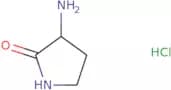
3-aminopyrrolidin-2-one hcl
CAS:3-Aminopyrrolidin-2-one hcl is an antibiotic that is used to treat tuberculosis. It inhibits the enzyme transacylase, which catalyses the conversion of L-lysine into L-pipecolic acid in bacteria. This antibiotic has been shown to be effective against Mycobacterium tuberculosis and Mycobacterium avium complex. 3-Aminopyrrolidin-2-one hcl has a broad spectrum of activity against gram positive and gram negative bacteria, but it is not active against acid-fast bacteria.
Fórmula:C4H9ClN2OPureza:Min. 95%Peso molecular:136.58 g/mol2-(Morpholin-4-yl)acetyl chloride hydrochloride
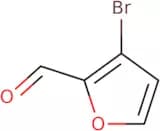
CAS:2-(Morpholin-4-yl)acetyl chloride hydrochloride is a fine chemical that is used as a building block for the synthesis of other compounds. It can be used in research and development, or as a reagent. 2-(Morpholin-4-yl)acetyl chloride hydrochloride has high purity and is easily soluble in water. This compound can be used as an intermediate to synthesize other compounds, or it can be used as a scaffold for the formation of complex structures.Fórmula:C6H11Cl2NO2Pureza:Min. 95%Cor e Forma:PowderPeso molecular:200.06 g/mol3-Bromofuran-2-carbaldehyde
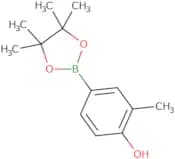
CAS:3-Bromofuran-2-carbaldehyde is a chemical compound that belongs to the group of carbonyl compounds. It is an acetylated form of 3-bromofuran and its molecular formula is C6H5BrO. This chemical contains a carbonyl group, which reacts with the hydroxyl group in epidermal growth factor (EGF) to produce epidermal growth. 3-Bromofuran-2-carbaldehyde has been shown to be an adrenergic receptor agonist and can be used as a structural formula blocker or hydrochloric acid. The chemical can also be synthesized in acidic conditions using methods such as fluorination, chlorination, and acetylation.Fórmula:C5H3BrO2Pureza:Min. 95%Peso molecular:174.98 g/mol2-Methyl-4-(4,4,5,5-tetramethyl-1,3,2-dioxaborolan-2-yl)phenol
CAS:Versatile small molecule scaffold
Fórmula:C13H19BO3Pureza:Min. 95%Peso molecular:234.1 g/mol7-Oxa-2-azaspiro[3.5]nonane hydrochloride
CAS:Versatile small molecule scaffoldFórmula:C7H14ClNOPureza:Min. 95%Peso molecular:163.6 g/molPentanimidamide hydrochloride
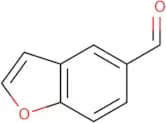
CAS:Pentanimidamide hydrochloride is a drug that belongs to the group of aromatic hydrocarbon drugs. It is a potent antihypertensive agent with a rapid onset and long duration of action. Pentanimidamide hydrochloride has been shown to inhibit the production of reactive oxygen species, which are generated by the respiratory chain in mitochondria, and to prevent the formation of pyrazinoic acid, an inhibitor of blood vessel relaxation. This drug also has been shown to reduce blood pressure in animal models by binding to specific receptors on cells in the cardiovascular system. The active form is bound to plasma proteins such as albumin and alpha-1-acid glycoprotein, which are found in high concentrations in erythrocytes. Pentanimidamide hydrochloride also binds to alkynyl groups and phenyl groups, which may be due to its ability to form covalent bonds with these functional groups.Fórmula:C5H13ClN2Pureza:Min. 95%Peso molecular:136.62 g/mol1-Benzofuran-5-carbaldehyde
CAS:1-Benzofuran-5-carbaldehyde is a synthetic compound that inhibits the enzyme ido1. It has been shown to have potent cytotoxicity, potent inhibition, and neurotrophic properties in a number of cell lines. 1-Benzofuran-5-carbaldehyde also exhibits inhibitory effects on the enzymes hydrolyzing dopamine, which is involved in the synthesis of norepinephrine and epinephrine. The chemical structure of 1-benzofuran-5-carbaldehyde closely resembles that of dopamine and its derivatives, and can be used for the treatment of neurodegenerative diseases such as Parkinson's disease.Fórmula:C9H6O2Pureza:Min. 95%Cor e Forma:Yellow To Brown SolidPeso molecular:146.14 g/mol4-Bromobenzaldehyde
CAS:4-Bromobenzaldehyde is a chemical compound that belongs to the group of aromatic compounds. It has been shown to have a potent stimulatory effect on locomotor activity in mice, which may be due to its ability to increase levels of epidermal growth factor and gamma-aminobutyric acid in the brain. 4-Bromobenzaldehyde can be synthesized from 2,4-dibromophenol and anhydrous copper chloride in the presence of sodium hydroxide. The reaction mechanism for this synthesis is believed to involve an intermediate enamine form of 4-bromobenzaldehyde, which can then undergo hydrolysis into 2,4-dibromophenol and benzaldehyde. This product is used as a reagent in organic synthesis because it can be used to form esters with trifluoroacetic acid or hydrochloric acid in high yield.
Fórmula:C7H5BrOPureza:Min. 90 Area-%Cor e Forma:White PowderPeso molecular:185.02 g/molBenzophenone-4-carboxylic acid
CAS:Organic intermediate
Fórmula:C14H10O3Pureza:Min. 98 Area-%Cor e Forma:White PowderPeso molecular:226.23 g/mol5-Bromo-2-dimethylaminopyridine
CAS:Produto ControladoPlease enquire for more information about 5-Bromo-2-dimethylaminopyridine including the price, delivery time and more detailed product information at the technical inquiry form on this pageFórmula:C7H9BrN2Pureza:Min. 95%Peso molecular:201.01 g/mol2,4,6-Trichloronicotinic acid
CAS:Versatile small molecule scaffoldFórmula:C6H2Cl3NO2Pureza:Min. 95%Peso molecular:226.44 g/moltert-Butyl N-(4-methylphenyl)carbamate
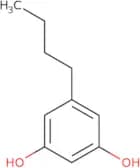
CAS:Tert-butyl N-(4-methylphenyl)carbamate is a reusable, efficient method for the synthesis of tert-butyl carbamates from amines and carbon dioxide. This reaction is an example of a C–H bond activation that proceeds through an anion intermediate. The reaction time can be reduced by irradiation to increase the efficiency. Electrons are unpaired during this process, which is modeled with quantum mechanics software. Chloride is used as a catalyst to activate the electron and generate a reactive intermediate. Amine functionalities are added to the molecule in order to give it desired properties. The chloride group can be replaced with other anions such as bromide or iodide, which will also introduce different reactivity patterns.Fórmula:C12H17NO2Pureza:Min. 95%Peso molecular:207.27 g/mol5-Butylbenzene-1,3-diol
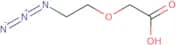
CAS:Versatile small molecule scaffoldFórmula:C10H14O2Pureza:Min. 95%Peso molecular:166.22 g/mol2-(2-Azidoethoxy)acetic Acid
CAS:2-(2-Azidoethoxy)acetic Acid is a hydrophobic antibacterial agent that can be used to inhibit bacterial growth by disrupting the cell membrane. It has been shown to inhibit the growth of Staphylococcus aureus and Escherichia coli, which may be due to its ability to bind to the glutathione moiety in the bacterial cell membrane. 2-(2-Azidoethoxy)acetic Acid has been shown to have antimicrobial activity against both Gram-positive and Gram-negative bacteria in vitro. This compound is also able to cross the cell membrane, inhibiting bacterial replication in vivo.
Fórmula:C4H7N3O3Pureza:Min. 95%Peso molecular:145.12 g/mol6,7-dihydro-5h-pyrrolo[3,4-d]pyrimidin-2-amine 2hcl
CAS:Versatile small molecule scaffold
Fórmula:C6H10Cl2N4Pureza:Min. 95%Peso molecular:209.07 g/mol2,4-Dichloroimidazo[2,1-F][1,2,4]triazine
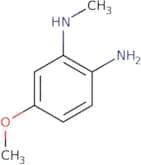
CAS:Versatile small molecule scaffoldFórmula:C5H2Cl2N4Pureza:Min. 95%Peso molecular:189 g/mol5-Methoxy-N1-methylbenzene-1,2-diamine
CAS:Versatile small molecule scaffold
Fórmula:C8H12N2OPureza:Min. 95%Peso molecular:152.19 g/mol2,4,5-Trimethoxybenzylamine
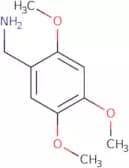
CAS:2,4,5-Trimethoxybenzylamine is a synthetic compound that can be used as a precursor to the synthesis of other chemicals. It is prepared by reacting phenol with deuterium gas in a process called amination. This reaction is followed by reductive quaternization with cyanide. 2,4,5-Trimethoxybenzylamine is often used as an intermediate for the synthesis of drugs such as tamoxifen and clonidine.Fórmula:C10H15NO3Pureza:Min. 95%Cor e Forma:PowderPeso molecular:197.23 g/mol5-Bromo-2-iodopyridine
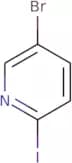
CAS:5-Bromo-2-iodopyridine is an antibiotic that is used to treat bacterial infections. It has been shown to inhibit the growth of bacteria by binding to the 50S ribosomal subunit. This drug also has a toxic effect on respiratory system cells, which may be due to its ability to induce apoptosis. 5-Bromo-2-iodopyridine interacts with DNA in a triazine ring and inhibits bacterial growth by inhibiting protein synthesis. The drug binds to the 50S ribosomal subunit at a site that is different from that of rifampin and other antibiotics. The reaction is catalyzed by palladium at high temperatures and takes place in organic solvents such as chloroform or benzene. This synthetic process can be made more efficient by using inexpensive starting materials, such as bromine, iodine, and acetone, rather than expensive starting materials like platinum or gold salts.
Fórmula:C5H3BrINPureza:Min. 95%Cor e Forma:Slightly Yellow PowderPeso molecular:283.89 g/mol4-Bromopyridine hydrochloride
CAS:4-Bromopyridine HCl is a chemical compound with the molecular formula C6H5BrN. It is an aromatic heterocycle and is used in organic synthesis as a coupling partner in cross-coupling reactions. The bromine atom of 4-bromopyridine is replaced by chloride, resulting in 4-chloropyridine. The chlorination reaction can be conducted using either hydrochloric acid or thionyl chloride. This process can be done on an industrial scale and the chlorinated product has been used in the manufacture of pharmaceuticals, dyes, and pesticides. The reaction mechanism for this substitution reaction involves a nucleophilic attack by chlorine on the pyridine ring at carbon atom 2 followed by displacement of hydrogen from the adjacent position on nitrogen atom 3. Acylation reactions are oxidation processes that involve conversion of carboxylic acids to acyl halides or acyl chlorides through treatment with acidified halogenating agents such
Fórmula:C5H4BrN•HClPureza:Min. 95%Cor e Forma:White PowderPeso molecular:194.46 g/mol


![7-Oxa-2-azaspiro[3.5]nonane hydrochloride](/_next/image/?url=https%3A%2Fstatic.cymitquimica.com%2Fproducts%2F3D%2Fthumb-webp%2FSGC63309.webp&w=3840&q=75)



![6,7-dihydro-5h-pyrrolo[3,4-d]pyrimidin-2-amine 2hcl](/_next/image/?url=https%3A%2Fstatic.cymitquimica.com%2Fproducts%2F3D%2Fthumb-webp%2FHGA32752.webp&w=3840&q=75)
![2,4-Dichloroimidazo[2,1-F][1,2,4]triazine](/_next/image/?url=https%3A%2Fstatic.cymitquimica.com%2Fproducts%2F3D%2Fthumb-webp%2FKXC70089.webp&w=3840&q=75)