Building Blocks
Subcategorias de "Building Blocks"
- Ácidos Borónicos e Derivados de Ácido Borónico(5.778 produtos)
- Building Blocks Quirais(1.243 produtos)
- Building Blocks Hidrocarbonetos(6.099 produtos)
- Building Blocks orgânicos(61.038 produtos)
Foram encontrados 205376 produtos de "Building Blocks"
4-[(Ethoxycarbonyl)oxy]benzoic acid
CAS:Versatile small molecule scaffoldFórmula:C10H10O5Pureza:Min. 95%Peso molecular:210.18 g/mol2-(2,6-Dimethoxyphenyl)acetic acid
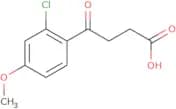
CAS:2-(2,6-Dimethoxyphenyl)acetic acid is a phenolic compound that can be found in the urine of people suffering from alcaptonuria. This disease is caused by the accumulation of homogentisic acid in the body and results in abnormalities such as neural tube defects. 2-(2,6-Dimethoxyphenyl)acetic acid is formed during the conversion of resorcinol to dihydroxybenzene by demethylation. It also has low yields when synthesized from methyl ester and benzene, which makes it difficult to produce synthetically.Fórmula:C10H12O4Pureza:Min. 95%Peso molecular:196.2 g/mol4-(2-Chloro-4-methoxyphenyl)-4-oxobutanoic acid
CAS:Versatile small molecule scaffold
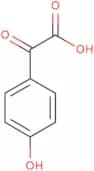
Fórmula:C11H11ClO4Pureza:Min. 95%Peso molecular:242.65 g/mol2-(4-Hydroxyphenyl)-2-oxoacetic acid
CAS:2-Hydroxyphenyl-2-oxoacetic acid (HPPAA) is a pharmaceutical preparation used to treat insulin resistance and type 2 diabetes. It has been shown to increase the activity of mitochondrial enzymes, inhibit oxidative phosphorylation, and increase the oxidation of fatty acids. HPPAA has also been shown to reduce carnitine levels in muscle tissue, which may contribute to its anti-obesity effects. HPPAA is an analytical method for detecting insulin resistance in Sprague-Dawley rats. This method is based on UV absorption at 280 nm and can be used with other analytical methods such as gas chromatography or liquid chromatography.Fórmula:C8H6O4Pureza:Min. 95%Peso molecular:166.13 g/mol{7-Oxabicyclo[2.2.1]heptan-1-yl}methanol
CAS:Versatile small molecule scaffold
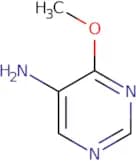
Fórmula:C7H12O2Pureza:Min. 95%Peso molecular:128.2 g/mol4-methoxypyrimidin-5-amine
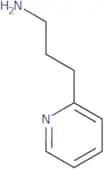
CAS:Versatile small molecule scaffoldFórmula:C5H7N3OPureza:Min. 95%Peso molecular:125.12 g/mol3-(Pyridin-2-yl)propan-1-amine
CAS:Versatile small molecule scaffold
Fórmula:C8H12N2Pureza:Min. 95%Peso molecular:136.2 g/molN-Methyl-3-(pyridin-2-yl)propan-1-amine
CAS:Versatile small molecule scaffold
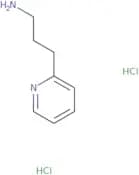
Fórmula:C9H14N2Pureza:Min. 95%Peso molecular:150.22 g/mol3-(Pyridin-2-yl)propan-1-amine dihydrochloride
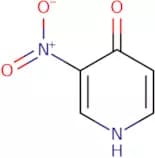
CAS:Versatile small molecule scaffoldFórmula:C8H14Cl2N2Pureza:Min. 95%Peso molecular:209.11 g/mol3-Nitropyridin-4(1H)-one
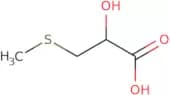
CAS:3-Nitropyridin-4(1H)-one is an organic solvent that has a number of industrial applications. It is used as a raw material for the production of other chemicals and as a cleaning agent in wastewater treatment plants. 3-Nitropyridin-4(1H)-one is also used in the synthesis of amines and nitro compounds. This compound is found in high concentrations in urban air due to its use as a solvent and its presence as a contaminant in carbon tetrachloride. The sublimed form of 3-nitropyridin-4(1H)-one has been shown to react with primary amines, amines, and tautomeric compounds, leading to the formation of nitro compounds or chloride ions. The nmr spectra show that this compound interacts with low energy radiation.Fórmula:C5H4N2O3Pureza:Min. 95%Peso molecular:140.1 g/mol2-Hydroxy-3-(methylsulfanyl)propanoic acid
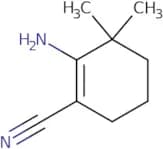
CAS:2-Hydroxy-3-(methylsulfanyl)propanoic acid is a polychromatic compound that has been used as an x-ray contrast agent. It has been shown to be useful in imaging techniques such as diffraction, x-ray, and electron microscopy. 2-Hydroxy-3-(methylsulfanyl)propanoic acid is also used in the study of human genome structure and function. This molecule has been found to bind to DNA in the nucleus, which is believed to help with its ability to transport electrons along DNA molecules. 2-Hydroxy-3-(methylsulfanyl)propanoic acid has been shown to have anticancer properties and has also been found useful for tissue imaging.Fórmula:C4H8O3SPureza:Min. 95%Peso molecular:136.17 g/mol2-Amino-3,3-dimethylcyclohex-1-ene-1-carbonitrile
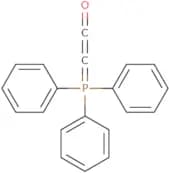
CAS:Versatile small molecule scaffoldFórmula:C9H14N2Pureza:Min. 95%Peso molecular:150.22 g/mol(Triphenylphosphoranylidene)ketene
CAS:Triphenylphosphoranylidene)ketene is an amine-containing compound that is used as a catalyst in organic synthesis. It can be used in reactions involving the cleavage of carbon-carbon bonds and has been shown to oxidize alcohols, ethers, and esters. Triphenylphosphoranylidene)ketene was first synthesized in 1887 by the reaction of triphenylphosphine with ethylene dione.
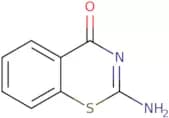
Fórmula:C20H15OPPureza:Min. 95%Peso molecular:302.31 g/mol2-Amino-4H-1,3-benzothiazin-4-one
CAS:Versatile small molecule scaffold
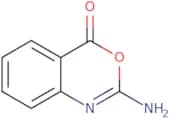
Fórmula:C8H6N2OSPureza:Min. 95%Peso molecular:178.21 g/mol2-Amino-4H-3,1-benzoxazin-4-one
CAS:Quinazolone is a quinazoline derivative with a 2-amino-4H-3,1-benzoxazin-4-one moiety. It is an inhibitor of enzymes that catalyze the phosphorylation of alkenes and alkynes, such as malonate decarboxylase and acetoacetyl-CoA thiolase. Quinazolones are also used in pharmaceuticals, mainly as anticonvulsants or antipsychotics. The quinazolone group is obtained by condensation of cyanamide with diethyl malonate or ethyl malonate. The resulting quinazoline can be converted to the corresponding quinazolone by replacement of the amino group with an amine. This reaction is called the Baeyer–Villiger oxidation. Quinazolones can also be synthesized from aralkyl chlorides by treatment with phenylurea followed by hydrolysis
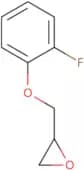
Fórmula:C8H6N2O2Pureza:Min. 95%Peso molecular:162.15 g/mol2-(2-Fluorophenoxymethyl)oxirane
CAS:2-(2-Fluorophenoxymethyl)oxirane is an organic compound that has been used as a diagnostic agent for the detection of Staphylococcus. It reacts with 2-amino-3-ketobutyric acid, which is the end product of bacterial metabolism and can be detected by gas chromatography. The sensitivity of this assay is approximately 10 CFU/mL. This compound has also been used as a probe for the study of bacterial metabolites in aerogenes cultures. In addition, it has been utilized as a sensor for bacterial growth in supernatants from subtilis bacteria cultures. 2-(2-Fluorophenoxymethyl)oxirane is not active against resistant strains of bacteria such as enterobacter and epidermidis species.
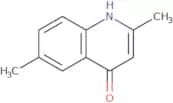
Fórmula:C9H9FO2Pureza:Min. 95%Peso molecular:168.16 g/mol2,6-Dimethyl-4-hydroxyquinoline
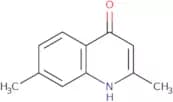
CAS:2,6-Dimethyl-4-hydroxyquinoline is a phthalocyanine that has been shown to be reduced by electrochemical reactions. 2,6-Dimethyl-4-hydroxyquinoline has been shown to have redox properties in the cyclic voltammetry and square reduction process. This compound can be characterized using spectroscopy and elemental analysis. Mass spectroscopy is used to identify the molecular weight of the compound. The elemental composition of 2,6-dimethyl-4-hydroxyquinoline is C 8 H 8 N 4 O 3 . It can be synthesized from phthalonitrile and formaldehyde with a chemical reaction that yields an elemental composition of C 6 H 6 + C 8 H 8 N 4 O 3 .Fórmula:C11H11NOPureza:Min. 95%Peso molecular:173.21 g/mol2,7-Dimethylquinolin-4-ol
CAS:Versatile small molecule scaffold
Fórmula:C11H11NOPureza:Min. 95%Peso molecular:173.21 g/mol6-Chloro-4-hydroxy-2-methylquinoline
CAS:6-Chloro-4-hydroxy-2-methylquinoline is a vasorelaxant that blocks potassium channels in the cell membrane. 6CHMQ has been shown to inhibit calcium and potassium channels, which are involved in the transmission of nerve impulses. It also inhibits glibenclamide binding to pancreatic beta cells, which is an action that contributes to the anti-diabetic effects of this drug. 6CHMQ has been shown to block voltage gated potassium channels and may have a role in regulating blood pressure by inhibiting the release of norepinephrine.
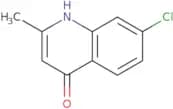
Fórmula:C10H8ClNOPureza:Min. 95%Peso molecular:193.63 g/mol7-Chloro-4-hydroxy-2-methylquinoline
CAS:Versatile small molecule scaffoldFórmula:C10H8ClNOPureza:Min. 95%Peso molecular:193.63 g/mol
![4-[(Ethoxycarbonyl)oxy]benzoic acid](/_next/image/?url=https%3A%2Fstatic.cymitquimica.com%2Fproducts%2F3D%2Fthumb-webp%2FQAA55232.webp&w=3840&q=75)


![{7-Oxabicyclo[2.2.1]heptan-1-yl}methanol](/_next/image/?url=https%3A%2Fstatic.cymitquimica.com%2Fproducts%2F3D%2Fthumb-webp%2FQAA57403.webp&w=3840&q=75)