Building Blocks
Esta seção contém produtos fundamentais para a síntese de compostos orgânicos e biológicos. Building blocks são os materiais de partida essenciais usados para construir moléculas complexas através de várias reações químicas. Eles desempenham um papel crítico na descoberta de medicamentos, ciência dos materiais e pesquisa química. Na CymitQuimica, oferecemos uma ampla gama de building blocks de alta qualidade para apoiar suas pesquisas inovadoras e projetos industriais, garantindo que você tenha os componentes essenciais para uma síntese bem-sucedida.
Subcategorias de "Building Blocks"
- Ácidos Borónicos e Derivados de Ácido Borónico(5.774 produtos)
- Building Blocks Quirais(1.237 produtos)
- Building Blocks Hidrocarbonetos(6.098 produtos)
- Building Blocks orgânicos(60.970 produtos)
Foram encontrados 205134 produtos de "Building Blocks"
Ordenar por
Pureza (%)
0
100
|
0
|
50
|
90
|
95
|
100
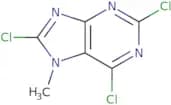
2,6,8-Trichloro-7-methyl-7H-purine
CAS:Versatile small molecule scaffoldFórmula:C6H3Cl3N4Pureza:Min. 95%Peso molecular:237.5 g/mol4-(Bromomethyl)-2,1,3-benzothiadiazole
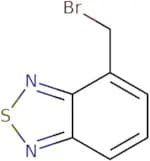
CAS:4-(Bromomethyl)-2,1,3-benzothiadiazole is a heterocyclic compound that is used as an intermediate in the synthesis of pharmaceuticals. It has been shown to have biological activity when hydrolyzed by malonic esterases and phosphodiesterases. 4-(Bromomethyl)-2,1,3-benzothiadiazole has also been shown to be a potent inhibitor of acid hydrolysis in rat erythrocytes and to cause inotropic effects. 4-(Bromomethyl)-2,1,3-benzothiadiazole can be nitrated by potassium nitrate to form a diazonium salt that is used as a reagent for the determination of amines.Fórmula:C7H5N2SBrPureza:Min. 95%Peso molecular:229.09 g/mol5-Chloro-2-(ethylsulfanyl)aniline
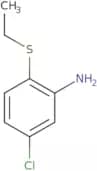
CAS:Versatile small molecule scaffoldFórmula:C8H10ClNSPureza:Min. 95%Peso molecular:187.69 g/molMethyl 6-isothiocyanatohexanoate
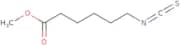
CAS:Methyl 6-isothiocyanatohexanoate is a reactive organic compound that reacts with thiophosgene to form methyl 2,6-dithiocyanatohexanoate. This reaction product is unstable and breaks down to release carbon dioxide and sulfur dioxide. Methyl 6-isothiocyanatohexanoate reacts with theophylline to produce methyl 3,7-dithiocyanatooctanoate. This reaction product can be hydrolyzed by esterases or glucuronidases to release caffeine. Methyl 6-isothiocyanatohexanoate also reacts with theophylline to form methyl 7-dithiocyanatooctanoate in an oxidative process, which releases carbon monoxide and hydrogen cyanide.Fórmula:C8H13NO2SPureza:Min. 95%Peso molecular:187.26 g/mol2-(3-Methylbutyl)cyclopentan-1-one
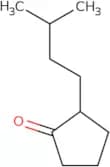
CAS:Versatile small molecule scaffold
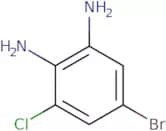
Fórmula:C10H18OPureza:Min. 95%Peso molecular:154.25 g/mol1,2-Diamino-5-bromo-3-chlorobenzene
CAS:Versatile small molecule scaffoldFórmula:C6H6BrClN2Pureza:Min. 95%Peso molecular:221.48 g/mol4-Phenylpentanoic acid
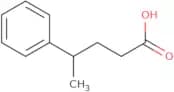
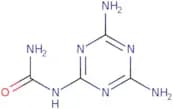
CAS:4-Phenylpentanoic acid is a chemical compound that is found in nature. It is used as an additive to enhance the properties of styrene, which is a colorless liquid with a sweet odor and it can be combustible. 4-Phenylpentanoic acid has been shown to inhibit the degradation of styrene by carbon tetrachloride, but its mechanism of action is not yet known. This substance has also been shown to be selective for alkali metals such as potassium and sodium, while exhibiting no selectivity for other metal ions such as magnesium or iron. This chemical also effectively removes hydroxides from metal surfaces and reacts with aliphatic hydrocarbons to form a variety of products. The nature of 4-phenylpentanoic acid's constant is not yet known.Fórmula:C11H14O2Pureza:Min. 95%Peso molecular:178.23 g/mol(Diamino-1,3,5-triazin-2-yl)urea
CAS:Versatile small molecule scaffold
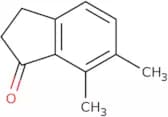
Fórmula:C4H7N7OPureza:Min. 95%Peso molecular:169.14 g/mol6,7-Dimethyl-2,3-dihydro-1H-inden-1-one
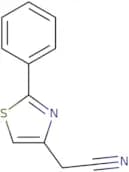
CAS:Versatile small molecule scaffoldFórmula:C11H12OPureza:Min. 95%Peso molecular:160.22 g/mol2-(2-Phenyl-1,3-thiazol-4-yl)acetonitrile
CAS:Versatile small molecule scaffold
Fórmula:C11H8N2SPureza:Min. 95%Peso molecular:200.26 g/mol2-[2-(4-Methylphenyl)-1,3-thiazol-4-yl]acetonitrile
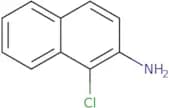
CAS:Versatile small molecule scaffoldFórmula:C12H10N2SPureza:Min. 95%Peso molecular:214.29 g/mol1-Chloronaphthalen-2-amine
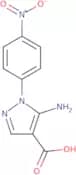
CAS:1-Chloronaphthalen-2-amine is an organic compound that belongs to the group of amines. It is a colorless liquid with a molecular weight of 122.14 and a boiling point of 164°C. This compound is an isomer of naphthalene, which means it has the same chemical formula but different arrangement of atoms within the molecule. 1-Chloronaphthalen-2-amine can be used in pharmaceuticals as well as in nature, where it reacts with singlet oxygen to form nitrosonium ion, which can then react with benzoate to produce nitrobenzene. The enzyme catalysis process involves the use of 1-chloronaphthalen-2-amine as a substrate and acetonitrile as a catalyst to produce 2,6 -dichloroisonicotinic acid.Fórmula:C10H8ClNPureza:Min. 95%Peso molecular:177.63 g/mol5-Amino-1-(4-nitrophenyl)-1H-pyrazole-4-carboxylic acid
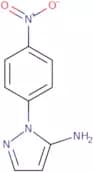
CAS:Versatile small molecule scaffoldFórmula:C10H8N4O4Pureza:Min. 95%Peso molecular:248.19 g/mol1-(4-Nitrophenyl)-1H-pyrazol-5-amine
CAS:Versatile small molecule scaffoldFórmula:C9H8N4O2Pureza:Min. 95%Peso molecular:204.19 g/mol3,4-Diaminopyrazole
CAS:3,4-Diaminopyrazole is a heterocyclic compound that has been used as a colorant in the textile industry. It is also known to be an effective acceptor for hydrogen bonding in human keratin. 3,4-Diaminopyrazole reacts with primary alcohols to form chalcones and the long-term exposure of this compound has been shown to cause fatty alcohols. This heterocyclic compound undergoes a bathochromic shift under UV light and can be used as a spectral marker in vitro.
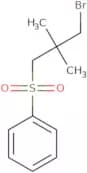
Fórmula:C3H8N4O4SPureza:Min. 95%Peso molecular:196.19 g/mol(3-Bromo-2,2-dimethylpropanesulfonyl)benzene
CAS:Versatile small molecule scaffoldFórmula:C11H15BrO2SPureza:Min. 95%Peso molecular:291.21 g/mol4-Methyl-1H,2H,3H-pyrrolo[2,3-b]pyridine
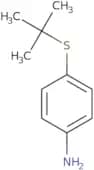
CAS:The protonation of 4-methyl-1H,2H,3H-pyrrolo[2,3-b]pyridine can be described by the following equilibrium equation:Fórmula:C8H10N2Pureza:Min. 95%Peso molecular:134.18 g/mol4-(tert-Butylsulfanyl)aniline
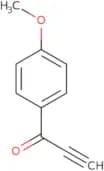
CAS:Versatile small molecule scaffoldFórmula:C10H15NSPureza:Min. 95%Peso molecular:181.3 g/mol1-(4-Methoxyphenyl)prop-2-yn-1-one
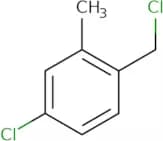
CAS:Versatile small molecule scaffoldFórmula:C10H8O2Pureza:Min. 95%Peso molecular:160.17 g/mol4-Chloro-1-(chloromethyl)-2-methyl-benzene
CAS:Lidamine is a potential drug candidate for use in cancer therapy. It has been shown to be cytotoxic, meaning it kills cancer cells. Lidamine was also found to inhibit the growth of cancer cells in vitro and in vivo. More research is needed to investigate lidamine as a potential treatment for cancer.Fórmula:C8H8Cl2Pureza:Min. 95%Peso molecular:175.05 g/mol

![2-[2-(4-Methylphenyl)-1,3-thiazol-4-yl]acetonitrile](/_next/image/?url=https%3A%2Fstatic.cymitquimica.com%2Fproducts%2F3D%2Fthumb-webp%2FRAA44127.webp&w=3840&q=75)

![4-Methyl-1H,2H,3H-pyrrolo[2,3-b]pyridine](/_next/image/?url=https%3A%2Fstatic.cymitquimica.com%2Fproducts%2F3D%2Fthumb-webp%2FRAA46294.webp&w=3840&q=75)