Building Blocks
Subcategorias de "Building Blocks"
- Ácidos Borónicos e Derivados de Ácido Borónico(5.783 produtos)
- Building Blocks Quirais(1.242 produtos)
- Building Blocks Hidrocarbonetos(6.105 produtos)
- Building Blocks orgânicos(61.055 produtos)
Foram encontrados 205383 produtos de "Building Blocks"
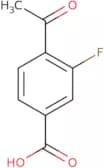
4-Acetyl-3-fluorobenzoic acid
CAS:Versatile small molecule scaffold
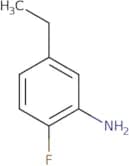
Fórmula:C9H7FO3Pureza:Min. 95%Peso molecular:182.15 g/mol5-Ethyl-2-fluoroaniline
CAS:Versatile small molecule scaffold
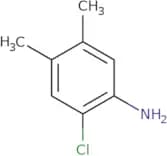
Fórmula:C8H10FNPureza:Min. 95%Peso molecular:139.17 g/mol2-Chloro-4,5-dimethylaniline
CAS:Versatile small molecule scaffold
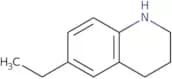
Fórmula:C8H10ClNPureza:Min. 95%Peso molecular:155.63 g/mol6-Ethyl-1,2,3,4-tetrahydroquinoline
CAS:Versatile small molecule scaffold
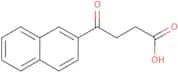
Fórmula:C11H15NPureza:Min. 95%Peso molecular:161.24 g/mol4-(2-Naphthyl)-4-oxobutyric acid
CAS:4-(2-Naphthyl)-4-oxobutyric acid (4NOBA) is a crystalline compound with a carboxylic acid group. It has been used as an anticoagulant drug to treat thrombosis, and it is also used in the treatment of rheumatoid arthritis. 4NOBA has been shown to inhibit albumin synthesis by binding to the serum albumin, which prevents the interaction between serum albumin and other molecules. The crystal structure of 4NOBA consists of a central naphthalene ring with two phenyl rings on opposite sides. The molecule is symmetrical, so there are three possible geometries: 1) an equatorial plane where all four hydrogens are equivalent; 2) an axial plane where all four hydrogens are equivalent; 3) a mirror plane where one hydrogen is equivalent and three hydrogens are equivalent. The molecular formula for 4NOBA can be determined from its elemental analysis,
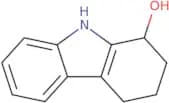
Fórmula:C14H12O3Pureza:Min. 95%Peso molecular:228.24 g/mol2,3,4,9-Tetrahydro-1H-carbazol-1-ol
CAS:Versatile small molecule scaffold
Fórmula:C12H13NOPureza:Min. 95%Peso molecular:187.24 g/moltert-Butyl 3-(4-phenyl-1H-imidazol-2-yl)piperidine-1-carboxylate
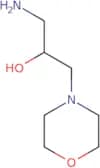
CAS:Versatile small molecule scaffoldFórmula:C19H25N3O2Pureza:Min. 95%Peso molecular:327.43 g/mol(2R)-1-Amino-3-(morpholin-4-yl)propan-2-ol
CAS:Versatile small molecule scaffoldFórmula:C7H16N2O2Pureza:Min. 95%Peso molecular:160.21 g/molRef: 3D-CTA10538
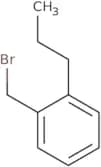
Produto descontinuado1-(Bromomethyl)-2-propylbenzene
CAS:Versatile small molecule scaffold
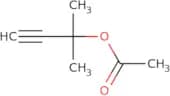
Fórmula:C10H13BrPureza:Min. 95%Peso molecular:213.11 g/mol2-Methylbut-3-yn-2-yl acetate
CAS:Versatile small molecule scaffold
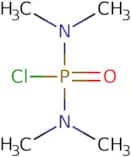
Fórmula:C7H10O2Pureza:Min. 95%Peso molecular:126.15 g/molBis(dimethylamino)phosphoryl chloride
CAS:Bis(dimethylamino)phosphoryl chloride is a monomer that can be used in the synthesis of polymers. It undergoes ring-opening polymerization with nucleophiles such as anilines to form polyamides. This compound also reacts with electrophilic chlorides to form phosphorochloridic esters, which are useful for organic syntheses. Bis(dimethylamino)phosphoryl chloride is synthesized by the reaction of hexamethylphosphoramide and aniline in the presence of a catalytic amount of hydrochloric acid. The resulting product has been shown to have electron deficiency in its structure, which may lead to its reactivity with other compounds.
Fórmula:C4H12ClN2OPPureza:Min. 95%Cor e Forma:Clear LiquidPeso molecular:170.58 g/molCholine kinase-A inhibitor, ck37
CAS:Versatile small molecule scaffold
Fórmula:C20H22N4OSPureza:Min. 95%Peso molecular:366.5 g/molRef: 3D-BQB47890
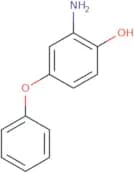
Produto descontinuado2-Amino-4-phenoxyphenol
CAS:Versatile small molecule scaffold
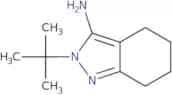
Fórmula:C12H11NO2Pureza:Min. 95%Peso molecular:201.22 g/mol2-tert-Butyl-4,5,6,7-tetrahydro-2H-indazol-3-amine
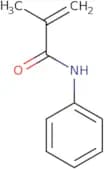
CAS:Versatile small molecule scaffoldFórmula:C11H19N3Pureza:Min. 95%Peso molecular:193.29 g/molN-Phenylmethacrylamide
CAS:N-Phenylmethacrylamide is a cross-linking agent that is used in the preparation of polymers. It reacts with amine groups to form amides, which are then reacted with sodium salts to form polyamides. The amide group can also be used for synthesizing polyurethanes and other polymers. N-Phenylmethacrylamide is soluble in organic solvents and has low toxicity. It can be activated by radiation or by reaction with a hydroxyl group and forms a bond by hydrogen bonding with other functional groups, such as hydroxyls, carbonyls, nitrogens, and sulphurs. This compound can be used as an effective chemotherapy drug because it binds to DNA strands and inhibits the synthesis of RNA and protein in cells.
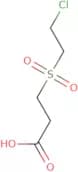
Fórmula:C10H11NOPureza:Min. 95%Peso molecular:161.2 g/mol3-(2-Chloroethanesulfonyl)propanoic acid
CAS:Versatile small molecule scaffold
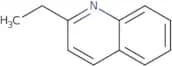
Fórmula:C5H9ClO4SPureza:Min. 95%Peso molecular:200.64 g/mol2-Ethylquinoline
CAS:2-Ethylquinoline is a compound that belongs to the group of alkenes. It can be prepared by reacting acetaldehyde with an amine in the presence of acid catalysts such as sulfuric acid or acetic acid. 2-Ethylquinoline has been shown to react with allylamine, forming an ether linkage. This reaction is facilitated by ultrasonic extraction and heating at reflux temperature for 12 hours, and then cooling to room temperature. The product obtained is purified via column chromatography using acetonitrile as a solvent. The magnetic resonance spectroscopy of 2-ethylquinoline reveals that it possesses a C–H bond and cyclic structure.
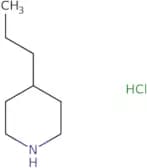
Fórmula:C11H11NPureza:Min. 95%Peso molecular:157.21 g/mol4-Propyl-piperidine HCl
CAS:Versatile small molecule scaffold
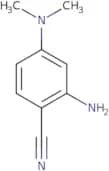
Fórmula:C8H18ClNPureza:Min. 95%Peso molecular:163.69 g/mol2-Amino-4-(dimethylamino)benzonitrile
CAS:Versatile small molecule scaffold
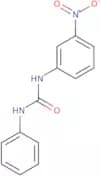
Fórmula:C9H11N3Pureza:Min. 95%Peso molecular:161.2 g/mol3-(3-Nitrophenyl)-1-phenylurea
CAS:3-(3-Nitrophenyl)-1-phenylurea is a fluorinated compound that inhibits the growth of plants by inhibiting photosynthesis. It is used as an insecticide and fungicide. 3-(3-Nitrophenyl)-1-phenylurea also has been shown to have some antiviral properties.
Fórmula:C13H11N3O3Pureza:Min. 95%Peso molecular:257.24 g/mol