


Building Blocks
Subcategorias de "Building Blocks"
- Ácidos Borónicos e Derivados de Ácido Borónico(5.784 produtos)
- Building Blocks Quirais(1.242 produtos)
- Building Blocks Hidrocarbonetos(6.105 produtos)
- Building Blocks orgânicos(61.061 produtos)
Foram encontrados 205399 produtos de "Building Blocks"
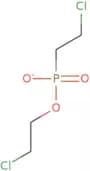
(2-Chloroethoxy)(2-chloroethyl)phosphinic acid
CAS:Versatile small molecule scaffold
Fórmula:C4H8Cl2O3PPureza:Min. 95%Peso molecular:205.98 g/mol4-Phenyl-1,3-oxazole-2-thiol
CAS:Versatile small molecule scaffold
Fórmula:C9H7NOSPureza:Min. 95%Peso molecular:177.22 g/molN-(2-Chloroacetyl)acetamide
CAS:Versatile small molecule scaffold
Fórmula:C4H6ClNO2Pureza:Min. 95%Peso molecular:135.55 g/mol2,2,2-Trifluoroethoxybenzene
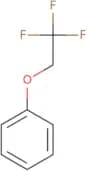
CAS:2,2,2-Trifluoroethoxybenzene is an acid catalyst that is used in the production of chlorobenzene. This organic compound has been shown to produce a number of products when heated with dihydroxybenzene. These products include acid chlorides and benzoyl chloride that can be used as intermediates in other chemical reactions. 2,2,2-Trifluoroethoxybenzene has also been shown to react with alkali metals to produce inorganic acids. In addition to acting as an acid catalyst, this compound may be used in the synthesis of flecainide, which is an antiarrhythmic drug. This product also reacts with carbonyl groups and acidic molecules such as halogens to form alkali metal carboxylates and alkanes.
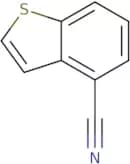
Fórmula:C8H7F3OPureza:Min. 95%Peso molecular:176.14 g/mol1-Benzothiophene-4-carbonitrile
CAS:Versatile small molecule scaffold
Fórmula:C9H5NSPureza:Min. 95%Cor e Forma:PowderPeso molecular:159.21 g/mol3-Ethylcyclohex-2-en-1-one
CAS:Versatile small molecule scaffold
Fórmula:C8H12OPureza:Min. 95%Peso molecular:124.18 g/mol2-Phenylcyclohexanamine
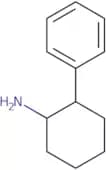
CAS:2-Phenylcyclohexanamine is a synthetic, experimental compound. It has been shown to have high energy content and the ability to cross over from the gas phase to the liquid phase. 2-Phenylcyclohexanamine can be used as a thermodynamic probe in analytical research and has an efficient method for synthesis. The synthesis of 2-phenylcyclohexanamine is done by heating 1,1-diphenyl cyclopropane with cyclohexylamine, producing a mixture that can be purified with column chromatography. The analytical methodology for this compound includes GC/MS analysis of the raw material, reaction product, and final product.
Fórmula:C12H17NPureza:Min. 95%Peso molecular:175.27 g/mol1,3,5-Trichloro-2-(chloromethyl)benzene
CAS:1,3,5-Trichloro-2-(chloromethyl)benzene (TCMB) is a chemical compound that inhibits the synthesis of proteins and is used in cancer therapy. TCMB has been shown to inhibit protein synthesis by binding to the polymerase chain reaction enzyme transcriptase polymerase chain reaction. It also inhibits the activity of enzymes involved in lipid metabolism, such as lipases and cholesterol esterases. The serum bilirubin levels were found to be lower in mice treated with TCMB than in those not treated with TCMB. This may be due to the ability of this drug to inhibit the enzyme fatty acid synthase, which is responsible for synthesizing fatty acids. TCMB has been shown to induce apoptosis in bladder cells, which may be due to its inhibition of DNA synthesis and repair.
Fórmula:C7H4Cl4Pureza:Min. 95%Peso molecular:229.9 g/mol4-(chloromethyl)-1-methyl-1H-imidazole hydrochloride
CAS:Produto ControladoVersatile small molecule scaffold
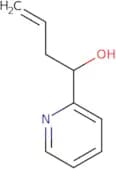
Fórmula:C5H8Cl2N2Pureza:Min. 95%Peso molecular:167.03 g/mol1-(Pyridin-2-yl)but-3-en-1-ol
CAS:Versatile small molecule scaffold
Fórmula:C9H11NOPureza:Min. 95%Peso molecular:149.19 g/molRef: 3D-SAA28557
Produto descontinuado2-(5-chlorobenzo[b]thiophen-3-yl)acetic acid
CAS:Versatile small molecule scaffold
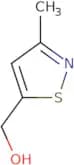
Fórmula:C10H7ClO2SPureza:Min. 95%Peso molecular:226.68 g/mol(3-Methyl-1,2-thiazol-5-yl)methanol
CAS:Versatile small molecule scaffold
Fórmula:C5H7NOSPureza:Min. 95%Peso molecular:129.18 g/mol4-Amino-2-cyclopentylpyrimidine-5-carbonitrile
CAS:Versatile small molecule scaffold
Fórmula:C10H12N4Pureza:Min. 95%Peso molecular:188.23 g/mol2-(Hydroxyamino)-3-phenylpropanoic acid
CAS:Versatile small molecule scaffold
Fórmula:C9H11NO3Pureza:Min. 95%Peso molecular:181.19 g/mol2-(2,2,3,3-Tetramethylcyclopropyl)acetic acid
CAS:Versatile small molecule scaffoldFórmula:C9H16O2Pureza:Min. 95%Peso molecular:156.22 g/mol1,3-Bis(1-naphthalenyloxy)-2-propanol
CAS:1,3-Bis(1-naphthalenyloxy)-2-propanol is a solvated molecule with 1,3-diphenylpropane as the solvent. It has a basicity of 5.4 and an entropy of -10.5 J mol(-1) K(-1). The solubility of 1,3-bis(1-naphthalenyloxy)-2-propanol in organic solvents ranges from 0.03 to 10 g/L. This compound is soluble in acetone, methanol, ethanol and toluene. The experimentally determined enthalpy of vaporization for 1,3-bis(1-naphthalenyloxy)-2-propanol was found to be -12 J mol(-1) K(-1).
Fórmula:C23H20O3Pureza:Min. 95%Peso molecular:344.4 g/mol2-Chloro-3,4-dihydronaphthalen-1(2H)-one
CAS:2-Chloro-3,4-dihydronaphthalen-1(2H)-one is a sulfoxide with significant antifungal activity. It has been shown to be effective against Candida albicans and other fungi, including Aspergillus niger and Mucor racemosus. It is commonly used as an electrolyte in electroluminescent devices, such as light emitting diodes (LEDs). The reaction time for the formation of 2-chloro-3,4-dihydronaphthalen-1(2H)-one from potassium sulfate is dependent on the acid catalyst used. Organic chemists have shown that the use of 2-chloro-3,4-dihydronaphthalen-1(2H)-one can inhibit leukotriene synthesis.
Fórmula:C10H9OClPureza:Min. 95%Peso molecular:180.63 g/molN-(3-Methoxyphenyl)prop-2-enamide
CAS:Versatile small molecule scaffold
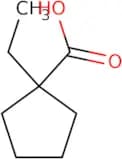
Fórmula:C10H11NO2Pureza:Min. 95%Peso molecular:177.2 g/mol1-Ethylcyclopentane-1-carboxylic acid
CAS:Versatile small molecule scaffold
Fórmula:C8H14O2Pureza:Min. 95%Peso molecular:142.2 g/molspiro[2.5]octane-1-carboxylic acid
CAS:Versatile small molecule scaffold
Fórmula:C9H14O2Pureza:Min. 95%Peso molecular:154.2 g/mol





![2-(5-chlorobenzo[b]thiophen-3-yl)acetic acid](/_next/image/?url=https%3A%2Fstatic.cymitquimica.com%2Fproducts%2F3D%2Fthumb-webp%2FSAA26630.webp&w=3840&q=75)


![spiro[2.5]octane-1-carboxylic acid](/_next/image/?url=https%3A%2Fstatic.cymitquimica.com%2Fproducts%2F3D%2Fthumb-webp%2FSAA20286.webp&w=3840&q=75)