Building Blocks
Subcategorias de "Building Blocks"
- Ácidos Borónicos e Derivados de Ácido Borónico(5.784 produtos)
- Building Blocks Quirais(1.244 produtos)
- Building Blocks Hidrocarbonetos(6.105 produtos)
- Building Blocks orgânicos(61.070 produtos)
Foram encontrados 205437 produtos de "Building Blocks"
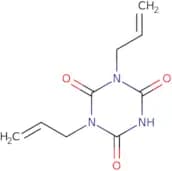
Diallyl Isocyanurate
CAS:Diallyl Isocyanurate is an aliphatic hydrocarbon and a cross-linking agent. It reacts with amines to form amides, which are the backbone of many polymers and plastics. This chemical has strong hydrogen bonding properties, making it suitable for use as a sealant. Diallyl Isocyanurate also has hydroxyl groups that can react with other compounds to form adducts or polyclonal antibodies. It is chemically stable and has a high boiling point, making it useful in radiation as a sealant.
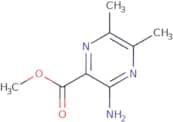
Fórmula:C9H11N3O3Pureza:Min. 95%Peso molecular:209.21 g/molMethyl 3-amino-5,6-dimethylpyrazine-2-carboxylate
CAS:Versatile small molecule scaffold
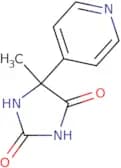
Fórmula:C8H11N3O2Pureza:Min. 95%Peso molecular:181.19 g/mol5-Methyl-5-(pyridin-4-yl)imidazolidine-2,4-dione
CAS:5-Methyl-5-(pyridin-4-yl)imidazolidine-2,4-dione is a compound that is structurally related to cisplatin. It has antibacterial activity and has been found to inhibit the growth of Escherichia coli. 5-Methyl-5-(pyridin-4-yl)imidazolidine-2,4-dione has been shown to be effective against gram positive bacteria such as Staphylococcus aureus and Streptococcus pneumoniae, but not against gram negative bacteria such as Pseudomonas aeruginosa. The molecule is an inhibitor with a broad spectrum of action. It binds to the active site of bacterial DNA gyrase, which is an enzyme that maintains the integrity of bacterial DNA by preventing supercoiling. This binding prevents the formation of an antibiotic resistant complex with the enzyme cell wall synthesis that is required for cell wall biosynthesis
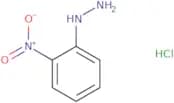
Fórmula:C9H9N3O2Pureza:Min. 95%Peso molecular:191.19 g/mol2-Nitrophenylhydrazine Hydrochloride
CAS:2-Nitrophenylhydrazine hydrochloride is a low-dose group of nonsteroidal anti-inflammatory drugs (NSAIDs) that is used as a pharmaceutical preparation for the treatment of pain and inflammation. This drug may be used in conjunction with other NSAIDs such as ibuprofen, naproxen, or diclofenac to treat more severe pain. NSAIDs inhibit the cyclooxygenase enzyme that produces prostaglandins, which are mediators of pain and inflammation. NSAIDs can also inhibit the production of certain types of cells found in the stomach lining, which can lead to ulcers. 2-Nitrophenylhydrazine hydrochloride has been shown to inhibit the formation of acid when combined with hydrochloric acid and sodium salts. It also exhibits hydrogen bonding properties.
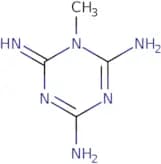
Fórmula:C6H7N3O2·HClPureza:Min. 95%Peso molecular:189.6 g/mol6-Imino-1-methyl-1,6-dihydro-1,3,5-triazine-2,4-diamine
CAS:Versatile small molecule scaffoldFórmula:C4H8N6Pureza:Min. 95%Peso molecular:140.15 g/molRef: 3D-GAA29182
Produto descontinuado4-Morpholin-4-yl-phenol
CAS:4-Morpholin-4-yl-phenol is a molecule that belongs to the class of organic compounds called morpholines. It is an intermediate in the formation of 4-morpholinoaniline. In this reaction, a nucleophilic oxygen atom (OH) reacts with an electrophilic nitrogen atom (N) and forms a tetrahedral intermediate. This intermediate then undergoes dimerization, which results in the loss of water molecules and produces a double bond between carbon atoms 3 and 4. The product of this reaction is 4-morpholin-4-yl phenol.
The kinetics of this reaction are first order with respect to both reactants. The rate constant for this reaction is 0.0029 mol/L/s at 25°C and can be calculated from the equation:
k = A[R]*[S]/(R*S)
where A is the concentration of R and S is the concentration of SFórmula:C10H13NO2Pureza:Min. 95%Peso molecular:179.22 g/mol1-(Methylamino)cyclohexanecarbonitrile
CAS:Versatile small molecule scaffold
Fórmula:C8H14N2Pureza:Min. 95%Peso molecular:138.21 g/mol6-Chloro-1-phenyl-1H,4H,5H-pyrazolo[3,4-d]pyrimidin-4-one
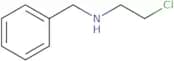
CAS:Versatile small molecule scaffoldFórmula:C11H7ClN4OPureza:Min. 95%Peso molecular:246.65 g/molN-Benzyl-N-(2-chloroethyl)amine hydrochloride
CAS:N-Benzyl-N-(2-chloroethyl)amine hydrochloride is an aniline derivative that is catalytically converted to an isocyanate. It has been used as a chiral building block for the synthesis of analogues and can be used in high yield as a regiospecific sulfone formation. The chlorosulfonyl chloride is generated in situ from triethylamine and chlorosulfonyl isocyanate, which leads to cyclic sulfones.
Fórmula:C9H13Cl2NPureza:Min. 95%Peso molecular:206.11 g/molN-Methyl-1H-pyrazolo[3,4-d]pyrimidin-4-amine
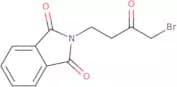
CAS:Versatile small molecule scaffoldFórmula:C6H7N5Pureza:Min. 95%Peso molecular:149.15 g/mol2-(3-Bromo-2-oxopropyl)isoindoline-1,3-dione
CAS:2-(3-Bromo-2-oxopropyl)isoindoline-1,3-dione is a methyl ester of 2-(3-bromo-2-oxopropyl)isoindoline. It is also known as 2-(2,6-dibromohexyl)-isoindoline. This compound has been used for the bromination of 1,4 dioxane and the synthesis of methyl 4-nitrobenzoate. The acid hydrochloride form has been used in the synthesis of 2-(3,5-dibromophenyl)isoindoline.Fórmula:C11H8BrNO3Pureza:Min. 95%Peso molecular:282.09 g/mol1,2-Dipropoxybenzene
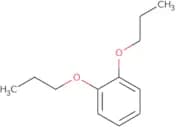
CAS:1,2-Dipropoxybenzene is a colorless liquid with a pleasant odor. It is soluble in water and insoluble in alcohol. The compound has been shown to inhibit the growth of bacteria such as Bacillus subtilis and Escherichia coli at low concentrations. This compound also has strong interactions with other compounds, such as its reaction with 1,4-dichlorobenzene to form 2,4-dichlorobenzophenone. 1,2-Dipropoxybenzene is biodegradable and has been shown to have a low toxicity for both aquatic organisms and mammals. This compound crystallizes from hot water or ethanol solution at room temperature.br>br>
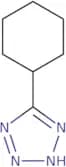
The structure of this molecule includes an aromatic ring that contains two benzene rings fused together with one oxygen atom between them. The three hydrogens on the benzene ring are not involved in any hydrogen bonding interactions; instead they are passively protonated byFórmula:C12H18O2Pureza:Min. 95%Peso molecular:194.27 g/mol5-Cyclohexyl-1H-1,2,3,4-tetrazole
CAS:Versatile small molecule scaffold
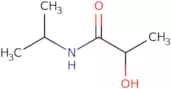
Fórmula:C7H12N4Pureza:Min. 95%Peso molecular:152.2 g/mol2-Hydroxy-N-(propan-2-yl)propanamide
CAS:Versatile small molecule scaffold
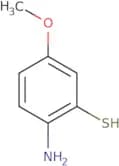
Fórmula:C6H13NO2Pureza:Min. 95%Peso molecular:131.17 g/mol2-Amino-5-methoxythiophenol
CAS:2-Amino-5-methoxythiophenol is an organic compound that is used as a fluorescent probe for the measurement of mitochondrial membrane potential. The optimal reaction conditions are 3:1 methanol to water, with a reaction time of 10 minutes at room temperature. The demethylation of 2-amino-5-methoxythiophenol yields 3-mercaptopropionic acid, which can be used as a synthetic intermediate in other organic synthesis reactions. It has been found that the ring opening of 2-amino-5-methoxythiophenol occurs through oxidation and the formation of radicals. This reaction mechanism is supported by the photophysical properties observed in its fluorescence spectrum.
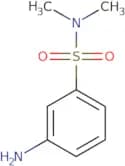
Fórmula:C7H9NOSPureza:Min. 95%Peso molecular:155.22 g/mol3-Amino-N,N-dimethyl-benzenesulfonamide
CAS:Versatile small molecule scaffold
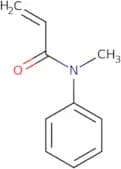
Fórmula:C8H12N2O2SPureza:Min. 95%Peso molecular:200.26 g/molN-Methyl-N-phenylprop-2-enamide
CAS:N-Methyl-N-phenylprop-2-enamide is a perfluorinated compound with acrylate functional groups. It is a monomer that can react with other compounds to form polymers. It has been shown to be useful in the production of polyacrylates, which are used in industrial and medical applications. NMPEA has a bond cleavage reaction when it reacts with triphosgene, which can lead to the formation of acrylonitrile and chlorobenzene. This type of reaction also exhibits hydrogen bonding interactions and can be activated by an amide or an alcohol.
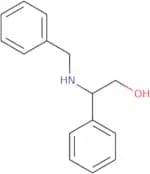
Fórmula:C10H11NOPureza:Min. 95%Peso molecular:161.2 g/mol2-(Benzylamino)-2-phenylethanol
CAS:Versatile small molecule scaffold
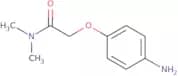
Fórmula:C15H17NOPureza:Min. 95%Peso molecular:227.3 g/mol2-(4-Aminophenoxy)-N,N-dimethylacetamide
CAS:Versatile small molecule scaffold
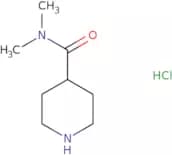
Fórmula:C10H14N2O2Pureza:Min. 95%Peso molecular:194.23 g/molPiperidine-4-carboxylic acid dimethylamide HCl
CAS:Versatile small molecule scaffold
Fórmula:C8H16N2O·HClPureza:Min. 95%Peso molecular:192.69 g/mol

![6-Chloro-1-phenyl-1H,4H,5H-pyrazolo[3,4-d]pyrimidin-4-one](/_next/image/?url=https%3A%2Fstatic.cymitquimica.com%2Fproducts%2F3D%2Fthumb-webp%2FGAA28899.webp&w=3840&q=75)
![N-Methyl-1H-pyrazolo[3,4-d]pyrimidin-4-amine](/_next/image/?url=https%3A%2Fstatic.cymitquimica.com%2Fproducts%2F3D%2Fthumb-webp%2FGAA28474.webp&w=3840&q=75)