Building Blocks
Subcategorias de "Building Blocks"
- Ácidos Borónicos e Derivados de Ácido Borónico(5.784 produtos)
- Building Blocks Quirais(1.244 produtos)
- Building Blocks Hidrocarbonetos(6.105 produtos)
- Building Blocks orgânicos(61.070 produtos)
Foram encontrados 205437 produtos de "Building Blocks"
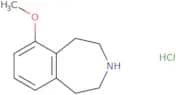
6-Methoxy-2,3,4,5-tetrahydro-1H-3-benzazepine hydrochloride
CAS:Versatile small molecule scaffold
Fórmula:C11H16ClNOPureza:Min. 95%Peso molecular:213.7 g/mol5-Methyl-2,3,4,5-tetrahydro-1H-1-benzazepine
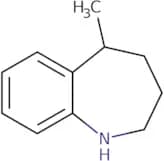
CAS:Versatile small molecule scaffold
Fórmula:C11H15NPureza:Min. 95%Peso molecular:161.24 g/molButyl benzoate
CAS:Butyl benzoate is a glycol ester that is used as a chemical solvent and as a catalyst for chemical reactions. It has been shown to be an effective catalyst for the synthesis of polymers, such as polybutylene terephthalate (PBT), from the monomers butanediol and terephthalic acid. Butyl benzoate also has been used in the production of fatty acids and pharmaceuticals, such as warfarin. The activation energy for butyl benzoate is 10.5 kJ/mol, which is higher than the activation energy for water at 10.2 kJ/mol.
Fórmula:C11H14O2Pureza:Min. 95%Peso molecular:178.23 g/mol1,2-Diethylbenzene
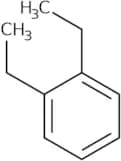
CAS:1,2-Diethylbenzene is a trifluoroacetic acid derivative that is used as an acylation agent and a solid catalyst. 1,2-Diethylbenzene has been shown to increase the energy metabolism in cultured human cells. It also influences fatty acid synthesis and nmr spectra of plant families. 1,2-Diethylbenzene was found to be safe for use in sciatic nerve regeneration in Sprague-Dawley rats with axonopathy. This chemical can also be used as an analytical reagent for the separation of urine samples by liquid chromatography methods.
Fórmula:C10H14Pureza:Min. 95%Peso molecular:134.22 g/molDiallylamine
CAS:Diallylamine is a colorless, volatile liquid that is miscible with water and most organic solvents. It is chemically stable and has a constant boiling point. Diallylamine has the ability to bind nitrogen atoms from the air and transfer them to other substances. It can also react with trifluoroacetic acid in the presence of water vapor to produce polymers and particles. This reaction mechanism is determined by structural analysis, which shows that diallylamine has an ester hydrochloride linkage between two fatty acids with hydroxyl groups on each end.
Fórmula:C8H17NPureza:Min. 95%Peso molecular:127.23 g/mol±-Amylcinnamaldehyde
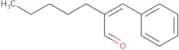
CAS:±-Amylcinnamaldehyde is a hydrocarbon that has been used as a fragrance and flavoring agent. The compound is found naturally in plants such as cinnamon, nutmeg, and cumin. It can be synthesized from acetone and benzaldehyde by the reaction of trifluoroacetic acid. ±-Amylcinnamaldehyde has been shown to stimulate growth factor production and to inhibit the growth of bacteria. This compound has also been shown to possess detergent compositions for use in detergent compositions, including hypochlorite-based detergents. The chemical structure of ±-Amylcinnamaldehyde is shown below: CH3COCH=CH2 ±-AMYLCINNAMALDEHYDE Molecular Weight: 180.25 Boiling Point: n/a Melting Point: n/a Density: 1.00 g/mL at 25°C
Fórmula:C14H18OPureza:90%MinPeso molecular:202.3 g/molN,N,3-Trimethylaniline
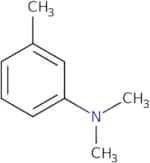
CAS:N,N,3-Trimethylaniline is a precursor for the production of 3-isopropylaniline. The compound is an isomer of trimethylamine. N,N,3-trimethylaniline undergoes cationic polymerization with acrylonitrile to produce a polyacrylonitrile. It also reacts with cellulose acetate to form cellulose nitrate. This compound has been shown to be useful in the synthesis of anthracene and peroxide. It can be used as a reagent for the demethylation of phenols and quinones.
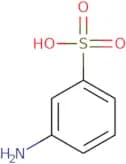
Fórmula:C9H13NPureza:Min. 95%Peso molecular:135.21 g/mol3-Aminobenzenesulfonic acid
CAS:3-Aminobenzenesulfonic acid (ABAS) is a chemical that belongs to the group of inhibitor molecules. It has been shown to be an efficient inhibitor of the enzyme carbonic anhydrase, which is essential for the conversion of CO2 to bicarbonate and protons. This inhibition causes a decrease in pH and increased thermal expansion, leading to increased permeability of water through cell walls. ABAS has also been shown to have antibacterial efficacy against bacteria such as Escherichia coli, Pseudomonas aeruginosa, and Staphylococcus aureus. Furthermore, it has been used in wastewater treatment due to its ability to break down organic matter into simpler compounds.
Fórmula:H2NC6H4SO3HPureza:Min. 95%Peso molecular:173.19 g/mol4-[(2-Sulfanyl-1H-imidazol-1-yl)methyl]phenol
CAS:Versatile small molecule scaffold
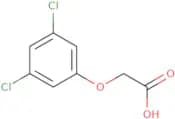
Fórmula:C10H10N2OSPureza:Min. 95%Peso molecular:206.27 g/mol2-(3,5-Dichlorophenoxy)acetic acid
CAS:2-(3,5-Dichlorophenoxy)acetic acid is an organic compound that has both a carboxylate and a hydroxyl group. It is used as an herbicide and has been shown to be effective in preventing uptake of radioactive elements by plants. 2-(3,5-Dichlorophenoxy)acetic acid can be prepared from butanoic acid and sodium chloride. The molecular formula for 2-(3,5-Dichlorophenoxy)acetic acid is CHClOOC(CHCOCH).
Fórmula:C8H6O3Cl2Pureza:Min. 95%Peso molecular:221.03 g/mol4-[Bis(2-chloroethyl)amino]benzamide
CAS:Versatile small molecule scaffold
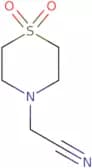
Fórmula:C11H14Cl2N2OPureza:Min. 95%Peso molecular:261.14 g/mol2-(1,1-Dioxo-1λ⁶-thiomorpholin-4-yl)acetonitrile
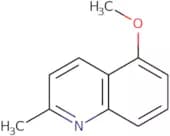
CAS:Versatile small molecule scaffoldFórmula:C6H10N2O2SPureza:Min. 95%Peso molecular:174.22 g/mol5-Methoxy-2-methylquinoline
CAS:5-Methoxy-2-methylquinoline is a condensation product of aniline and phenol. It is synthesized by the reaction of tio2 nanoparticles with ethanol solution in the presence of uv irradiation. The synthesis of 5-methoxy-2-methylquinoline may also be achieved through cyclization, which involves two steps: oxidation and reduction. This compound can be used for the preparation of photocatalysts, which are materials that absorb light and use it to produce chemical reactions. 5-Methoxy-2-methylquinoline has been shown to have antioxidant effects and this may be due to its ability to scavenge reactive oxygen species.
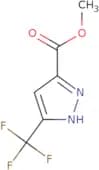
Fórmula:C11H11NOPureza:Min. 95%Peso molecular:173.21 g/molMethyl 5-(trifluoromethyl)pyrazole-3-carboxylate
CAS:Versatile small molecule scaffold
Fórmula:C6H5F3N2O2Pureza:Min. 95%Peso molecular:194.11 g/mol1,2,3,4-Tetrahydronaphthalene-1-thiol
CAS:Versatile small molecule scaffold
Fórmula:C10H12SPureza:Min. 95%Peso molecular:164.27 g/mol3-Oxo-N-(2-phenylethyl)butanamide
CAS:Versatile small molecule scaffold
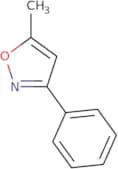
Fórmula:C12H15NO2Pureza:Min. 95%Peso molecular:205.25 g/mol5-Methyl-3-phenyl-1,2-oxazole
CAS:5-Methyl-3-phenyl-1,2-oxazole is a synthetic molecule that is postulated to be an isoxazole derivative. It has been shown to react with sodium chloride in the presence of organic solvents and hydrogen chloride to form a fluorinated salt. The reaction yield for this process was found to be low, however, the product was obtained in high purity. When irradiated or heated, 5-methyl-3-phenyl-1,2-oxazole undergoes thermal isomerization to form 3-(difluoromethyl)-5-(methyl)isoxazole.
Fórmula:C10H9NOPureza:Min. 95%Peso molecular:159.18 g/mol1-(2,2-difluoroethyl)piperidin-4-ol
CAS:Versatile small molecule scaffold
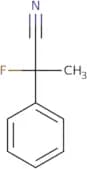
Fórmula:C7H13F2NOPureza:Min. 95%Peso molecular:165.18 g/mol2-Fluoro-2-phenylpropanenitrile
CAS:Versatile small molecule scaffold
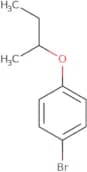
Fórmula:C9H8FNPureza:Min. 95%Peso molecular:149.16 g/mol1-Bromo-4-(butan-2-yloxy)benzene
CAS:Versatile small molecule scaffold
Fórmula:C10H13BrOPureza:Min. 95%Peso molecular:229.11 g/mol



![4-[(2-Sulfanyl-1H-imidazol-1-yl)methyl]phenol](/_next/image/?url=https%3A%2Fstatic.cymitquimica.com%2Fproducts%2F3D%2Fthumb-webp%2FVDA33364.webp&w=3840&q=75)
![4-[Bis(2-chloroethyl)amino]benzamide](/_next/image/?url=https%3A%2Fstatic.cymitquimica.com%2Fproducts%2F3D%2Fthumb-webp%2FCAA04542.webp&w=3840&q=75)