Building Blocks
Subcategorias de "Building Blocks"
- Ácidos Borónicos e Derivados de Ácido Borónico(5.784 produtos)
- Building Blocks Quirais(1.242 produtos)
- Building Blocks Hidrocarbonetos(6.105 produtos)
- Building Blocks orgânicos(61.061 produtos)
Foram encontrados 205399 produtos de "Building Blocks"
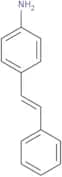
4-Aminostilbene
CAS:4-Aminostilbene is a fluorescent stilbene derivative that is used as a synthetic estrogen. It has been shown to possess anti-inflammatory properties and inhibit the production of reactive oxygen species in target tissues. 4-Aminostilbene also possesses anti-cancer properties and has been shown to be effective against Pseudomonas aeruginosa. The mechanism of action for this compound is thought to be via its ability to react with amines, forming diazonium salts in an organic solution.
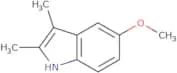
Fórmula:C14H13NPureza:Min. 95%Peso molecular:195.27 g/mol5-Methoxy-2,3-dimethyl-1H-indole
CAS:5-Methoxy-2,3-dimethyl-1H-indole is an indole that is used as a drug. It has anti-inflammatory activity and belongs to the class of intermolecular drugs. It works by inhibiting cyclooxygenase (COX) enzymes, which are involved in the synthesis of prostaglandins. 5-Methoxy-2,3-dimethyl-1H-indole can be found as crystals and has a crystal structure that contains a five membered ring with one double bond and one methyl group on each side of the ring.
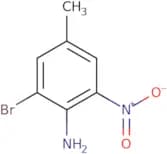
Fórmula:C11H13NOPureza:Min. 95%Peso molecular:175.23 g/mol2-Bromo-4-methyl-6-nitroaniline
CAS:Versatile small molecule scaffold
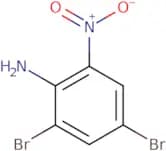
Fórmula:C7H7BrN2O2Pureza:Min. 95%Peso molecular:231.05 g/mol2,4-Dibromo-6-nitroaniline
CAS:2,4-Dibromo-6-nitroaniline is a nitro compound that has been used in the production of dyes. It is also used as a component in the synthesis of other organic compounds. 2,4-Dibromo-6-nitroaniline can be produced by electrolysis of an acid solution containing radical cations and benzene. The radical cations are formed by proton transfer from the acid to the benzene, followed by electron transfer from benzene to the electrode. This process results in the formation of nitro groups on the benzene ring, which undergoes oxidation to form 2,4-dibromo-6-nitroaniline. The cyclic voltammetry shows that this process occurs via two pathways: one with a fast rate and one with a slow rate. The mechanism for this reaction is not yet known.
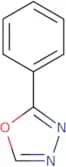
Fórmula:C6H4Br2N2O2Pureza:Min. 95%Peso molecular:295.92 g/mol2-Phenyl-1,3,4-oxadiazole
CAS:2-Phenyl-1,3,4-oxadiazole is a 2-phenyloxazole with an oxygen atom at the 1 position. It is a white crystalline solid that is soluble in water and has antibacterial properties. This chemical can be used as a catalyst for the synthesis of organic compounds. 2-Phenyl-1,3,4-oxadiazole reacts with nitro groups to form oxime derivatives and has been shown to inhibit the growth of fungi such as Candida albicans and Aspergillus niger. 2-Phenyl-1,3,4-oxadiazole can also be used as an antifungal agent against Trichophyton rubrum.
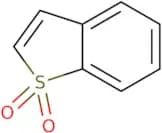
2-Phenyl-1,3,4-oxadiazole may be synthesized by reacting phenol with acetone in the presence of nitric acid or sulfuric acid. The structural formula for this compound isFórmula:C8H6N2OPureza:Min. 95%Peso molecular:146.15 g/mol1-Benzothiophene 1,1-dioxide
CAS:1-Benzothiophene 1,1-dioxide is a potential drug target for the treatment of cryptococcus neoformans. It inhibits bacterial growth by inhibiting the transport properties of the bacteria, which in turn leads to cell death. This compound has been shown to have potent antitumor activity and may be activated through x-ray diffraction data analysis. The compound also has fluorescence properties and hydrogen bond formation, which may aid in its chemical structure.
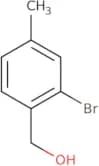
Fórmula:C8H6O2SPureza:Min. 95%Peso molecular:166.2 g/mol(2-Bromo-4-methylphenyl)methanol
CAS:Versatile small molecule scaffold
Fórmula:C8H9BrOPureza:Min. 95%Peso molecular:201.06 g/mol4H,5H-Thieno[2,3-d]pyridazin-4-one
CAS:Versatile small molecule scaffold
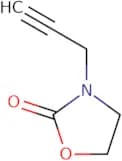
Fórmula:C6H4N2OSPureza:Min. 95%Peso molecular:152.18 g/mol3-(prop-2-yn-1-yl)oxazolidin-2-one
CAS:3-(prop-2-yn-1-yl)oxazolidin-2-one is a synthetic compound that is used as a pharmacological tool. The chemical structure of this compound closely resembles that of nucleobases and it has been shown to be a potent antiproliferative agent in cancer cell lines. 3-(prop-2-yn-1-yl)oxazolidin-2-one induces apoptosis through the activation of caspase 3 and 9, which cleaves poly(ADP ribose) polymerase (PARP). This compound also activates the DNA damage response pathway and induces G1 arrest. 3-(prop-2-yn-1-yl)oxazolidin-2-one has shown promising results in preclinical studies on animal models of breast cancer.
Fórmula:C6H7NO2Pureza:Min. 95%Peso molecular:125.13 g/mol1-Bromopentan-2-one
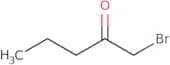
CAS:1-Bromopentan-2-one is a chemical compound that has been shown to have significant activity in the prevention of bone loss. It has also been shown to inhibit the cross-linking of collagen, which may be due to its ability to act as an amine scavenger. 1-Bromopentan-2-one is a fluorescent chemical that can be used for research purposes. It has been demonstrated to inhibit the production of lysine and lysine residues when incubated with lysines and amines, which may be due to its ability to act as an amine scavenger. This compound has been shown in model studies to inhibit biochemical reactions such as dicarbonyl formation and protein cross linking.
Fórmula:C5H9BrOPureza:Min. 95%Peso molecular:165.03 g/mol2-Hydroxycarbazole
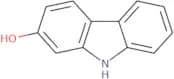
CAS:2-Hydroxycarbazole is a molecule that binds to the dinucleotide phosphate and inhibits its enzymatic activity. It has been shown to be membrane permeable and reversible, with irreversible inhibition of protein synthesis in cancer cells. 2-Hydroxycarbazole has been shown to inhibit growth factor-induced DNA synthesis in cardiac cells. This compound binds irreversibly to the ryanodine receptor, which is involved in the release of calcium from sarcoplasmic reticulum vesicles, leading to an increase in cytosolic calcium concentration. This can be done using electrochemical impedance spectroscopy on model systems.
Fórmula:C12H9NOPureza:Min. 95%Peso molecular:183.21 g/mol1-Methyl-1,4-dihydroquinolin-4-one
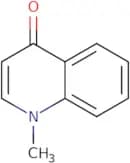
CAS:1-Methyl-1,4-dihydroquinolin-4-one is a cholinergic agent that is used in medicines. It is a hydrochloric acid salt of quinoline derivatives and exhibits clinical use as an anticholinesterase. This drug has also been shown to have locomotor activity in animals. The effective dose of 1-methyl-1,4-dihydroquinolin-4-one is 0.3mg/kg body weight (bw). This chemical has been shown to be toxic when given with radiation or echinopsidine and can inhibit protein synthesis in the cell.
Fórmula:C10H9NOPureza:Min. 95%Peso molecular:159.18 g/mol6-Iodo-2,4,5-trichlorophenol
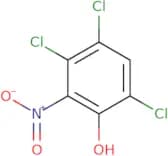
CAS:6-Iodo-2,4,5-trichlorophenol is a fungicide that inhibits fungal growth by interfering with the synthesis of ergosterol, a component of the cell membrane. This chemical can be found as pale yellow or yellow crystals and has a volatile odor. It is used in pesticides and preservatives because it has fungicidal properties. 6-Iodo-2,4,5-trichlorophenol is effective against fungi such as Aspergillus niger and Penicillium chrysogenum.
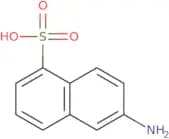
Fórmula:C6H2Cl3NO3Pureza:Min. 95%Peso molecular:242.4 g/mol2-Aminonaphthalene-5-sulfonic acid
CAS:2-Aminonaphthalene-5-sulfonic acid is a sulfonated aromatic amine that can be synthesized by reacting sodium salt of 2-naphthol with sulfur trioxide. It is a structural isomer of 1-aminoanthracene and has been used in the synthesis of other sulfonated compounds. 2-Aminonaphthalene-5-sulfonic acid has carcinogenic activity, and its use as an intermediate in chemical synthesis should be limited to short reaction times at low temperatures.
Fórmula:C10H9NO3SPureza:Min. 95%Peso molecular:223.25 g/mol2-Nitrobenzenesulfonic Acid Hydrate
CAS:2-Nitrobenzenesulfonic acid hydrate (2NBS) is a reactive, sulfonated organic compound that has been used for many years as a precursor for pharmaceuticals. 2NBS reacts with sodium carbonate to form a mixture of nitrobenzenesulfonic acids. This process is known as sulfonation and can be used for biological treatment, such as wastewater treatment. 2NBS is also known to react with styryl dye in an intramolecular hydrogen bond to form the corresponding hydroxyl group. 2NBS also has antiinflammatory activities and has been found to inhibit the inflammatory response in rat models of inflammatory bowel disease.
Fórmula:C6H5NO5S·xH2OPureza:Min. 95%Peso molecular:203.17 g/molN-[(4-Aminophenyl)sulfonyl]-N-(3,4-dimethyl-5-isoxazolyl)acetamide
CAS:N-(4-aminophenylsulfonyl)-N-(3,4-dimethyl-5-isoxazolyl)acetamide (CAS: 83833-30-1) is a small molecule antibiotic that inhibits bacterial fatty acid synthesis. It binds to the 3'-phosphoadenosine 5'-phosphosulfate (PAPS) synthetase enzyme, which is responsible for converting adenosine 5'-phosphosulfate (APS) to PAPS. This binding prevents the production of APS, blocking the synthesis of fatty acids. In addition, N-(4-aminophenylsulfonyl)-N-(3,4-dimethyl-5-isoxazolyl)acetamide is a potent inhibitor of microbial infection in vitro and in vivo. It has been shown to be effective against viruses and bacteria such as Escherichia coli and Staphylococcus aureus.
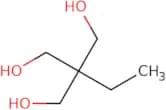
Fórmula:C13H15N3O4SPureza:Min. 95%Peso molecular:309.34 g/mol1,1,1-Tris(hydroxymethyl)propane
CAS:Tris(hydroxymethyl)propane is a diphenyl ether that has been shown to have an electrochemical impedance spectroscopy (EIS) spectrum in the human serum that is similar to those of other known antioxidants. Tris(hydroxymethyl)propane has been shown to protect against light-induced damage in human skin cells, and it also has radiation protective effects. Tris(hydroxymethyl)propane has also been shown to interact with trimethylolpropane, which is another antioxidant, and this interaction may affect the effectiveness of each agent. Tris(hydroxymethyl)propane inhibits lipid peroxidation by inhibiting the oxidation of fatty acids and hydroxyl groups on proteins.
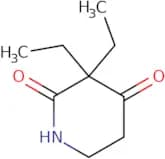
Fórmula:C6H14O3Pureza:Min. 95%Peso molecular:134.17 g/mol3,3-Diethylpiperidine-2,4-dione
CAS:3,3-Diethylpiperidine-2,4-dione is a film-forming polymer that has been shown to be effective in the treatment of infectious diseases. It is used in pharmaceutical preparations to treat symptoms of bowel disease, food composition to prevent inflammation, and as an analog to amphetamines. 3,3-Diethylpiperidine-2,4-dione binds to the hydroxyl group on human serum albumin, which prevents it from binding with sodium citrate and forming an insoluble salt. This prevents the release of calcium ions from the albumin and alleviates symptoms of infectious diseases.
Fórmula:C9H15NO2Pureza:Min. 95%Peso molecular:169.22 g/molRef: 3D-AAA07703
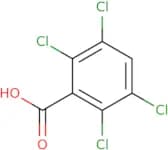
Produto descontinuado2,3,5,6-Tetrachlorobenzoic acid
CAS:Versatile small molecule scaffold
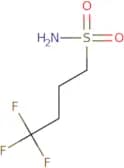
Fórmula:C7H2Cl4O2Pureza:Min. 95%Peso molecular:259.9 g/mol4,4,4-Trifluorobutane-1-sulfonamide
CAS:Versatile small molecule scaffold
Fórmula:C4H8F3NO2SPureza:Min. 95%Peso molecular:191.17 g/mol

![4H,5H-Thieno[2,3-d]pyridazin-4-one](/_next/image/?url=https%3A%2Fstatic.cymitquimica.com%2Fproducts%2F3D%2Fthumb-webp%2FAAA82423.webp&w=3840&q=75)

![N-[(4-Aminophenyl)sulfonyl]-N-(3,4-dimethyl-5-isoxazolyl)acetamide](/_next/image/?url=https%3A%2Fstatic.cymitquimica.com%2Fproducts%2F3D%2Fthumb-webp%2FAAA08074.webp&w=3840&q=75)