Building Blocks
Subcategorias de "Building Blocks"
- Ácidos Borónicos e Derivados de Ácido Borónico(5.780 produtos)
- Building Blocks Quirais(1.241 produtos)
- Building Blocks Hidrocarbonetos(6.100 produtos)
- Building Blocks orgânicos(61.023 produtos)
Foram encontrados 205289 produtos de "Building Blocks"
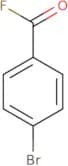
4-Bromobenzoyl fluoride
CAS:Versatile small molecule scaffold
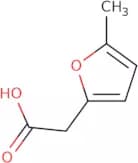
Fórmula:C7H4BrFOPureza:Min. 95%Peso molecular:203.01 g/mol2-(5-Methylfuran-2-yl)acetic acid
CAS:Versatile small molecule scaffold
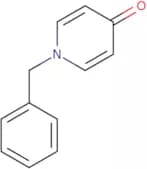
Fórmula:C7H8O3Pureza:Min. 95%Peso molecular:140.14 g/mol1-Benzylpyridin-4(1H)-one
CAS:1-Benzylpyridin-4(1H)-one is an organic compound that belongs to the group of benzyl compounds. It is a colorless oil with a sweet, floral odor. 1-Benzylpyridin-4(1H)-one is used as an intermediate in organic chemistry and reacts with alkenes, sulfoxides, and sulfides to form intermediates. It also reacts with alkynes to form triflic acid esters. The hydrolysis of this compound produces pyridine and benzaldehyde. This compound has been used in the synthesis of sulfoxide antibiotics such as cefotaxime and ceftazidime.
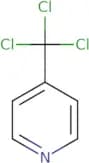
Fórmula:C12H11NOPureza:Min. 95%Peso molecular:185.22 g/mol4-(Trichloromethyl)pyridine
CAS:4-(Trichloromethyl)pyridine is an organic compound that can be used as a pesticide. It is the main active ingredient in chloropicrin, which is used primarily for agricultural purposes to help protect crops from insect damage. 4-(Trichloromethyl)pyridine has been shown to have toxic effects on animals, including humans, and may cause adverse health effects such as headaches, nausea, vomiting and dizziness. The chemical reacts with hydrogen chloride in the presence of an organic solvent to form the chlorinated derivative of 4-chloropyridinol. The reactivity of 4-(trichloromethyl)pyridine towards nucleophilic inorganic bases has also been studied and it was found that it reacts with potassium hydroxide at room temperature to form a 1:1 mixture of 4-chloropyridinol and potassium chloride.
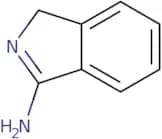
Fórmula:C6H4Cl3NPureza:Min. 95%Peso molecular:196.5 g/mol1H-Isoindol-3-amine
CAS:1H-Isoindol-3-amine is a coordination complex with a palladium atom coordinated to three active methylene ligands. It is used as an intermediate in the synthesis of organic compounds. 1H-Isoindol-3-amine can be synthesized by the reaction of sodium hydrogen with hydroxybenzoic acid, followed by the Suzuki coupling reaction with copper chloride and an aryl chloride. The coordination chemistry between 1H-Isoindol-3-amine and palladium has been studied using viscosity measurements and X-ray diffraction data. The coordination complexes are usually based on aryl chlorides, which are electron rich, electron deficient, or electrophilic. The reaction mechanism for 1H-Isoindol-3-amine has been recorded.
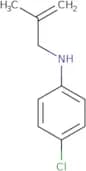
Fórmula:C8H8N2Pureza:Min. 95%Peso molecular:132.16 g/mol4-Chloro-N-(2-methylprop-2-en-1-yl)aniline
CAS:Versatile small molecule scaffold
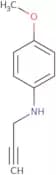
Fórmula:C10H12ClNPureza:Min. 95%Peso molecular:181.66 g/mol4-Methoxy-N-(prop-2-yn-1-yl)aniline
CAS:Versatile small molecule scaffold
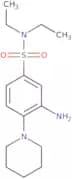
Fórmula:C10H11NOPureza:Min. 95%Peso molecular:161.2 g/mol3-Amino-N,N-diethyl-4-piperidin-1-yl-benzenesulfonamide
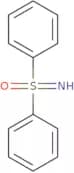
CAS:Versatile small molecule scaffoldFórmula:C15H25N3O2SPureza:Min. 95%Peso molecular:311.4 g/molS,S-Diphenyl-sulfoximine
CAS:S,S-Diphenyl sulfoximine is a sulfoxide with the chemical formula C6H6O2S. It has been used as a synthetic intermediate for the production of other chemicals. S,S-Diphenyl sulfoximine is also an efficient method for methylation reactions in organic solvents and radical coupling. In addition, it can be used to form functional groups with the functional theory and its analogs have been used as control experiments. S,S-Diphenyl sulfoximine is monosubstituted by two phenyl groups.
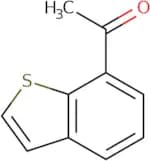
Fórmula:C12H11NOSPureza:Min. 95%Peso molecular:217.29 g/mol1-(1-Benzothiophen-7-yl)ethan-1-one
CAS:Versatile small molecule scaffold
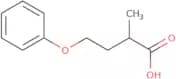
Fórmula:C10H8OSPureza:Min. 95%Peso molecular:176.24 g/mol2-Methyl-4-phenoxybutanoic acid
CAS:Versatile small molecule scaffold
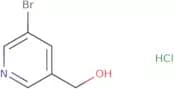
Fórmula:C11H14O3Pureza:Min. 95%Peso molecular:194.23 g/mol(5-bromopyridin-3-yl)methanol hcl
CAS:Versatile small molecule scaffold
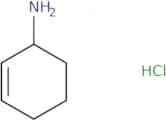
Fórmula:C6H7BrClNOPureza:Min. 95%Peso molecular:224.48 g/molCyclohex-2-en-1-amine hydrochloride
CAS:Versatile small molecule scaffold
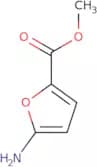
Fórmula:C6H12ClNPureza:Min. 95%Peso molecular:133.62 g/molMethyl 5-amino-2-furoate
CAS:Methyl 5-amino-2-furoate is a nitrofuran that is used as a reagent in the synthesis of other compounds. It has been shown to be metabolized by acetylation, hydrazine, and reduction. Methyl 5-amino-2-furoate can also act as an inhibitor of xanthine oxidase and xanthine dehydrogenase. The compound has been shown to inhibit the production of xanthine and aminofuran in an incubated system containing these enzymes. Spectrometry analysis showed that methyl 5-amino-2-furoate was reduced to form methyl 2,5-dihydroxybenzoate during incubation with xanthine oxidase and xanthine dehydrogenase.
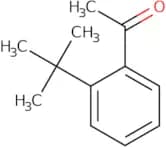
Fórmula:C6H7NO3Pureza:Min. 95%Peso molecular:141.13 g/mol1-(2-tert-Butylphenyl)ethan-1-one
CAS:Versatile small molecule scaffold
Fórmula:C12H16OPureza:Min. 95%Peso molecular:176.25 g/molRef: 3D-XAA58361
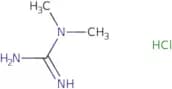
Produto descontinuado1,1-Dimethylguanidine hydrochloride
CAS:1,1-Dimethylguanidine hydrochloride is an oxadiazole derivative that is used in the treatment of bacterial infections. It is a competitive inhibitor of bacterial leukocyte-mediated killing of bacteria and inhibits the growth of staphylococcal and staphylococcus aureus isolates. In vitro, 1,1-dimethylguanidine hydrochloride has been shown to inhibit the growth of gram-positive bacteria by binding to their cell wall. This drug also has a kinetic effect on leukocytes, which may be due to its ability to inhibit the release of reactive oxygen species from these cells.
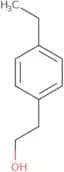
Fórmula:C3H10ClN3Pureza:Min. 95%Peso molecular:123.58 g/mol2-(4-Ethylphenyl)ethan-1-ol
CAS:Versatile small molecule scaffold
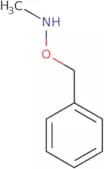
Fórmula:C10H14OPureza:Min. 95%Peso molecular:150.22 g/mol(Benzyloxy)(methyl)amine
CAS:Benzyloxy(methyl)amine (BMA) is a potent inhibitor of oligosaccharide synthesis. BMA has been shown to inhibit cellular growth in a variety of cell culture assays. It also inhibits proton-dependent biosynthesis, which is the mechanism by which cells produce energy. BMA binds to protonated dinucleotide phosphate and has been shown to induce cancer cell death by inhibiting protein synthesis.
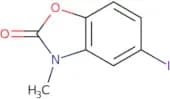
Fórmula:C8H11NOPureza:Min. 95%Peso molecular:137.18 g/mol5-Iodo-3-methyl-2,3-dihydro-1,3-benzoxazol-2-one
CAS:Versatile small molecule scaffold
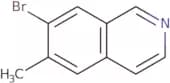
Fórmula:C8H6INO2Pureza:Min. 95%Peso molecular:275.04 g/mol7-Bromo-6-methylisoquinoline
CAS:Versatile small molecule scaffold
Fórmula:C10H8BrNPureza:Min. 95%Peso molecular:222.08 g/mol