Building Blocks
Subcategorias de "Building Blocks"
- Ácidos Borónicos e Derivados de Ácido Borónico(5.780 produtos)
- Building Blocks Quirais(1.241 produtos)
- Building Blocks Hidrocarbonetos(6.100 produtos)
- Building Blocks orgânicos(61.017 produtos)
Foram encontrados 205265 produtos de "Building Blocks"
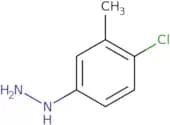
(4-Chloro-3-methyl-phenyl)-hydrazine
CAS:Versatile small molecule scaffold
Fórmula:C7H9ClN2Pureza:Min. 95%Peso molecular:156.62 g/mol{Bicyclo[4.1.0]heptan-1-yl}methanol
CAS:Versatile small molecule scaffold
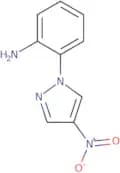
Fórmula:C8H14OPureza:Min. 95%Peso molecular:126.2 g/mol2-(4-Nitro-1H-pyrazol-1-yl)aniline
CAS:Versatile small molecule scaffold
Fórmula:C9H8N4O2Pureza:Min. 95%Peso molecular:204.19 g/mol5-Methyl-4H,7H-thieno[3,2-b]pyridin-7-one
CAS:Versatile small molecule scaffold
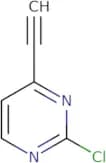
Fórmula:C8H7NOSPureza:Min. 95%Peso molecular:165.21 g/mol2-Chloro-4-ethynylpyrimidine
CAS:2-Chloro-4-ethynylpyrimidine is a chemical compound that belongs to the family of meridianins. It has been shown to have medicinal properties, and is used in the treatment of trypanosomiasis. This molecule also has physicochemical properties that warrant further investigation. Optimization studies have shown that 2-chloro-4-ethynylpyrimidine can be synthesized with yields of up to 76% using nitrosoarenes as reactants.
Fórmula:C6H3ClN2Pureza:Min. 95%Peso molecular:138.55 g/molEthyl 4-chloro-1-methyl-1H-pyrazolo[3,4-b]pyridine-5-carboxylate
CAS:Versatile small molecule scaffold
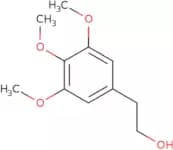
Fórmula:C10H10ClN3O2Pureza:Min. 95%Peso molecular:239.66 g/mol2-(3,4,5-Trimethoxyphenyl)ethanol
CAS:Produto Controlado2-(3,4,5-Trimethoxyphenyl)ethanol is a conjugate of 3,4,5-trimethoxybenzaldehyde and ethanol. It has shown in vitro antifungal activity against Candida strains and antibacterial activity against Escherichia coli and Staphylococcus aureus. 2-(3,4,5-Trimethoxyphenyl)ethanol can be used as an antifungal agent in the treatment of fungal infections. It has also been shown to act as an acetoacetate receptor for the conversion of acetoacetate into acetoacetyl CoA during fatty acid synthesis. This compound has also been used in the synthesis of mescaline.
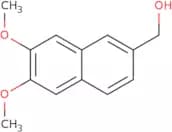
Fórmula:C11H16O4Pureza:Min. 95%Peso molecular:212.24 g/mol(6,7-Dimethoxynaphthalen-2-yl)methanol
CAS:Versatile small molecule scaffold
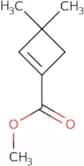
Fórmula:C13H14O3Pureza:Min. 95%Peso molecular:218.25 g/mol1-Cyclobutene-1-carboxylic acid, 3,3-dimethyl-, methyl ester
CAS:Versatile small molecule scaffold
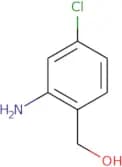
Fórmula:C8H12O2Pureza:Min. 95%Peso molecular:140.18 g/mol(2-amino-4-chlorophenyl)methanol
CAS:Ruthenium-based catalysts can be used for the synthesis of 2-amino-4-chlorophenylmethanol. This catalyst is a sustainable, low cost, and efficient solution to many industrial chemical production problems. The catalyst utilizes magnetic nanoparticles that are inexpensive and easy to produce. It also has a short reaction time, which helps to increase efficiency. The oxidation of this compound produces hydrogen peroxide as an oxidant, which reduces the need for other oxidizing agents in the reaction.
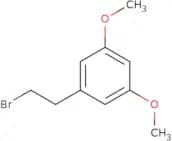
Fórmula:C7H8ClNOPureza:Min. 95%Peso molecular:157.6 g/mol1-(2-Bromoethyl)-3,5-dimethoxybenzene
CAS:Versatile small molecule scaffold
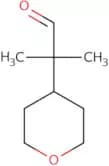
Fórmula:C10H13BrO2Pureza:Min. 95%Peso molecular:245.11 g/mol2-Methyl-2-(oxan-4-yl)propanal
CAS:Versatile small molecule scaffold
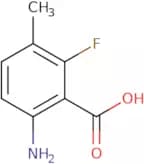
Fórmula:C9H16O2Pureza:Min. 95%Peso molecular:156.22 g/mol6-Amino-2-fluoro-3-methylbenzoic acid
CAS:Versatile small molecule scaffold
Fórmula:C8H8FNO2Pureza:Min. 95%Peso molecular:169.15 g/mol4-Methyl-3-nitrobenzoic acid
CAS:4-Methyl-3-nitrobenzoic acid is a fine chemical that is used as a building block in the synthesis of complex compounds. It is often used as a reagent or speciality chemical, and it has a CAS number of 96-98-0. 4-Methyl-3-nitrobenzoic acid can be react with other chemicals to form useful intermediates or scaffolds for larger molecules. This chemical is versatile and can be used in many different reactions.
Fórmula:C8H7NO4Pureza:Min. 98.0 Area-%Peso molecular:181.15 g/molRef: 3D-M-4217
Produto descontinuadotert-Butyl 3-[(2E)-3-(dimethylamino)prop-2-enoyl]azetidine-1-carboxylate
CAS:Tert-butyl 3-[(2E)-3-(dimethylamino)prop-2-enoyl]azetidine-1-carboxylate (TBAC) is an inhibitor of endocannabinoid synthesis. It has been shown to be a potent and selective inhibitor of the enzyme monoacylglycerol lipase, which is responsible for the hydrolysis of the 2-arachidonoylglycerol (2AG). TBAC has been demonstrated to have proinflammatory properties, with efficacy against cellular and proinflammatory effects. This drug also inhibits lipolysis through inhibition of the enzyme phospholipase A2, thereby reducing prostaglandin production.Fórmula:C13H22N2O3Pureza:Min. 95%Peso molecular:254.33 g/mol6-Ethynylpyridine-3-carbonitrile
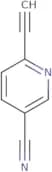
CAS:Versatile small molecule scaffold
Fórmula:C8H4N2Pureza:Min. 95%Peso molecular:128.13 g/molBenzyl 4-((chlorosulfonyl)methyl)piperidine-1-carboxylate
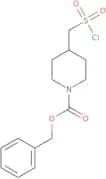
CAS:Versatile small molecule scaffold
Fórmula:C14H18ClNO4SPureza:Min. 95%Peso molecular:331.82 g/mol3-Cyclopropoxybenzoic acid
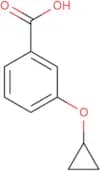
CAS:Versatile small molecule scaffold
Fórmula:C10H10O3Pureza:Min. 95%Peso molecular:178.18 g/mol4-Methoxy-3-methylpyridine-2-carboxylic acid
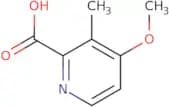
CAS:Versatile small molecule scaffold
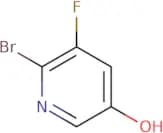
Fórmula:C8H9NO3Pureza:Min. 95%Peso molecular:167.16 g/mol6-Bromo-5-fluoropyridin-3-ol
CAS:Versatile small molecule scaffold
Fórmula:C5H3BrFNOPureza:Min. 95%Peso molecular:191.99 g/mol

![{Bicyclo[4.1.0]heptan-1-yl}methanol](/_next/image/?url=https%3A%2Fstatic.cymitquimica.com%2Fproducts%2F3D%2Fthumb-webp%2FMCA60935.webp&w=3840&q=75)
![5-Methyl-4H,7H-thieno[3,2-b]pyridin-7-one](/_next/image/?url=https%3A%2Fstatic.cymitquimica.com%2Fproducts%2F3D%2Fthumb-webp%2FMBA98604.webp&w=3840&q=75)
![Ethyl 4-chloro-1-methyl-1H-pyrazolo[3,4-b]pyridine-5-carboxylate](/_next/image/?url=https%3A%2Fstatic.cymitquimica.com%2Fproducts%2F3D%2Fthumb-webp%2FMBA80157.webp&w=3840&q=75)

![tert-Butyl 3-[(2E)-3-(dimethylamino)prop-2-enoyl]azetidine-1-carboxylate](/_next/image/?url=https%3A%2Fstatic.cymitquimica.com%2Fproducts%2F3D%2Fthumb-webp%2FLZB86177.webp&w=3840&q=75)