Building Blocks
Subcategorias de "Building Blocks"
- Ácidos Borónicos e Derivados de Ácido Borónico(5.774 produtos)
- Building Blocks Quirais(1.237 produtos)
- Building Blocks Hidrocarbonetos(6.098 produtos)
- Building Blocks orgânicos(60.970 produtos)
Foram encontrados 205134 produtos de "Building Blocks"
1,1-Dimethylethyl 4-[3-[[4-[[[2-[(2S)-2-cyano-4,4-difluoro-1-pyrrolidinyl]-2-oxoethyl]amino]carbonyl]-6-quinolinyl]methylamino]propy l]-1-piperazinecarboxylate
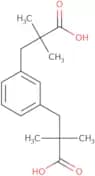
CAS:Please enquire for more information about 1,1-Dimethylethyl 4-[3-[[4-[[[2-[(2S)-2-cyano-4,4-difluoro-1-pyrrolidinyl]-2-oxoethyl]amino]carbonyl]-6-quinolinyl]methylamino]propy l]-1-piperazinecarboxylate including the price, delivery time and more detailed product information at the technical inquiry form on this pageFórmula:C30H39F2N7O4Pureza:Min. 95%Peso molecular:599.67 g/mol±,±,±²,±²-Tetramethyl-1,3-benzenedipropionic acid
CAS:Versatile small molecule scaffold
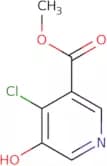
Fórmula:C16H22O4Pureza:Min. 95%Peso molecular:278.34 g/molMethyl 4-chloro-5-hydroxy-3-pyridinecarboxylate
CAS:Versatile small molecule scaffold
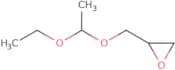
Fórmula:C7H6ClNO3Pureza:Min. 95%Peso molecular:187.58 g/mol2,3-Epoxy-1-(1-ethoxyethoxy)propane
CAS:2,3-Epoxy-1-(1-ethoxyethoxy)propane is a water-insoluble solid that has been shown to form stable complexes with metal ions. It is soluble in hydrochloric acid and is polymerized by cationic polymerization. 2,3-Epoxy-1-(1-ethoxyethoxy)propane reacts with the hydroxyl group of polymers to produce epoxides. The epoxide ring can be opened to produce ethers or oxiranes through ring opening reactions. 2,3-Epoxy-1-(1-ethoxyethoxy)propane is an acidic compound and reacts with water vapor to form hydroxy groups. This compound can also be synthesized by transfer reactions from 1,2,4,5-tetrahydrobenzene and ethylene oxide.Fórmula:C7H14O3Pureza:Min. 95%Peso molecular:146.18 g/mol4-(Dibromomethyl)-2(1H)-quinolinone
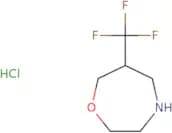
CAS:Please enquire for more information about 4-(Dibromomethyl)-2(1H)-quinolinone including the price, delivery time and more detailed product information at the technical inquiry form on this pageFórmula:C10H7Br2NOPureza:Min. 95%Peso molecular:316.98 g/mol6-(Trifluoromethyl)-1,4-oxazepane hydrochloride
CAS:Please enquire for more information about 6-(Trifluoromethyl)-1,4-oxazepane hydrochloride including the price, delivery time and more detailed product information at the technical inquiry form on this pageFórmula:C6H10F3NO•HClPureza:Min. 95%Peso molecular:205.61 g/mol4-[(1,1-Dimethylethoxy)carbonyl]-2-thiomorpholineacetic acid
CAS:Please enquire for more information about 4-[(1,1-Dimethylethoxy)carbonyl]-2-thiomorpholineacetic acid including the price, delivery time and more detailed product information at the technical inquiry form on this page
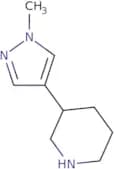
Fórmula:C11H19NO4SPureza:Min. 95%Peso molecular:261.34 g/mol3-(1-Methyl-1H-pyrazol-4-yl)piperidine
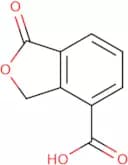
CAS:Versatile small molecule scaffoldFórmula:C9H15N3Pureza:Min. 95%Peso molecular:165.24 g/mol1-Oxo-1,3-dihydro-2-benzofuran-4-carboxylic acid
CAS:Versatile small molecule scaffold
Fórmula:C9H6O4Pureza:Min. 95%Peso molecular:178.14 g/mol2-(tert-Butoxycarbonyl)-2-azaspiro[4.5]decane-8-carboxylic acid
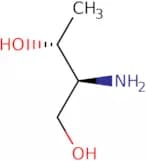
CAS:Versatile small molecule scaffoldFórmula:C15H25NO4Pureza:Min. 95%Peso molecular:283.36 g/molD-allo-Threoninol
CAS:D-allo-Threoninol is a conformational analogue of threonine. It has been shown to inhibit the growth of Escherichia coli, Bacillus subtilis, and Staphylococcus aureus in vitro. D-allo-Threoninol binds to the enzyme methionine adenosyltransferase (MAT) by forming hydrogen bonds with its amino acid side chains. This binding prevents the formation of the MAT-coenzyme A complex, inhibiting protein synthesis and cell division.Fórmula:C4H11NO2Pureza:Min. 95%Cor e Forma:PowderPeso molecular:105.14 g/mol[3-Fluoro-4-(1H-imidazol-1-yl)phenyl]methanamine
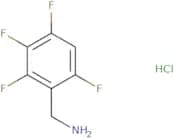
CAS:Versatile small molecule scaffoldFórmula:C10H10FN3Pureza:Min. 95%Peso molecular:191.2 g/mol2,3,4,6-Tetrafluorobenzylamine hydrochloride
CAS:2,3,4,6-Tetrafluorobenzylamine hydrochloride is a fluorescent organic dye that binds to the antibody and can be used as a research tool for studying protein interactions. 2,3,4,6-Tetrafluorobenzylamine hydrochloride is also an inhibitor of the ion channel TRPV1. This compound has been shown to be a ligand and activator of nicotinic acetylcholine receptors. It binds to the receptor with high affinity and is an excellent fluorescent probe for covalent labeling of peptides and proteins.
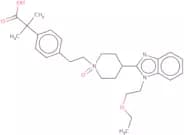
Fórmula:C7H6ClF4NPureza:Min. 95%Peso molecular:215.57 g/moltrans-Bilastine N-oxide
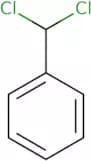
CAS:Please enquire for more information about trans-Bilastine N-oxide including the price, delivery time and more detailed product information at the technical inquiry form on this pageFórmula:C28H37N3O4Pureza:Min. 95%Peso molecular:479.61 g/molBenzal Chloride
CAS:Produto ControladoBenzal Chloride is a chlorinating agent that exhibits reactive properties. It is used in wastewater treatment to disinfect and oxidize organic matter, as well as to remove hydrogen sulfide and other volatile organics. Benzal Chloride is also used for the preparation of benzalkonium chloride, which has been shown to have antimicrobial properties. The pharmacokinetic properties of benzal chloride are similar to those of chloride, but it has not been studied extensively in humans.Fórmula:C7H6Cl2Pureza:Min. 95%Cor e Forma:Clear LiquidPeso molecular:161.03 g/mol6-Bromocinnolin-4-ol
CAS:Versatile small molecule scaffoldFórmula:C8H5BrN2OPureza:Min. 95%Peso molecular:225.04 g/molPyr-Gln-OH trifluoroacetate
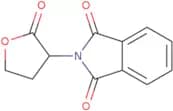
CAS:Please enquire for more information about Pyr-Gln-OH trifluoroacetate including the price, delivery time and more detailed product information at the technical inquiry form on this pageFórmula:C10H15N3O5•(C2HF3O2)xPureza:Min. 95%2-(2-Oxotetrahydrofuran-3-yl)-1H-isoindole-1,3(2H)-dione
CAS:Versatile small molecule scaffoldFórmula:C12H9NO4Pureza:Min. 95%Peso molecular:231.2 g/molMacaridine
CAS:Please enquire for more information about Macaridine including the price, delivery time and more detailed product information at the technical inquiry form on this page
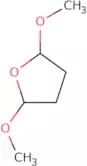
Fórmula:C13H13NO2Pureza:Min. 95%Peso molecular:215.25 g/mol2,5-Dimethoxytetrahydrofuran
CAS:2,5-Dimethoxytetrahydrofuran is an organic compound that can be synthesized from 2,5-dimethoxybenzaldehyde and tetrahydrofuran. The asymmetric synthesis of this compound was first reported in 1968. The nmr spectrum of 2,5-dimethoxytetrahydrofuran shows two signals at δ 5.89 and δ 7.03 ppm. This compound is soluble in water and organic solvents such as dichloromethane, benzene, toluene, chloroform, and methanol. 2,5-Dimethoxytetrahydrofuran has been shown to have pain-relieving effects using the formalin test in mice and rats. It also has antineoplastic properties when used with other quinoline derivatives.br>br> 2,5-Dimethoxytetrahydrofuran is a white solid
Fórmula:C6H12O3Pureza:Min. 95%Cor e Forma:PowderPeso molecular:132.16 g/mol
![1,1-Dimethylethyl 4-[3-[[4-[[[2-[(2S)-2-cyano-4,4-difluoro-1-pyrrolidinyl]-2-oxoethyl]amino]carbon…](/_next/image/?url=https%3A%2Fstatic.cymitquimica.com%2Fproducts%2F3D%2Fthumb-webp%2FFD184138.webp&w=3840&q=75)

![4-[(1,1-Dimethylethoxy)carbonyl]-2-thiomorpholineacetic acid](/_next/image/?url=https%3A%2Fstatic.cymitquimica.com%2Fproducts%2F3D%2Fthumb-webp%2FFD183547.webp&w=3840&q=75)
![2-(tert-Butoxycarbonyl)-2-azaspiro[4.5]decane-8-carboxylic acid](/_next/image/?url=https%3A%2Fstatic.cymitquimica.com%2Fproducts%2F3D%2Fthumb-webp%2FNEC38187.webp&w=3840&q=75)
![[3-Fluoro-4-(1H-imidazol-1-yl)phenyl]methanamine](/_next/image/?url=https%3A%2Fstatic.cymitquimica.com%2Fproducts%2F3D%2Fthumb-webp%2FBNB90714.webp&w=3840&q=75)