Building Blocks
Subcategorias de "Building Blocks"
- Ácidos Borónicos e Derivados de Ácido Borónico(5.778 produtos)
- Building Blocks Quirais(1.243 produtos)
- Building Blocks Hidrocarbonetos(6.099 produtos)
- Building Blocks orgânicos(61.038 produtos)
Foram encontrados 205376 produtos de "Building Blocks"
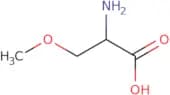
2-Amino-3-methoxypropanoic acid hydrochloride
CAS:2-Amino-3-methoxypropanoic acid hydrochloride is a mitochondrial enzyme inhibitor that is used as a research tool to study protein synthesis. It binds to the cytochrome b2 subunit of the mitochondrial respiratory chain, inhibiting the oxidation of pyruvate and affecting the production of ATP. 2-Amino-3-methoxypropanoic acid hydrochloride has been shown to induce apoptosis in human liver cells by triggering caspase 3, which is an important enzyme in the apoptotic pathway. 2-Amino-3-methoxypropanoic acid hydrochloride also has a number of chemical properties that make it useful for analytical chemistry. For example, 2-amino-3-methoxypropanoic acid hydrochloride can be used to measure carboxylic acids, acetylation reactions, hydrogen bonds and hydroxyl groups. It can also be used as a nucle
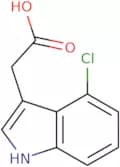
Fórmula:C4H10ClNO3Pureza:Min. 95%Peso molecular:155.58 g/mol4-Chloroindole-3-acetic acid
CAS:4-Chloroindole-3-acetic acid is a fine chemical that is used as a building block in the synthesis of complex compounds. It is also used as a reagent and speciality chemical. The compound is versatile and can be used as a reaction component or as an intermediate to produce useful scaffolds. 4-Chloroindole-3-acetic acid has been shown to be effective in the synthesis of certain pharmaceuticals, such as antipsychotics, antidepressants, and antihistamines. It has also been shown to have antiviral properties against HIV and HSV viruses.Fórmula:C10H8ClNO2Pureza:Min. 95.0 Area-%Peso molecular:209.63 g/molRef: 3D-C-4325
1gA consultar5gA consultar10gA consultar25gA consultar2500mgA consultar-Unit-ggA consultar3-(p-tolyl)propiolic acid
CAS:3-(p-tolyl)propiolic acid is a functional group that is used in organic chemistry. It is an alkynoic acid with a terminal triple bond. The compound can be synthesized by the reaction of propiolic acid with an alkyne, followed by oxidation. The 3-(p-tolyl)propiolic acid can be used as a surrogate for other functional groups in organic synthesis, and it has been shown to react as an oxidant in biomolecular systems.Fórmula:C10H8O2Pureza:Min. 95%Peso molecular:160.17 g/mol5-Bromo-2,4-dimethoxypyridine
CAS:Versatile small molecule scaffoldFórmula:C7H8BrNO2Pureza:Min. 95%Peso molecular:218.05 g/moltert-Butyl 4-(5-aminoisoxazol-3-yl)piperidine-1-carboxylate
CAS:Versatile small molecule scaffoldFórmula:C13H21N3O3Pureza:Min. 95%Peso molecular:267.32 g/mol[Ir{dFCF3ppy}2(bpy)]PF6
CAS:Iridium(III) bis-(2-phenylpyridine) (Ir{dFCF3ppy}2(bpy)) is a monomeric amido ligand that can be used in polymerization processes. It has an average molecular weight of 185.8 and a transition temperature of -55°C. Ir{dFCF3ppy}2(bpy) is soluble in organic solvents such as chloroform and acetone and will react with amines, anionic sites, and cycloalkyl groups to form polymers. The yields of the polymerization process are dependent on the starting materials used.Fórmula:C34H18F16IrN4PPureza:Min. 95%Peso molecular:1,009.7 g/moltert-butyl 2,5-diazabicyclo[4.1.0]heptane-2-carboxylate
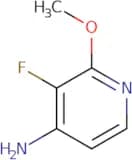
CAS:Versatile small molecule scaffoldFórmula:C10H18N2O2Pureza:Min. 95%Peso molecular:198.3 g/mol3-Fluoro-2-methoxypyridin-4-amine
CAS:Versatile small molecule scaffoldFórmula:C6H7FN2OPureza:Min. 95%Peso molecular:142.13 g/mol3,3²-Dithiobis(propionitrile)
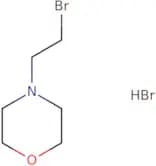
CAS:3,3²-Dithiobis(propionitrile) is a molecule that includes sodium hydroxide solution and acrylonitrile. It reacts with 3-mercaptopropionic acid to form sodium hydrogen ester compounds. This reaction takes place in a sealed container and is catalyzed by carbonic and hydrochloric acids. The product of this reaction is 3-thiocyanatoacrylic acid.Fórmula:C6H8N2S2Pureza:Min. 95%Peso molecular:172.27 g/mol4-(2-Bromoethyl)morpholine hydrobromide
CAS:4-(2-Bromoethyl)morpholine hydrobromide is a solvent that is used as an agent in the production of other chemicals. It is a colorless, crystalline solid with a constant melting point of 130 to 131 degrees Celsius. 4-(2-Bromoethyl)morpholine hydrobromide is soluble in acetone, ethanol, ether, and water. This chemical has been shown to be toxic and should be handled with care.
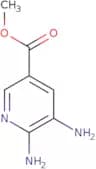
Fórmula:C6H13Br2NOPureza:Min. 95%Peso molecular:274.98 g/molMethyl 5,6-diaminopyridine-3-carboxylate
CAS:Versatile small molecule scaffoldFórmula:C7H9N3O2Pureza:Min. 95%Peso molecular:167.17 g/mol5-Bromo-3-(difluoromethyl)pyridine-2-carboxylic acid
CAS:Versatile small molecule scaffoldFórmula:C7H4BrF2NO2Pureza:Min. 95%Peso molecular:252.01 g/molMethyl 3-oxoisoindoline-5-carboxylate
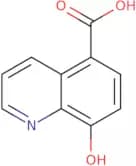
CAS:Versatile small molecule scaffoldFórmula:C10H9NO3Pureza:Min. 95%Peso molecular:191.18 g/molJMJD2 Inhibitor, 5-carboxy-8HQ
CAS:JMJD2 is an enzyme that catalyzes the methylation of histone H3 at lysine 27. JMJD2 inhibitors are compounds that inhibit JMJD2 activity, which may be used to treat cancer. This class of drugs inhibits the activity of JMJD2 by binding to the active site and blocking the substrate from entering. The most potent compound in this class, 5-carboxy-8HQ, has been shown to have antibacterial efficacy in a squamous cell carcinoma model system and up-regulated expression in wild-type cells. Additionally, this compound has been shown to significantly inhibit tumor growth in a mouse model of atherosclerotic lesion.Fórmula:C10H7NO3Pureza:Min. 95%Peso molecular:189.17 g/mol2,3-Dihydro-1H-pyrrolo[3,2-c]pyridine hydrochloride
CAS:Versatile small molecule scaffoldFórmula:C7H8N2·HClPureza:Min. 95%Peso molecular:156.62 g/mol5-Methyl-3-oxo-hexanoic acid methyl ester
CAS:Versatile small molecule scaffoldFórmula:C8H14O3Pureza:Min. 95%Peso molecular:158.2 g/mol2,6-Dichloro-4-methoxyaniline
CAS:2,6-Dichloro-4-methoxyaniline is a chemical that belongs to the group of methyl derivatives. It is used as an industrial chemical and as a precursor to other chemicals in the production of pesticides, herbicides, and other products. 2,6-Dichloro-4-methoxyaniline can be found in brominated flame retardants and phenolic resins. It is also present in pentachlorophenol (PCP) and hydroxylated congeners. 2,6-Dichloro-4-methoxyaniline has been detected in humans at levels ranging from 10 to 100 parts per billion. The chemical structure of 2,6-dichloro-4-methoxyaniline is similar to that of triclosan, which has been shown to have antimicrobial activity against bacteria such as Staphylococcus aureus and EscherichFórmula:C7H7Cl2NOPureza:Min. 95%Peso molecular:192.04 g/mol2,4-Dichloropyrido [2,3-D] pyrimidine
CAS:2,4-Dichloropyrido [2,3-D] pyrimidine is a regioselective chlorination agent that can be used for the synthesis of various organic compounds. It is often used in cross-coupling reactions to form carbon-carbon bonds. 2,4-Dichloropyrido [2,3-D] pyrimidine has been shown to give high yields and is selective for disubstituted or monosubstituted substrates. This compound is also useful for the functionalization of C-H bonds via palladium-catalyzed coupling reactions.
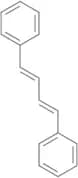
Fórmula:C7H3Cl2N3Pureza:Min. 95%Cor e Forma:White PowderPeso molecular:200.02 g/moltrans,trans-1,4-Diphenyl-1,3-butadiene
CAS:Used in the preparation of metal-diene reagents (e.g. for carbocyclization)
Fórmula:C16H14Pureza:Min. 95%Peso molecular:206.28 g/mol(2S)-3-Hydroxy-2-phenylpropanoic acid
CAS:(2S)-3-Hydroxy-2-phenylpropanoic acid is an unlabelled, naturally occurring compound. It is the citric acid analog of L-phenylalanine. The structure of (2S)-3-Hydroxy-2-phenylpropanoic acid is a skeleton that consists of one hydroxyl group and one carboxylic acid group. The carboxylic acid group has a double bond in the alpha position to the carboxyl carbon, which gives this molecule an acidic character. The chloride ion is also present in this structure. This molecule can be synthesized by a kinetic reaction that involves fatty acids and brugmansia as catalysts. It can also be synthesized through a catalysed reaction using thionyl chloride as a catalyst.Fórmula:C9H10O3Pureza:Min. 95%Peso molecular:166.17 g/mol



![[Ir{dFCF3ppy}2(bpy)]PF6](/_next/image/?url=https%3A%2Fstatic.cymitquimica.com%2Fproducts%2F3D%2Fthumb-webp%2FSTB77562.webp&w=3840&q=75)
![tert-butyl 2,5-diazabicyclo[4.1.0]heptane-2-carboxylate](/_next/image/?url=https%3A%2Fstatic.cymitquimica.com%2Fproducts%2F3D%2Fthumb-webp%2FDZB67518.webp&w=3840&q=75)



![2,3-Dihydro-1H-pyrrolo[3,2-c]pyridine hydrochloride](/_next/image/?url=https%3A%2Fstatic.cymitquimica.com%2Fproducts%2F3D%2Fthumb-webp%2FFAA91219.webp&w=3840&q=75)

![2,4-Dichloropyrido [2,3-D] pyrimidine](/_next/image/?url=https%3A%2Fstatic.cymitquimica.com%2Fproducts%2F3D%2Fthumb-webp%2FFD31600.webp&w=3840&q=75)