


Building Blocks
Subcategorias de "Building Blocks"
- Ácidos Borónicos e Derivados de Ácido Borónico(5.774 produtos)
- Building Blocks Quirais(1.237 produtos)
- Building Blocks Hidrocarbonetos(6.098 produtos)
- Building Blocks orgânicos(60.970 produtos)
Foram encontrados 205134 produtos de "Building Blocks"
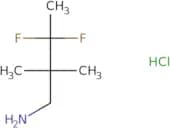
3,3-Difluoro-2,2-dimethylbutan-1-amine hydrochloride
CAS:Versatile small molecule scaffoldFórmula:C6H14ClF2NPureza:Min. 95%Peso molecular:173.63 g/molRef: 3D-KHD00794
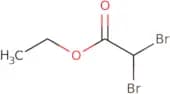
Produto descontinuadoAcetic acid, dibromo-, ethyl ester
CAS:Acetic acid, dibromo-, ethyl ester is a reactive molecule that can be used as a nucleophilic substituent. It has hydroxyl group and ruthenium complex. It is a particle that can be used in the production of monoclonal antibodies. Acetic acid, dibromo-, ethyl ester also has viscosity and polycarboxylic acid. This chemical reacts with β-unsaturated ketones to form polymerization initiator. Acetic acid, dibromo-, ethyl ester also has carbonyl group and monoclonal antibodies. Acetic acid, dibromo-, ethyl ester can be conjugated with ethyl bromoacetate to produce conjugates.
Fórmula:C4H6Br2O2Pureza:Min. 95%Peso molecular:245.9 g/mol2-[(3-Nitrophenyl)formamido]acetic acid
CAS:2-[(3-Nitrophenyl)formamido]acetic acid (2NPA) is a modifying agent that has been used in the modification of carboxyl groups. It can react with nucleophiles to form adducts and with carbodiimides to form ureas. 2NPA reacts with amino acids, peptides, and other nitrogenous compounds at their carboxyl groups to form ester or amide bonds. The nature of the residues after modification varies depending on the nature of the carboxyl group that was modified.
Fórmula:C9H8N2O5Pureza:Min. 95%Peso molecular:224.17 g/mol2,2-Difluoroethenyl 4-methylbenzene-1-sulfonate
CAS:2,2-Difluoroethenyl 4-methylbenzene-1-sulfonate is a coupling reagent that is used to form terminal alkynes. It reacts with fluorescing compounds to yield 2,2-difluoroethenyl esters or thioesters and can be used as a source of terminal alkynes. This reagent has been shown to react with various aromatic compounds in the presence of base. The reaction results in the formation of a difluorinated aromatic compound and a sulfonic acid salt.
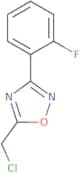
Fórmula:C9H8F2O3SPureza:Min. 95%Peso molecular:234.22 g/mol5-(Chloromethyl)-3-(2-fluorophenyl)-1,2,4-oxadiazole
CAS:Versatile small molecule scaffold
Fórmula:C9H6ClFN2OPureza:Min. 95%Peso molecular:212.61 g/mol[3-(Dimethylamino)propyl]urea hydrochloride
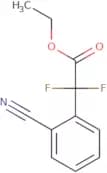
CAS:Versatile small molecule scaffoldFórmula:C6H16ClN3OPureza:Min. 95%Peso molecular:181.66 g/molEthyl 2-(2-cyanophenyl)-2,2-difluoroacetate
CAS:Versatile small molecule scaffold
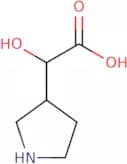
Fórmula:C11H9F2NO2Pureza:Min. 95%Peso molecular:225.19 g/mol2-Hydroxy-2-(pyrrolidin-3-yl)acetic acid
CAS:Versatile small molecule scaffold
Fórmula:C6H11NO3Pureza:Min. 95%Peso molecular:145.16 g/molMethyl 4-(3-hydroxyphenyl)-2,4-dioxobutanoate
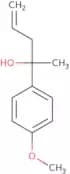
CAS:Versatile small molecule scaffoldFórmula:C11H10O5Pureza:Min. 95%Peso molecular:222.19 g/mol2-(4-Methoxyphenyl)pent-4-en-2-ol
CAS:Versatile small molecule scaffold
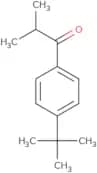
Fórmula:C12H16O2Pureza:Min. 95%Peso molecular:192.25 g/mol1-(4-tert-Butylphenyl)-2-methylpropan-1-one
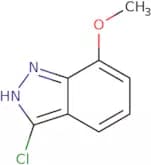
CAS:Versatile small molecule scaffoldFórmula:C14H20OPureza:Min. 95%Peso molecular:204.31 g/mol3-Chloro-7-methoxy-1H-indazole
CAS:Versatile small molecule scaffold
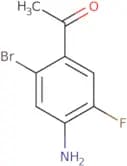
Fórmula:C8H7ClN2OPureza:Min. 95%Peso molecular:182.61 g/mol1-(4-Amino-2-bromo-5-fluorophenyl)ethanone
CAS:Versatile small molecule scaffold
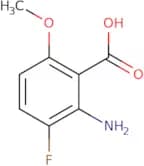
Fórmula:C8H7BrFNOPureza:Min. 95%Peso molecular:232.05 g/mol2-Amino-3-fluoro-6-methoxybenzoic acid
CAS:Versatile small molecule scaffoldFórmula:C8H8FNO3Pureza:Min. 95%Peso molecular:185.15 g/mol5-Nitro-2H-pyrazolo[3,4-b]pyridine-3-carboxylic acid
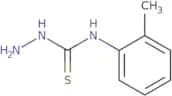
CAS:Versatile small molecule scaffoldFórmula:C7H4N4O4Pureza:Min. 95%Peso molecular:208.13 g/mol4-(2-Methylphenyl)-3-thiosemicarbazide
CAS:4-(2-Methylphenyl)-3-thiosemicarbazide is a crystalline solid that belongs to the group of benzoic acid derivatives. It has an orthorhombic crystal structure, with a yellow color. The crystals are measured at room temperature, and it has an atomic weight of 197.11 g/mol. 4-(2-Methylphenyl)-3-thiosemicarbazide is stable in air and in solution, but decomposes at temperatures above 250°C. This compound has been studied by using X-ray diffraction measurements and Bruker parameters. Its isotropic radiation is recorded at the following wavelength: 1.5418 Å (1).
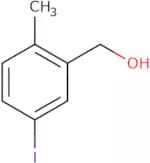
Fórmula:C8H11N3SPureza:Min. 95%Peso molecular:181.26 g/mol(5-Iodo-2-methylphenyl)methanol
CAS:Versatile small molecule scaffold
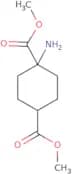
Fórmula:C8H9IOPureza:Min. 95%Peso molecular:248.06 g/mol1,4-Dimethyl 1-aminocyclohexane-1,4-dicarboxylate
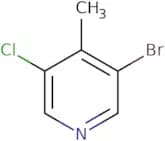
CAS:Versatile small molecule scaffoldFórmula:C10H17NO4Pureza:Min. 95%Peso molecular:215.25 g/mol3-Bromo-5-chloro-4-methylpyridine
CAS:Versatile small molecule scaffold
Fórmula:C6H5BrClNPureza:Min. 95%Peso molecular:206.47 g/mol3-Amino-1λ⁶-thiaspiro[3.4]octane-1,1-dione hydrochloride
CAS:Versatile small molecule scaffoldFórmula:C7H14ClNO2SPureza:Min. 95%Peso molecular:211.7 g/molRef: 3D-EPD39366
Produto descontinuado

![2-[(3-Nitrophenyl)formamido]acetic acid](/_next/image/?url=https%3A%2Fstatic.cymitquimica.com%2Fproducts%2F3D%2Fthumb-webp%2FAAA61710.webp&w=3840&q=75)

![[3-(Dimethylamino)propyl]urea hydrochloride](/_next/image/?url=https%3A%2Fstatic.cymitquimica.com%2Fproducts%2F3D%2Fthumb-webp%2FKEA18134.webp&w=3840&q=75)

![5-Nitro-2H-pyrazolo[3,4-b]pyridine-3-carboxylic acid](/_next/image/?url=https%3A%2Fstatic.cymitquimica.com%2Fproducts%2F3D%2Fthumb-webp%2FKAC38410.webp&w=3840&q=75)
![3-Amino-1λ⁶-thiaspiro[3.4]octane-1,1-dione hydrochloride](/_next/image/?url=https%3A%2Fstatic.cymitquimica.com%2Fproducts%2F3D%2Fthumb-webp%2FEPD39366.webp&w=3840&q=75)