Building Blocks
Subcategorias de "Building Blocks"
- Ácidos Borónicos e Derivados de Ácido Borónico(5.774 produtos)
- Building Blocks Quirais(1.237 produtos)
- Building Blocks Hidrocarbonetos(6.098 produtos)
- Building Blocks orgânicos(60.969 produtos)
Foram encontrados 205134 produtos de "Building Blocks"
4-(Thiophen-3-yl)butanoic acid
CAS:Versatile small molecule scaffold
Fórmula:C8H10O2SPureza:Min. 95%Peso molecular:170.23 g/molMethyl 2-(methylamino)-2-(pyridin-2-yl)propanoate
CAS:Versatile small molecule scaffold
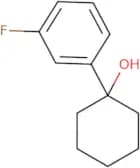
Fórmula:C10H14N2O2Pureza:Min. 95%Peso molecular:194.23 g/mol1-(3-Fluorophenyl)cyclohexanol
CAS:Versatile small molecule scaffold
Fórmula:C12H15FOPureza:Min. 95%Peso molecular:194.25 g/mol2-Ethylpiperidine hydrochloride
CAS:Versatile small molecule scaffold
Fórmula:C7H16ClNPureza:Min. 95%Peso molecular:149.66 g/molSpiro[5.5]undecane-2,4-dione
CAS:Spiro[5.5]undecane-2,4-dione is an analgesic drug that belongs to the class of carboxylic acid derivatives. It has been shown to be effective in treating chronic pain and neuropathic pain. Spiro[5.5]undecane-2,4-dione binds to a pharmacophore site on voltage gated sodium channels, preventing the influx of sodium ions into the cell, which blocks the conduction of nerve impulses and relieves pain. The chemical structure of Spiro[5.5]undecane-2,4-dione is similar to that of morphine but it does not have morphine's addictive properties or potential for abuse.
Fórmula:C11H16O2Pureza:Min. 95%Peso molecular:180.25 g/mol4-Chromanol
CAS:4-Chromanol is a trifluoroacetic acid amide. It contains a hydroxyl group, which is important for its neuroprotective properties. 4-Chromanol's mechanism of action is not yet fully understood, but it has been shown to inhibit the growth of human serum and oral pathogens in vitro. The compound also has an anti-inflammatory effect by inhibiting the production of pro-inflammatory cytokines from human monocytes. 4-Chromanol's chemical structure consists of a hydroxy group, fatty acids, and benzyl groups on both sides of the carbonyl group at position 4.
Fórmula:C9H10O2Pureza:Min. 95%Peso molecular:150.18 g/mol5,6-Dihydrobenzo[b]thiophen-7(4H)-one
CAS:5,6-Dihydrobenzo[b]thiophen-7(4H)-one is a sulfur-containing heterocycle that has been shown in studies to have cytotoxic activity. This compound has been found to induce apoptosis (programmed cell death) in cancer cells by binding to the protein kinase B (PKB/Akt), which is involved in the regulation of cell proliferation and survival. 5,6-Dihydrobenzo[b]thiophen-7(4H)-one also binds to DNA, preventing transcription and translation of proteins. The cytotoxic effects of this compound make it useful for treatment of ophthalmic conditions such as cataracts and glaucoma. This compound is being studied for use in the treatment of ovarian cancer and other types of cancer. It was recently shown that 5,6-dihydrobenzo[b]thiophen-7(4H)-one
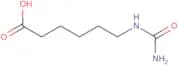
Fórmula:C8H8OSPureza:Min. 95%Peso molecular:152.21 g/mol6-(Carbamoylamino)hexanoic acid
CAS:6-(Carbamoylamino)hexanoic acid (6ACA) is a synlett that has been shown to be a potent and selective inhibitor of Hsp70. It is functional as a modulator through the interaction with the zinc-binding site, which inhibits ATPase activity. This molecule also acts as a lead molecule for the development of therapeutic agents against various diseases such as cancer, diabetes, and neurodegenerative disorders. The compound has been shown to have catalytic activity in acidic conditions and shows high stereoselectivity in multicomponent reactions.
Fórmula:C7H14N2O3Pureza:Min. 95%Peso molecular:174.2 g/mol7-Chlorobenzo[D]isoxazol-3-amine
CAS:Versatile small molecule scaffold
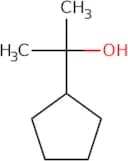
Fórmula:C7H5ClN2OPureza:Min. 95%Peso molecular:168.58 g/mola,a-Dimethyl-cyclopentanemethanol
CAS:Versatile small molecule scaffold
Fórmula:C8H16OPureza:Min. 95%Peso molecular:128.21 g/mol(4-Nitrophenyl)acetaldehyde
CAS:4-Nitrophenylacetaldehyde is an organic compound that belongs to the group of reactive chemicals. It is synthetically derived from nitrobenzene and reacts with proton, covalent adducts, or other functional groups. 4-Nitrophenylacetaldehyde has been shown to be a target for cancer research because it can be used to produce cancer drugs by linking a variety of functional groups to the molecule. The nitrogen atom in the molecule is also a target for research because it can be converted into nitro groups and can help in the development of new drugs through dehydration reactions.
Fórmula:C8H7NO3Pureza:Min. 95%Peso molecular:165.15 g/mol5-Methylbenzo[c][1,2,5]thiadiazole
CAS:5-Methylbenzo[c][1,2,5]thiadiazole is a chemical compound that belongs to the group of mixtures. It is a yellow solid that can be purified by recrystallization from water and ethanol. This compound is soluble in alcohol, chloroform and ether. 5-Methylbenzo[c][1,2,5]thiadiazole has been shown to be an oxidizing agent when mixed with potassium permanganate or potassium perchlorate. The reactivity of this substance can also be seen when it reacts with chlorine gas to form the corresponding thiocarbonyl chloride. 5-Methylbenzo[c][1,2,5]thiadiazole has not been found to have any commercial applications at this time.
Fórmula:C7H6N2SPureza:Min. 95%Peso molecular:150.2 g/molIsothiazole-3-carbonitrile
CAS:Isothiazole-3-carbonitrile is a chemical compound that contains a nitrile group with two isothiazole rings. It is used in the synthesis of urea and in the production of carbon tetrachloride. This chemical has been shown to cause hypotoxicity mediated by cyano, epithelioma, disulfide, pyridine, carbon disulfide, dichloro, industrial, cutaneum and cancer. Isothiazole-3-carbonitrile has been shown to act as a signal molecule that can inhibit chlorine and cyanide reactions by acting as a competitive inhibitor.
Fórmula:C2H2N2SPureza:Min. 95%Peso molecular:110.14 g/mol4-Bromopentanoic acid
CAS:Versatile small molecule scaffold
Fórmula:C5H9BrO2Pureza:Min. 95%Peso molecular:181.03 g/molBenzyltriphenylphosphonium Bromide
CAS:Benzyltriphenylphosphonium Bromide is a quaternary ammonium compound that is used in the treatment of microbial infections. It is a white powder that has an unpleasant odor and is soluble in water. Benzyltriphenylphosphonium Bromide has been shown to be effective against bacterial species, such as those found in urine samples, and also exhibits physiological activities, such as sodium citrate. This chemical also has an analytical chemistry role in the determination of diamine tetraacetic acid (DTA) levels in cervical cancer cells. Benzyltriphenylphosphonium Bromide is known to form salts with fatty acids and hydroxyl groups.
Fórmula:C25H22BrPPureza:Min. 95%Peso molecular:433.33 g/mol1-[3-(Methylsulfanyl)phenyl]ethan-1-one
CAS:Versatile small molecule scaffold
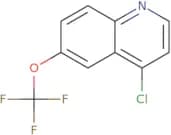
Fórmula:C9H10OSPureza:Min. 95%Peso molecular:166.24 g/mol4-Chloro-6-(trifluoromethoxy)quinoline
CAS:Versatile small molecule scaffold
Fórmula:C10H5ClF3NOPureza:Min. 95%Peso molecular:247.6 g/molN-Cyclohexyl-1,3-thiazol-2-amine
CAS:Versatile small molecule scaffold
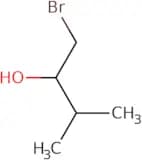
Fórmula:C9H14N2SPureza:Min. 95%Peso molecular:182.29 g/mol1-Bromo-3-methylbutan-2-ol
CAS:Versatile small molecule scaffold
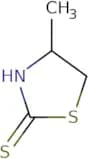
Fórmula:C5H11BrOPureza:Min. 95%Peso molecular:167.04 g/mol4-Methyl-1,3-thiazolidine-2-thione
CAS:4-Methyl-1,3-thiazolidine-2-thione is a selective disulfide reductase with metal halide and cycloaddition activity. It catalyzes the reaction of alkali metal with carbon disulfide to form aziridine. The reaction proceeds through two steps: in the first step, alkali metal is reduced by carbon disulfide to form an alkyl radical; in the second step, the alkyl radical reacts with carbon disulfide to form aziridine. 4-Methyl-1,3-thiazolidine-2-thione has been shown to be an efficient catalyst for this reaction and can also catalyze cycloadditions between urethane and aziridine.
Fórmula:C4H7NS2Pureza:Min. 95%Peso molecular:133.2 g/mol



![Spiro[5.5]undecane-2,4-dione](/_next/image/?url=https%3A%2Fstatic.cymitquimica.com%2Fproducts%2F3D%2Fthumb-webp%2FBAA48199.webp&w=3840&q=75)

![5,6-Dihydrobenzo[b]thiophen-7(4H)-one](/_next/image/?url=https%3A%2Fstatic.cymitquimica.com%2Fproducts%2F3D%2Fthumb-webp%2FBAA46884.webp&w=3840&q=75)
![7-Chlorobenzo[D]isoxazol-3-amine](/_next/image/?url=https%3A%2Fstatic.cymitquimica.com%2Fproducts%2F3D%2Fthumb-webp%2FCMB41364.webp&w=3840&q=75)

![5-Methylbenzo[c][1,2,5]thiadiazole](/_next/image/?url=https%3A%2Fstatic.cymitquimica.com%2Fproducts%2F3D%2Fthumb-webp%2FBAA45793.webp&w=3840&q=75)


![1-[3-(Methylsulfanyl)phenyl]ethan-1-one](/_next/image/?url=https%3A%2Fstatic.cymitquimica.com%2Fproducts%2F3D%2Fthumb-webp%2FBAA44199.webp&w=3840&q=75)