Building Blocks
Subcategorias de "Building Blocks"
- Ácidos Borónicos e Derivados de Ácido Borónico(5.784 produtos)
- Building Blocks Quirais(1.244 produtos)
- Building Blocks Hidrocarbonetos(6.105 produtos)
- Building Blocks orgânicos(61.070 produtos)
Foram encontrados 205437 produtos de "Building Blocks"
1,2,4-Triazolo[4,3-a]pyridin-3(2H)-one
CAS:1,2,4-Triazolo[4,3-a]pyridin-3(2H)-one is a potent inhibitor of the enzyme c-glycosylase. This compound has been used in pharmaceutical preparations and as a feedstock in organic syntheses. It is used to produce the anti-inflammatory drug piroxicam, which inhibits the action of cyclooxygenase and blocks the synthesis of prostaglandins. 1,2,4-Triazolo[4,3-a]pyridin-3(2H)-one also has been shown to inhibit crystallization of the bovine liver enzyme phosphatidylcholine:cholesterol acyltransferase (PCAT). The inhibition was found to be competitive with respect to PCAT substrate and was not due to inhibition of PCAT by 1,2,4-triazolo[4,3-a]pyridin-3(
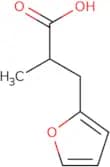
Fórmula:C6H5N3OPureza:Min. 95%Peso molecular:135.13 g/mol3-(Furan-2-yl)-2-methylpropanoic acid
CAS:Versatile small molecule scaffold
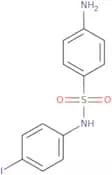
Fórmula:C8H10O3Pureza:Min. 95%Peso molecular:154.16 g/mol4-Amino-N-(4-iodophenyl)benzene-1-sulfonamide
CAS:Versatile small molecule scaffold
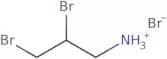
Fórmula:C12H11IN2O2SPureza:Min. 95%Peso molecular:374.2 g/mol2,3-Dibromo-propylamine, hydrobromide
CAS:2,3-Dibromo-propylamine, hydrobromide is an organolithium compound that is postulated to exist. It has been synthesized in the laboratory but its structure and properties have not yet been fully characterized. In addition to allylamine and azetidine, it has also been shown to react with benzoyl peroxide to form a peroxide. The magnesium ion coordinates the bromine atom of 2,3-dibromo-propylamine, hydrobromide. This mechanism is similar to that of other organolithium compounds.
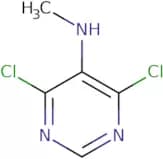
Fórmula:C3H8Br3NPureza:Min. 95%Peso molecular:297.81 g/mol4,6-dichloro-N-methylpyrimidin-5-amine
CAS:Versatile small molecule scaffoldFórmula:C5H5Cl2N3Pureza:Min. 95%Peso molecular:178 g/mol2-(4-Bromo-2-methylphenoxy)acetic acid
CAS:2-(4-Bromo-2-methylphenoxy)acetic acid is a sulfonated phenolic compound that is synthesized by the sulfurylation of 2-methylphenoxyacetic acid with sulfuryl chloride. It has been used as a chemical intermediate in the synthesis of various drugs, such as triethanolamine. 2-(4-Bromo-2-methylphenoxy)acetic acid can also be used to produce fluorinated compounds, such as pentafluoropropionic and hexafluoroacetic acids. The chlorination reaction is an efficient method for the production of this compound.
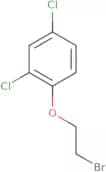
Fórmula:C9H9BrO3Pureza:Min. 95%Peso molecular:245.08 g/mol1-(2-Bromoethoxy)-2,4-dichlorobenzene
CAS:Versatile small molecule scaffold
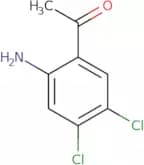
Fórmula:C8H7BrCl2OPureza:Min. 95%Peso molecular:269.96 g/mol1-(2-Amino-4,5-dichlorophenyl)ethanone
CAS:Versatile small molecule scaffold
Fórmula:C8H7Cl2NOPureza:Min. 95%Peso molecular:204.05 g/mol3-[(Pyridin-2-ylmethyl)amino]propan-1-ol
CAS:3-[(Pyridin-2-ylmethyl)amino]propan-1-ol is an industrial chemical that is used in the production of peroxy compounds. It is a byproduct of hydrogenation and aluminium production processes, and can be produced using transition metal ions such as copper or nickel. 3-[(Pyridin-2-ylmethyl)amino]propan-1-ol has a low molecular weight, which allows it to be used in a variety of applications. This compound has been shown to interact with adsorption equilibrium and kinetic techniques, as well as being suitable for sustainable development.
Fórmula:C9H14N2OPureza:Min. 95%Peso molecular:166.22 g/mol[2-(Methylsulfanyl)ethyl]urea
CAS:Versatile small molecule scaffold
Fórmula:C4H10N2OSPureza:Min. 95%Peso molecular:134.2 g/mol1-[(Methoxycarbonyl)amino]cyclopentane-1-carboxylic acid
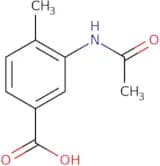
CAS:Versatile small molecule scaffoldFórmula:C8H13NO4Pureza:Min. 95%Peso molecular:187.19 g/mol3-Acetamido-4-methylbenzoic acid
CAS:3-Acetamido-4-methylbenzoic acid is a product of organic synthesis. It is an amide compound and is synthesized by the condensation reaction of cyanamide and aniline. 3-Acetamido-4-methylbenzoic acid has been used in the synthesis of medicines such as nilotinib, which is a tyrosine kinase inhibitor that blocks cancer cell growth.
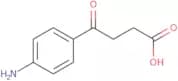
Fórmula:C10H11NO3Pureza:Min. 95%Peso molecular:193.2 g/mol4-(4-Aminophenyl)-4-oxobutanoic acid
CAS:Versatile small molecule scaffold
Fórmula:C10H11NO3Pureza:Min. 95%Peso molecular:193.2 g/mol1-(3-Bromopropyl)-3-methoxybenzene
CAS:Versatile small molecule scaffold
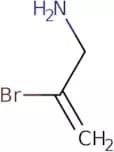
Fórmula:C10H13OBrPureza:Min. 95%Peso molecular:229.11 g/mol2-Bromo-allylamine
CAS:2-Bromo-allylamine is an inorganic compound that can be used as a synthetic intermediate for organic synthesis. It has been used to synthesize a variety of compounds, such as pharmaceuticals and agrochemicals. The bromide group is attached to the amine group through an ether bond. Bromoallylation is a chemoenzymatic reaction system that uses 2-bromo-allylamine as an intermediate.
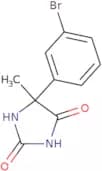
2-Bromo-allylamine can also be synthesized by reacting allyl chloride with bromine or chlorodibromomethane in the presence of catalysts such as copper(II) acetate and sodium methoxide. This reaction has been shown to be able to produce 2-bromo-allylamine in high yield without any side reactions.Fórmula:C3H6BrNPureza:Min. 95%Peso molecular:135.99 g/mol5-(3-Bromo-phenyl)-5-methyl-imidazolidine-2,4-dione
CAS:Versatile small molecule scaffold
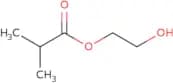
Fórmula:C10H9BrN2O2Pureza:Min. 95%Peso molecular:269.1 g/mol2-Hydroxyethyl 2-methylpropanoate
CAS:2-Hydroxyethyl 2-methylpropanoate is a fatty acid ester that has been used as a chemical intermediate in the synthesis of other chemicals. It can be synthesized by reacting a carboxylate with an alcohol, followed by hydrolysis. The reaction is exothermic, and the product has a lipophilic nature. This compound is often used in clinical applications because it is hydrophobic and can form polymers easily.
Fórmula:C6H12O3Pureza:Min. 95%Peso molecular:132.16 g/mol2-[2,2-Bis-(1H-indol-3-yl)-ethyl]-phenylamine
CAS:2-[2,2-Bis-(1H-indol-3-yl)-ethyl]-phenylamine is a drug that inhibits the growth of cancer cells by interfering with the epidermal growth factor receptor, which is a protein involved in cell proliferation. This drug has been shown to be effective against leukemia and breast cancer cells. 2-[2,2-Bis-(1H-indol-3-yl)-ethyl]-phenylamine has also been shown to synergistically interact with light emission and preventative therapies, such as radiation therapy and chemotherapy. The compound has been shown to have an effect on body fat mass and also transport properties for certain drugs.Fórmula:C24H21N3Pureza:Min. 95%Peso molecular:351.4 g/mol3-Chloro-±-methylbenzyl Alcohol
CAS:3-Chloro-±-methylbenzyl Alcohol is an alcohol that can be used as a biocatalyst. It is chiral and has been shown to be an efficient catalyst for the asymmetric synthesis of (R)-2,3-butanediol in the presence of saccharomyces cerevisiae. This compound has also been shown to be an effective optical resolution agent, with a high optical purity and excellent stability in organic solvents. 3-Chloro-±-methylbenzyl Alcohol is useful in the catalyzed conversion of glucose into ethanol, which is a dry weight procedure that does not require water or addition of cosubstrate.
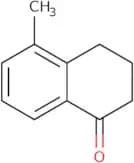
Fórmula:C8H9ClOPureza:Min. 95%Peso molecular:156.61 g/mol5-Methyl-3,4-dihydronaphthalen-1(2H)-one
CAS:Versatile small molecule scaffoldFórmula:C11H12OPureza:Min. 95%Peso molecular:160.22 g/mol
![1,2,4-Triazolo[4,3-a]pyridin-3(2H)-one](/_next/image/?url=https%3A%2Fstatic.cymitquimica.com%2Fproducts%2F3D%2Fthumb-webp%2FGAA96971.webp&w=3840&q=75)

![3-[(Pyridin-2-ylmethyl)amino]propan-1-ol](/_next/image/?url=https%3A%2Fstatic.cymitquimica.com%2Fproducts%2F3D%2Fthumb-webp%2FGAA95099.webp&w=3840&q=75)
![[2-(Methylsulfanyl)ethyl]urea](/_next/image/?url=https%3A%2Fstatic.cymitquimica.com%2Fproducts%2F3D%2Fthumb-webp%2FGAA95055.webp&w=3840&q=75)
![1-[(Methoxycarbonyl)amino]cyclopentane-1-carboxylic acid](/_next/image/?url=https%3A%2Fstatic.cymitquimica.com%2Fproducts%2F3D%2Fthumb-webp%2FGAA94976.webp&w=3840&q=75)

![2-[2,2-Bis-(1H-indol-3-yl)-ethyl]-phenylamine](/_next/image/?url=https%3A%2Fstatic.cymitquimica.com%2Fproducts%2F3D%2Fthumb-webp%2FGAA94173.webp&w=3840&q=75)