Building Blocks
Subcategorias de "Building Blocks"
- Ácidos Borónicos e Derivados de Ácido Borónico(5.784 produtos)
- Building Blocks Quirais(1.242 produtos)
- Building Blocks Hidrocarbonetos(6.105 produtos)
- Building Blocks orgânicos(61.065 produtos)
Foram encontrados 205418 produtos de "Building Blocks"
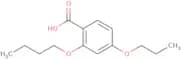
2-Butoxy-4-propoxybenzoic acid
CAS:Versatile small molecule scaffold
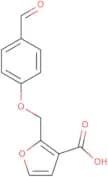
Fórmula:C14H20O4Pureza:Min. 95%Peso molecular:252.31 g/mol2-(4-Formylphenoxymethyl)furan-3-carboxylic acid
CAS:Versatile small molecule scaffoldFórmula:C13H10O5Pureza:Min. 95%Peso molecular:246.21 g/mol1-[(3-Methyl-1,2,4-oxadiazol-5-yl)methyl]-1H-pyrazole-4-carboxylic acid
CAS:Versatile small molecule scaffold
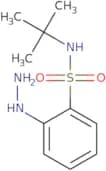
Fórmula:C8H8N4O3Pureza:Min. 95%Peso molecular:208.17 g/molN-(tert-Butyl)-2-hydrazinylbenzenesulfonamide
CAS:Versatile small molecule scaffoldFórmula:C10H17N3O2SPureza:Min. 95%Peso molecular:243.33 g/mol2-Chloro-N-[5-(dimethylsulfamoyl)-2-methoxyphenyl]propanamide
CAS:Versatile small molecule scaffold
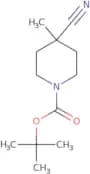
Fórmula:C12H17ClN2O4SPureza:Min. 95%Peso molecular:320.79 g/moltert-Butyl 4-cyano-4-methylpiperidine-1-carboxylate
CAS:Versatile small molecule scaffold
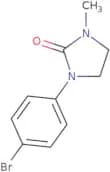
Fórmula:C12H20N2O2Pureza:Min. 95%Peso molecular:224.3 g/mol1-(4-Bromophenyl)-3-methylimidazolidin-2-one
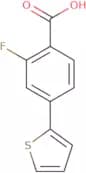
CAS:Versatile small molecule scaffoldFórmula:C10H11BrN2OPureza:Min. 95%Peso molecular:255.11 g/mol2-Fluoro-4-(thiophen-2-yl)benzoic acid
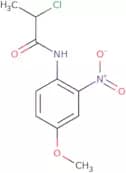
CAS:Versatile small molecule scaffoldFórmula:C11H7FO2SPureza:Min. 95%Peso molecular:222.24 g/mol2-Chloro-N-(4-methoxy-2-nitrophenyl)propanamide
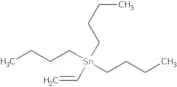
CAS:Versatile small molecule scaffoldFórmula:C10H11ClN2O4Pureza:Min. 95%Peso molecular:258.66 g/molVinyltributyltin
CAS:Produto ControladoVinyltributyltin is a dibutyltin oxide (DBTO) enantiomer that has been shown to inhibit the HIV-1 protease. Vinyltributyltin has also been shown to reduce inflammation in bowel disease, as well as to have synergistic effects with other drugs in the treatment of cancer and inflammatory bowel disease. The mechanism of action of vinyltributyltin is not yet known, but it may be related to its ability to inhibit the quinazolone-dependent formation of reactive oxygen species. Vinyltributyltin also inhibits the NS3 protease, which is an enzyme involved in hepatitis C virus replication.
Fórmula:C14H30SnPureza:Min. 95%Cor e Forma:Colorless Clear LiquidPeso molecular:317.1 g/mol2,4,6-Trimethylbenzonitrile
CAS:2,4,6-Trimethylbenzonitrile (TMBN) is a reactive unsaturated ketone that reacts with phosphorus pentachloride to form the corresponding chloroform. It is used in nucleophilic substitution reactions and can be hydrolyzed by hydrochloric acid to form an n-oxide. The reaction mechanism of TMBN with phosphorus pentachloride has been studied using molecular modeling and NMR spectroscopy. TMBN can be converted into an oxide, which can react with hydrogen chloride to form the corresponding chloroform. Reaction products include the 2,4,6-trichlorobenzonitrile (TCBN), which is a carcinogen.
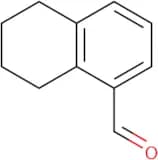
Fórmula:C10H11NPureza:Min. 95%Cor e Forma:PowderPeso molecular:145.2 g/mol5,6,7,8-Tetrahydronaphthalene-1-carbaldehyde
CAS:Please enquire for more information about 5,6,7,8-Tetrahydronaphthalene-1-carbaldehyde including the price, delivery time and more detailed product information at the technical inquiry form on this page
Fórmula:C11H12OPureza:Min. 95%Cor e Forma:Clear LiquidPeso molecular:160.21 g/mol4-Toluenesulfonylmethylisonitrile
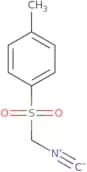
CAS:4-Toluenesulfonylmethylisonitrile is a potent antagonist of the malonic acid receptor that has been shown to be reactive. It is synthesized by reacting methyl ketones with trifluoroacetic acid and nitrogen gas in the presence of a catalyst. The reaction mechanism has been studied using gravimetric analysis and the thermodynamic data have been calculated for fatty acids. 4-Toluenesulfonylmethylisonitrile can be used to make esters.
Fórmula:C9H9NO2SPureza:Min. 95%Cor e Forma:Off-White To Yellow SolidPeso molecular:195.24 g/molTrifluoromethanesulfonyl chloride
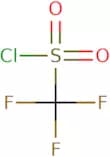
CAS:Trifluoromethanesulfonyl chloride is a reactive chemical that reacts with nucleophilic groups in biological molecules. It is used for the treatment of infectious diseases and metabolic disorders. Trifluoromethanesulfonyl chloride has been shown to have receptor activity against various microorganisms, including resistant strains. Structural analysis has shown that the active form of trifluoromethanesulfonyl chloride binds to malonic acid and other coumarin derivatives. This binding prevents the formation of hydrogen bonds, which would otherwise stabilize the molecule, leading to its degradation. Trifluoromethanesulfonyl chloride also reacts with magnesium salt to produce trifluoroacetic acid, which is an organic solvent that can be used as a reaction medium or a reagent in organic synthesis.
Fórmula:CClF3O2SPureza:Min. 95%Peso molecular:168.52 g/mol(2E)-3-[4-(Heptyloxy)-3-methoxyphenyl]prop-2-enoic acid
CAS:Versatile small molecule scaffold
Fórmula:C17H24O4Pureza:Min. 95%Peso molecular:292.4 g/mol8-Oxabicyclo[3.2.1]octan-3-amine HCl
CAS:Versatile small molecule scaffold
Fórmula:C7H14ClNOPureza:Min. 95%Peso molecular:163.65 g/mol3-{[(9H-Fluoren-9-yl)methoxy]carbonyl}-2,3,4,5-tetrahydro-1H-3-benzazepine-7-carboxylic acid
CAS:Versatile small molecule scaffold
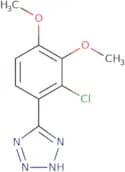
Fórmula:C26H23NO4Pureza:Min. 95%Peso molecular:413.5 g/mol5-(2-Chloro-3,4-dimethoxyphenyl)-2H-1,2,3,4-tetrazole
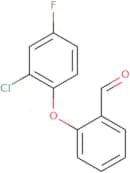
CAS:Versatile small molecule scaffoldFórmula:C9H9ClN4O2Pureza:Min. 95%Peso molecular:240.64 g/mol2-(2-Chloro-4-fluorophenoxy)benzaldehyde
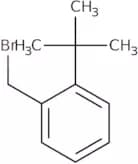
CAS:Versatile small molecule scaffoldFórmula:C13H8ClFO2Pureza:Min. 95%Peso molecular:250.65 g/mol1-(Bromomethyl)-2-tert-butylbenzene
CAS:Versatile small molecule scaffold
Fórmula:C11H15BrPureza:Min. 95%Peso molecular:227.14 g/mol

![1-[(3-Methyl-1,2,4-oxadiazol-5-yl)methyl]-1H-pyrazole-4-carboxylic acid](/_next/image/?url=https%3A%2Fstatic.cymitquimica.com%2Fproducts%2F3D%2Fthumb-webp%2FFWB06495.webp&w=3840&q=75)
![2-Chloro-N-[5-(dimethylsulfamoyl)-2-methoxyphenyl]propanamide](/_next/image/?url=https%3A%2Fstatic.cymitquimica.com%2Fproducts%2F3D%2Fthumb-webp%2FFWB00026.webp&w=3840&q=75)

![(2E)-3-[4-(Heptyloxy)-3-methoxyphenyl]prop-2-enoic acid](/_next/image/?url=https%3A%2Fstatic.cymitquimica.com%2Fproducts%2F3D%2Fthumb-webp%2FFQC94990.webp&w=3840&q=75)
![8-Oxabicyclo[3.2.1]octan-3-amine HCl](/_next/image/?url=https%3A%2Fstatic.cymitquimica.com%2Fproducts%2F3D%2Fthumb-webp%2FFQC90633.webp&w=3840&q=75)
![3-{[(9H-Fluoren-9-yl)methoxy]carbonyl}-2,3,4,5-tetrahydro-1H-3-benzazepine-7-carboxylic acid](/_next/image/?url=https%3A%2Fstatic.cymitquimica.com%2Fproducts%2F3D%2Fthumb-webp%2FFQC74341.webp&w=3840&q=75)