Building Blocks
Subcategorias de "Building Blocks"
- Ácidos Borónicos e Derivados de Ácido Borónico(5.774 produtos)
- Building Blocks Quirais(1.237 produtos)
- Building Blocks Hidrocarbonetos(6.098 produtos)
- Building Blocks orgânicos(60.969 produtos)
Foram encontrados 205134 produtos de "Building Blocks"
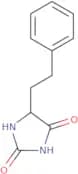
5-(2-Phenylethyl)imidazolidine-2,4-dione
CAS:Versatile small molecule scaffold
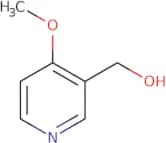
Fórmula:C11H12N2O2Pureza:Min. 95%Peso molecular:204.22 g/mol3-Pyridinemethanol, 4-methoxy-
CAS:Versatile small molecule scaffold
Fórmula:C7H9NO2Pureza:Min. 95%Peso molecular:139.15 g/mol2-[(tert-Butylamino)carbonyl]benzoic acid
CAS:2-[(tert-Butylamino)carbonyl]benzoic acid is an organic compound that is used as a chemical intermediate. It has a carboxylic acid group, which can be used for esterification or amidation reactions to create different derivatives. 2-[(tert-Butylamino)carbonyl]benzoic acid is deactivated by chlorine and other halogens, and can be reactivated through the addition of glycine or sodium bicarbonate. 2-[(tert-Butylamino)carbonyl]benzoic acid also suppresses malonic acid when mixed with mixtures and solutions of this compound.Fórmula:C12H15NO3Pureza:Min. 95%Peso molecular:221.25 g/mol[2-(Pyridin-2-yl)ethyl]urea
CAS:Versatile small molecule scaffold
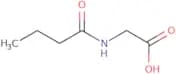
Fórmula:C8H11N3OPureza:Min. 95%Peso molecular:165.19 g/moln-Butyrylglycine
CAS:n-Butyrylglycine is a compound that was first identified in human urine as a metabolite of the amino acid glycine. It is an intermediate in the conversion of glycine to succinic acid, which is required for the production of energy in mitochondria. Deficiency of this enzyme causes mitochondrial dysfunction and leads to various metabolic disorders including fatty acid oxidation disorders and homocysteine metabolism defects. n-Butyrylglycine can be detected by gas chromatography or liquid chromatography with mass spectrometry detection.
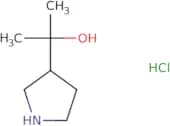
Fórmula:C6H11NO3Pureza:Min. 95%Peso molecular:145.16 g/mol(S)-2-(3-Pyrrolidinyl)-2-propanol Hydrochloride ee
CAS:Versatile small molecule scaffold
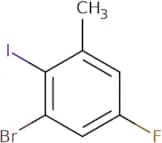
Fórmula:C7H16ClNOPureza:Min. 95%Peso molecular:165.66 g/mol3-Bromo-5-fluoro-2-iodotoluene
CAS:Versatile small molecule scaffold
Fórmula:C7H5BrFIPureza:Min. 95%Peso molecular:314.92 g/mol1-[4-(Propan-2-yl)phenyl]ethan-1-ol
CAS:Versatile small molecule scaffold
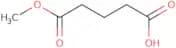
Fórmula:C11H16OPureza:Min. 95%Peso molecular:164.24 g/molMonomethyl Glutarate
CAS:Monomethyl glutarate is a monomer for the synthesis of polymers. It has been used in the past as a precursor for the production of polyacrylic acid and its copolymers. Monomethyl glutarate is synthesized by the reaction of hydrochloric acid, high salt, and an expression plasmid containing glutarate dehydrogenase. This compound is also used as a reagent in kinetic studies of fatty acids and glutaric acid. Monomethyl glutarate is an acidic compound with a pKa value of 3.5 at 25°C. It is rapidly hydrolyzed in water to form monomethyl glutarate acid, which has a pKa value of 2.4 at 25°C. Monomethyl glutarate can be ingested orally or applied topically due to its low energy requirements for hydrolysis in water.
Fórmula:C6H10O4Pureza:Min. 95%Peso molecular:146.14 g/mol3-Methoxy-benzenesulfonic acid
CAS:Versatile small molecule scaffold
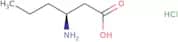
Fórmula:C7H8O4SPureza:Min. 95%Peso molecular:188.2 g/mol(S)-3-Aminohexanoic acid hydrochloride ee
CAS:Versatile small molecule scaffold
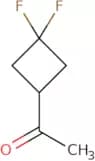
Fórmula:C6H14ClNO2Pureza:Min. 95%Peso molecular:167.63 g/mol1-(3,3-Difluorocyclobutyl)ethan-1-one
CAS:Versatile small molecule scaffold
Fórmula:C6H8F2OPureza:Min. 95%Peso molecular:134.13 g/mol2,3-Dihydro-1H-pyrrolo[3,2-c]pyridine
CAS:2,3-Dihydro-1H-pyrrolo[3,2-c]pyridine is an alkaloid compound that has various applications in research and chemical studies. It has been found to interact with dopamine receptors and exhibit photothermal properties. This compound has been studied in the context of G. lucidum (also known as Reishi mushroom) and its potential therapeutic effects. Additionally, it has shown interactions with quinpirole, lithium, ergovaline, efrotomycin, and other compounds. The photocatalytic and fatty acid properties of 2,3-Dihydro-1H-pyrrolo[3,2-c]pyridine make it a versatile compound for various research purposes.
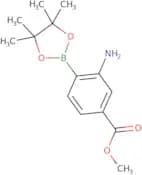
Pureza:Min. 95%Methyl 3-amino-4-(tetramethyl-1,3,2-dioxaborolan-2-yl)benzoate
CAS:Versatile small molecule scaffold
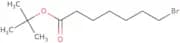
Fórmula:C14H20BNO4Pureza:Min. 95%Peso molecular:277.13 g/moltert-Butyl 7-bromoheptanoate
CAS:Versatile small molecule scaffold
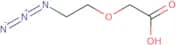
Fórmula:C11H21BrO2Pureza:Min. 95%Peso molecular:265.19 g/mol2-(2-Azidoethoxy)acetic Acid
CAS:2-(2-Azidoethoxy)acetic Acid is a hydrophobic antibacterial agent that can be used to inhibit bacterial growth by disrupting the cell membrane. It has been shown to inhibit the growth of Staphylococcus aureus and Escherichia coli, which may be due to its ability to bind to the glutathione moiety in the bacterial cell membrane. 2-(2-Azidoethoxy)acetic Acid has been shown to have antimicrobial activity against both Gram-positive and Gram-negative bacteria in vitro. This compound is also able to cross the cell membrane, inhibiting bacterial replication in vivo.
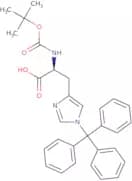
Fórmula:C4H7N3O3Pureza:Min. 95%Peso molecular:145.12 g/molBoc-His(Trt)-OH
CAS:Boc-His(Trt)-OH is a chemical compound that has been used in the laboratory to study uptake and binding of compounds. It is stable in complex with albumin, which has led to its use as a model system for studying hepatic steatosis. This chemical can be synthesized by solid-phase synthesis with trifluoroacetic acid and polypeptide synthesis. FT-IR spectroscopy has been used to characterize Boc-His(Trt)-OH, revealing its chemical diversity.
Fórmula:C30H31N3O4Pureza:Min. 95%Cor e Forma:PowderPeso molecular:497.58 g/molRef: 3D-FB42925
Produto descontinuado6-fluoroquinoline-8-carboxylicacid
CAS:Versatile small molecule scaffold
Fórmula:C10H6FNO2Pureza:Min. 95%Peso molecular:191.16 g/mol2-Methoxy-benzenesulfonic acid
CAS:2-Methoxy-benzenesulfonic acid is a synthetic chemical compound that is used in the production of polymers and other ester compounds. It can be produced by reacting benzenesulfonyl chloride with methanol in the presence of a strong acid catalyst. 2-Methoxy-benzenesulfonic acid reacts with radiation to produce reactive oxygen species that are capable of damaging cellular structures. The molecule contains an intramolecular hydrogen bond, which stabilizes the structure and helps to form hydrogen bonds with other molecules. 2-Methoxy-benzenesulfonic acid also has a hydroxyl group, which allows it to function as an acidic compound that can react with water and cause inflammation. This functional group also makes it soluble in water, allowing it to penetrate tissue structures.
Fórmula:C7H8O4SPureza:Min. 95%Peso molecular:188.2 g/molRef: 3D-JBA25600
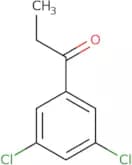
Produto descontinuado1-(3,5-Dichloro-phenyl)-propan-1-one
CAS:Versatile small molecule scaffold
Fórmula:C9H8Cl2OPureza:Min. 95%Peso molecular:203.07 g/mol

![2-[(tert-Butylamino)carbonyl]benzoic acid](/_next/image/?url=https%3A%2Fstatic.cymitquimica.com%2Fproducts%2F3D%2Fthumb-webp%2FVAA32035.webp&w=3840&q=75)
![[2-(Pyridin-2-yl)ethyl]urea](/_next/image/?url=https%3A%2Fstatic.cymitquimica.com%2Fproducts%2F3D%2Fthumb-webp%2FVAA27353.webp&w=3840&q=75)
![1-[4-(Propan-2-yl)phenyl]ethan-1-ol](/_next/image/?url=https%3A%2Fstatic.cymitquimica.com%2Fproducts%2F3D%2Fthumb-webp%2FBAA47510.webp&w=3840&q=75)

![2,3-Dihydro-1H-pyrrolo[3,2-c]pyridine](/_next/image/?url=https%3A%2Fstatic.cymitquimica.com%2Fproducts%2F3D%2Fthumb-webp%2FYAA59628.webp&w=3840&q=75)