Building Blocks
Esta seção contém produtos fundamentais para a síntese de compostos orgânicos e biológicos. Building blocks são os materiais de partida essenciais usados para construir moléculas complexas através de várias reações químicas. Eles desempenham um papel crítico na descoberta de medicamentos, ciência dos materiais e pesquisa química. Na CymitQuimica, oferecemos uma ampla gama de building blocks de alta qualidade para apoiar suas pesquisas inovadoras e projetos industriais, garantindo que você tenha os componentes essenciais para uma síntese bem-sucedida.
Subcategorias de "Building Blocks"
- Ácidos Borónicos e Derivados de Ácido Borónico(5.756 produtos)
- Building Blocks Quirais(1.242 produtos)
- Building Blocks Hidrocarbonetos(6.093 produtos)
- Building Blocks orgânicos(60.534 produtos)
Foram encontrados 195534 produtos de "Building Blocks"
Ordenar por
Pureza (%)
0
100
|
0
|
50
|
90
|
95
|
100
(3R)-(-)-1-Benzyl-3-aminopyrrolidine
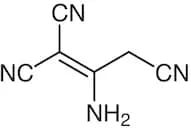
CAS:Fórmula:C11H16N2Pureza:>98.0%(GC)(T)Cor e Forma:Colorless to Almost colorless clear liquidPeso molecular:176.262-Amino-1,1,3-tricyano-1-propene
CAS:Fórmula:C6H4N4Pureza:>98.0%(T)Cor e Forma:White to Gray to Brown powder to crystalPeso molecular:132.132-Fluoro-4-methoxyaniline
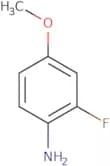
CAS:<p>2-Fluoro-4-methoxyaniline is a non-selective amide that forms in the presence of amines, aminobutyraldehyde, and fluorine. 2-Fluoro-4-methoxyaniline is a product of the industrial process for synthesizing acetylated products through the use of dichloroketene as an acetylating agent. This chemical compound has been used to produce five-membered heterocycles that are used in the manufacture of pharmaceuticals. Mechanistic studies have shown that this chemical reacts with oxygen, water, and halogens to form a variety of products.</p>Fórmula:C7H8FNOPureza:Min. 95%Cor e Forma:Yellow PowderPeso molecular:141.14 g/mol3,5,5-Trimethylhexyl Acetate
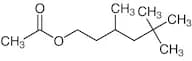
CAS:Fórmula:C11H22O2Pureza:>93.0%(GC)Cor e Forma:Colorless to Almost colorless clear liquidPeso molecular:186.306-Amino-m-cresol
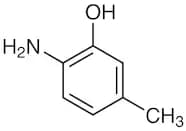
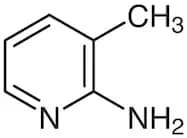
CAS:Fórmula:C7H9NOPureza:>98.0%(GC)(T)Cor e Forma:White to Brown powder to crystallinePeso molecular:123.162-Amino-3-methylpyridine
CAS:Fórmula:C6H8N2Pureza:>98.0%(GC)Cor e Forma:White or Colorless to Light orange to Yellow powder to lump to clear liquidPeso molecular:108.142-Amino-3-hydroxyanthraquinone
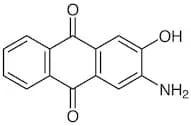
CAS:Fórmula:C14H9NO3Pureza:>98.0%(T)Cor e Forma:Orange to Amber to Dark red powder to crystalPeso molecular:239.23(1S,2S)-(-)-1,2-Diaminocyclohexane-N,N'-bis(2-diphenylphosphino-1-naphthoyl)
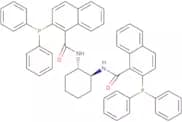
CAS:<p>(1S,2S)-(-)-1,2-Diaminocyclohexane-N,N'-bis(2-diphenylphosphino-1-naphthoyl) is an alkoxyallene that is synthesized from the reaction of allene and ethylene oxide. It has been shown to inhibit abnormal cell growth in vitro. (1S,2S)-(-)-1,2-Diaminocyclohexane-N,N'-bis(2-diphenylphosphino-1-naphthoyl) also inhibits cancer cell proliferation in vivo and shows a high degree of stereoselectivity and enantioselectivity. This compound can be used as an anticancer agent due to its ability to selectively kill cancer cells while leaving normal cells unharmed.</p>Fórmula:C52H44N2O2P2Pureza:Min. 94.5 Area-%Cor e Forma:PowderPeso molecular:790.87 g/molD-Alanine methyl ester HCl
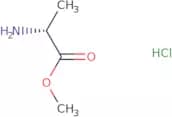
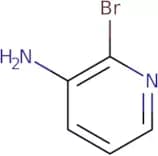
CAS:<p>D-Alanine methyl ester HCl is a diamide with antimycobacterial activity. It was synthesized by the reaction of D-alanine and methyl acrylate in the presence of methanesulfonic acid. The chiral compound was obtained as a racemic mixture. Optical properties are not reported.</p>Fórmula:C4H9NO2HCIPureza:Min. 95%Cor e Forma:White To Off-White SolidPeso molecular:243.04 g/mol3-Amino-2-bromopyridine
CAS:<p>3-Amino-2-bromopyridine is a synthetic compound that has been found to be a potential antitumor agent. It undergoes a palladium-catalyzed coupling reaction with 3-phenylpropene, forming an amide. The reaction yield is dependent on the temperature of the reaction, which must be low enough for the desired product to form. 3-Amino-2-bromopyridine has been shown to possess pharmacokinetic properties and can be transported by amide, hydroxyl, and carboxyl groups. This compound also undergoes acid formation reactions at elevated temperatures.</p>Fórmula:C5H5BrN2Pureza:Min. 95%Cor e Forma:White PowderPeso molecular:173.01 g/mol1-Ethyl-1,2-dihydro-2,2,4-trimethyl-7-quinolinol hydrochloride
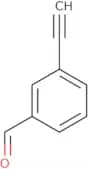
CAS:<p>Please enquire for more information about 1-Ethyl-1,2-dihydro-2,2,4-trimethyl-7-quinolinol hydrochloride including the price, delivery time and more detailed product information at the technical inquiry form on this page</p>Fórmula:C14H19NO•HClPureza:Min. 95%Cor e Forma:PowderPeso molecular:253.77 g/mol3-Ethynylbenzaldehyde
CAS:<p>3-Ethynylbenzaldehyde is a tryptic, nitro compound that contains terminal alkynes and has functional groups. The functional theory of this compound suggests that it may be used as a chemosensor for the detection of acidic compounds. 3-Ethynylbenzaldehyde reacts with sodium trifluoroacetate to form an aldehyde, which is then oxidized to an acid by the addition of water. This acid can be detected using NMR spectroscopy. 3-Ethynylbenzaldehyde has been shown to react with sodium trifluoroacetate in solid form at room temperature and above. The resulting product is a yellow crystalline solid that can be identified by its UV spectrum.</p>Fórmula:C9H6OPureza:Min. 95%Cor e Forma:PowderPeso molecular:130.14 g/mol2-Ethoxy-1,3-thiazole-5-carbaldehyde
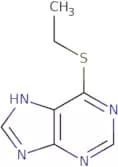
CAS:<p>2-Ethoxy-1,3-thiazole-5-carbaldehyde is a fine chemical that is a versatile building block for the synthesis of complex molecules. It can be used as a reagent in organic chemistry, and it is also an intermediate in the synthesis of drugs and other compounds. This compound has been shown to be useful as a scaffold in the development of novel drug candidates.</p>Fórmula:C6H7NO2SPureza:Min. 95%Cor e Forma:PowderPeso molecular:157.19 g/mol6-Ethylmercaptopurine
CAS:<p>6-Ethylmercaptopurine is a purine analogue that inhibits the synthesis of DNA. It is used as an inhibitor of protein synthesis and in the treatment of inflammatory bowel disease. 6-Ethylmercaptopurine has been shown to inhibit the activity of ATPase, which may be responsible for its ability to suppress the proliferation of cells. This drug can also act as an analog to adenosine, which can be used to determine ATP levels in a cell or tissue sample by measuring the amount of p-nitrophenyl phosphate produced. 6-Ethylmercaptopurine has been shown to block phosphatase activity, which may lead to inflammation in some cases.<br>6-Ethylmercaptopurine has a molecular weight of 194.2 g/mol and an optimum pH of 4.5</p>Fórmula:C7H8N4SPureza:Min. 95%Cor e Forma:Off-White PowderPeso molecular:180.23 g/molN-Methyl methanesulfonamide
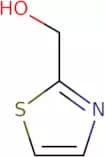
CAS:<p>N-Methyl methanesulfonamide is an amide compound that has a vibrational frequency of 1605 cm-1. It is used in the manufacture of covid-19, a pandemic influenza virus vaccine. Covid-19 contains N-methyl methanesulfonamide as one of its ingredients. The vaccine has been shown to have a constant temperature and an inhibitory effect on the production of tyrosine kinase, which is a protein that regulates cell growth and division. The reaction product also inhibits sulfoxide reductase, an enzyme that catalyzes the reduction of sulfoxides. N-Methyl methanesulfonamide is susceptible to acidic hydrolysis and can be structurally represented as follows:</p>Fórmula:C2H7NO2SPureza:Min. 95%Cor e Forma:Light (Or Pale) Yellow To Amber To Brown LiquidPeso molecular:109.15 g/mol1,3-Thiazol-2-ylmethanol
CAS:<p>1,3-Thiazol-2-ylmethanol is a macrocyclic compound that has a structure similar to that of the natural product phenylbutazone. It is synthesized from 1,3-thiazol-2-amine and benzaldehyde by dehydrogenative condensation. The ligand binds with metal ions via its thionyl group. The metal ion coordinates with the chloride anion and the ligand to produce a planar geometry. This process also produces a distillate that contains phenylbutazone as a major product.</p>Fórmula:C4H5NOSPureza:Min. 95%Cor e Forma:White PowderPeso molecular:115.15 g/molD-Threonine methyl ester hydrochloride
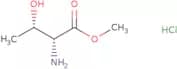
CAS:<p>D-Threonine methyl ester hydrochloride is a versatile building block that is used in the synthesis of complex compounds. It can be used as a reagent, speciality chemical, and useful scaffold in organic chemistry. D-Threonine methyl ester hydrochloride has been shown to react with a variety of electrophiles and nucleophiles to form diverse products. This product is also used as a reaction component for the synthesis of high quality chemical intermediates.</p>Fórmula:C5H11NO3·HClPureza:Min. 98%Cor e Forma:PowderPeso molecular:169.61 g/molTrimethyl 1,3,5-benzene tricarboxylate
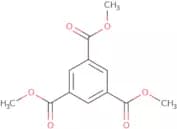
CAS:<p>Trimethyl 1,3,5-benzene tricarboxylate is a chemical compound that belongs to the group of polycarboxylic acids. It is used as a polymerization agent in the manufacture of ionic polymers. The first step in this process is cationic polymerization, which involves the reaction between trimethyl 1,3,5-benzene tricarboxylate and sodium citrate to form an ion pair. This process can be followed by hydrolysis with hydrochloric acid and sodium carbonate to release the carboxylate anion from the polymer chain and regenerate trimethyl 1,3,5-benzene tricarboxylate. Trimethyl 1,3,5-benzene tricarboxylate has been shown to have optical properties that depend on its molecular weight and metal surface interactions. It can also be used as a chelating agent for zinc diethyld</p>Fórmula:C12H12O6Pureza:Min. 95%Cor e Forma:White PowderPeso molecular:252.22 g/mol7,7,8,8-Tetracyanoquinodimethane
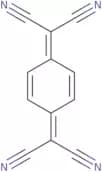
CAS:<p>7,7,8,8-Tetracyanoquinodimethane is a quinoid compound that is used as an analytical chemical reagent. It has been shown to be a powerful reducing agent and can be used in the determination of trace amounts of metals. 7,7,8,8-Tetracyanoquinodimethane also reacts with cationic surfactants and hydroxyl groups to form stable compounds. The nitrogen atoms in this molecule are capable of multiple transfer reactions with other molecules.br>br> <br>The redox potentials of this substance are negative and it has been shown to have the ability to transport pharmaceutical preparations across cell membranes. Boron nitride (BN) has been shown to stabilize the structure of 7,7,8,8-tetracyanoquinodimethane by forming strong hydrogen bonds between the BN and hydroxyl groups on this molecule.</p>Fórmula:C12H4N4Pureza:Min. 95%Cor e Forma:Yellow To Green Or Brown SolidPeso molecular:204.19 g/mol3-Bromo-5-chloropyridine-4-amine
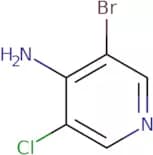
CAS:<p>3-Bromo-5-chloropyridine-4-amine is a versatile building block that can be used in many different chemical syntheses. It is a reagent and a useful scaffold for the synthesis of complex compounds. 3-Bromo-5-chloropyridine-4-amine has been used as a high quality, useful intermediate in the synthesis of other chemicals. It is also an effective reaction component for reactions involving amines and thiols.</p>Fórmula:C5H4BrClN2Pureza:Min. 95%Cor e Forma:White PowderPeso molecular:207.46 g/mol