


Building Blocks
Esta seção contém produtos fundamentais para a síntese de compostos orgânicos e biológicos. Building blocks são os materiais de partida essenciais usados para construir moléculas complexas através de várias reações químicas. Eles desempenham um papel crítico na descoberta de medicamentos, ciência dos materiais e pesquisa química. Na CymitQuimica, oferecemos uma ampla gama de building blocks de alta qualidade para apoiar suas pesquisas inovadoras e projetos industriais, garantindo que você tenha os componentes essenciais para uma síntese bem-sucedida.
Subcategorias de "Building Blocks"
- Ácidos Borónicos e Derivados de Ácido Borónico(5.756 produtos)
- Building Blocks Quirais(1.242 produtos)
- Building Blocks Hidrocarbonetos(6.093 produtos)
- Building Blocks orgânicos(60.519 produtos)
Foram encontrados 195533 produtos de "Building Blocks"
Ordenar por
Pureza (%)
0
100
|
0
|
50
|
90
|
95
|
100
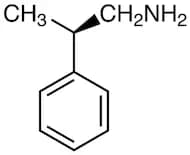
(R)-(+)-β-Methylphenethylamine
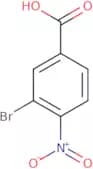
CAS:Fórmula:C9H13NPureza:>98.0%(GC)(T)Cor e Forma:Colorless to Almost colorless clear liquidPeso molecular:135.213-Bromo-4-nitrobenzoic acid
CAS:<p>3-Bromo-4-nitrobenzoic acid is a chemical compound with the molecular formula CHBrNO2. It is a versatile building block that can be used in the synthesis of many different compounds. 3-Bromo-4-nitrobenzoic acid is a white crystalline solid that is soluble in water, ethanol, and ether. It reacts with many substances to produce other useful compounds. It can also be used as a reagent for the detection of proteins or nucleic acids. This product has been shown to be an effective intermediate in organic reactions and has been used as a scaffold in the synthesis of complex molecules such as natural products, pharmaceuticals, and agrochemicals.</p>Fórmula:C7H4BrNO4Pureza:Min. 95%Cor e Forma:PowderPeso molecular:246.02 g/mol3,5,7-Trimethyl-1-aminoadamantane hydrochloride
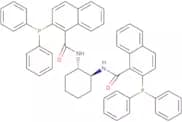
CAS:<p>3,5,7-Trimethyl-1-aminoadamantane hydrochloride is a versatile building block that can be used in the production of various fine chemicals. 3,5,7-Trimethyl-1-aminoadamantane hydrochloride is a reagent and speciality chemical that has been used as a research chemical in the synthesis of complex compounds. It is also a useful building block for the synthesis of high quality reaction components and scaffolds.</p>Fórmula:C13H23N•HClPureza:Min. 95%Cor e Forma:White PowderPeso molecular:229.79 g/mol(1S,2S)-(-)-1,2-Diaminocyclohexane-N,N'-bis(2-diphenylphosphino-1-naphthoyl)
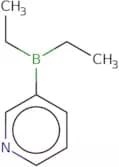
CAS:<p>(1S,2S)-(-)-1,2-Diaminocyclohexane-N,N'-bis(2-diphenylphosphino-1-naphthoyl) is an alkoxyallene that is synthesized from the reaction of allene and ethylene oxide. It has been shown to inhibit abnormal cell growth in vitro. (1S,2S)-(-)-1,2-Diaminocyclohexane-N,N'-bis(2-diphenylphosphino-1-naphthoyl) also inhibits cancer cell proliferation in vivo and shows a high degree of stereoselectivity and enantioselectivity. This compound can be used as an anticancer agent due to its ability to selectively kill cancer cells while leaving normal cells unharmed.</p>Fórmula:C52H44N2O2P2Pureza:Min. 94.5 Area-%Cor e Forma:PowderPeso molecular:790.87 g/mol3-(Diethylboryl) pyridine
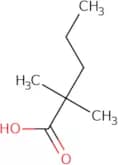
CAS:<p>3-(Diethylboryl) pyridine is a halogenated biphenyl. It is used in the synthesis of 3-aryl substituted pyridines by cross-coupling reactions with aryl iodides, bromides and chlorides. Cross-coupling reactions are usually carried out at low temperatures (0 to 20°C) in order to minimize side reactions. The reaction is usually conducted in a biphasic system containing an organic solvent and water, which facilitates the extraction of the product from the mixture. 3-(Diethylboryl) pyridine reacts with halide ions via an electrophilic substitution reaction to form a reactive intermediate, which reacts with palladium catalyst to produce the desired product. This process is also called catalytic hydrogenation. 3-(Diethylboryl) pyridine has been shown to inhibit human cytochrome P450 enzymes, which are involved in drug metabolism and break down drugs</p>Fórmula:C9H14BNPureza:Min. 95%Cor e Forma:PowderPeso molecular:147.03 g/mol2,2-Dimethylvaleric acid
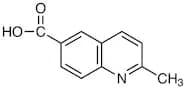
CAS:<p>2,2-Dimethylvaleric acid is a fatty acid that can be synthesized from 2,2-dimethylolpropane. It has been shown to reduce blood pressure in mice by inhibiting the synthesis of certain fatty acids. The mechanism of action may be due to the inhibition of messenger RNA (mRNA) and protein synthesis in the central nervous system. 2,2-Dimethylvaleric acid has also been shown to have neurotrophic effects on cultured cells and is an effective antioxidant. This compound has been used as a control for diode experiments in optical systems.</p>Fórmula:C7H14O2Pureza:Min. 95%Cor e Forma:Colorless Clear LiquidPeso molecular:130.18 g/mol2-Methylquinoline-6-carboxylic Acid
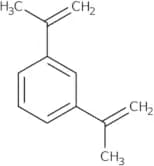
CAS:Fórmula:C11H9NO2Pureza:>98.0%(T)(HPLC)Cor e Forma:White to Light yellow to Light orange powder to crystalPeso molecular:187.201,3-Diisopropenylbenzene - stabilized with TBC
CAS:<p>1,3-Diisopropenylbenzene is a hydrocarbon solvent with thermal expansion properties. It has been shown to be an effective cross-linking agent for cationic polymerization and is used as a surfactant for the production of polyurethanes. 1,3-Diisopropenylbenzene is also used as a chemical intermediate in the production of higher molecular weight polymers and plastics. The ester linkages in 1,3-diisopropenylbenzene are susceptible to hydrolysis and oxidation, which can lead to degradation. 1,3-diisopropenylbenzene is stabilized with TBC by forming an ether linkage with the terminal hydroxyl group on TBC.</p>Fórmula:C12H14Pureza:Min. 95%Cor e Forma:Colorless PowderPeso molecular:158.24 g/molMethyl Pentafluorophenyl Carbonate
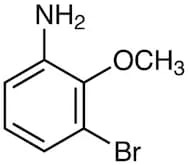
CAS:Fórmula:C8H3F5O3Pureza:>98.0%(GC)Cor e Forma:White to Almost white powder to lumpPeso molecular:242.103-Bromo-2-methoxyaniline
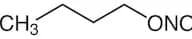
CAS:Fórmula:C7H8BrNOPureza:>98.0%(GC)(T)Cor e Forma:Light yellow to Brown clear liquidPeso molecular:202.05Butyl Nitrite
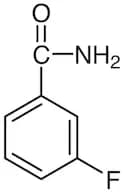
CAS:Fórmula:C4H9NO2Pureza:>95.0%(GC)Cor e Forma:Light yellow to Yellow clear liquidPeso molecular:103.123-Fluorobenzamide
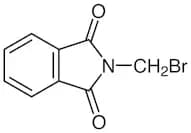
CAS:Fórmula:C7H6FNOPureza:>97.0%(HPLC)(N)Cor e Forma:White to Almost white powder to crystalPeso molecular:139.13N-(Bromomethyl)phthalimide
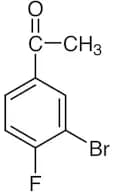
CAS:Fórmula:C9H6BrNO2Pureza:>96.0%(T)Cor e Forma:White to Almost white powder to crystalPeso molecular:240.063'-Bromo-4'-fluoroacetophenone
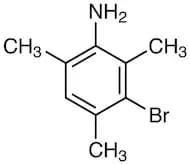
CAS:Fórmula:C8H6BrFOPureza:>96.0%(GC)Cor e Forma:White to Orange to Green powder to crystalPeso molecular:217.043-Bromo-2,4,6-trimethylaniline
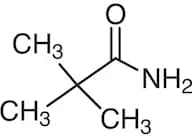
CAS:Fórmula:C9H12BrNPureza:>98.0%(GC)(T)Cor e Forma:White to Light yellow to Light orange powder to crystalPeso molecular:214.11Pivalamide
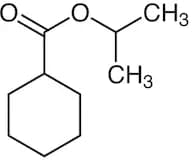
CAS:Fórmula:C5H11NOPureza:>98.0%(GC)(N)Cor e Forma:White to Almost white powder to crystalPeso molecular:101.15Isopropyl Cyclohexanecarboxylate
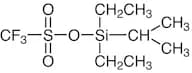
CAS:Fórmula:C10H18O2Pureza:>98.0%(GC)Cor e Forma:Colorless to Almost colorless clear liquidPeso molecular:170.25Diethylisopropylsilyl Trifluoromethanesulfonate
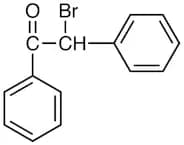
CAS:Fórmula:C8H17F3O3SSiPureza:>98.0%(T)Cor e Forma:Colorless to Light yellow to Light orange clear liquidPeso molecular:278.362-Bromo-2-phenylacetophenone
CAS:Fórmula:C14H11BrOPureza:>95.0%(GC)Cor e Forma:White to Light yellow to Light orange powder to crystalPeso molecular:275.151,1'-[Biphenyl-4,4'-diylbis(methylene)]bis(4,4'-bipyridinium) Bis(hexafluorophosphate)
CAS:Fórmula:C34H28F12N4P2Pureza:>98.0%(HPLC)Cor e Forma:Light yellow to Yellow to Orange powder to crystalPeso molecular:782.55




![1,1'-[Biphenyl-4,4'-diylbis(methylene)]bis(4,4'-bipyridinium) Bis(hexafluorophosphate)](/_next/image/?url=https%3A%2Fstatic.cymitquimica.com%2Fproducts%2F3B%2Fthumb-webp%2FB2280.webp&w=3840&q=75)