Building Blocks
Esta seção contém produtos fundamentais para a síntese de compostos orgânicos e biológicos. Building blocks são os materiais de partida essenciais usados para construir moléculas complexas através de várias reações químicas. Eles desempenham um papel crítico na descoberta de medicamentos, ciência dos materiais e pesquisa química. Na CymitQuimica, oferecemos uma ampla gama de building blocks de alta qualidade para apoiar suas pesquisas inovadoras e projetos industriais, garantindo que você tenha os componentes essenciais para uma síntese bem-sucedida.
Subcategorias de "Building Blocks"
- Ácidos Borónicos e Derivados de Ácido Borónico(5.756 produtos)
- Building Blocks Quirais(1.242 produtos)
- Building Blocks Hidrocarbonetos(6.093 produtos)
- Building Blocks orgânicos(60.532 produtos)
Foram encontrados 195533 produtos de "Building Blocks"
Ordenar por
Pureza (%)
0
100
|
0
|
50
|
90
|
95
|
100
2-Nitrobiphenyl
CAS:Fórmula:C12H9NO2Pureza:>98.0%(GC)Cor e Forma:White or Colorless to Yellow powder to lump to clear liquidPeso molecular:199.21Bromoform (stabilized with 2-Methyl-2-butene) [for Spectrophotometry]
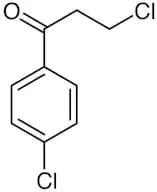
CAS:Fórmula:CHBr3Pureza:>99.0%(GC)Cor e Forma:Colorless clear liquidPeso molecular:252.733,4'-Dichloropropiophenone
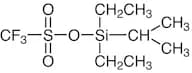
CAS:Fórmula:C9H8Cl2OPureza:>98.0%(GC)(T)Cor e Forma:White to Yellow to Orange powder to crystalPeso molecular:203.06Diethylisopropylsilyl Trifluoromethanesulfonate
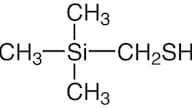
CAS:Fórmula:C8H17F3O3SSiPureza:>98.0%(T)Cor e Forma:Colorless to Light yellow to Light orange clear liquidPeso molecular:278.36Trimethylsilylmethanethiol
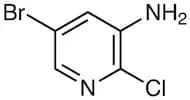
CAS:Fórmula:C4H12SSiPureza:>97.0%(GC)Cor e Forma:Colorless to Almost colorless clear liquidPeso molecular:120.293-Amino-5-bromo-2-chloropyridine
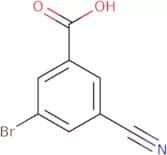
CAS:Fórmula:C5H4BrClN2Pureza:>98.0%(GC)Cor e Forma:White to Orange to Green powder to crystalPeso molecular:207.463-Bromo-5-cyanobenzoic acid
CAS:<p>3-Bromo-5-cyanobenzoic acid is a fine chemical that is used as a reagent or intermediate in the production of other chemicals. 3-Bromo-5-cyanobenzoic acid can be used as an intermediate in the synthesis of pharmaceuticals, agrochemicals, and perfumes. This compound is also useful as a building block for making speciality chemicals and research chemicals. 3-Bromo-5-cyanobenzoic acid is versatile because it can be used in many different reactions with many different substrates to make many different products.</p>Fórmula:C8H4BrNO2Pureza:Min. 95%Cor e Forma:PowderPeso molecular:226.03 g/mol12-(t-Boc-amino)-1-dodecanol
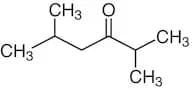
CAS:<p>12-(t-Boc-amino)-1-dodecanol is a versatile building block that is used in the synthesis of complex compounds. It can be used by itself or as a reagent or speciality chemical. This compound is useful for the synthesis of high quality research chemicals and useful scaffolds. 12-(t-Boc-amino)-1-dodecanol has CAS No. 67341-03-1 and is a fine chemical that has been widely used in the synthesis of pharmaceuticals, agrochemicals, and other organic compounds.</p>Fórmula:C17H35NO3Pureza:Min. 95%Cor e Forma:PowderPeso molecular:301.46 g/mol2,5-Dimethyl-3-hexanone
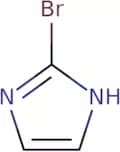
CAS:Fórmula:C8H16OPureza:>96.0%(GC)Cor e Forma:Colorless to Light yellow clear liquidPeso molecular:128.222-Bromo-1H-imidazole
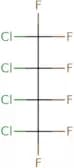
CAS:<p>2-Bromo-1H-imidazole is an environmental pollutant that has been detected in the atmosphere, water, and soil. It is used as a pesticide and has been found to be an impurity in biphenyl. 2-Bromo-1H-imidazole can be used as a substrate for the Suzuki coupling reaction or as a starting material for the synthesis of imidazole derivatives. The compound spontaneously fragments under acidic conditions to form nitric acid and hydrogen bromide. 2-Bromo-1H-imidazole has been shown to inhibit hepatitis C virus (HCV) replication and induce cancer cell apoptosis in vitro.<br>2-Bromo-1H-imidazole is also known to cause DNA fragmentation in cells through oxidation by reactive oxygen species or through spontaneous decomposition of the molecule into acid, bromine radicals, and ammonia.</p>Fórmula:C3H3BrN2Pureza:Min. 95%Cor e Forma:PowderPeso molecular:146.97 g/mol1,2,3,4-Tetrachlorohexafluorobutane
CAS:<p>1,2,3,4-Tetrachlorohexafluorobutane is a colorless liquid with an unpleasant odor. It is used as a solvent and as a chemical intermediate in the production of other chemicals. 1,2,3,4-Tetrachlorohexafluorobutane has been shown to react with hydrochloric acid to produce hydrogen chloride gas and hydrogen fluoride. The reaction vessel must be well-ventilated and the use of protective clothing is recommended due to the potential for exposure to hydrogen fluoride. This compound can also be chlorinated using chlorine gas or hypochlorite solution.</p>Fórmula:C4Cl4F6Pureza:Min. 95%Cor e Forma:Colorless Clear LiquidPeso molecular:303.84 g/mol1-Amino-1-cyclopropanecarbonitrile hydrochloride
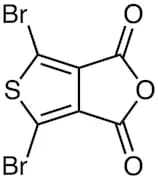
CAS:<p>1-Amino-1-cyclopropanecarbonitrile hydrochloride (ACN) is a synthetic compound that has been shown to be effective against cancer and inflammatory diseases. It is an acidic compound that has been shown to inhibit the growth of tumor cells by inducing apoptosis. This drug also binds to chloride ions and inhibits the production of inflammatory cytokines, such as IL-6, TNFα, and IL-2. 1-Amino-1-cyclopropanecarbonitrile hydrochloride is soluble in water and acetonitrile with a melting point of about 157°C. The molecule's structure was determined through kinetic measurements and thermodynamic calculations.</p>Fórmula:C4H6N2·HClPureza:Min. 95%Cor e Forma:Off-White PowderPeso molecular:118.56 g/mol2,5-Dibromo-3,4-thiophenedicarboxylic Anhydride
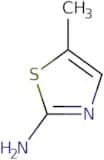
CAS:Fórmula:C6Br2O3SPureza:>98.0%(GC)Cor e Forma:Light yellow to Brown to Dark green powder to crystalPeso molecular:311.932-Amino-5-methylthiazole
CAS:<p>2-Amino-5-methylthiazole is a nonsteroidal anti-inflammatory drug (NSAID) that inhibits the enzyme cyclooxygenase. It has been shown to inhibit the activity of two different types of cyclooxygenase, COX-1 and COX-2, in vitro. 2-Amino-5-methylthiazole also has shown antimicrobial activity against Escherichia coli and Staphylococcus aureus. This compound is stable in high salt concentrations and at high pH values. 2-Amino-5-methylthiazole does not contain any nitrogen atoms but does have an electron rich aromatic ring and a methyl group on the side chain. The redox potential for this molecule is -0.16 V vs SHE at pH 7.4, making it more likely to be oxidized than reduced, which may explain its low reactivity with hydrogen peroxide and its ability to be stable in</p>Fórmula:C4H6N2SPureza:Min. 95%Cor e Forma:Off-White PowderPeso molecular:114.17 g/molOctafluorocyclopentene
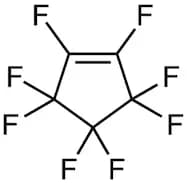
CAS:Fórmula:C5F8Pureza:>98.0%(GC)Cor e Forma:Colorless to Almost colorless clear liquidPeso molecular:212.04anti-(1R)-(+)-Camphorquinone 3-Oxime
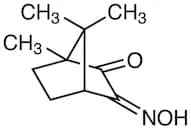
CAS:Fórmula:C10H15NO2Pureza:>95.0%(GC)(N)Cor e Forma:White to Orange to Green powder to crystalPeso molecular:181.24N-Butanesulfonyl-O-[4-(4-pyridinyl)-butyl]-(S)-tyrosine
CAS:<p>N-Butanesulfonyl-O-[4-(4-pyridinyl)-butyl]-(S)-tyrosine is a synthetic amino acid. It is soluble in water and forms hydrates. The yield of this reaction is 60%. The molecular weight of this compound is 233.3 g/mol. This compound has been shown to have proteolytic activity, which may be due to its ability to cleave peptide bonds in proteins. N-Butanesulfonyl-O-[4-(4-pyridinyl)-butyl]-(S)-tyrosine may also be used as an intermediate for the synthesis of other compounds, such as aminoglycosides and antibiotics. This chemical can be synthesized by reacting L-tyrosine with butanesulfonyl chloride in the presence of sodium hydroxide and an organic base, such as pyridine. The solvents used in this process are chloroform, dich</p>Fórmula:C22H30N2O5SPureza:Min. 95%Cor e Forma:PowderPeso molecular:434.55 g/molFmoc-Thr(tBu)-Ser(Psi(Me,Me)pro)-OBzl
<p>Fmoc-Thr(tBu)-Ser(Psi(Me,Me)pro)-OBzl is a high quality, research chemical that is used as an intermediate in the synthesis of complex compounds. It is a useful building block and can be used to make speciality chemicals. This reagent has many uses including being a useful scaffold for organic synthesis and a reaction component in the production of other fine chemicals. Fmoc-Thr(tBu)-Ser(Psi(Me,Me)pro)-OBzl has CAS No. 7791-02-8 and may be found in the following chemical structure:</p>Fórmula:C36H42N2O7Pureza:Min. 95%Cor e Forma:PowderPeso molecular:614.73 g/mol1,3-Thiazol-2-ylmethanol
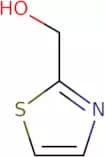
CAS:<p>1,3-Thiazol-2-ylmethanol is a macrocyclic compound that has a structure similar to that of the natural product phenylbutazone. It is synthesized from 1,3-thiazol-2-amine and benzaldehyde by dehydrogenative condensation. The ligand binds with metal ions via its thionyl group. The metal ion coordinates with the chloride anion and the ligand to produce a planar geometry. This process also produces a distillate that contains phenylbutazone as a major product.</p>Fórmula:C4H5NOSPureza:Min. 95%Cor e Forma:White PowderPeso molecular:115.15 g/molD-Threonine methyl ester hydrochloride
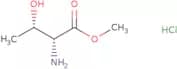
CAS:<p>D-Threonine methyl ester hydrochloride is a versatile building block that is used in the synthesis of complex compounds. It can be used as a reagent, speciality chemical, and useful scaffold in organic chemistry. D-Threonine methyl ester hydrochloride has been shown to react with a variety of electrophiles and nucleophiles to form diverse products. This product is also used as a reaction component for the synthesis of high quality chemical intermediates.</p>Fórmula:C5H11NO3·HClPureza:Min. 98%Cor e Forma:PowderPeso molecular:169.61 g/mol


![Bromoform (stabilized with 2-Methyl-2-butene) [for Spectrophotometry]](/_next/image/?url=https%3A%2Fstatic.cymitquimica.com%2Fproducts%2F3B%2Fthumb-webp%2FB0806.webp&w=3840&q=75)



![N-Butanesulfonyl-O-[4-(4-pyridinyl)-butyl]-(S)-tyrosine](/_next/image/?url=https%3A%2Fstatic.cymitquimica.com%2Fproducts%2F3D%2Fthumb-webp%2FFB19373.webp&w=3840&q=75)