


Building Blocks
Esta seção contém produtos fundamentais para a síntese de compostos orgânicos e biológicos. Building blocks são os materiais de partida essenciais usados para construir moléculas complexas através de várias reações químicas. Eles desempenham um papel crítico na descoberta de medicamentos, ciência dos materiais e pesquisa química. Na CymitQuimica, oferecemos uma ampla gama de building blocks de alta qualidade para apoiar suas pesquisas inovadoras e projetos industriais, garantindo que você tenha os componentes essenciais para uma síntese bem-sucedida.
Subcategorias de "Building Blocks"
- Ácidos Borónicos e Derivados de Ácido Borónico(5.778 produtos)
- Building Blocks Quirais(1.242 produtos)
- Building Blocks Hidrocarbonetos(6.098 produtos)
- Building Blocks orgânicos(61.034 produtos)
Foram encontrados 199601 produtos de "Building Blocks"
Ordenar por
Pureza (%)
0
100
|
0
|
50
|
90
|
95
|
100
2-{[1-(2,4-Difluorophenyl)ethyl]amino}-N-ethylacetamide
CAS:<p>Versatile small molecule scaffold</p>Fórmula:C12H16F2N2OPureza:Min. 95%Cor e Forma:PowderPeso molecular:242.26 g/mol3-Cyclohexyl-1,1-dimethylurea
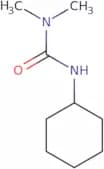
CAS:<p>3-Cyclohexyl-1,1-dimethylurea is a chemical compound that can be used in industrial processes. It is stable and controllable, but must be handled with care as it reacts with water. The compound does not react with cariprazine or any other drugs at room temperature. 3-Cyclohexyl-1,1-dimethylurea has been shown to be an effective reagent for the synthesis of amides from carboxylic acids.</p>Fórmula:C9H18N2OPureza:Min. 95%Cor e Forma:PowderPeso molecular:170.25 g/mol4H-Cyclopenta[2,1-b:3,4-b']dithiophene
CAS:<p>4H-Cyclopenta[2,1-b:3,4-b']dithiophene is a molecule that has been shown to be photovoltaic. It has an optical absorption spectrum that peaks in the UV region and is able to absorb light from 300 to 400 nm. 4H-Cyclopenta[2,1-b:3,4-b']dithiophene can be fabricated into devices by means of cyclic voltammetry or other techniques. As a result of its high electron mobility and its ability to absorb visible light, this molecule may lead to high efficiency solar cells. Photovoltaic devices made with 4H-Cyclopenta[2,1-b:3,4-b']dithiophene have been shown to have efficiencies as high as 2%.</p>Fórmula:C9H6S2Pureza:Min. 95%Cor e Forma:PowderPeso molecular:178.28 g/molNudifloramide
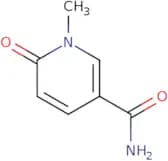
CAS:<p>Nudifloramide is an adenine nucleotide that functions in the synthesis of DNA and RNA. It has been shown to inhibit the activities of enzymes such as glutamine synthetase, glutamate dehydrogenase, and cytochrome P450. Nudifloramide is a component of cervical cancer cells and has been shown to have clinical relevance in the diagnosis of this disease. This molecule has also been found to be present in high-sensitivity C-reactive protein samples, which are used for diagnosing chronic inflammation.</p>Fórmula:C7H8N2O2Pureza:Min. 95%Cor e Forma:PowderPeso molecular:152.15 g/mol2-Chloroquinoline
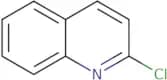
CAS:2-Chloroquinoline is a compound that has antimicrobial properties. It acts by inhibiting bacterial RNA synthesis and protein synthesis. 2-Chloroquinoline has been shown to have toxicological effects in animal studies, including cancer. It also inhibits the activity of the cb2 receptor and the CCR5 receptor, which are involved in tumor growth. The molecular docking analysis for this compound is available, which can be found on PubChem.Fórmula:C9H6ClNPureza:Min. 98%Cor e Forma:PowderPeso molecular:163.6 g/mol5-Chloro-2-mercaptobenzothiazole
CAS:<p>5-Chloro-2-mercaptobenzothiazole (5CMB) is a thione that binds to hydrogen fluoride (HF) and sodium salts. 5CMB has been used in the synthesis of fluorinated drugs, such as 5-chloro-2-(4'-fluorophenylsulfonyl)benzothiazole, which is used for the treatment of cancer. 5CMB has also been shown to be a potential drug candidate for the treatment of Alzheimer's disease. The structure of 5CMB can be determined using crystallography techniques. Its binding constants with HF and sodium salts can be determined using matrix-assisted laser desorption ionization mass spectrometry (MALDI MS). The toxicity studies of 5CMB have been conducted on animals including mice and rats. These studies show that the LD50 value for 5CMB is 3200 mg/kg bodyweight.</p>Fórmula:C7H4ClNS2Pureza:Min. 98 Area-%Cor e Forma:PowderPeso molecular:201.7 g/mol2-(Chloromethyl)pyrimidine HCl
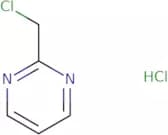
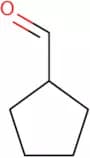
CAS:<p>2-(Chloromethyl)pyrimidine HCl is a chlorinated aromatic compound that is used in the manufacturing of nylon and other synthetic fibers. It is an intermediate for the production of polychloroparaffins, which are used as solvents and raw materials in the chemical industry. 2-(Chloromethyl)pyrimidine HCl has been shown to undergo a chlorination reaction with alcohols to produce 4-chloro-2-methyl-1,3-dioxolane. This reaction can be catalyzed by calcium hydroxide or magnesium chloride, which are both common chemicals found in household cleaners.</p>Fórmula:C5H5ClN2·HClPureza:Min. 95%Cor e Forma:Yellow PowderPeso molecular:165.02 g/molCyclopentanecarbaldehyde
CAS:<p>Cyclopentanecarbaldehyde is a reactive molecule that is used as a ligand in coordination chemistry. It has been shown to bind to the toll-like receptor and may be useful for treating autoimmune diseases. Cyclopentanecarbaldehyde binds with nitrogen atoms in the active site of chelate ligands, which can cause changes in coordination geometry. This reaction mechanism is similar to that of other heterocycles such as 2-picolylhydrazine and 4-picolylhydrazine, which have been shown to be effective in treating Parkinson's disease.</p>Fórmula:C6H10OPureza:Min. 95%Cor e Forma:Colorless Yellow Clear LiquidPeso molecular:98.14 g/mol2-Chloro-4-trifluoromethylbenzoic acid
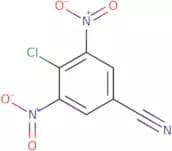
CAS:<p>2-Chloro-4-trifluoromethylbenzoic acid is a chemical compound with the formula CHClFO. It can be obtained by deprotonation of 2,4,6-trichlorobenzoic acid with butyllithium and subsequent reaction with chlorotrifluoromethane. The product has two regioisomers, one in which the chlorine atom is attached to the para position on the benzene ring and the other in which it is attached to the ortho position. Substituents such as alkyl groups or lithium reagents can affect both reactivity and selectivity. The halogen substituent can also be replaced by other functional groups to make derivatives of this compound.</p>Fórmula:C8H4ClF3O2Pureza:Min. 95%Cor e Forma:PowderPeso molecular:224.56 g/mol4-Chloro-3,5-dinitrobenzonitrile
CAS:<p>4-Chloro-3,5-dinitrobenzonitrile is a mesomeric compound that has four amines and one nitro group. It is a dipole with chloride as the negative end and amine as the positive end. The reaction mechanism of this chemical is nucleophilic substitution. 4-Chloro-3,5-dinitrobenzonitrile reacts with an organic solvent to form a buffer. A buffer is an ionized solution that resists changes in pH when acid or base are added to it. This chemical also reacts with thionyl chloride to form hydrochloric acid, which can be used to leishmania parasites. 4-Chloro-3,5-dinitrobenzonitrile also reacts with an anion such as ClO4− or NO2− to form a salt such as chlorate or nitrate respectively.</p>Fórmula:C7H2ClN3O4Pureza:Min. 95%Cor e Forma:PowderPeso molecular:227.56 g/mol2-Chloro-6-fluorobenzaldehyde
CAS:<p>2-Chloro-6-fluorobenzaldehyde is an impurity that can be found in wastewater. It has been shown to be a reactive intermediate for the synthesis of streptochlorin, which is a natural product with potential antibiotic activity. 2-Chloro-6-fluorobenzaldehyde is produced by the reaction of chlorine and anhydrous sodium, with acid as catalyst. The molecule has two fluorine atoms and one chloride atom. This compound can also be used in the treatment of waste water due to its ability to react with hydroxyl ions and chloride ions in the presence of hydrogen chloride or hydrochloric acid. The pain model was evaluated using nmr spectra and optical properties.</p>Fórmula:C7H4ClFOPureza:Min. 95%Cor e Forma:White PowderPeso molecular:158.56 g/mol5-Nitroindole
CAS:<p>5-Nitroindole is a nitro functionalized indole. It is a fine chemical that has a wide range of uses in research, industry and education. 5-Nitroindole can be used as a versatile building block for the synthesis of complex compounds and as an intermediate for the production of other chemicals. 5-Nitroindole is soluble in organic solvents and can be used to synthesize other compounds with high purity. This compound is also known as CAS No. 6146-52-7 and is considered to be of high quality.</p>Fórmula:C8H6N2O2Pureza:Min. 99.0 Area-%Peso molecular:162.15 g/molRef: 3D-N-3000
1kgA consultar100gA consultar250gA consultar500gA consultar2500gA consultar-Unit-ggA consultar4-Nitroindole
CAS:<p>4-Nitroindole is a versatile building block with a variety of applications. It can be used in the synthesis of complex compounds, research chemicals, and reagents. 4-Nitroindole is also useful in the synthesis of speciality chemicals and as an intermediate for the preparation of other compounds. This compound is high quality and has many uses as a reaction component or scaffold.</p>Fórmula:C8H6N2O2Peso molecular:162.15 g/molRef: 3D-N-2980
25gA consultar50gA consultar100gA consultar250gA consultar500gA consultar-Unit-kgkgA consultarcis-4-Chloro-3-nitrocinnamic acid
<p>Cis-4-Chloro-3-nitrocinnamic acid is an aromatic organic compound with potential utility in biochemical research and synthesis. This compound is typically derived from synthetic chemical processes involving chlorination and nitration reactions on cinnamic acid derivatives. Its molecular structure, characterized by both chloro and nitro functional groups, allows it to interact in unique ways with various biochemical pathways and molecular frameworks.</p>Fórmula:C9H6ClNO4Pureza:Min. 95%Cor e Forma:White PowderPeso molecular:227.6 g/molD-Valine
CAS:<p>D-Valine is a non-essential amino acid that is synthesized from 2-oxoglutarate and glutamine. D-Valine has been shown to be an intermediate in microbial metabolism, where it is converted to L-valine by the enzyme d-amino acid oxidase. It has also been shown to have antihypertensive properties in rat models of hypertension. The synthesis of D-valine from glucose can occur through two different pathways: one involves the conversion of L-glutamic acid to L-alanine then to pyruvic acid, which is then converted to L-lactate and then d-malic acid; the other pathway involves the conversion of L-glutamate to citric acid, which can then be converted into succinic acid and eventually d-malic acid. Structural analysis has revealed that D-valine contains a hydrogen bond between its carboxyl group and nitrogen atom in a neighboring molecule. This hydrogen</p>Fórmula:C5H11NO2Pureza:Min. 95%Cor e Forma:White PowderPeso molecular:117.15 g/molL-Valine
CAS:<p>Amino acid</p>Fórmula:C5H11NO2Pureza:min 98%Cor e Forma:White PowderPeso molecular:117.15 g/mol4-Chloro-3-hydroxybenzoic acid
CAS:<p>4-Chloro-3-hydroxybenzoic acid (4-CHB) is a reactive compound that can be used for the detection of bacteria. 4-CHB reacts with peroxyl radicals in solution to form a chlorobenzoic acid derivative, which emits light when excited by radiation. 4-CHB is also capable of dehalogenating chlorobenzene, and can be used as a bioluminescent probe for the detection of bacteria. The reactions are efficient at low concentrations and are detectable with an ultraviolet or visible spectrophotometer.</p>Fórmula:C7H5ClO3Pureza:Min. 95%Cor e Forma:PowderPeso molecular:172.57 g/molcis-N-(3-Chloroallyl)-1-(R)-aminoindan hydrochloride
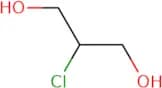
CAS:<p>cis-N-(3-Chloroallyl)-1-(R)-aminoindan hydrochloride is a high quality, research chemical that is a versatile building block. It is used as a reagent and reaction component for the synthesis of fine chemicals, speciality chemicals, and complex compounds. cis-N-(3-Chloroallyl)-1-(R)-aminoindan hydrochloride has CAS number 1175018-80-0.</p>Fórmula:C12H14ClN·HClPureza:Min. 95 Area-%Cor e Forma:PowderPeso molecular:244.16 g/mol2-Chloro-1,3-propanediol
CAS:<p>2-Chloro-1,3-propanediol is a useful intermediate and building block in organic synthesis. It is also a reagent that can be used to synthesize other organic compounds. 2-Chloro-1,3-propanediol has been shown to be a versatile scaffold for the synthesis of many different types of organic molecules. It is also an important component of research chemicals and speciality chemicals. This chemical can be used as a high quality fine chemical or complex compound in the manufacture of other products.</p>Fórmula:C3H7ClO2Pureza:Min. 97 Area-%Cor e Forma:Colorless Clear LiquidPeso molecular:110.54 g/mol4-(Cyclopropylmethyl)-1-oxa-4,9-diazaspiro[5.5]undecan-3-one hydrochloride
Please enquire for more information about 4-(Cyclopropylmethyl)-1-oxa-4,9-diazaspiro[5.5]undecan-3-one hydrochloride including the price, delivery time and more detailed product information at the technical inquiry form on this pageFórmula:C12H20N2O2•(HCl)xPureza:Min. 95%Cor e Forma:Powder
![2-{[1-(2,4-Difluorophenyl)ethyl]amino}-N-ethylacetamide](/_next/image/?url=https%3A%2Fstatic.cymitquimica.com%2Fproducts%2F3D%2Fthumb-webp%2FFWB46460.webp&w=3840&q=75)

![4H-Cyclopenta[2,1-b:3,4-b']dithiophene](/_next/image/?url=https%3A%2Fstatic.cymitquimica.com%2Fproducts%2F3D%2Fthumb-webp%2FFC13994.webp&w=3840&q=75)






![4-(Cyclopropylmethyl)-1-oxa-4,9-diazaspiro[5.5]undecan-3-one hydrochloride](/_next/image/?url=https%3A%2Fstatic.cymitquimica.com%2Fproducts%2F3D%2Fthumb-webp%2FFC182982.webp&w=3840&q=75)