Building Blocks
Esta seção contém produtos fundamentais para a síntese de compostos orgânicos e biológicos. Building blocks são os materiais de partida essenciais usados para construir moléculas complexas através de várias reações químicas. Eles desempenham um papel crítico na descoberta de medicamentos, ciência dos materiais e pesquisa química. Na CymitQuimica, oferecemos uma ampla gama de building blocks de alta qualidade para apoiar suas pesquisas inovadoras e projetos industriais, garantindo que você tenha os componentes essenciais para uma síntese bem-sucedida.
Subcategorias de "Building Blocks"
- Ácidos Borónicos e Derivados de Ácido Borónico(5.756 produtos)
- Building Blocks Quirais(1.242 produtos)
- Building Blocks Hidrocarbonetos(6.095 produtos)
- Building Blocks orgânicos(61.038 produtos)
Foram encontrados 196817 produtos de "Building Blocks"
Ordenar por
Pureza (%)
0
100
|
0
|
50
|
90
|
95
|
100
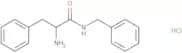
2-Amino-N-benzyl-3-phenylpropanamide hydrochloride
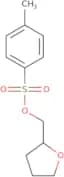
CAS:<p>Versatile small molecule scaffold</p>Fórmula:C16H19ClN2OPureza:Min. 95%Peso molecular:290.79 g/molTetrahydro-2-furanylmethyl4-methylbenzenesulfonate
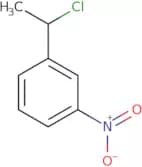
CAS:<p>The Tetrahydro-2-furanylmethyl4-methylbenzenesulfonate ligand is a metal complex that can be used to form allyl complexes with Zirconium and Germanium. It also forms a stable cyclopentyl methyl allyl ligand, which is an important component of the catalytic cycle. This ligand has been shown to bind to alkali metals, such as sodium and potassium, and phosphines. It has a nucleophilic nature and can be used in metallocene reactions.</p>Fórmula:C12H16O4SPureza:Min. 95%Peso molecular:256.32 g/mol1-(1-Chloroethyl)-3-nitrobenzene
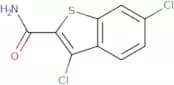
CAS:<p>Versatile small molecule scaffold</p>Fórmula:C8H8ClNO2Pureza:Min. 95%Peso molecular:185.61 g/mol3,6-Dichloro-1-benzothiophene-2-carboxamide
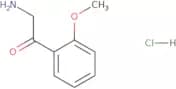
CAS:<p>Versatile small molecule scaffold</p>Fórmula:C9H5Cl2NOSPureza:Min. 95%Peso molecular:246.11 g/mol2-Amino-1-(2-methoxyphenyl)ethanone hydrochloride
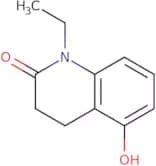
CAS:Produto Controlado<p>Versatile small molecule scaffold</p>Fórmula:C9H12ClNO2Pureza:Min. 95%Peso molecular:201.65 g/mol1-Ethyl-5-hydroxy-1,2,3,4-tetrahydroquinolin-2-one
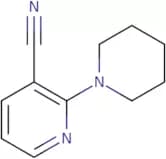
CAS:<p>Versatile small molecule scaffold</p>Fórmula:C11H13NO2Pureza:Min. 95%Peso molecular:191.23 g/mol2-Piperidin-1-ylnicotinonitrile
CAS:<p>Versatile small molecule scaffold</p>Fórmula:C11H13N3Pureza:Min. 95%Peso molecular:187.24 g/mol3-(Benzylamino)-1-phenylpropan-1-ol
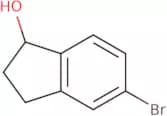
CAS:<p>Versatile small molecule scaffold</p>Fórmula:C16H19NOPureza:Min. 95%Peso molecular:241.33 g/mol5-Bromoindan-1-ol
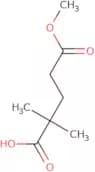
CAS:<p>Versatile small molecule scaffold</p>Fórmula:C9H9BrOPureza:Min. 95%Peso molecular:213.07 g/mol5-Methoxy-2,2-dimethyl-5-oxopentanoic acid
CAS:<p>Versatile small molecule scaffold</p>Fórmula:C8H14O4Pureza:Min. 95%Peso molecular:174.19 g/mol2-(Dimethylamino)-5-nitrobenzenecarbaldehyde
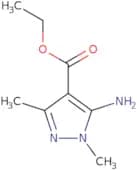
CAS:<p>Versatile small molecule scaffold</p>Fórmula:C9H10N2O3Pureza:Min. 95%Peso molecular:194.19 g/molEthyl 5-amino-1,3-dimethyl-1H-pyrazole-4-carboxylate
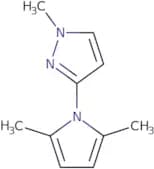
CAS:<p>Versatile small molecule scaffold</p>Fórmula:C8H13N3O2Pureza:Min. 95%Peso molecular:183.21 g/mol3-(2,5-Dimethyl-1H-pyrrol-1-yl)-1-methyl-1H-pyrazole
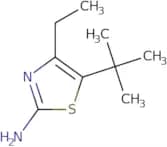
CAS:<p>Versatile small molecule scaffold</p>Fórmula:C10H13N3Pureza:Min. 95%Peso molecular:175.24 g/mol5-tert-Butyl-4-ethyl-1,3-thiazol-2-amine
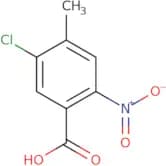
CAS:<p>Versatile small molecule scaffold</p>Fórmula:C9H16N2SPureza:Min. 95%Peso molecular:184.3 g/mol5-Chloro-4-methyl-2-nitrobenzoic acid
CAS:<p>Versatile small molecule scaffold</p>Fórmula:C8H6ClNO4Pureza:Min. 95%Peso molecular:215.59 g/molN-[(4-Methylphenyl)sulfonyl]phenylalanine
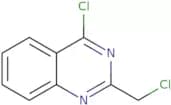
CAS:<p>Versatile small molecule scaffold</p>Fórmula:C16H17NO4SPureza:Min. 95%Peso molecular:319.4 g/mol4-Chloro-2-(chloromethyl)quinazoline
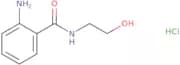
CAS:<p>Versatile small molecule scaffold</p>Fórmula:C9H6Cl2N2Pureza:Min. 95%Peso molecular:213.06 g/mol2-Amino-N-(2-hydroxyethyl)benzamide hydrochloride
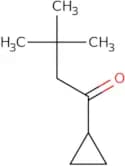
CAS:<p>Versatile small molecule scaffold</p>Fórmula:C9H13ClN2O2Pureza:Min. 95%Peso molecular:216.66 g/mol1-Cyclopropyl-3,3-dimethylbutan-1-one
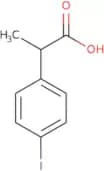
CAS:<p>Cyclopropyl-3,3-dimethylbutan-1-one is an organic compound with the formula (CH)C(O)CH. It is a white solid that is soluble in organic solvents and reacts with water to produce hydrochloric acid. Cyclopropyl-3,3-dimethylbutan-1-one can be used to make other compounds by iodocyclization, including 1,2,4-triazole and 3,4,5-trimethoxybenzene. This reaction proceeds with high stereoselectivity. The synthesis of cyclopropylmethylenecyclohexane can also be accomplished using this reagent. The presence of a hydroxyl group on the ring prevents its use as an oxidant for alkenes or alkynes because it undergoes oxidation by air. Cyclopropyl-3,3-dimethylbutan-1-one also undergoes stere</p>Fórmula:C9H16OPureza:Min. 95%Peso molecular:140.22 g/mol2-(4-Iodophenyl)propanoic acid
CAS:<p>Versatile small molecule scaffold</p>Fórmula:C9H9IO2Pureza:Min. 95%Peso molecular:276.07 g/mol

![N-[(4-Methylphenyl)sulfonyl]phenylalanine](/_next/image/?url=https%3A%2Fstatic.cymitquimica.com%2Fproducts%2F3D%2Fthumb-webp%2FJBA63534.webp&w=3840&q=75)