Building Blocks
Esta seção contém produtos fundamentais para a síntese de compostos orgânicos e biológicos. Building blocks são os materiais de partida essenciais usados para construir moléculas complexas através de várias reações químicas. Eles desempenham um papel crítico na descoberta de medicamentos, ciência dos materiais e pesquisa química. Na CymitQuimica, oferecemos uma ampla gama de building blocks de alta qualidade para apoiar suas pesquisas inovadoras e projetos industriais, garantindo que você tenha os componentes essenciais para uma síntese bem-sucedida.
Subcategorias de "Building Blocks"
- Ácidos Borónicos e Derivados de Ácido Borónico(5.756 produtos)
- Building Blocks Quirais(1.242 produtos)
- Building Blocks Hidrocarbonetos(6.095 produtos)
- Building Blocks orgânicos(61.038 produtos)
Foram encontrados 196817 produtos de "Building Blocks"
Ordenar por
Pureza (%)
0
100
|
0
|
50
|
90
|
95
|
100
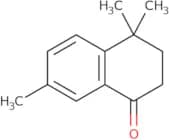
4,4,7-Trimethyl-1,2,3,4-tetrahydronaphthalen-1-one
CAS:<p>Versatile small molecule scaffold</p>Fórmula:C13H16OPureza:Min. 95%Peso molecular:188.26 g/mol2-[2-(1-Methyl-1H-indol-3-yl)ethyl]-2,3-dihydro-1H-isoindole-1,3-dione
CAS:Produto Controlado<p>Versatile small molecule scaffold</p>Fórmula:C19H16N2O2Pureza:Min. 95%Peso molecular:304.3 g/mol5-Amino-1,3-dimethyl-1H,2H,3H,4H-[1,3]diazino[4,5-d]pyrimidine-2,4-dione
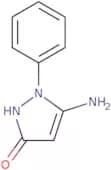
CAS:<p>Azelastine belongs to the class of antihistamines, and is used in the treatment of allergic diseases. It inhibits histamine release from mast cells and basophils, which are white blood cells responsible for inflammatory reactions, such as asthma and allergic rhinitis. Azelastine is not active against infections, but it is effective in the treatment of conjunctivitis caused by allergies or infection. Azelastine also has a local anesthetic effect on the eye. This drug is available in a nasal spray that can be used to treat allergic rhinitis, conjunctivitis and dermatopathy.br><br>Azelastine has been shown to inhibit the growth of bacteria that are resistant to penicillin, ampicillin, erythromycin. Azelastine binds to the penicillin-binding proteins in the bacterial cell wall by competitive inhibition. This binding prevents the formation of an antibiotic-inhibitor complex with the enzyme cell wall synthesis</p>Fórmula:C8H9N5O2Pureza:Min. 95%Peso molecular:207.19 g/mol5-Amino-1-phenyl-2,3-dihydro-1H-pyrazol-3-one
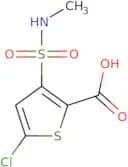
CAS:<p>Versatile small molecule scaffold</p>Fórmula:C9H9N3OPureza:Min. 95%Peso molecular:175.19 g/mol5-Chloro-3-(N-methylsulfamoyl)thiophene-2-carboxylic acid
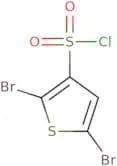
CAS:<p>Versatile small molecule scaffold</p>Fórmula:C6H6ClNO4S2Pureza:Min. 95%Peso molecular:255.7 g/mol2,5-Dibromothiophene-3-sulfonyl chloride
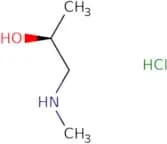
CAS:<p>Versatile small molecule scaffold</p>Fórmula:C4HBr2ClO2S2Pureza:Min. 95%Peso molecular:340.4 g/mol(S)-1-(Methylamino)-2-propanol Hydrochloride
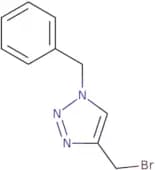
CAS:<p>Versatile small molecule scaffold</p>Fórmula:C4H11NO·HClPureza:Min. 95%Peso molecular:125.59 g/mol1-Benzyl-4-(bromomethyl)-1H-1,2,3-triazole
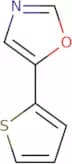
CAS:<p>Versatile small molecule scaffold</p>Fórmula:C10H10BrN3Pureza:Min. 95%Peso molecular:252.11 g/mol5-(2-Thienyl)-1,3-oxazole
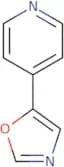
CAS:<p>Versatile small molecule scaffold</p>Fórmula:C7H5NOSPureza:Min. 95%Peso molecular:151.19 g/mol4-(1,3-Oxazol-5-yl)pyridine
CAS:<p>4-(1,3-Oxazol-5-yl)pyridine (4-OP) is an organic solvent that is also a bioisoster of nicotinic acid and nicotinamide. It has significant activity against some bacteria and fungi, and can be used as an antimicrobial agent. 4-OP is decarboxylated by alkali metal hydroxides to give the corresponding amine salt. This process yields a high yield of 4-OP, which can be purified via column chromatography or crystallization with aqueous ammonia. 4-OP has been shown to inhibit streptochlorin production in Streptomyces clavuligerus and act as an antibiotic against Escherichia coli and Pseudomonas aeruginosa.</p>Fórmula:C8H6N2OPureza:Min. 95%Peso molecular:146.15 g/mol3-Benzyl-9-hydroxy-2-methyl-4H-pyrido[1,2-a]pyrimidin-4-one
CAS:<p>Versatile small molecule scaffold</p>Fórmula:C16H14N2O2Pureza:Min. 95%Peso molecular:266.29 g/mol6-Amino-5-methyl-[1,2,4]triazolo[1,5-a]pyrimidin-7-ol
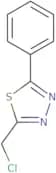
CAS:<p>Versatile small molecule scaffold</p>Fórmula:C6H7N5OPureza:Min. 95%Peso molecular:165.15 g/mol2-(Chloromethyl)-5-phenyl-1,3,4-thiadiazole
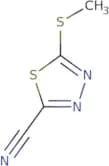
CAS:<p>Versatile small molecule scaffold</p>Fórmula:C9H7ClN2SPureza:Min. 95%Peso molecular:210.68 g/mol5-(Methylsulfanyl)-1,3,4-thiadiazole-2-carbonitrile
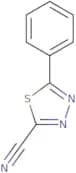
CAS:<p>Versatile small molecule scaffold</p>Fórmula:C4H3N3S2Pureza:Min. 95%Peso molecular:157.2 g/mol5-Phenyl-1,3,4-thiadiazole-2-carbonitrile
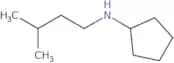
CAS:<p>Versatile small molecule scaffold</p>Fórmula:C9H5N3SPureza:Min. 95%Peso molecular:187.22 g/molN-(3-Methylbutyl)cyclopentanamine
CAS:<p>Versatile small molecule scaffold</p>Fórmula:C10H21NPureza:Min. 95%Peso molecular:155.28 g/mol6-Chloropyrido[2,3-b]pyrazin-2(1H)-one
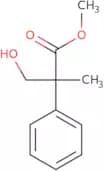
CAS:<p>Versatile small molecule scaffold</p>Fórmula:C7H4ClN3OPureza:Min. 95%Peso molecular:181.58 g/molMethyl 3-hydroxy-2-methyl-2-phenylpropanoate
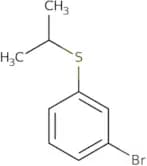
CAS:<p>Versatile small molecule scaffold</p>Fórmula:C11H14O3Pureza:Min. 95%Peso molecular:194.23 g/mol1-Bromo-3-(isopropylsulfanyl)benzene
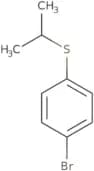
CAS:<p>Versatile small molecule scaffold</p>Fórmula:C9H11BrSPureza:Min. 95%Peso molecular:231.15 g/mol1-Bromo-4-(isopropylthio)benzene
CAS:<p>1-Bromo-4-(isopropylthio)benzene is a reusable, phenylboronic acid reagent. It is used in organic synthesis as a Grignard reagent or peroxide. 1-Bromo-4-(isopropylthio)benzene can be prepared by the reaction of benzene and phenylboronic acid in the presence of potassium carbonate. The reaction proceeds with high yield at room temperature and pressure. 1-Bromo-4-(isopropylthio)benzene reacts with hydrogen peroxide to form 4,5-dihydrobenzoquinone and 2-phenylethanol. This chemical is also used as an industrial acid ester and a reagent for organic synthesis.</p>Fórmula:C9H11BrSPureza:Min. 95%Peso molecular:231.15 g/mol

![2-[2-(1-Methyl-1H-indol-3-yl)ethyl]-2,3-dihydro-1H-isoindole-1,3-dione](/_next/image/?url=https%3A%2Fstatic.cymitquimica.com%2Fproducts%2F3D%2Fthumb-webp%2FVCA36920.webp&w=3840&q=75)
![5-Amino-1,3-dimethyl-1H,2H,3H,4H-[1,3]diazino[4,5-d]pyrimidine-2,4-dione](/_next/image/?url=https%3A%2Fstatic.cymitquimica.com%2Fproducts%2F3D%2Fthumb-webp%2FVCA37155.webp&w=3840&q=75)
![3-Benzyl-9-hydroxy-2-methyl-4H-pyrido[1,2-a]pyrimidin-4-one](/_next/image/?url=https%3A%2Fstatic.cymitquimica.com%2Fproducts%2F3D%2Fthumb-webp%2FVCA38149.webp&w=3840&q=75)
![6-Amino-5-methyl-[1,2,4]triazolo[1,5-a]pyrimidin-7-ol](/_next/image/?url=https%3A%2Fstatic.cymitquimica.com%2Fproducts%2F3D%2Fthumb-webp%2FVCA38475.webp&w=3840&q=75)
![6-Chloropyrido[2,3-b]pyrazin-2(1H)-one](/_next/image/?url=https%3A%2Fstatic.cymitquimica.com%2Fproducts%2F3D%2Fthumb-webp%2FVCA39575.webp&w=3840&q=75)