Building Blocks
Esta seção contém produtos fundamentais para a síntese de compostos orgânicos e biológicos. Building blocks são os materiais de partida essenciais usados para construir moléculas complexas através de várias reações químicas. Eles desempenham um papel crítico na descoberta de medicamentos, ciência dos materiais e pesquisa química. Na CymitQuimica, oferecemos uma ampla gama de building blocks de alta qualidade para apoiar suas pesquisas inovadoras e projetos industriais, garantindo que você tenha os componentes essenciais para uma síntese bem-sucedida.
Subcategorias de "Building Blocks"
- Ácidos Borónicos e Derivados de Ácido Borónico(5.778 produtos)
- Building Blocks Quirais(1.243 produtos)
- Building Blocks Hidrocarbonetos(6.098 produtos)
- Building Blocks orgânicos(61.042 produtos)
Foram encontrados 204339 produtos de "Building Blocks"
Ordenar por
Pureza (%)
0
100
|
0
|
50
|
90
|
95
|
100
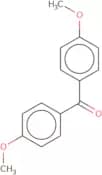
4,4'-Dimethoxybenzophenone
CAS:4,4'-Dimethoxybenzophenone is a process optimization agent that can be used to measure the concentration of basic proteins in human serum. It is also used as a chemical intermediate in the production of polymers. In this application, 4,4'-dimethoxybenzophenone undergoes an irreversible oxidation reaction with trifluoroacetic acid to form 4-methoxybenzoic acid and hydrogen peroxide. The linear model for this reaction has been shown to be: The rate of the reaction depends on the concentration of homogeneous catalysts, such as metal surfaces or hydrogen bonds.Fórmula:C15H14O3Pureza:Min. 95%Cor e Forma:PowderPeso molecular:242.27 g/mol1,3-Dihydroxynaphthalene
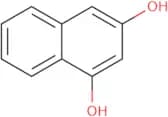
CAS:1,3-Dihydroxynaphthalene is an organic compound that has been shown to inhibit HIV infection in vitro. The optimum concentration of 1,3-dihydroxynaphthalene for inhibition of HIV infection is 0.5% (w/v). This compound can be synthesized by the reaction of epoxy and a sulfonamide drug. In addition, 1,3-dihydroxynaphthalene has been shown to have anti-inflammatory properties and can be used as a potential treatment for metabolic disorders such as diabetes mellitus.Fórmula:C10H8O2Pureza:Min. 95%Cor e Forma:PowderPeso molecular:160.17 g/molAlafosfalin
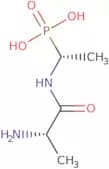
CAS:<p>Antibacterial phosphonopeptide mimic of peptidoglycan dipeptide D-Ala-D-Ala</p>Fórmula:C5H13N2O4PPureza:Min. 98 Area-%Cor e Forma:White PowderPeso molecular:196.14 g/mol1-Azido-2-(methylsulfonyl)ethane solution in dichloromethane
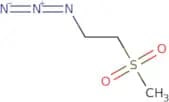
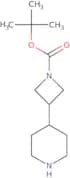
CAS:<p>Versatile small molecule scaffold</p>Fórmula:C3H7N3O2SPureza:Min. 95%Cor e Forma:Clear LiquidPeso molecular:149.17 g/moltert-Butyl 3-(piperidin-4-yl)azetidine-1-carboxylate
CAS:tert-Butyl 3-(piperidin-4-yl)azetidine-1-carboxylate is a fine chemical that is used as a reagent, research chemical, or speciality chemical. It has been shown to be a versatile building block and useful scaffold for the synthesis of complex compounds. This compound has been shown to undergo a number of reactions, including cyclization and Michael addition.Fórmula:C13H24N2O2Pureza:Min. 95%Peso molecular:240.34 g/mol4,6-Difluoroindole
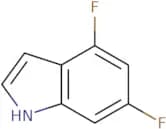
CAS:<p>4,6-Difluoroindole is a functional group that has been optimized for use as a pharmaceutical drug. It has been shown to be an efficient inhibitor of renal organic anion transporters and monophosphate-activated protein, which are involved in the absorption of drugs from the blood into the cells. 4,6-Difluoroindole also inhibits bacterial growth by binding to ribosomal RNA and interfering with protein synthesis. This drug exhibits antibacterial activity against Gram-positive bacteria such as Mycobacterium tuberculosis and Mycobacterium avium complex. This drug is able to cross the blood-brain barrier and thus may be used to treat tuberculosis infections in the brain.</p>Fórmula:C8H5F2NPureza:Min 90%Peso molecular:153.13 g/mol3,5-Diiodo-L-tyrosine dihydrate
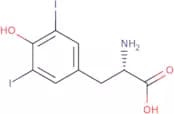
CAS:There are many good reasons to eat fish and seafood, one of them is certainly the fact that they are rich in iodine salts, which are a fundamental for the endocrine activity of the thyroid gland. Iodine salts are enzymatically converted into molecular iodine, which adds to tyrosine residues in thyroglobulin forming diiodotyrosine. This is the first step towards the biosynthesis of thyroid hormones triodityronine T3 and tetraiodotyronine T4 which serve important regulatory functions in body metabolism and energy expenditure. Recently, the dietary introduction of potassium iodide and diiodotyrosine were compared in mice showing that diiodotyrosine can also be used effectively as food supplement preventing the potential damage from excessive intake of inorganic iodine salts.Fórmula:C9H13I2NO5Pureza:Min. 95.0 Area-%Peso molecular:469.02 g/mol1-[(2R)-2-(Hydroxymethyl)pyrrolidin-1-yl]ethan-1-one
CAS:<p>Versatile small molecule scaffold</p>Fórmula:C7H13NO2Pureza:Min. 95%Peso molecular:143.18 g/mol5,6-Difluoroindole
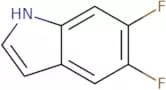
CAS:5,6-Difluoroindole is a chemical compound that has been studied in biological and chemical research. It is an analog of the neurotransmitter serotonin, which binds to the 5-HT2C receptor and activates phospholipase C (PLC) to produce inositol triphosphate (IP3). This compound may be useful for the treatment of neurodegenerative diseases such as Alzheimer's disease. 5,6-Difluoroindole has been shown to block the activity of acetylcholinesterase (AChE), which is an enzyme that breaks down acetylcholine. This leads to an increase in acetylcholine levels and a decrease in AChE activity. The reaction mechanism for this process is not known.Fórmula:C8H5NF2Cor e Forma:PowderPeso molecular:153.13 g/moltert-Butyl 3-formyl-5H,6H,7H,8H-[1,2,4]triazolo[4,3-α]pyrazine-7-carboxylate
CAS:<p>Tert-butyl 3-formyl-5H,6H,7H,8H-[1,2,4]triazolo[4,3-α]pyrazine-7-carboxylate is a research chemical that is used as a building block in the synthesis of complex compounds. It is also used as a reagent and a speciality chemical. Tert-butyl 3-formyl-5H,6H,7H,8H-[1,2,4]triazolo[4,3-α]pyrazine-7-carboxylate is an intermediate in the synthesis of other chemicals with high quality and versatile building blocks. It has been used in reactions to produce various heterocycles including 1-(2'-aminophenoxy)propane hydrochloride.</p>Fórmula:C11H16N4O3Pureza:Min. 95%Cor e Forma:PowderPeso molecular:252.27 g/mol1,3-Diacetylindole
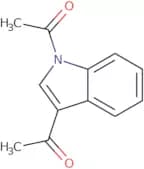
CAS:1,3-Diacetylindole is an alkene that belongs to the class of organic compounds. It can be prepared by Friedel-Crafts acylation of cyclopentenone with formaldehyde and hydrogen chloride gas. The molecule has a molecular electrostatic potential of -0.8 eV and a molecular weight of 126.1 g/mol. 1,3-Diacetylindole has been shown to react with Grignard reagent in an electrochemical study. Additionally, it has been used as a starting material for the synthesis of other molecules such as 2-methylquinoline and 1,2-dihydroquinoline. The vibrational and spectral data for 1,3-diacetylindole have been obtained using both experimental and computational methods. These data are useful for understanding the structure and reactivity of this compound at the molecular level.br>br> br>br>Fórmula:C12H11NO2Pureza:Min. 95%Peso molecular:201.22 g/mol2-Chloro-N-(3-methoxyphenyl)-7H-purin-6-amine
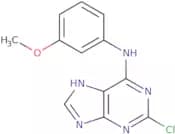
CAS:2-Chloro-N-(3-methoxyphenyl)-7H-purin-6-amine is a plant growth regulator that inhibits the growth of plants by inhibiting the activity of enzymes involved in the synthesis of dinucleotide phosphates. This product has been shown to inhibit the development of leaf chlorophyll and photosynthetic pigments, as well as other physiological effects. 2-Chloro-N-(3-methoxyphenyl)-7H-purin-6-amine also inhibits the antioxidant system and can be used to study plant cell life cycles. The compound has been found to be effective on wheat leaves and triticum aestivum, but not on alfalfa or corn leaves.Fórmula:C12H10ClN5OPureza:Min. 95%Peso molecular:275.69 g/mol4-({[3-(2,2-Dimethyloxan-4-yl)-4-phenylbutyl]amino}methyl)-N,N-dimethylaniline dihydrochloride
CAS:<p>Please enquire for more information about 4-({[3-(2,2-Dimethyloxan-4-yl)-4-phenylbutyl]amino}methyl)-N,N-dimethylaniline dihydrochloride including the price, delivery time and more detailed product information at the technical inquiry form on this page</p>Fórmula:C26H38N2O•(HCl)2Pureza:Min. 95%Peso molecular:467.52 g/mol3',4'-Dimethylacetophenone
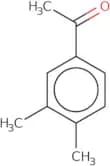
CAS:3',4'-Dimethylacetophenone is a natural product that belongs to the class of salicylates. It is a yellow oily liquid with an odor reminiscent of ocimene, which has been shown to be an attractant for the cotton bollworm (Hirsutum). 3',4'-Dimethylacetophenone is also used in cyclization reactions, such as the conversion of a benzene ring into a cyclohexane ring. This compound can be found in many plants and flowers, including hirsutum, caryophyllene, gossypium, medicago, and chalcone. The molecule can be synthesized in several ways through combinations of different reactants.Fórmula:C10H12OPureza:Min. 95%Cor e Forma:PowderPeso molecular:148.2 g/molEthyl 2-[(benzenesulfonyl)methyl]prop-2-enoate
CAS:<p>Ethyl 2-[(benzenesulfonyl)methyl]prop-2-enoate is a chemical compound that is commonly used as a building block in the synthesis of other compounds. It has shown to be effective in research, as it can be used as an intermediate or a reaction component. CAS No. 89295-32-9 is the Chemical Abstracts Service registry number for this chemical. This compound is also known by its synonym of ethyl propanoate benzenesulfonate, and it has been found to have useful properties such as being a versatile building block and being a fine chemical. This product is high quality and is a reagent that has been found to be useful in many chemical reactions.</p>Fórmula:C12H14O4SPureza:Min. 95%Cor e Forma:Clear LiquidPeso molecular:254.3 g/mol2,5-Dimethoxybenzoic acid
CAS:2,5-Dimethoxybenzoic acid (2,5-DMA) is a plant metabolite that belongs to the group of cinnamic acid derivatives. It can be found in plants and has been shown to have systemic effects. 2,5-DMA is involved in the cycloacylation of protocatechuic acid. This reaction is catalyzed by an enzyme called cyclooxygenase and requires molecular oxygen as a cofactor. 2,5-DMA also forms hydrogen bonds with methoxy groups and other molecules. The monoclonal antibodies against 2,5-DMA have been used for radiation therapy and are effective against cancer cells. Model studies show that 2,5-DMA can be converted into more potent metabolites by the action of cytochrome P450 enzymes or glutathione S-transferases.Fórmula:C9H10O4Pureza:Min. 95%Cor e Forma:PowderPeso molecular:182.17 g/mol5-(Bromomethyl)-2-methylpyridine hydrobromide
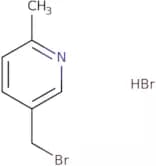
CAS:5-(Bromomethyl)-2-methylpyridine hydrobromide is a brominated reagent that is used as a reaction component in organic synthesis. It has been used to synthesize high quality, versatile building blocks and useful intermediates. 5-(Bromomethyl)-2-methylpyridine hydrobromide is also a fine chemical with CAS No. 718608-10-7.Fórmula:C7H9Br2NPureza:Min. 95%Peso molecular:266.96 g/mol2,2-Dichloro-N-(4-hydroxyphenyl)-N-methylacetamide
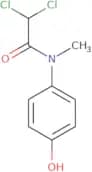
CAS:2,2-Dichloro-N-(4-hydroxyphenyl)-N-methylacetamide (FUROATE) is a synthetic antimicrobial agent that is structurally related to the furoate class of antibiotics. FUROATE has been shown to be effective against urothelial carcinoma cells and minimal toxic in animals. It binds to the fatty acid component of bacterial cell membranes and causes rapid lysis. FUROATE is used as an analytical reagent for the determination of hydroxyl groups in organic solutes. The detection limit of this test is 0.1 ppm. Monoclonal antibodies can be generated against FUROATE for use as diagnostic or therapeutic agents for infectious diseases, such as HIV infection.Fórmula:C9H9Cl2NO2Pureza:Min. 95%Cor e Forma:PowderPeso molecular:234.08 g/mol1-Methoxy-2-methyl-2-propanol
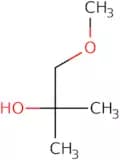
CAS:1-Methoxy-2-methyl-2-propanol is a ligand that is used in coordination chemistry and catalysis. It can be prepared by the metathesis reaction of zirconium dichloride and terminal alkynes at high temperatures. The compound has been shown to have properties as a phase equilibrium catalyst and a mononuclear ligand. 1-Methoxy-2-methyl-2-propanol is soluble in organic solvents, but insoluble in water. It has a melting point of about -20°C and a boiling point of about 190°C, with supercritical fluid properties between these two points. It can be used for reactions at low temperatures or high temperatures, depending on the solvent used.Fórmula:C5H12O2Pureza:Min. 95%Cor e Forma:Colorless Clear LiquidPeso molecular:104.15 g/molMethyl 4-formylbenzoate
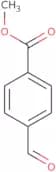
CAS:<p>Methyl 4-formylbenzoate is a trifluoroacetic acid derivative that inhibits the conversion of androgens to estrogens. It has been shown to inhibit aromatase activity in human serum and cell culture, as well as in vitro cultured rat hepatocytes. Methyl 4-formylbenzoate also binds to copper(II) by forming a complex with copper(II) ions, which prevents the formation of an enzyme-substrate complex. The binding of methyl 4-formylbenzoate to copper(II) prevents the production of malonic acid from acetoacetate, which inhibits fatty acid synthesis. This compound also acts as an analytical reagent for the detection of acylation reactions, such as those involving benzimidazole compounds.</p>Fórmula:C9H8O3Pureza:Min. 95%Cor e Forma:PowderPeso molecular:164.16 g/mol

![1-[(2R)-2-(Hydroxymethyl)pyrrolidin-1-yl]ethan-1-one](/_next/image/?url=https%3A%2Fstatic.cymitquimica.com%2Fproducts%2F3D%2Fthumb-webp%2FYEA95887.webp&w=3840&q=75)
![tert-Butyl 3-formyl-5H,6H,7H,8H-[1,2,4]triazolo[4,3-α]pyrazine-7-carboxylate](/_next/image/?url=https%3A%2Fstatic.cymitquimica.com%2Fproducts%2F3D%2Fthumb-webp%2FZWB06903.webp&w=3840&q=75)
![4-({[3-(2,2-Dimethyloxan-4-yl)-4-phenylbutyl]amino}methyl)-N,N-dimethylaniline dihydrochloride](/_next/image/?url=https%3A%2Fstatic.cymitquimica.com%2Fproducts%2F3D%2Fthumb-webp%2FJAB90846.webp&w=3840&q=75)
![Ethyl 2-[(benzenesulfonyl)methyl]prop-2-enoate](/_next/image/?url=https%3A%2Fstatic.cymitquimica.com%2Fproducts%2F3D%2Fthumb-webp%2FPDA29532.webp&w=3840&q=75)