Building Blocks
Subcategorias de "Building Blocks"
- Ácidos Borónicos e Derivados de Ácido Borónico(5.774 produtos)
- Building Blocks Quirais(1.237 produtos)
- Building Blocks Hidrocarbonetos(6.098 produtos)
- Building Blocks orgânicos(60.970 produtos)
Foram encontrados 205134 produtos de "Building Blocks"
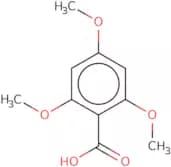
2,4,6-Trimethoxybenzoic acid
CAS:2,4,6-Trimethoxybenzoic acid (TMB) is a monomer that belongs to the class of organic compounds known as phenols. It can undergo dehydrogenation reactions with nitroethane in the presence of trifluoroacetic acid and catalytic amounts of hydrogen gas. TMB has been shown to interact with an allyl group in other molecules. The reaction system was studied under different flow rates and was found to be best described by an isotherm equation.
Fórmula:C10H12O5Pureza:Min. 95%Cor e Forma:PowderPeso molecular:212.2 g/molD-Valinol
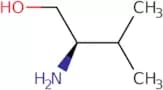
CAS:D-Valinol is a synthetic compound that contains a chiral alcohol group. It is an ester hydrochloride salt of D-valinol and has been shown to be clinically effective in treating chronic lymphocytic leukemia (CLL). This drug is a potent inhibitor of the bcr-abl kinase, which is involved in the regulation of protein synthesis. D-Valinol binds to the kinase domain of this enzyme and inhibits its activity by preventing it from transferring phosphate groups from ATP to tyrosine residues on proteins. D-Valinol also inhibits chloride channels, which are required for cell survival.
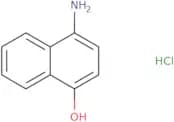
Fórmula:C5H13NOPureza:Min. 95%Cor e Forma:PowderPeso molecular:103.16 g/mol4-Amino-1-naphthol hydrochloride
CAS:4-Amino-2-methyl-1-naphthol is a menadione analog. Most commonly seen in its hydrochloride form, 4-amini-2-methyl-1-naphtol posseses vitamin K activity, effective against microbes and bacteria, and as antibiotic.Fórmula:C10H9NO•HClPureza:Min. 85.0 Area-%Cor e Forma:PowderPeso molecular:195.65 g/molVal-Cit-PAB-MMAE
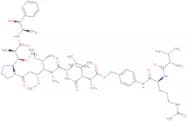
CAS:Val-Cit-PAB-MMAE is a linker that has been conjugated to a monoclonal antibody (Val-Cit) and a cytotoxic agent (MMAE). This linker is designed to provide predictable strategies for site-specific conjugation of therapeutic agents to antibodies. The Val-Cit sequence facilitates the attachment of the linker to the antibody, while MMAE targets cancer cells through its chemotherapeutic effect. The linker provides an anti-cancer drug with an increased halflife in vivo, which may be due to its physicochemical properties. Val-Cit-PAB-MMAE also has the potential for use in other applications such as diagnostics and biosensors.Fórmula:C58H94N10O12Pureza:Min. 95 Area-%Cor e Forma:PowderPeso molecular:1,123.43 g/mol2-Amino-3-sulfanylpropanamide hydrochloride
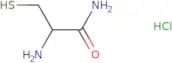
CAS:2-Amino-3-sulfanylpropanamide hydrochloride is an organic chemical compound that can be used as a reaction component, reagent, or useful scaffold. It has the CAS number 867-85-6 and is classified as a speciality chemical. This product is versatile and can be used as a building block for complex compounds or fine chemicals.Fórmula:C3H9ClN2OSPureza:Min. 95%Cor e Forma:PowderPeso molecular:156.64 g/mol6-(Aminomethyl)-2-naphthol
CAS:Versatile small molecule scaffoldFórmula:C11H11NOPureza:Min. 95%Peso molecular:173.21 g/mol2,3-Dichloro-N-[2-({2-[(2,3-dichlorophenyl)amino]ethyl}amino)ethyl]aniline
CAS:2,3-Dichloro-N-[2-({2-[(2,3-dichlorophenyl)amino]ethyl}amino)ethyl]aniline is a chemical compound that is used as a building block in the synthesis of other chemicals. It is also used as a reagent, speciality chemical and research chemical. This product has many uses in the field of organic chemistry, such as use as an intermediate in organic reactions or as a scaffold for complex compounds. 2,3-Dichloro-N-[2-({2-[(2,3-dichlorophenyl)amino]ethyl}amino)ethyl]aniline has high quality and can be used to synthesize many different products.Fórmula:C16H17Cl4N3Pureza:Min. 95%Cor e Forma:PowderPeso molecular:393.1 g/molAdenine
CAS:Purine nucleobase; component of nucleic acids and coenzymes
Fórmula:C5H5N5Pureza:Min. 98 Area-%Cor e Forma:White PowderPeso molecular:135.13 g/mol3-(Trifluoromethyl)-1-oxa-2,8-diazaspiro[4.5]dec-2-ene
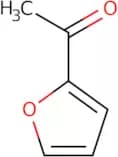
CAS:Versatile small molecule scaffoldFórmula:C8H11F3N2OPureza:(%) Min. 85%Cor e Forma:PowderPeso molecular:208.18 g/mol2-Acetylfuran
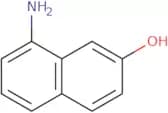
CAS:2-Acetylfuran is a chemical compound that has been shown to have in vitro antifungal activity. It is an aromatic, hydroxylated compound with a 2-acetyl group and two double bonds, one of which is conjugated. 2-Acetylfuran has been used as a model system for the study of biological properties and kinetic data. It also inhibits the reaction by binding to the pyrimidine compound, preventing it from undergoing nucleophilic substitution. This inhibition can be reversed by adding ethyl decanoate to the reaction solution, which may be due to its ability to chelate the metal ion that activates the enzyme.2-Acetylfuran has been tested for its ability to inhibit fungal growth in tissue culture by inhibiting RNA synthesis. The matrix effect can cause variations in results obtained when using different solvents and this should be taken into account when conducting experiments with 2-acetylfuran.Fórmula:C6H6O2Pureza:Min. 95%Cor e Forma:Yellow Clear LiquidPeso molecular:110.11 g/mol8-Amino-2-naphthol
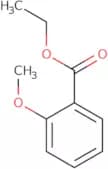
CAS:8-Amino-2-naphthol (8AN) is a natural product that has been found to have anti-inflammatory, antioxidant, and antiviral properties in vitro. It has been shown to inhibit the production of protonated species of 8AN by adding a proton to the hydroxyl group on the naphthalene ring. This reaction occurs at an activation energy of 17.2 kJ/mol and is reversible, with a protonation equilibrium constant of 1.0 x 10 M. The intramolecular hydrogen transfer mechanism is shown in Figure 1 below:Fórmula:C10H9NOPureza:Min. 98 Area-%Cor e Forma:White PowderPeso molecular:159.18 g/molEthyl 2-methoxybenzoate
CAS:Ethyl 2-methoxybenzoate is a colorless liquid that is used as an intermediate in the synthesis of other organic compounds. It has been shown to be an effective insect repellent, with an LD50 of 14 mg/kg. This compound also has a high affinity for protonated amines and amino acids, which may account for its adsorption to riparia. Ethyl 2-methoxybenzoate is biosynthesized from monoketones and monohydric alcohols. The hydroxyl group on the benzoic acid moiety reacts with methyl anthranilate to produce ethyl 2-methoxybenzoate.Fórmula:C10H12O3Pureza:Min. 95%Cor e Forma:PowderPeso molecular:180.2 g/mol2-Fluoroadenine
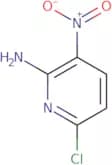
CAS:2-Fluoroadenine is an inhibitor of DNA synthesis, which is used to study the effect of carcinogens on the cell cycle. It is a potent inducer of G2/M arrest in HL-60 cells, and has been shown to be cytotoxic to a number of different carcinoma cell lines. 2-Fluoroadenine disrupts collagen gel networks by binding to nitrogens in the protein matrix. This inhibits the glycosylation process that stabilizes collagen networks. The use of 2-fluoroadenine as a chemotherapeutic agent has been studied in animal models and clinical trials. 2-Fluoroadenine has been shown to inhibit mitochondrial membrane potential, leading to apoptosis caused by oxidative stress.Fórmula:C5H4FN5Pureza:Min. 98 Area-%Cor e Forma:Off-White PowderPeso molecular:153.12 g/mol2-Amino-6-chloro-3-nitropyridine
CAS:2-Amino-6-chloro-3-nitropyridine is a cytotoxic drug that has been shown to have anti-viral potency, as well as antiviral activity in an activity test. It is synthesized by reacting hydrogen tartrate with oxadiazole, and then hydrolyzing the resulting product with chloride. 2-Amino-6-chloro-3-nitropyridine has also been shown to inhibit human immunodeficiency virus type 1 (HIV) replication in vitro and to be effective against other viruses such as type 2 influenza. This drug can bind to the viral envelope and inhibit fusion of the viral membrane with host cells by preventing the release of viral contents into the cytoplasm. The binding affinity of 2-amino 6-chloro 3 nitropyridine for chloride may be due to hydrogen bonding interactions. 2AMINO 6 CHLORO 3 NITROPYRIDINE CANPureza:Min. 95%Cor e Forma:PowderPeso molecular:173.56 g/mol1,1-Diethoxy-2-propanamine
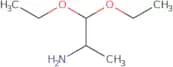
CAS:1,1-Diethoxy-2-propanamine is a primary amine that serves as a versatile building block in various chemical reactions. It is commonly used in research laboratories for the synthesis of new compounds and the development of innovative chemical processes. This high-quality research chemical offers excellent purity and reliability, making it a preferred choice among chemists and scientists. Whether you are conducting experiments or exploring new avenues in chemistry, 1,1-Diethoxy-2-propanamine is an essential component to consider for your research needs.Fórmula:C7H17NO2Pureza:Min. 95%Cor e Forma:Clear LiquidPeso molecular:147.22 g/mol3-Aminobenzonitrile
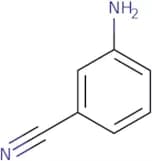
CAS:3-Aminobenzonitrile is an amine that has been shown to inhibit the growth of bacteria. It was synthesized by the reaction of nitrobenzene with benzamide in the presence of acetic acid. The chemical structure of 3-aminobenzonitrile is similar to that of a group of natural amino acids, including cysteine and tryptophan, which are known inhibitors of bacterial growth. This compound is soluble in organic solvents and can be used as an injection solution. 3-Aminobenzonitrile has been evaluated by kinetic studies and found to have a high affinity for bacterial cells, with an inhibition constant (Ki) value of 0.37 mM. It is also active against other microorganisms such as yeast or mold fungi, but not against plant or animal cells. 3-Aminobenzonitrile inhibits the synthesis of proteins by binding to a number of different sites on the ribosomes where
Pureza:Min. 95%Cor e Forma:Yellow PowderPeso molecular:118.14 g/molD-Alanine
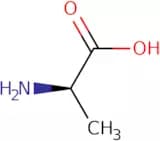
CAS:D-Alanine is a small-molecule drug that inhibits the hepatitis B virus. It has been shown to decrease the levels of HBV-DNA in chronic hepatitis patients. D-Alanine may be effective for reducing hepatic steatosis and improving liver function, which may be due to its ability to reduce the expression of δ receptors. D-Alanine can inhibit viral replication by interfering with the polymerase chain reaction and inhibiting human serum albumin from binding to HBV-DNA. D-alanine also has an antioxidant effect and can scavenge anion radicals.
Fórmula:C3H7NO2Pureza:Min. 98 Area-%Cor e Forma:White PowderPeso molecular:89.09 g/moln-Pentyl 4-hydroxybenzoate
CAS:n-Pentyl 4-hydroxybenzoate is a preservative that inhibits the growth of microorganisms. It is used in products such as cosmetics, pharmaceuticals, and food to prevent spoilage. The antimicrobial activity of n-pentyl 4-hydroxybenzoate has been shown to be due to p-hydroxybenzoic acid, which binds to bacterial cell walls. This binding prevents the formation of an antibiotic-inhibitor complex with the enzyme cell wall synthesis that is required for cell wall biosynthesis, inhibiting protein synthesis and cell division. n-Pentyl 4-hydroxybenzoate has also been shown to inhibit bacterial growth in vitro and in vivo in rats by interfering with protein synthesis in rat liver microsomes.
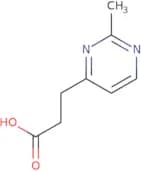
Fórmula:C12H16O3Pureza:Min. 95%Cor e Forma:Off-White PowderPeso molecular:208.25 g/mol3-(2-Methylpyrimidin-4-yl)propanoic acid
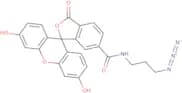
CAS:Versatile small molecule scaffoldFórmula:C8H10N2O2Pureza:Min. 95%Cor e Forma:PowderPeso molecular:166.18 g/mol6-FAM azide
CAS:6-Fluorescein Azide or 6-FAM azide finds application in biomolecules labelling. 6-FAM azide reacts with a terminal alkyne or cyclooctene derivative with a fast click reaction, forming a stable adduct.Fórmula:C24H18N4O6Pureza:Min. 95%Cor e Forma:PowderPeso molecular:458.43 g/mol

![2,3-Dichloro-N-[2-({2-[(2,3-dichlorophenyl)amino]ethyl}amino)ethyl]aniline](/_next/image/?url=https%3A%2Fstatic.cymitquimica.com%2Fproducts%2F3D%2Fthumb-webp%2FZGC85789.webp&w=3840&q=75)

![3-(Trifluoromethyl)-1-oxa-2,8-diazaspiro[4.5]dec-2-ene](/_next/image/?url=https%3A%2Fstatic.cymitquimica.com%2Fproducts%2F3D%2Fthumb-webp%2FRID39800.webp&w=3840&q=75)