Building Blocks
Subcategorias de "Building Blocks"
- Ácidos Borónicos e Derivados de Ácido Borónico(5.783 produtos)
- Building Blocks Quirais(1.242 produtos)
- Building Blocks Hidrocarbonetos(6.105 produtos)
- Building Blocks orgânicos(61.055 produtos)
Foram encontrados 205383 produtos de "Building Blocks"
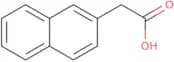
2-Naphthylacetic acid
CAS:2-Naphthylacetic acid is a molecule that has been shown to inhibit serine proteases in humans and other mammals. It has been tested as a growth regulator for plants and has shown promising results in the prevention of root formation. 2-Naphthylacetic acid can be used to inhibit the activity of hydrogen bonding, which is required for chromatographic methods. The compound's chemical structure includes a naphthalene ring with two acetic acid groups on either side of it.Fórmula:C12H10O2Pureza:Min. 95%Cor e Forma:PowderPeso molecular:186.21 g/molDMDM hydantoin, 50% min aqueous solution
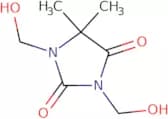
CAS:DMDM Hydantoin is a preservative that is used in the production of many products, including personal care products and pharmaceuticals. DMDM Hydantoin is an antimicrobial agent that inhibits microbial growth by interfering with the microorganism's cell membrane. This chemical also has a low toxicity to humans and other mammals. It has been shown to inhibit the growth of bacteria in wastewater treatment plants and can be used to prevent the spread of infectious diseases. It also has antibacterial properties against some strains of Staphylococcus aureus, such as methicillin-resistant strains (MRSA). DMDM Hydantoin is often found in hair conditioners, shampoos, and other cosmetic products. It can be absorbed through the skin or ingested orally. Although it is not classified as carcinogenic, it may cause contact dermatitis or alopecia areata because of its ability to inhibit prostaglandin synthesis in animal studies.Fórmula:C7H12N2O4Pureza:(%) Min. 50%Cor e Forma:Clear LiquidPeso molecular:188.18 g/mol3-Phenylbutan-2-one
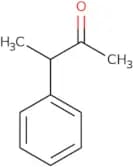
CAS:3-Phenylbutan-2-one is a volatile oil that possesses bactericidal activity. 3-Phenylbutan-2-one has been shown to inhibit the growth of Enterobacter aerogenes and Bacillus subtilis at high concentrations by hydrogen bonding with the enzyme enolate anion, which is involved in the synthesis of fatty acids. 3-Phenylbutan-2-one also inhibits nitro group formation and ether extract production through steric interactions, thereby preventing bacterial cell wall synthesis. The antibacterial mechanism of 3-phenylbutan-2-one is due to its ability to react with steroid glycosides in intramolecular hydrogen transfer reactions.Fórmula:C10H12OPureza:Min. 95%Cor e Forma:Clear LiquidPeso molecular:148.2 g/mol5,6-Dichloroindole
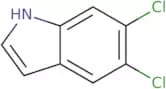
CAS:5,6-Dichloroindole is a chemical compound that contains a functional group with acidic properties. The compound has been shown to inhibit the activity of bafilomycin A1, which is an inhibitor of vacuolar ATPase. This inhibition leads to an increase in intracellular phosphate levels and an accumulation of lysosomal membrane proteins. 5,6-Dichloroindole has also been found to inhibit bone resorption in gramine-fed rats. It also has anti-inflammatory effects and inhibits the growth of zoobotryon pinnatum cells and algal cells. 5,6-Dichloroindole can be used as a molecular descriptor for predicting the presence or absence of bryozoan species in a sample.Fórmula:C8H5Cl2NCor e Forma:PowderPeso molecular:186.04 g/mol2-Methyl-2-phenylsuccinimide
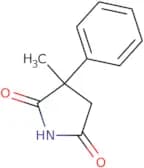
CAS:2-Methyl-2-phenylsuccinimide is a synthetic cannabinoid that has been found in urine samples. It is not known whether 2-methyl-2-phenylsuccinimide has any psychoactive effects. Phensuximide, a drug that is used to treat epilepsy, has been shown to interact with 2-methyl-2-phenylsuccinimide and other drugs. 5HT7 receptor agonists are thought to be involved in the treatment of depression and anxiety. The terminal half-life of 2-methyl-2-phenylsuccinimide is unknown at this time, but it may be shorter than that of phensuximide. Clinical studies have shown that carbamazepine and enzyme inducing antiepileptic drugs can decrease the concentration of 2-methyl-2-phenylsuccinimide in the blood. Chromatography techniques have been used to detect 2 methyl -2 phenylFórmula:C11H11NO2Pureza:Min. 95%Peso molecular:189.21 g/mol2-Hydroxy-4-methoxybenzoic acid
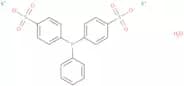
CAS:2-Hydroxy-4-methoxybenzoic acid (2HMB) is a natural product with tuberculostatic activity and is also used as a pharmaceutical drug. It is an enzyme inhibitor that binds to the diphenolase domain of mycobacterial cell wall hydrolases, such as lysyl oxidase and chitinase. 2HMB has been shown to be effective against cancer cells in vitro. The monosodium salt of 2HMB is more stable than the free acid form and can be used for the treatment of tuberculosis in India. 2HMB has also been shown to inhibit the growth of bacteria in human serum and tissue culture.Fórmula:C8H8O4Pureza:Min. 95%Cor e Forma:PowderPeso molecular:168.15 g/molBis(p-sulfonatophenyl)phenylphosphine dihydrate dipotassium
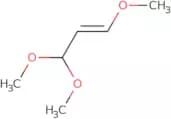
CAS:A common water soluble substitute for triphenylphosphine in palladium coupling reactionsFórmula:C18H15O6PS2•K2•(H2O)2Pureza:Min. 95%Cor e Forma:PowderPeso molecular:536.64 g/mol1,3,3-Trimethoxypropene
CAS:1,3,3-Trimethoxypropene is a fluorophore that can be used for the labeling of nucleic acids. It has been shown to be photostable and can be used in fluorescence techniques. 1,3,3-Trimethoxypropene has also been used in structural biology research and studies on the physicochemical properties of fluorescent probes. This compound can also be used as a building block for the synthesis of supramolecular structures and conjugates with other molecules that have different properties. 1,3,3-Trimethoxypropene is a fluorophore that emits cyanines in the visible range of light.
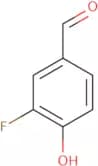
Fórmula:C6H12O3Pureza:Min. 95%Cor e Forma:Clear LiquidPeso molecular:132.16 g/mol3-Fluoro-4-hydroxybenzaldehyde
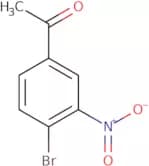
CAS:3-Fluoro-4-hydroxybenzaldehyde is a hydroxyl group with an activation energy of 87.7 kJ/mol. The molecule can be synthesized by the reaction of salicylaldehyde and 3,4-dihydroxybenzaldehyde in the presence of an organic solvent such as chloroform or methylene chloride. This compound has been shown to cause cell death in ht-29 cells and cancer cell lines, as well as human ovarian carcinoma cells. It causes apoptosis by inhibiting mitochondrial membrane potential, which leads to decreased intracellular ATP levels. 3-Fluoro-4-hydroxybenzaldehyde is most commonly used in molecular modeling studies to represent the hydroxyl group due to its simplicity in comparison to other hydroxyl groups like methanol or ethanol.Fórmula:C7H5FO2Pureza:90%Cor e Forma:White PowderPeso molecular:140.11 g/mol4-Bromo-3-nitroacetophenone - 90%
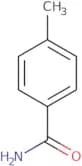
CAS:4-Bromo-3-nitroacetophenone is a chemical compound with the molecular formula C6H4BrNO2. It is an organic nitroaromatic compound that is used in organic synthesis as a building block for pharmaceuticals. 4-Bromo-3-nitroacetophenone has been shown to be effective in relieving pain and it has been used as an analgesic. The compound was synthesized by the Suzuki reaction, which involves the use of palladium as a catalyst, and thermogravimetric analysis showed that it hydrolyzes in water. 4-Bromo-3-nitroacetophenone also reacts with europium ion to produce phosphor, which can be observed using absorption spectroscopy. This chemical has also been shown to have an emission spectrum. The reaction product of 4-bromo-3-nitroacetophenone and ligands can be measured using various fields or cross coupling reactions.Fórmula:C8H6BrNO3Pureza:Min. 95%Cor e Forma:PowderPeso molecular:244.04 g/mol4-Methylbenzamide
CAS:4-Methylbenzamide is a palladium complex that has been used in the synthesis of imatinib, a drug used to treat chronic myeloid leukemia. 4-Methylbenzamide has been shown to form a hydrogen bond with water molecules and also exhibits cavity effects. The cavity effect can be explained by intermolecular hydrogen bonding and the deuterium isotope effect. The deuterium isotope effect is observed when an atom of deuterium replaces an atom of hydrogen in a molecule. This substitution leads to reduced boiling point and increased solubility for the compound. 4-Methylbenzamide is also known for its inhibitory effects on p38 kinase, which are seen through titration calorimetry.Fórmula:C8H9NOPureza:Min. 95%Cor e Forma:PowderPeso molecular:135.16 g/mol3,4,5,6-Tetrahydro-2H-cyclopenta-[D][1,3]thiazol-2-one
CAS:Versatile small molecule scaffoldFórmula:C6H7NOSPureza:Min. 95%Cor e Forma:PowderPeso molecular:141.19 g/mol10-Amino-1-decanol
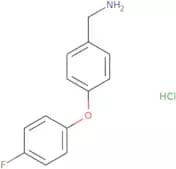
CAS:10-Amino-1-decanol is a synthetic compound that has been shown to be neuroprotective and estrogenic. It also inhibits the growth of MCF-7 cells by interacting with the cell's signalling pathways. This molecule was synthesized by ozonides and contains ether linkages, which may be responsible for its inhibitory activity. The molecular modelling of this molecule shows that it contains an iron chelating group, which may be responsible for its ability to interact with other molecules containing iron. 10-Amino-1-decanol interacts with proteins in a similar way to tamoxifen, inhibiting their activity.Fórmula:C10H23NOPureza:Min. 95%Cor e Forma:White PowderPeso molecular:173.3 g/mol4-(4-Fluorophenoxy)benzylamine hydrochloride
CAS:4-(4-Fluorophenoxy)benzylamine hydrochloride is a metabolic agent that inhibits the metabolism of phenylpropionic acid and butanoic acid. It is used industrially as an oxime to protect other organic compounds from damage by peroxides, such as in polymerization reactions. 4-(4-Fluorophenoxy)benzylamine hydrochloride has been shown to be effective in treating metabolic diseases, such as phenylketonuria and urea cycle disorders.Fórmula:C13H12FNO·HClPureza:Min. 95%Cor e Forma:PowderPeso molecular:253.7 g/moltert-Butyl N-[2-(chlorosulfonyl)ethyl]carbamate
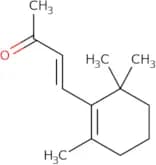
CAS:Versatile small molecule scaffoldFórmula:C7H14ClNO4SPureza:Min. 95%Peso molecular:243.71 g/molβ-Ionone
CAS:2-Ionone is a carotenoid that is an intermediate in the biosynthesis of vitamin A. It is also used as a flavoring and fragrance additive and has been shown to have cancer-preventing properties. 2-Ionone inhibits the NADP-cytochrome P450 reductase, which prevents formation of NADPH, an essential cofactor in cellular respiration and biosynthesis of fatty acids. 2-Ionone also inhibits cell growth in vitro by interacting with the polymerase chain reaction (PCR) process. The physiological function of 2-Ionone is not well understood, but it has been shown to inhibit steric interactions between DNA molecules. 2-Ionone can be prepared industrially by photolysis or by thermal decomposition of acetophenone.
Fórmula:C13H20OPureza:Min. 95%Cor e Forma:Clear LiquidPeso molecular:192.3 g/mol4H-Cyclopenta[2,1-b:3,4-b']dithiophene
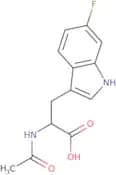
CAS:4H-Cyclopenta[2,1-b:3,4-b']dithiophene is a molecule that has been shown to be photovoltaic. It has an optical absorption spectrum that peaks in the UV region and is able to absorb light from 300 to 400 nm. 4H-Cyclopenta[2,1-b:3,4-b']dithiophene can be fabricated into devices by means of cyclic voltammetry or other techniques. As a result of its high electron mobility and its ability to absorb visible light, this molecule may lead to high efficiency solar cells. Photovoltaic devices made with 4H-Cyclopenta[2,1-b:3,4-b']dithiophene have been shown to have efficiencies as high as 2%.Fórmula:C9H6S2Pureza:Min. 95%Cor e Forma:PowderPeso molecular:178.28 g/mol2-Acetamido-3-(6-fluoro-1H-indol-3-yl)propanoic acid
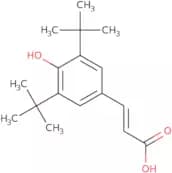
CAS:2-Acetamido-3-(6-fluoro-1H-indol-3-yl)propanoic acid is a fine chemical that can be used as a versatile building block in the synthesis of a wide range of compounds. It is also an intermediate in research and industrial processes, and is used as a reaction component for complex compound synthesis. 2-Acetamido-3-(6-fluoro-1H-indol-3-yl)propanoic acid has been shown to be useful as a building block in high quality synthesis.Fórmula:C13H13FN2O3Pureza:Min. 95%Peso molecular:264.25 g/mol3,5-Di-tert-butyl-4-hydroxycinnamic acid
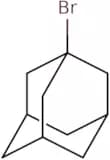
CAS:3,5-Di-tert-butyl-4-hydroxycinnamic acid is a chemical compound that belongs to the group of antihistaminic drugs. It is used as an antiallergic drug and has shown to be effective in treating hay fever and asthma. 3,5-Di-tert-butyl-4-hydroxycinnamic acid has been shown to be metabolised by rat plasma into dimethylformamide, tetrahydrofuran, reactive amides, chlorides and volatile compounds. These metabolites are then excreted via the kidneys or liver. The synthesis of 3,5-Di-tert-butyl-4-hydroxycinnamic acid can be done through a two step process that starts with the reaction of pivalaldehyde with hydrochloric acid followed by hydrogenation with rhodium on charcoal catalyst.Fórmula:C17H24O3Pureza:Min. 95%Cor e Forma:PowderPeso molecular:276.37 g/mol1-Bromoadamantane - 90%min
CAS:1-Bromoadamantane is a quinoline derivative that binds to the inflammatory bowel disease molecule. It is used as a pharmaceutical preparation for the treatment of inflammatory bowel disease. 1-Bromoadamantane is synthesized by the palladium-catalyzed coupling reaction of 2,6-dimethoxybenzene and trifluoromethanesulfonic acid. The synthesis method involves the use of hydrochloric acid and hydroxyl group. 1-Bromoadamantane has been shown to have binding constants with ileal and colonic tissue in rats with experimental colitis.Fórmula:C10H15BrPureza:Min. 90%Cor e Forma:PowderPeso molecular:215.13 g/mol


![3,4,5,6-Tetrahydro-2H-cyclopenta-[D][1,3]thiazol-2-one](/_next/image/?url=https%3A%2Fstatic.cymitquimica.com%2Fproducts%2F3D%2Fthumb-webp%2FHCA00118.webp&w=3840&q=75)

![tert-Butyl N-[2-(chlorosulfonyl)ethyl]carbamate](/_next/image/?url=https%3A%2Fstatic.cymitquimica.com%2Fproducts%2F3D%2Fthumb-webp%2FJFA01973.webp&w=3840&q=75)
![4H-Cyclopenta[2,1-b:3,4-b']dithiophene](/_next/image/?url=https%3A%2Fstatic.cymitquimica.com%2Fproducts%2F3D%2Fthumb-webp%2FFC13994.webp&w=3840&q=75)