Building Blocks
Subcategorias de "Building Blocks"
- Ácidos Borónicos e Derivados de Ácido Borónico(5.783 produtos)
- Building Blocks Quirais(1.242 produtos)
- Building Blocks Hidrocarbonetos(6.105 produtos)
- Building Blocks orgânicos(61.055 produtos)
Foram encontrados 205383 produtos de "Building Blocks"
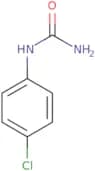
4-Chlorophenylurea
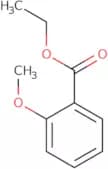
CAS:4-Chlorophenylurea is an urea derivative that has been shown to inhibit the activity of a number of enzymes. It has been used as a chemical intermediate and in the synthesis of other compounds. 4-Chlorophenylurea is stable in dry environments and does not react with air. The enzyme hydrolysis can be inhibited by adding piperonyl butoxide, which prevents the cleavage of the urea ring. The enzyme's activity can also be suppressed by adding acidic compounds such as hydrochloric acid, which increases its activation energy. The chemical structure of 4-Chlorophenylurea contains a carbonyl group and two chloro groups that are responsible for its inhibitory effect on tumour cells. This compound can also be analysed using liquid chromatography methods, which provide structural data about the product being tested.Fórmula:C7H7ClN2OPureza:Min. 95%Cor e Forma:PowderPeso molecular:170.6 g/molEthyl 2-methoxybenzoate
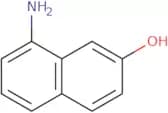
CAS:Ethyl 2-methoxybenzoate is a colorless liquid that is used as an intermediate in the synthesis of other organic compounds. It has been shown to be an effective insect repellent, with an LD50 of 14 mg/kg. This compound also has a high affinity for protonated amines and amino acids, which may account for its adsorption to riparia. Ethyl 2-methoxybenzoate is biosynthesized from monoketones and monohydric alcohols. The hydroxyl group on the benzoic acid moiety reacts with methyl anthranilate to produce ethyl 2-methoxybenzoate.Fórmula:C10H12O3Pureza:Min. 95%Cor e Forma:PowderPeso molecular:180.2 g/mol8-Amino-2-naphthol
CAS:8-Amino-2-naphthol (8AN) is a natural product that has been found to have anti-inflammatory, antioxidant, and antiviral properties in vitro. It has been shown to inhibit the production of protonated species of 8AN by adding a proton to the hydroxyl group on the naphthalene ring. This reaction occurs at an activation energy of 17.2 kJ/mol and is reversible, with a protonation equilibrium constant of 1.0 x 10 M. The intramolecular hydrogen transfer mechanism is shown in Figure 1 below:Fórmula:C10H9NOPureza:Min. 98 Area-%Cor e Forma:White PowderPeso molecular:159.18 g/molPoly epsilon L-lysine HCl approx MW 4500Da
CAS:Poly epsilon L-lysine HCl is a water soluble, biodegradable, cationic peptide that can be produced via fermentation by Streptomyces albulus. It shows a wide range of antimicrobial activity against microorganisms such as bacteria, yeasts and molds and is stable at high temperatures and under both acidic and alkaline conditions. This non-toxic poly-L-lysine is commonly used as a supplement or preservative in various food, beverage and cosmetics products. It can also be used for microscopy glass slides coating.Fórmula:(C6H12N2O•HCl)nPureza:Min. 95.0 Area-%Cor e Forma:Off-White Yellow Powder2-Acetylfuran
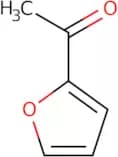
CAS:2-Acetylfuran is a chemical compound that has been shown to have in vitro antifungal activity. It is an aromatic, hydroxylated compound with a 2-acetyl group and two double bonds, one of which is conjugated. 2-Acetylfuran has been used as a model system for the study of biological properties and kinetic data. It also inhibits the reaction by binding to the pyrimidine compound, preventing it from undergoing nucleophilic substitution. This inhibition can be reversed by adding ethyl decanoate to the reaction solution, which may be due to its ability to chelate the metal ion that activates the enzyme.2-Acetylfuran has been tested for its ability to inhibit fungal growth in tissue culture by inhibiting RNA synthesis. The matrix effect can cause variations in results obtained when using different solvents and this should be taken into account when conducting experiments with 2-acetylfuran.Fórmula:C6H6O2Pureza:Min. 95%Cor e Forma:Yellow Clear LiquidPeso molecular:110.11 g/mol2-Methoxy-4-propylcyclohexan-1-ol
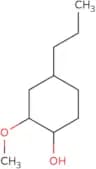
CAS:2-Methoxy-4-propylcyclohexan-1-ol is a versatile compound with various applications. It is commonly used as an anesthetic and can be found in research chemicals. This compound has been shown to have colloidal properties, making it suitable for use in the formulation of various products. Additionally, 2-Methoxy-4-propylcyclohexan-1-ol has been studied for its potential therapeutic effects on conditions such as casein-related disorders and fatty acid metabolism. Its unique structure allows it to interact with different biological pathways, including protein kinase signaling and carotenoid synthesis. Overall, this compound offers a wide range of possibilities for scientific research and product development.Fórmula:C10H20O2Pureza:Min. 95%Cor e Forma:Clear LiquidPeso molecular:172.26 g/mol4-Amino-1-naphthol hydrochloride
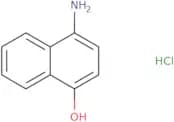
CAS:4-Amino-2-methyl-1-naphthol is a menadione analog. Most commonly seen in its hydrochloride form, 4-amini-2-methyl-1-naphtol posseses vitamin K activity, effective against microbes and bacteria, and as antibiotic.Fórmula:C10H9NO•HClPureza:Min. 85.0 Area-%Cor e Forma:PowderPeso molecular:195.65 g/molBCN-PNP carbonate
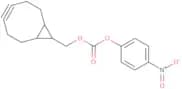
CAS:BCN-PNP carbonate is a versatile building block that can be used as an intermediate in the synthesis of complex compounds. It has a variety of uses in research and as a reagent for fine chemicals. BCN-PNP carbonate is an effective reaction component for the synthesis of speciality chemicals, which are used for research purposes or as intermediates for pharmaceuticals. BCN-PNP carbonate is also useful scaffold for the synthesis of highly pure, high quality building blocks.
Fórmula:C17H17NO5Pureza:Min. 95%Cor e Forma:PowderPeso molecular:315.32 g/mol1-Bromopentane
CAS:1-Bromopentane is a colorless liquid that has an unpleasant odor. It is soluble in water and reacts with acids to form bromides. 1-Bromopentane has been used as an oxidation catalyst in the preparation of organic compounds under conditions of constant pressure and light exposure. It has also been used in the synthesis of polymers, such as poly(1-bromopentene). Its biological properties are not well known, but it has been shown to have CB2 receptor agonist activity and inhibitory effects on oxidative stress. The chemical kinetic data for 1-bromopentane are available at various temperatures and pressures. Chloride ions can act as catalysts for its decomposition reaction, which is a stepwise process involving the conversion of hydroxyl groups into chloride atoms. The reaction mechanism starts with the conversion of one bromine atom into a radical by abstraction of a hydrogen atom from the molecule followed by addition of another brom
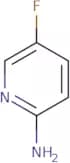
Fórmula:C5H11BrPureza:Min. 98 Area-%Cor e Forma:Colorless Clear LiquidPeso molecular:151.04 g/mol2-Amino-5-fluoropyridine
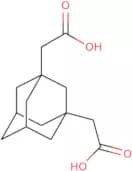
CAS:2-Amino-5-fluoropyridine is a precursor to the amino acid L-glutamic acid. It is used in organic synthesis as an acetylating agent and can be synthesized from ethyl bromoacetate and anhydrous sodium acetate. 2-Amino-5-fluoropyridine has shown efficacy in treating cancer, including leukemia cells. This compound also has allosteric modulator activity, which may be due to its ability to form hydrogen bonds with other molecules. The synthesis of 2-amino-5-fluoropyridine requires a chloride ion source that is not chlorinated, such as magnesium chloride or potassium chloride. The optimal reaction temperature is between 60°C and 80°C.Fórmula:C5H5FN2Pureza:Min. 95%Cor e Forma:White PowderPeso molecular:112.11 g/mol1,3-Adamantanediacetic acid
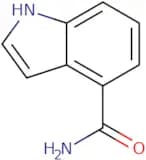
CAS:1,3-Adamantanediacetic acid is a linker molecule that is used in analytical chemistry. It is a bifunctional reagent that reacts with trifluoroacetic acid and triflic acid to form a chelate ring. This reaction product can be analyzed using analytical methods such as gas chromatography or nuclear magnetic resonance spectroscopy. 1,3-Adamantanediacetic acid has been shown to react with amides and hydrogen bonding interactions to form supramolecular structures. The introduction of this compound into the synthesis of peptides has allowed for the elucidation of the structural analysis of these molecules.Fórmula:C14H20O4Pureza:Min. 98 Area-%Cor e Forma:PowderPeso molecular:252.31 g/mol1H-Indole-4-carboxamide
CAS:1H-Indole-4-carboxamide is a hydrogen bond inhibitor that has anticancer activity. It inhibits the growth of cancer cells by interacting with alkoxycarbonyl groups and carboxyalkyl groups in proteins. In addition, it was found to have synergistic effects when combined with Jak2 inhibitors or diazepine derivatives. 1H-Indole-4-carboxamide has been shown to inhibit the tyrosine kinase activity of the JAK2 protein and inhibit cell proliferation in murine melanoma cells.Fórmula:C9H8N2OPureza:Min. 95%Cor e Forma:PowderPeso molecular:160.17 g/mol4-Hydroxybenzamide
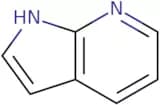
CAS:4-Hydroxybenzamide is a fatty acid with the hydroxyl group at the 4 position. It has been shown to inhibit the activity of human protein by interfering with hydrogen bonding and amide formation. The chemical structures of 4-hydroxybenzamide have been studied by electrochemical impedance spectroscopy (EIS) and found to be a competitive inhibitor of 1-hydroxy-2-naphthoic acid, an adenosine receptor antagonist, and p-hydroxybenzoic acid. This compound has also been shown to be acutely toxic in rats at high doses.Fórmula:C7H7NO2Pureza:90%Cor e Forma:PowderPeso molecular:137.14 g/mol7-Azaindole
CAS:7-Azaindole is a reactive chemical that has been shown to be effective in the treatment of skin cancer, as well as hepatic steatosis. The compound can promote the transfer of hydrogen atoms and form a dimer with protonated nitrogen. 7-Azaindole reacts rapidly with nucleophiles such as amines, alcohols, and thiols to form covalent bonds. The reaction mechanism is characterized by an initial protonation step followed by nucleophilic attack or hydrogen transfer from the nucleophile to 7-azaindole. Kinetic studies have demonstrated that the rate of this reaction depends on the concentration of both reactants.
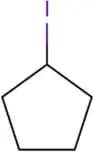
Fórmula:C7H6N2Cor e Forma:PowderPeso molecular:118.14 g/molIodocyclopentane (stabilised with copper)
CAS:Iodocyclopentane is an organic compound that has been synthesized for the treatment of infectious diseases. Iodocyclopentane binds to the active site of a lipid kinase and inhibits the enzyme activity, which prevents the synthesis of phospholipids and lipids. This compound also inhibits bacterial growth by binding to nitrogen atoms in their DNA, preventing replication. The X-ray crystal structure of iodocyclopentane shows that it is a symmetric molecule.Fórmula:C5H9IPureza:Min. 95%Peso molecular:196.03 g/mol4-Acetoxyindole
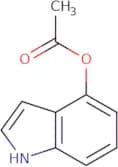
CAS:4-Acetoxyindole is a chromophore that belongs to the pyrrole family of compounds. It has been shown to react with an ionic liquid under acidic conditions to form a protonated intermediate, which can be deprotonated by a nucleophile. This reaction yields an acetate anion and a fluorescing product. 4-Acetoxyindole also reacts with deuterium gas, yielding an acetate, a deuterium atom, and fluorescing product. The reaction is reversible and the yield of the product depends on the concentration of the reactants. 4-Acetoxyindole has strong carbonyl groups that make it reactive towards other functional groups. These reactions are useful for synthesizing heterocycles such as indoles and isoquinolines.
Fórmula:C10H9NO2Pureza:Min. 97 Area-%Cor e Forma:White PowderPeso molecular:175.18 g/mol4-Amino-3-nitropyridine
CAS:4-Amino-3-nitropyridine is a molecule with the chemical formula C6H6N4O2. It is an organic compound that has been shown to have analgesic, antimicrobial, and antiviral properties. 4-Amino-3-nitropyridine has been shown to inhibit the growth of bacteria in vitro by reducing the ability of bacteria to synthesize DNA. It is not active against bacteria that use RNA as their genetic material. 4-Amino-3-nitropyridine also inhibits viral replication and may be useful in treating chronic pain, diabetic neuropathy, and other conditions related to nerve damage. This drug binds to chloride ions and nucleophilic functional groups on microbial metabolites, which prevents their conversion into other metabolites.Fórmula:C5H5N3O2Pureza:Min. 95%Cor e Forma:PowderPeso molecular:139.11 g/mol1-Adamantane carbonitrile
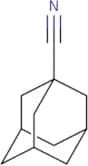
CAS:1-Adamantane carbonitrile is a compound that has been shown to have high binding constants to the covid-19 pandemic. The compound has been shown to be a good candidate for oxidation catalysts and radiation. 1-Adamantane carbonitrile is also a metastable molecule, which means it can exist in two different states with different energy levels. This compound has been found to bind to an endogenous enzyme, as well as being crystalline and having a coordination complex. It has been shown that 1-Adamantane carbonitrile reacts with hydrogen chloride and produces reactive intermediates such as hydrogen chloride. 1-Adamantane carbonitrile has also been shown to have antiviral properties against influenza virus with nmr spectra data showing the presence of this compound in the active site of the influenza virus.Fórmula:C11H15NPureza:Min. 96.0%Cor e Forma:PowderPeso molecular:161.24 g/mol6-Amino-2-pyridinecarboxylic acid
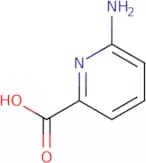
CAS:6-Amino-2-pyridinecarboxylic acid is a potentiating agent that belongs to the class of cyclic peptides. It has been shown to have anti-leukemic activity and can be used for the treatment of leukemia. The mechanism of action is not yet fully understood, but it may involve hydrogen bonding interactions with other molecules or cavities in proteins. 6-Amino-2-pyridinecarboxylic acid forms stable complexes with halides and intramolecular hydrogen bonds. This drug also has quantum theory effects, including a short lifetime in solution and an increase in fluorescence intensity when excited with light at low energies.Fórmula:C6H6N2O2Pureza:Min. 95%Cor e Forma:PowderPeso molecular:138.12 g/mol4-Amino-2,6-dimethylpyrimidine
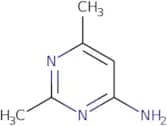
CAS:4-Amino-2,6-dimethylpyrimidine (4ADMP) is an organic solvent that inhibits the enzyme acetylcholinesterase. It has been shown to be a potent and selective inhibitor of human immunodeficiency virus type 1 (HIV-1) replication in vitro. 4ADMP is a prodrug that undergoes reduction to form a reactive intermediate that binds to the active site of acetylcholinesterase and inhibits its activity. The nitrogen atom in 4ADMP stabilizes the intermediate and prevents it from reacting with other proteins. This agent also has muscarinic M1 receptor agonist activity, which may be due to its ability to allosterically modulate the receptor and increase the affinity for acetylcholine.Fórmula:C6H9N3Pureza:Min. 95%Cor e Forma:PowderPeso molecular:123.16 g/mol