Building Blocks
Subcategorias de "Building Blocks"
- Ácidos Borónicos e Derivados de Ácido Borónico(5.783 produtos)
- Building Blocks Quirais(1.242 produtos)
- Building Blocks Hidrocarbonetos(6.105 produtos)
- Building Blocks orgânicos(61.055 produtos)
Foram encontrados 205383 produtos de "Building Blocks"
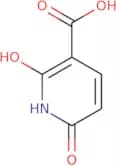
6-Hydroxy-2-oxo-1,2-dihydropyridine-3-carboxylic acid
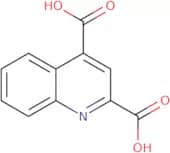
CAS:6-Hydroxy-2-oxo-1,2-dihydropyridine-3-carboxylic acid is a hydroxylate that is found in animals and plants. It is also a flavinoid, meaning it has an aromatic ring with two carbon atoms and a nitrogen atom. 6-Hydroxy-2-oxo-1,2-dihydropyridine 3 carboxylic acid is found in the subunits of flavoproteins, which are enzymes that produce molecular oxygen from hydrogen peroxide. 6HODCA has been shown to be an acceptor for electrons in lipid oxidation reactions and can be used as a precursor for the synthesis of lipids. Hydroxylases also produce 6HODCA by adding water to pyridines.Fórmula:C6H5NO4Pureza:Min. 95%Peso molecular:155.11 g/molQuinoline 2,4-dicarboxylic acid
CAS:Quinoline 2,4-dicarboxylic acid (QDA) is a novel cytotoxic agent that targets cervical cancer cells. It inhibits the uptake of glucose and other nutrients by cervical cancer cells, leading to cell death through apoptosis. QDA also inhibits the expression of genes involved in cross-linking reactions, which are important for the structural integrity of proteins. This agent has been shown to inhibit the growth of aniline-induced breast cancer cells and glutamate-stimulated PC12 cells. QDA binds to DNA and forms covalent bonds with nucleotide bases, inhibiting DNA synthesis, as well as interfering with protein synthesis and cell division. The QDA mechanism is similar to that of benzoquinolines and estrone sulfate.
Fórmula:C11H7NO4Pureza:Min. 95%Cor e Forma:White PowderPeso molecular:217.18 g/mol3-Methoxybenzoic acid
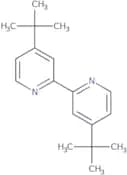
CAS:3-Methoxybenzoic acid is a compound that has two carboxyl groups, one on each of the two benzene rings. It is a white crystalline solid with a melting point of 86°C and a boiling point of 240°C at 1 mmHg. 3-Methoxybenzoic acid can be found in plants such as cranberries and strawberries. It also occurs naturally in animal fat, where it functions as an antioxidant and antimicrobial agent. 3-Methoxybenzoic acid has been shown to have synergistic effects when combined with protocatechuic acid in the treatment of carcinoma cells.Fórmula:C8H8O3Pureza:Min. 95%Cor e Forma:PowderPeso molecular:152.15 g/mol4,4'-Di-tert-butyl-2,2'-bipyridine
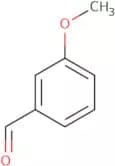
CAS:4,4'-Di-tert-butyl-2,2'-bipyridine is a maleate salt that is used in organic chemistry as a proton acceptor and donor. This compound has been shown to have an interaction with the functional theory by using voltammetry and nmr spectroscopic data. The structural analysis of 4,4'-di-tert-butyl-2,2'-bipyridine has also been done and it was found that this compound has agostic interactions. This compound has also been shown to be able to form neutral form crystals, which diffract x-rays well and have vibrational spectra.Fórmula:C18H24N2Pureza:Min. 98 Area-%Cor e Forma:PowderPeso molecular:268.41 g/mol3-Methoxybenzaldehyde
CAS:3-Methoxybenzaldehyde is a chemical compound that is used as an intermediate in the synthesis of organic compounds. This compound has shown to be a potent inhibitor of several enzymes, including diamine tetraacetic acid (DAT)-dependent aminotransferase, trimethyl amine N-oxide reductase, and hydrochloric acid hydrolases. 3-Methoxybenzaldehyde also inhibits the growth of hepg2 cells and induces apoptosis. The chemical structure of this compound contains a boron nitride group that can form hydrogen bonds with other molecules and fatty acids that can act as a substrate for oxidation reactions.
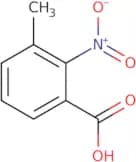
Fórmula:C8H8O2Pureza:Min. 98 Area-%Cor e Forma:Clear LiquidPeso molecular:136.15 g/mol3-Methyl-2-nitrobenzoic acid
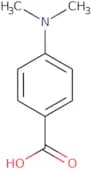
CAS:3-Methyl-2-nitrobenzoic acid is a chemical that can be used for wastewater treatment. It has been shown to be effective against chlorantraniliprole, a pesticide that is often found in wastewater. 3-Methyl-2-nitrobenzoic acid also has the ability to reduce chloride levels by oxidizing it to produce chloride ions and nitrogen gas. This chemical can be used as an oxidation catalyst in wastewater treatment. 3-Methyl-2-nitrobenzoic acid has been shown to have photocatalytic activity with titanium dioxide and copper sulfate (CuSO4) under visible light illumination conditions.Fórmula:C8H7NO4Pureza:Min. 95%Cor e Forma:PowderPeso molecular:181.15 g/mol4-Dimethylaminobenzoic acid
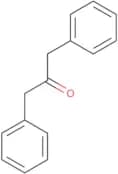
CAS:4-Dimethylaminobenzoic acid is a cationic surfactant that is used in analytical chemistry to measure the proton concentration. It reacts with protons and forms a positively charged ion. 4-Dimethylaminobenzoic acid can be used in experimental models to study the effects of protonation on cell growth and metabolism. Research has found that 4-dimethylaminobenzoic acid can be used as a growth factor by stimulating the production of protein, DNA, and RNA in cells. 4-Dimethylaminobenzoic acid is used as an ingredient in some skin care products because it has been shown to have anti-inflammatory properties.Fórmula:C9H11NO2Pureza:Min. 98 Area-%Cor e Forma:White PowderPeso molecular:165.19 g/mol1,3-Diphenylacetone
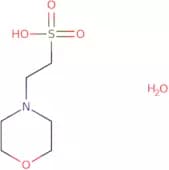
CAS:1,3-Diphenylacetone is a redox potential polymer that is soluble in organic solvents and is used as a film-forming polymer. It has been shown to have some intramolecular hydrogen bonding between the ketone and the nitrogen atoms, which can be seen in its chemical structure. The FTIR spectra of this compound show that it has a hydroxyl group and gives off water vapor when heated. 1,3-Diphenylacetone is an excellent solvent for detergents because it does not corrode metals or rubber. This molecule also has a basic structure due to its benzyl groups.Fórmula:C15H14OPureza:Min. 95%Cor e Forma:PowderPeso molecular:210.28 g/molMES monohydrate
CAS:MES buffer is a synthetic buffer commonly used in biological and biochemical experiments. It's known for its buffering capacity within the pH range of 5.5 to 6.7, making it suitable for various applications. It has good water solubility, chemical stability, and minimal interaction with metal ions, which is crucial for many biological systems.Fórmula:C6H13NO4S·H2OCor e Forma:White Off-White PowderPeso molecular:213.25 g/molMethyl 4-methoxybenzoate
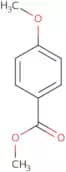
CAS:Methyl 4-methoxybenzoate is a white, crystalline powder that is soluble in alcohol and ether. The chemical formula for methyl 4-methoxybenzoate is C8H10O4. It has a molecular weight of 196.19 g/mol and a melting point of 136°C. Methyl 4-methoxybenzoate has been used as an organic reagent, as well as a pharmaceutical intermediate and additive in food manufacturing. It also has biological properties such as being an anti-inflammatory agent and being able to inhibit the growth of infectious diseases like tuberculosis and malaria. Methyl 4-methoxybenzoate can be synthesized by reacting benzoic acid with methanol, phosphoric acid, or hydrochloric acid. This molecule can also be synthesized from p-hydroxybenzoic acid by electrophilic substitution with methyl iodide followed by hydrolysis using sodium hydroxide. The chemicalFórmula:C9H10O3Pureza:Min. 98%Cor e Forma:PowderPeso molecular:166.17 g/molMethyl 2-methoxybenzoate
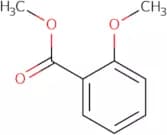
CAS:Methyl 2-methoxybenzoate is a synthetic chemical that is used in the treatment of wastewater. It inhibits the activity of enzymes such as fatty acid synthase, which are involved in the synthesis of long-chain fatty acids. Methyl 2-methoxybenzoate has been found to be an efficient method for the synthesis of prenyl compounds. This product is also an active methylene and hydrogen bond donor, and it can form products with carboxylic acid conjugates through acid catalysis. Methyl 2-methoxybenzoate has been used as a reagent for analytical chemistry, including gas chromatography and liquid chromatography.Fórmula:C9H10O3Pureza:Min. 95%Cor e Forma:Colorless Clear LiquidPeso molecular:166.17 g/mol3,4-Furandimethanol
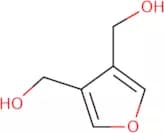
CAS:3,4-Furandimethanol is an antimicrobial agent that is used to treat skin and soft tissue infections. It belongs to the group of compounds called halogens and has a number of natural sources. The fluorescence properties make it a useful tool for biocatalysis, especially in Friedel-Crafts reactions. 3,4-Furandimethanol can be produced from hydrogen chloride, sulfuric acid, and diphenyl ether. This compound is also acetylated by acetic anhydride to produce 3,4-dihydroxymethylfuran (DHMF). 3,4-Furandimethanol has been shown to react with hydrogen sulfate in a polymerization reaction.Fórmula:C6H8O3Pureza:Min. 95%Cor e Forma:Clear LiquidPeso molecular:128.13 g/mol2-Methyl-6-quinolinecarboxylic acid
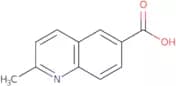
CAS:2-Methyl-6-quinolinecarboxylic acid is a molecule with an affinity for aromatic rings. It has been shown through experiment that this molecule has a stable structure and can be transferred from one ring to another. 2-Methyl-6-quinolinecarboxylic acid has also been shown to have an affinity for aromatic rings in the range of 8.1 × 10 to 8.3 × 10 M−1, with an experimental affinity value of 1.2 × 10 M−1. This compound is known to interact with other molecules in a molecular docking process and can be optimized using parameters such as hydrogen bonding and van der Waals interactions.END> END>
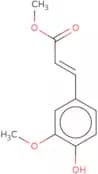
Fórmula:C11H9NO2Pureza:Min. 95%Cor e Forma:PowderPeso molecular:187.19 g/molMethyl 4-hydroxy-3-methoxycinnamate
CAS:Methyl 4-hydroxy-3-methoxycinnamate is a natural phenolic compound that is found in small quantities in many plants and foods. It is used to produce other compounds, such as vanillin, which are used as flavoring agents. Methyl 4-hydroxy-3-methoxycinnamate can be quantified using the enzymatic reaction of peroxidase with 3,4,5-trimethoxybenzene. The kinetics of this reaction have been studied by titration calorimetry. Aspergillus niger catalase has been shown to be sensitive to methyl 4-hydroxy-3-methoxycinnamate. Birch and oak wood lignocellulosic biomass can be converted into sugars through a hydrolysis process with methyl 4-hydroxy-3-methoxycinnamate. The carbohydrate content of birch and oak wood was reduced by approximately 60
Fórmula:C11H12O4Pureza:Min. 95%Cor e Forma:PowderPeso molecular:208.21 g/mol3-Methoxy-4-methylbenzonitrile
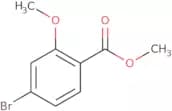
CAS:3-Methoxy-4-methylbenzonitrile is a reagent that is used in the synthesis of complex compounds, such as pharmaceuticals and fine chemicals. It has been shown to be useful as an intermediate for the synthesis of various drugs, including antibiotics. 3-Methoxy-4-methylbenzonitrile has also been shown to be a useful scaffold for the synthesis of new drugs and other chemical compounds. This compound is listed on the Chemical Abstracts Service registry number 3556-60-3.Fórmula:C9H9NOPureza:Min. 95%Cor e Forma:PowderPeso molecular:147.17 g/molMethyl 4-bromo-2-methoxybenzoate
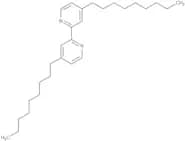
CAS:Methyl 4-bromo-2-methoxybenzoate is a drug molecule that belongs to the amide class. It is a synthetic reagent and can be used as a potential precursor in the synthesis of other drugs. Methyl 4-bromo-2-methoxybenzoate has been shown to react with carboxylic acids to form methyl esters, which are functional groups that contain a carboxyl group (COOH) and an alcohol group (OH). This reaction is called methoxylation. The transformation of methyl 4-bromo-2-methoxybenzoate into methyl esters increases the solubility of the compound and allows for it to be transported in water.Fórmula:C9H9BrO3Pureza:Min. 98 Area-%Cor e Forma:Yellow PowderPeso molecular:245.07 g/mol4,4'-Dinonyl-2,2'-bipyridine
CAS:4,4'-Dinonyl-2,2'-bipyridine is a high-yield transfer reagent that is used in organic synthesis. It can be used to transfer aryl or alkyl groups from ancillary to the functional group on the substrate. 4,4'-Dinonyl-2,2'-bipyridine is also used for the production of polymers and organic semiconductors. In addition, this compound has been shown to be useful in the production of silicon solar cells and as a catalyst for photovoltaic devices. 4,4'-Dinonyl-2,2'-bipyridine has been shown to be thermostable and can be used in temperatures up to 200°C. This compound is also a ligand with ruthenium complex properties and can be used as an electron acceptor in radiation therapy procedures.
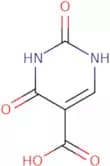
Fórmula:C28H44N2Pureza:Min. 98 Area-%Cor e Forma:White PowderPeso molecular:408.68 g/mol2,4-Dihydroxypyrimidine-5-carboxylic acid anhydrous
CAS:2,4-Dihydroxypyrimidine-5-carboxylic acid anhydrous (2,4DPA) is a metabolite of the drug 2,4-diaminopyrimidine. It inhibits protein synthesis in cells through hydrogen bonding interactions with dna duplexes and has been shown to be toxic to bacteria by inhibiting fatty acid biosynthesis. 2,4DPA is used as a standard in biological assays to measure uptake and light exposure. The analytical method for measuring 2,4DPA relies on hydrochloric acid (HCl) as a solvent that converts the material into its dimethyl ester derivative. This derivative can be quantified by gas chromatography/mass spectrometry (GCMS).Fórmula:C5H4N2O4Pureza:Min. 94.0 Area-%Cor e Forma:White Off-White PowderPeso molecular:156.1 g/molO-Methyl-L-tyrosine
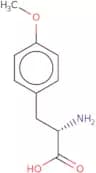
CAS:O-Methyl-L-tyrosine is a non-protein amino acid that inhibits protein synthesis by preventing the formation of peptide bonds. It has been shown to be an effective inhibitor of methionyl and cysteyl synthetases, which are enzymes that synthesize proteins. O-Methyl-L-tyrosine has also been used in clinical studies to treat translation defects associated with Duchenne muscular dystrophy (DMD) and spinal muscular atrophy (SMA). This drug is a synthetic amino acid that is not found in nature. Its structure consists of two methyl groups bonded to the oxygen atom on the tyrosine side chain, making it more stable than L-tyrosine. OMT binds to the enzyme methionyl synthetase in its active site, preventing formation of peptide bonds during protein synthesis. In addition, this drug has been shown to inhibit methyltetrahydrofolate reductase, an enzyme involvedFórmula:C10H13NO3Pureza:Min. 95%Cor e Forma:White PowderPeso molecular:195.22 g/molDibenzofuran
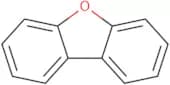
CAS:Dibenzofuran is a polycyclic aromatic hydrocarbon (PAH) that can be found in the environment and in living organisms. The body mass index, concentrations of dibenzofurans in maternal blood, and analytical method are factors that determine the levels of this compound. Dibenzofurans have been shown to induce enzyme activities in human serum. It is also an oral pathogen for humans, causing health problems such as DNA damage and cancer. Dibenzofurans are metabolized by cytochrome P450 enzymes and can react with other PAHs to form polychlorinated dibenzodioxins. Structural analysis shows nitrogen atoms on the benzene ring, which are essential for biological properties such as mutagenicity.Fórmula:C12H8OPureza:Min. 95%Cor e Forma:White PowderPeso molecular:168.19 g/mol