Building Blocks
Subcategorias de "Building Blocks"
- Ácidos Borónicos e Derivados de Ácido Borónico(5.783 produtos)
- Building Blocks Quirais(1.242 produtos)
- Building Blocks Hidrocarbonetos(6.105 produtos)
- Building Blocks orgânicos(61.055 produtos)
Foram encontrados 205383 produtos de "Building Blocks"
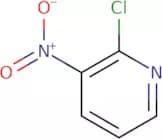
2-Chloro-3-nitropyridine
CAS:2-Chloro-3-nitropyridine is a nucleophilic compound that reacts with amines to form substituted amines. It can be synthesized by hydrolysis of chloroacetamide with hydrochloric acid and reacting the resulting ammonium chloride with nitrobenzene. The reactions are nucleophilic substitutions, which means it reacts at an electron rich atom such as the nitrogen in the ammonium chloride. This reaction is exothermic, meaning it releases heat, and the products are 2-chloro-3-nitropyridine and water. 2-Chloro-3-nitropyridine has been shown to inhibit α subunit of protein kinase C (PKCα) activity by binding to the PKCα ATP site. It also has been shown to react with proteins containing reactive sulfhydryl groups such as cysteine residues, forming sulfonamides or sulfoxides that may inhibit enzyme activity orFórmula:C5H3ClN2O2Pureza:Min. 95%Cor e Forma:Slightly Yellow PowderPeso molecular:158.54 g/mol5-Chloro-2-mercaptobenzimidazole
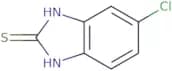
CAS:5-Chloro-2-mercaptobenzimidazole is an inorganic base that is used as a microscopy reagent. It has been shown to have a transfer mechanism that is similar to the hydrogen ion transfer mechanism. 5-Chloro-2-mercaptobenzimidazole has been used in vivo assays and has functional groups that are important for its use in coatings and aluminum oxide. The molecule also contains chlorine atoms, which are important for its use in chlorination reactions. 5-Chloro-2-mercaptobenzimidazole can be used in voltammetry to test samples of organic compounds (e.g., casein) and has been shown to be effective against the Gram positive bacterium Staphylococcus aureus.Fórmula:C7H5ClN2SPureza:Min. 98.5 Area-%Cor e Forma:Off-White PowderPeso molecular:184.65 g/mol4-Chloro-3-nitrobenzonitrile
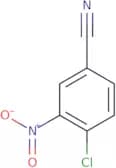
CAS:4-Chloro-3-nitrobenzonitrile is a molecule with potent antibacterial activity. It is synthesized by the reaction of sodium carbonate, hydrogen chloride, and 4-chlorobenzonitrile. 4-Chloro-3-nitrobenzonitrile has shown antimicrobial properties against a wide range of bacteria, including methicillin resistant Staphylococcus aureus (MRSA) and Enterococcus faecium. This compound has been used in the treatment of infections caused by these bacteria. 4-Chloro-3-nitrobenzonitrile also has the ability to inhibit the synthesis of fatty acids and lipids in bacterial cells, which may be responsible for its antimicrobial effects.Fórmula:C7H3ClN2O2Pureza:Min. 95%Cor e Forma:PowderPeso molecular:182.56 g/mol5-Chloro-2-methylindole
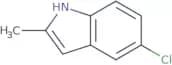
CAS:5-Chloro-2-methylindole is an antimicrobial agent that is used to treat bacterial infections. It binds to the enzyme acetylacetone hydrazide, which prevents it from forming acetoacetate and 5-chloroindole. This leads to a decrease in the formation of serotonin, which may contribute to the alleviation of symptoms in patients with cerebral escherichia coli infection. 5-Chloro-2-methylindole has been shown to have antimicrobial effects against a number of bacteria, including E. coli and Staphylococcus aureus. The drug is injected intraperitoneally as a magnetic resonance imaging contrast agent for myelography, angiography, and other medical imaging procedures.
Fórmula:C9H8ClNPureza:Min. 95%Peso molecular:165.62 g/mol6-Carboxyindole
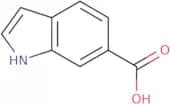
CAS:6-Carboxyindole is an indole that binds to the IL-17A receptor, which leads to the production of pro-inflammatory cytokines. It has been shown to be involved in autoimmune diseases and other inflammatory conditions. 6-Carboxyindole can be used as a probe for studying the biology of IL-17A, by binding to it and inhibiting its effects. The chemical structure of 6-carboxyindole is also useful for diagnostic purposes, as it can bind to antibodies and antigens for detecting infectious diseases or other biological processes. 6-Carboxyindole can be used in the treatment of heart tissue by binding with monoclonal antibodies that are specific for cardiac proteins such as myosin light chain kinase.Fórmula:C9H7NO2Pureza:Min. 95%Peso molecular:161.16 g/mol2-Bromo-5-iodotoluene
CAS:2-Bromo-5-iodotoluene (2BIOT) is a synthetic compound that has been used as an immunosorbent in immunoassays. It is also a fluorescing radical and can be used to detect other radicals, making it useful for many different types of assays. The compound was first synthesized by the reaction of sodium periodate with 2-bromotoluene; the reaction was catalyzed by radical mechanism. This synthesis is an advance in organic chemistry because it provides a new method for synthesizing brominated compounds.Fórmula:C7H6BrIPureza:Min. 95%Cor e Forma:Slightly Yellow PowderPeso molecular:296.93 g/mol3-Bromo-2,6-dimethoxybenzoic acid
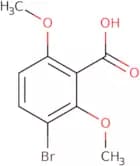
CAS:3-Bromo-2,6-dimethoxybenzoic acid is a synthetic chemical used to introduce insulators into the DNA molecule. It is also used as a treatment method for introducing branched-chain scripts into the DNA molecule. 3-Bromo-2,6-dimethoxybenzoic acid has been shown to counteract synthetic techniques, such as transistors, and can be used in plant physiology research.Fórmula:C9H9BrO4Pureza:Min. 95%Cor e Forma:PowderPeso molecular:261.07 g/mol5-Bromo-3,4-dihydroxybenzaldehyde
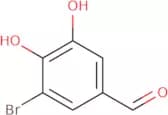
CAS:5-Bromo-3,4-dihydroxybenzaldehyde (5BDBA) is a chemical compound that can be used as a reactive dye and photochemical crosslinker in the preparation of polymers. 5BDBA has been shown to have chemoattractant properties for immune cells, such as activated T lymphocytes and neutrophils. It also has been shown to have an effect on β-cells in the pancreas and skin cells. This compound has been found to activate the nuclear factor kappa-light-chain enhancer (NFκB), which leads to increased expression of chemoattractant protein (MCP). In 3T3-L1 preadipocytes, 5BDBA has been shown to induce accumulation of fatty acids by activating peroxisome proliferator activator receptor gamma.
Fórmula:C7H5BrO3Pureza:Min. 95%Cor e Forma:Yellow PowderPeso molecular:217.02 g/mol4-(Bromomethyl)benzophenone
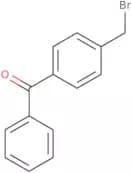
CAS:4-(Bromomethyl)benzophenone is a monomer that is used in the production of polymers, plastics, and resins. It is a fluorescent material with an efficient method for interacting with peroxides. 4-(Bromomethyl)benzophenone has been shown to interact with membrane phospholipids and proton transfer. The structural formula of 4-(bromomethyl)benzophenone is shown below:Fórmula:C14H11BrOPureza:Min. 95%Cor e Forma:PowderPeso molecular:275.14 g/mol5-Bromo-7-methyl-1H-indole-2,3-dione
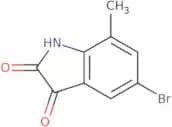
CAS:5-Bromo-7-methyl-1H-indole-2,3-dione is a lead compound that inhibits the inosine monophosphate (IMP) deaminase enzyme. This compound is an inhibitor of the IMP deaminase enzyme and has been shown to reduce viral load in HIV patients. 5-Bromo-7-methyl-1H-indole-2,3-dione has been studied as a potential treatment for other diseases such as mycophenolic acid renal toxicity and inflammatory bowel disease. This molecule is a regiospecific inhibitor of the IMPDE4 protein with IC50 values of 0.5 μM and 2 μM for the wild type and mutant forms respectively.Fórmula:C9H6BrNO2Pureza:Min. 95%Cor e Forma:Orange PowderPeso molecular:240.05 g/mol2-Bromo-5-methoxybenzoic acid
CAS:2-Bromo-5-methoxybenzoic acid (BMBA) is a natural compound that belongs to the class of ellagitannins. It has been shown to inhibit the proliferation of leukemia cells and induce apoptosis in these cells. The mechanism of this apoptotic activity may be due to BMBA's inhibition of the progesterone receptor, which has been demonstrated by molecular modeling and 13C NMR spectroscopy experiments. This receptor is involved in cancer development and progression. BMBA also inhibits the mitochondrial membrane potential, leading to cell death. In addition, 2-Bromo-5-methoxybenzoic acid has been shown to have anti-inflammatory properties in mice with chronic colitis. This compound also has an effect on bacteria such as Pseudomonas aeruginosa, which was observed using thermodynamic calculations.Fórmula:C8H7BrO3Pureza:Min. 95%Cor e Forma:PowderPeso molecular:231.04 g/mol2-Bromo-6-fluorobenzonitrile
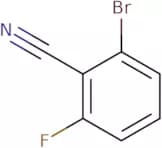
CAS:2-Bromo-6-fluorobenzonitrile is an organic compound with a molecular formula of C6H3BrF. It is a colorless liquid that is used as a precursor in the synthesis of other compounds. 2-Bromo-6-fluorobenzonitrile has been shown to be an efficient fluorophore and can be activated by electron transfer, thermally, or chemically. 2-Bromo-6-fluorobenzonitrile also has a quantum efficiency of 0.5% and transport properties that make it ideal for fluorescence microscopy. The fluorescence intensity of 2-bromo-6-fluorobenzonitrile is proportional to the amount of energy absorbed, which makes it useful for quantifying the concentration of fluorescent molecules in solution. 2-Bromo-6-fluorobenzonitrile has also been shown to have high quantum yields and high efficiency levels when
Fórmula:C7H3BrFNPureza:Min. 95%Cor e Forma:PowderPeso molecular:200.01 g/mol1-Boc-4-bromomethylpiperidine
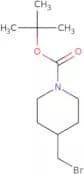
CAS:1-Boc-4-bromomethylpiperidine is a versatile building block for the synthesis of complex compounds with diverse biological activity. It is an excellent reagent for the synthesis of 1,2,3-triazoles, which are useful scaffolds in the synthesis of high quality pharmaceuticals. This compound can be used as a reaction component and as a useful intermediate in various chemical reactions.Fórmula:C11H20BrNO2Pureza:Min. 97 Area-%Cor e Forma:PowderPeso molecular:278.19 g/molN,O-Bis-acetyl-L-tyrosine
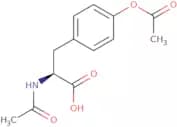
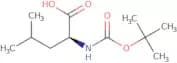
CAS:N,O-Bis-acetyl-L-tyrosine is a bioreversible acetylated amino acid that is synthesized from L-tyrosine. It can be used in the preparation of creatine kinase. N,O-Bis-acetyl-L-tyrosine has been shown to bind to the aromatic residues on creatine kinase and inhibit its activity. The acetylation of lysine residues may be reversible, but this process requires the presence of a hydroxyl group on the tyrosine residue. This reaction is catalyzed by a lysine residue on creatine kinase. Studies have shown that the kinetic properties of N,O-Bis-acetyl-L-tyrosine are similar to those of L-tyrosine and therefore it can be used as an alternative substrate for creatine biosynthesis.Fórmula:C13H15NO5Pureza:Min. 98 Area-%Cor e Forma:White PowderPeso molecular:265.26 g/moltert-Butoxycarbonyl-L-leucine
CAS:Tert-Butoxycarbonyl-L-leucine (tBOC-LL) is a tetrapeptide that is used as a drug substance in the synthesis of buserelin, a synthetic peptide hormone. It has been shown to have high reactivity in organic solvents and can be used in cationic polymerization reactions. tBOC-LL has been used to synthesize helical structures with high purity and yield. As it is not an amino acid, tBOC-LL does not occur naturally and must be synthesized.
Tert-Butoxycarbonyl-L-leucine (tBOC-LL) is available from Sigma Aldrich Chemie GmbH & Co KG as:Fórmula:C11H21NO4Pureza:Min. 98 Area-%Cor e Forma:White PowderPeso molecular:231.29 g/moltert-Butyl 2-(furan-2-yl)-1H-indole-1-carboxylate
CAS:Please enquire for more information about tert-Butyl 2-(furan-2-yl)-1H-indole-1-carboxylate including the price, delivery time and more detailed product information at the technical inquiry form on this page
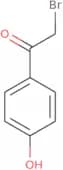
Fórmula:C17H17NO3Pureza:Min. 95%Cor e Forma:Clear LiquidPeso molecular:283.32 g/mol2-Bromo-4-hydroxyacetophenone
CAS:2-Bromo-4-hydroxyacetophenone is a membrane permeable inhibitor of monoamine oxidase (MAO) that has been shown to inhibit the enzyme's activity with an IC50 of 10 μM. It is used as a research tool in biological studies and has been shown to be active against MAO A, MAO B, and MAO C. 2-Bromo-4-hydroxyacetophenone has also been shown to inhibit the growth of carcinoma cells in vitro. This molecule is also a β-unsaturated ketone that binds to catalytic domains and forms covalent bonds with chloride ions. 2-Bromo-4-hydroxyacetophenone can be used as an industrial process catalyst for chemical reactions involving chloride.
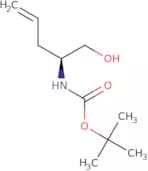
2-Bromo-4-hydroxyacetophenone synergistically inhibits the growth of cancer cells when combined with other compounds such as trifluoroacetic acid or dichlorometFórmula:C8H7BrO2Pureza:(%) Min. 85%Cor e Forma:PowderPeso molecular:215.04 g/mol(S)-N-Boc-2-aminopent-4-en-1-ol
CAS:(S)-N-Boc-2-aminopent-4-en-1-ol is an organic compound that is a useful scaffold for the synthesis of complex compounds. It is also a useful intermediate in organic synthesis and can be used as a building block to synthesize fine chemicals. The chemical has been registered with CAS number 116613-81-1.Fórmula:C10H19NO3Pureza:Min. 95%Cor e Forma:Colourless To Yellow LiquidPeso molecular:201.26 g/mol4'-Bromo-2'-methylacetophenone
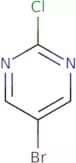
CAS:4'-Bromo-2'-methylacetophenone is a reagent and a useful intermediate that can be used in the synthesis of a variety of organic compounds. It is supplied as a fine chemical and is currently not commercially available. It has been found to be an effective building block for the synthesis of speciality chemicals, such as research chemicals and versatile building blocks.Fórmula:C9H9BrOPureza:Min. 95%Cor e Forma:Slightly Yellow Clear LiquidPeso molecular:213.07 g/mol5-Bromo-2-chloropyrimidine
CAS:Intermediate in the synthesis of macitentan; building blockFórmula:C4H2BrClN2Pureza:Min. 95%Cor e Forma:White PowderPeso molecular:193.43 g/mol