Building Blocks
Esta seção contém produtos fundamentais para a síntese de compostos orgânicos e biológicos. Building blocks são os materiais de partida essenciais usados para construir moléculas complexas através de várias reações químicas. Eles desempenham um papel crítico na descoberta de medicamentos, ciência dos materiais e pesquisa química. Na CymitQuimica, oferecemos uma ampla gama de building blocks de alta qualidade para apoiar suas pesquisas inovadoras e projetos industriais, garantindo que você tenha os componentes essenciais para uma síntese bem-sucedida.
Subcategorias de "Building Blocks"
- Ácidos Borónicos e Derivados de Ácido Borónico(5.784 produtos)
- Building Blocks Quirais(1.244 produtos)
- Building Blocks Hidrocarbonetos(6.105 produtos)
- Building Blocks orgânicos(61.076 produtos)
Foram encontrados 205455 produtos de "Building Blocks"
Ordenar por
Pureza (%)
0
100
|
0
|
50
|
90
|
95
|
100
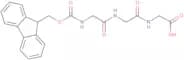
Fmoc-Gly-Gly-Gly-OH
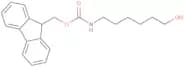
CAS:Fmoc-gly-gly-gly-OH is a synthetic amino acid with the carboxylate group at the alpha position and an amide group at the beta position. It is a white solid that can be synthesized by reacting glycine ethyl ester with glyoxylic acid in a solvent such as chloroform. Fmoc-gly-gly-gly-OH has been used to study the binding of oxytocin to its receptor, which is important for regulating uterine contraction during childbirth. The compound also has potential applications in drug delivery, biotechnology, and medical research.Fórmula:C21H21N3O6Pureza:Min. 95%Cor e Forma:PowderPeso molecular:411.41 g/mol6-(Fmoc-amino)-1-hexanol
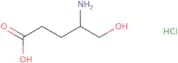
CAS:6-(Fmoc-amino)-1-hexanol is a high quality chemical that can be used as an intermediate in the synthesis of many complex compounds, such as pharmaceuticals, fine chemicals and research chemicals. It is often used as a building block in the synthesis of other useful chemicals and has been shown to have versatile reactions with many functional groups. 6-(Fmoc-amino)-1-hexanol can be used in reactions involving nucleophilic substitution, elimination, amination, esterification and transesterification.Fórmula:C21H25NO3Pureza:Min. 95%Cor e Forma:PowderPeso molecular:339.43 g/mol(4S)-4-Amino-5-hydroxypentanoic acid hydrochloride
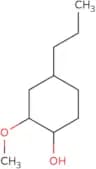
CAS:Versatile small molecule scaffoldFórmula:C5H11NO3•HClPureza:Min. 95%Cor e Forma:PowderPeso molecular:169.61 g/mol2-Methoxy-4-propylcyclohexan-1-ol
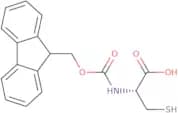
CAS:2-Methoxy-4-propylcyclohexan-1-ol is a versatile compound with various applications. It is commonly used as an anesthetic and can be found in research chemicals. This compound has been shown to have colloidal properties, making it suitable for use in the formulation of various products. Additionally, 2-Methoxy-4-propylcyclohexan-1-ol has been studied for its potential therapeutic effects on conditions such as casein-related disorders and fatty acid metabolism. Its unique structure allows it to interact with different biological pathways, including protein kinase signaling and carotenoid synthesis. Overall, this compound offers a wide range of possibilities for scientific research and product development.Fórmula:C10H20O2Pureza:Min. 95%Cor e Forma:Clear LiquidPeso molecular:172.26 g/molFmoc-L-cysteine
CAS:Fmoc-L-cysteine is a reactive thiol that can be used for the synthesis of peptides and proteins. Fmoc-L-cysteine is synthesized by hydrothiolation of L-cysteine with 3-mercaptopropionic acid, which leads to the formation of a disulfide bond. The reaction product is purified by column chromatography and analyzed by NMR spectroscopy. Fmoc-L-cysteine has been shown to have efficient prenylation activity in vitro and in cell culture experiments. It has also been shown to be an important amino acid for the formation of amyloid protein aggregates, as well as being involved with other helical peptides in plants. X-ray crystal structures have been determined for Fmoc-L-cysteine bound to monoclonal antibodies.Fórmula:C18H17NO4SPureza:Min. 98 Area-%Cor e Forma:PowderPeso molecular:343.4 g/mol2-Methyl-6-(phenylethynyl)pyridine HCl
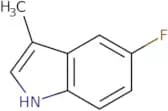
CAS:2-Methyl-6-(phenylethynyl)pyridine (MPEP) is a drug that is used in the treatment of Parkinson's disease. This drug inhibits the synthesis of proteins, including glutamate and dopamine, which are involved in Parkinson's disease. MPEP has been shown to be effective against Parkinson's disease by blocking protein synthesis in the caudate putamen and other brain regions. It also lowers locomotor activity and improves motor skills in rats. MPEP binds to response element-binding protein (RBP), which is involved in the regulation of gene expression. The binding of MPEP to RBP leads to an increase in levels of endogenous adenosine, which blocks the effects of dopamine and serotonin on postsynaptic neurons.Fórmula:C14H11N·HClPureza:Min. 98 Area-%Cor e Forma:White PowderPeso molecular:229.7 g/mol5-Fluoro-3-methylindole
CAS:5-Fluoro-3-methylindole is a reactive compound that is not soluble in water. It has a molecular weight of 288.5 and an ionization potential of 7.8 eV. 5-Fluoro-3-methylindole can act as a potent antagonist by binding to the pharmacophore, which is the three hydrogen bonding sites on the benzodiazepine receptor. This drug has been shown to be reactive with halides, nitro, and magnesium, as well as with some endogenous compounds such as nitroarenes and amides. 5-Fluoro-3-methylindole also reacts with fluorescence ligands and transfer agents.Fórmula:C9H8FNPureza:Min. 95%Peso molecular:149.16 g/mol4-Methoxy-6-methyl-2H,5H,6H,7H,8H-[1,3]dioxolo[4,5-G]isoquinoline
CAS:4-Methoxy-6-methyl-2H,5H,6H,7H,8H-[1,3]dioxolo[4,5-G]isoquinoline is an electron donor that has been shown to have an excitatory effect on cells. It has been used for the treatment of cancer and other diseases. 4-Methoxy-6-methyl-2H,5H,6H,7H,8H-[1,3]dioxolo[4,5-G]isoquinoline has been shown to have a cavity inhibiting effect in mice and also inhibits the growth of tumor cells in rats. This drug has been evaluated for clinical use in humans and is available as a granule formulation. The particle size of 4-Methoxy-6-methyl-2H,5H,6H,7H,8H-[1,3]dioxolo[4,5-G]Fórmula:C12H15NO3Pureza:Min. 95%Cor e Forma:PowderPeso molecular:221.25 g/mol4-(4-Fluorophenoxy)benzylamine hydrochloride
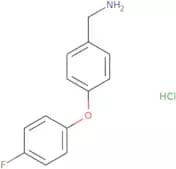
CAS:4-(4-Fluorophenoxy)benzylamine hydrochloride is a metabolic agent that inhibits the metabolism of phenylpropionic acid and butanoic acid. It is used industrially as an oxime to protect other organic compounds from damage by peroxides, such as in polymerization reactions. 4-(4-Fluorophenoxy)benzylamine hydrochloride has been shown to be effective in treating metabolic diseases, such as phenylketonuria and urea cycle disorders.Fórmula:C13H12FNO·HClPureza:Min. 95%Cor e Forma:PowderPeso molecular:253.7 g/mol3-Fluoro-4-hydroxybenzaldehyde
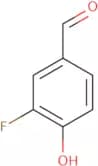
CAS:3-Fluoro-4-hydroxybenzaldehyde is a hydroxyl group with an activation energy of 87.7 kJ/mol. The molecule can be synthesized by the reaction of salicylaldehyde and 3,4-dihydroxybenzaldehyde in the presence of an organic solvent such as chloroform or methylene chloride. This compound has been shown to cause cell death in ht-29 cells and cancer cell lines, as well as human ovarian carcinoma cells. It causes apoptosis by inhibiting mitochondrial membrane potential, which leads to decreased intracellular ATP levels. 3-Fluoro-4-hydroxybenzaldehyde is most commonly used in molecular modeling studies to represent the hydroxyl group due to its simplicity in comparison to other hydroxyl groups like methanol or ethanol.Fórmula:C7H5FO2Pureza:90%Cor e Forma:White PowderPeso molecular:140.11 g/mol1-Naphthoic acid
CAS:1-Naphthoic acid is a phenolic antioxidant that is used in the treatment of inflammatory bowel disease. It has been shown to reduce the production of inflammatory cytokines and improve symptoms of bowel disease. 1-Naphthoic acid, as a fluorescence probe, can be used to detect and quantify hydroxycinnamic acids in biological fluids such as serum and urine. 1-Naphthoic acid also inhibits serine protease activity, which is involved in autoimmune diseases such as lupus erythematosus. It also inhibits the activity of hydrolytic enzymes that are associated with metabolic disorders such as diabetes mellitus. In addition, 1-naphthoic acid can act as an agonist at certain receptors including muscarinic receptors and α2A receptors. It has also been shown to increase levels of retinoic acid and inhibit the formation of hydrogen peroxide by bacteria like H. pylori due to its abilityFórmula:C11H8O2Pureza:Min. 95%Cor e Forma:Clear LiquidPeso molecular:172.18 g/mol4-Methyl-3-nitrobenzoic acid
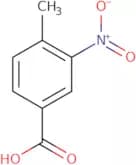
CAS:4-Methyl-3-nitrobenzoic acid is a hydroxide solution that has been shown to be cytotoxic to malignant melanoma cells in vitro. 4-Methyl-3-nitrobenzoic acid also inhibits the growth of normal cells by blocking epidermal growth factor receptor signaling. This molecule is converted to hippuric acid, which may have an anti-cancer effect by inhibiting metal ion uptake and causing DNA damage. There are no known adverse effects or interactions with other drugs.Fórmula:C8H7NO4Pureza:Min. 95%Cor e Forma:PowderPeso molecular:181.15 g/mol(3R)-3-Hydroxyoctanoic acid
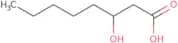
CAS:(3R)-3-Hydroxyoctanoic acid is a fatty acid that is produced in the cytoplasm from acetyl-CoA. This chemical can be synthesized by immobilizing acyl-CoA synthase on a surface, which has been shown to increase its activity and extend the duration of its action. This immobilization technique has been used for the production of monomers, which are then polymerized to form polyesters with high molecular weight. (3R)-3-Hydroxyoctanoic acid is also involved in the biosynthesis of phospholipids, glycerophospholipids, and sphingolipids. The biochemical properties of this molecule have been studied using in vitro assays.Fórmula:C8H16O3Pureza:Min. 95%Cor e Forma:PowderPeso molecular:160.21 g/mol3-Methoxycinnamic acid methyl ester
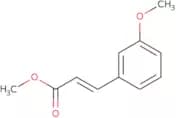
CAS:3-Methoxycinnamic acid methyl ester is a high quality, versatile building block for the synthesis of complex compounds. It is an intermediate in the synthesis of reagents and fine chemicals. 3-Methoxycinnamic acid methyl ester has been used in research as a scaffold to create new chemical entities. This compound has been used as a reaction component in multistep syntheses and as a precursor to speciality chemicals.
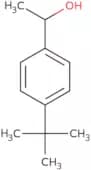
Fórmula:C11H12O3Pureza:Min. 95%Cor e Forma:Colorless PowderPeso molecular:192.21 g/mol1-(4-tert-Butylphenyl)ethan-1-ol
CAS:1-(4-tert-Butylphenyl)ethan-1-ol is a reagent, complex compound, useful intermediate, and fine chemical. It has CAS No. 34386-42-0 and is a useful scaffold for the synthesis of speciality chemicals. 1-(4-tert-Butylphenyl)ethan-1-ol is a versatile building block that can be used in the synthesis of many different compounds. It is also an important reaction component for the synthesis of many organic compounds.Fórmula:C12H18OPureza:Min. 95%Cor e Forma:PowderPeso molecular:178.27 g/mol5-Aminopyrimidine
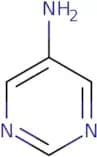
CAS:5-Aminopyrimidine is a synthetic compound that has been shown to have inhibitory effects on the nervous system. The structural formula of 5-aminopyrimidine is C6H4N3O2. It is a structural analogue of pyrimidine and can be used as an anticancer drug. 5-Aminopyrimidine can also be used in the treatment of diseases such as diabetes and Parkinson’s disease. The reaction mechanism of 5-aminopyrimidine begins with the formation of an unstable diazonium salt, which then reacts with a chloride ion to form an alloxan intermediate. This intermediate then reacts with phosphate group to form a product that is soluble in water.Fórmula:C4H5N3Pureza:Min. 95%Cor e Forma:White PowderPeso molecular:95.1 g/mol4-{5H,6H,7H,8H-Pyrido[4,3-c]pyridazin-3-yl}-1,4-oxazepane
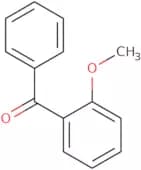
CAS:Versatile small molecule scaffoldFórmula:C12H18N4OPureza:Min. 95%Cor e Forma:PowderPeso molecular:234.3 g/mol2-Methoxybenzophenone
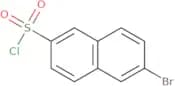
CAS:2-Methoxybenzophenone is an organic chemical compound that is a benzoylating agent. It is used as a solid catalyst in the benzoic anhydride synthesis from 2-methoxybenzene and acetic acid. 2-Methoxybenzophenone reacts with chloride to form benzoic acid, which can be converted to other compounds with different functional groups. 2-Methoxybenzophenone also acts as an antioxidant and can inhibit acetylation reactions. The reaction time for this process varies depending on the nature of the carbonyl group present in the reactant.Fórmula:C14H12O2Pureza:Min. 98.0 Area-%Cor e Forma:White PowderPeso molecular:212.24 g/mol6-Bromonaphthalene-2-sulfonyl chloride
CAS:Versatile small molecule scaffoldFórmula:C10H6BrClO2SPureza:Min. 95%Cor e Forma:PowderPeso molecular:305.58 g/mol4,4'-Dipyridyl
CAS:Please enquire for more information about 4,4'-Dipyridyl including the price, delivery time and more detailed product information at the technical inquiry form on this pageFórmula:C10H8N2Peso molecular:156.19 g/mol


![4-Methoxy-6-methyl-2H,5H,6H,7H,8H-[1,3]dioxolo[4,5-G]isoquinoline](/_next/image/?url=https%3A%2Fstatic.cymitquimica.com%2Fproducts%2F3D%2Fthumb-webp%2FAAA55010.webp&w=3840&q=75)

![4-{5H,6H,7H,8H-Pyrido[4,3-c]pyridazin-3-yl}-1,4-oxazepane](/_next/image/?url=https%3A%2Fstatic.cymitquimica.com%2Fproducts%2F3D%2Fthumb-webp%2FJHD95611.webp&w=3840&q=75)