Building Blocks
Subcategorias de "Building Blocks"
- Ácidos Borónicos e Derivados de Ácido Borónico(5.784 produtos)
- Building Blocks Quirais(1.244 produtos)
- Building Blocks Hidrocarbonetos(6.105 produtos)
- Building Blocks orgânicos(61.070 produtos)
Foram encontrados 205437 produtos de "Building Blocks"
(R,R)-2,8-Diazabicyclo[4.3.0]nonane
CAS:(R,R)-2,8-Diazabicyclo[4.3.0]nonane is an antibacterial agent that is synthesized from piperazine and fluoroquinolone derivatives. It has a high yield of (R,R)-2,8-diazabicyclo[4.3.0]nonane and a low reaction time in the microwave amination reaction. This compound can be used to replace environmentally hazardous chemicals such as mercury(II) chloride in the synthesis of (R,R)-2,8-diazabicyclo[4.3.0]nonane by avoiding the use of toxic mercury compounds and reducing the cost of production by using microwave irradiation.Fórmula:C7H14N2Pureza:Min. 95%Cor e Forma:PowderPeso molecular:126.2 g/mol1,8-Diazido-3,6-dioxaoctane
CAS:1,8-Diazido-3,6-dioxaoctane is a synthetic molecule that is used in the synthesis of macrolactones, polymers, and biomolecules. It can be used as a bioconjugate to attach other functional groups to biomaterials and polymers, such as azido groups. This compound has high sensitivity and thermal stability with good solubility in organic solvents. 1,8-Diazido-3,6-dioxaoctane has been shown to be compatible with many functional groups and is an important monomer for use in cross-linked polymers.Fórmula:C6H12N6O2Pureza:Min. 95%Cor e Forma:Colorless PowderPeso molecular:200.2 g/molL-5-Methyltetrahydrofolate calcium
CAS:L-5-Methyltetrahydrofolate calcium is also known as calcium levomefolate; N-[4-[[(2-amino-1,4,5,6,7,8-hexahydro-5-methyl-4-oxo-6-pteridinyl)methyl]amino]benzoyl]-L-glutamic acid, calcium salt; and L-5-MTHF. L-5-Methyltetrahydrofolate calcium is the calcium salt of L-5-methyltetrahydrofolic acid, and a member of the folate group of vitamins (Vitamin B9). It is the coenzymated and most active form of folic acid, which performs many vital cellular functions, including DNA reproduction, cysteine cycle and homocysteine regulation. L-5-Methyltetrahydrofolate calcium is used as in dietary supplements and has been proposed for treatment of cardiovascular disease.Fórmula:C20H23CaN7O6Pureza:Min. 95 Area-%Cor e Forma:White PowderPeso molecular:497.52 g/mol3,4-Dibenzyloxybenzaldehyde
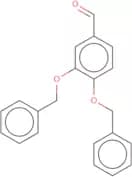
CAS:3,4-Dibenzyloxybenzaldehyde is a chemical compound with the formula ClCH=C(O)CHO. This compound is an intermediate in the synthesis of the cancer drug daunorubicin. 3,4-Dibenzyloxybenzaldehyde has been shown to induce apoptosis in human ovary cells and has been detected in urine samples from patients undergoing chemotherapy for ovarian cancer. 3,4-Dibenzyloxybenzaldehyde also inhibits the production of flavonoids and has been shown to inhibit rat striatal membranes and rat atria.
Fórmula:C21H18O3Pureza:Min. 95%Cor e Forma:PowderPeso molecular:318.37 g/mol5-Ethylindole-2-carboxylic acid
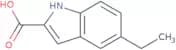
CAS:5-Ethylindole-2-carboxylic acid is an organic compound that is a decarboxylation product of indole. It can be obtained by catalytic dehydrogenation of ethyl ester or 5-ethylindole-2-carboxylic acid. It has been shown to inhibit the growth of bacteria and fungi, as well as to have anti-inflammatory properties.
Fórmula:C11H11NO2Pureza:Min. 95%Peso molecular:189.21 g/molO-2-Propynylhydroxylamine hydrochloride
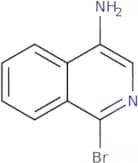
CAS:O-2-Propynylhydroxylamine hydrochloride is a ribosome-inactivating molecule that is used in the treatment of cancer. It binds to the amines on the ribosome and inhibits protein synthesis, leading to cell death. The drug also has a favorable ph profile, which allows it to be administered intravenously. The glycosidic bond makes this drug difficult to metabolize, increasing its half-life in the body. O-2-Propynylhydroxylamine hydrochloride can be easily conjugated with other molecules for targeted delivery, making it an ideal candidate for treating cancers that are resistant to traditional chemotherapy drugs.Fórmula:C3H5NO•HClPureza:Min. 95%Peso molecular:107.54 g/mol1-Bromoisoquinolin-4-amine
CAS:Versatile small molecule scaffold
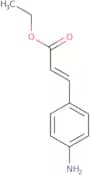
Fórmula:C9H7BrN2Pureza:Min. 95%Cor e Forma:PowderPeso molecular:223.07 g/molEthyl 4-aminocinnamate
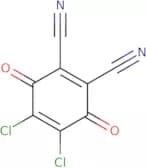
CAS:Ethyl 4-aminocinnamate is a supramolecular, homologous, activated, linear polymer. It is used as an amine and phosphazene ligand in mesomorphic solid-state chemistry. It has a reversible covalent bond that can be thermally broken and re-formed. This property allows for the synthesis of polymers with functional groups on both ends of the molecule. The nitro group on this compound can be reduced to amine to give another functional group. Ethyl 4-aminocinnamate has been shown to have pharmacokinetic properties that are similar to those of ethyl 4-aminobenzoate (EB). EB is an inhibitor of NS5B polymerase that blocks RNA synthesis and leads to inhibition of viral replication. EB also inhibits ring opening reactions in the presence of nitro groups, which may explain its inhibitory effect on HIV RNA synthesis.Fórmula:C11H13NO2Pureza:Min. 95%Cor e Forma:PowderPeso molecular:191.23 g/mol2,3-Dichloro-5,6-dicyanobenzoquinone
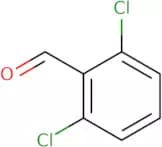
CAS:2,3-Dichloro-5,6-dicyanobenzoquinone is a chemical compound with the molecular formula C12H4Cl2O2. It is used as a chemical intermediate in the production of dyes and pesticides. 2,3-Dichloro-5,6-dicyanobenzoquinone has been shown to have cytotoxic properties against lung fibroblasts in a model system that mimics the human body's reaction to this compound. The mechanism of action is thought to involve the formation of reactive oxygen species that leads to DNA damage. 2,3-Dichloro-5,6-dicyanobenzoquinone also has antiestrogenic activity and has been shown to be active against MDA-MB-231 breast cancer cells. The activation energies for these reactions are 7.8 kcal/mol for carbonyl group elimination and 8.1 kcal/mol for hydFórmula:C8Cl2N2O2Cor e Forma:Yellow PowderPeso molecular:227 g/mol2,6-Dichlorobenzaldehyde
CAS:2,6-Dichlorobenzaldehyde is a nucleophilic compound that has the ability to form hydrogen bonds. It reacts with phosphorus pentachloride to produce 2-chloro-4,6-dichlorobenzene. 2,6-Dichlorobenzaldehyde can be used in the synthesis of β-unsaturated ketones and anticancer drugs such as aziridines. It is also used as a precursor for coordination complexes. This compound is an efficient method for making nitrogen nucleophiles, which are important in chain reactions and the production of polymers. The 2,6-dichlorobenzaldehyde molecule contains two chiral centers that give rise to four stereoisomers. X-ray diffraction data shows that this molecule exists as a mixture of these four isomers.Fórmula:C7H4Cl2OPureza:Min. 97.5%Cor e Forma:PowderPeso molecular:175.01 g/mol2,6-Dichloropyridine-1-oxide
CAS:2,6-Dichloropyridine-1-oxide is a reactive compound that has been synthesized by the reaction of ethyl diazoacetate and trifluoroacetic acid. The synthesis is scalable and can be immobilized in a ruthenium complex. The reactivity of this compound has been studied in kinetic experiments and molecular modeling simulations. 2,6-Dichloropyridine-1-oxide can form an epoxide with ethyl diazoacetate, which is used as the control experiment.Fórmula:C5H3Cl2NOPureza:Min. 95%Cor e Forma:White PowderPeso molecular:163.99 g/mol4,5-Dichloro-3-thiophenecarboxylic acid
CAS:4,5-Dichloro-3-thiophenecarboxylic acid (4,5-DTTC) is an organic compound that is a useful building block and can be used as a reactive intermediate in the synthesis of other chemicals. 4,5-DTTC has been shown to react with alkenes at room temperature to produce a variety of thioethers. This reaction was facilitated by the use of copper(II) chloride as a catalyst. 4,5-DTTC has also been shown to be a good starting material for synthesizing pharmaceuticals such as antihistamines and antibiotics.Fórmula:C5H2Cl2O2SPureza:Min. 95%Cor e Forma:PowderPeso molecular:197.04 g/mol6-[(1E)-2-(3,4-Dihydroxyphenyl)ethenyl]-3,4-dihydroxy-2H-pyran-2-one
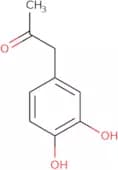
CAS:Versatile small molecule scaffoldFórmula:C13H10O6Pureza:Min. 95%Cor e Forma:PowderPeso molecular:262.2 g/mol3',4'-Dihydroxyphenylacetone
CAS:3',4'-Dihydroxyphenylacetone (DOPA) is a metabolite of dopamine that is produced in the brain and kidneys. DOPA has been shown to have pharmacological properties, but its function as an endogenous neurotransmitter has not been confirmed. DOPA is also a precursor for the synthesis of melanin, which is found in skin cells. The detection of DOPA in urine samples can be used to diagnose Parkinson's disease or other conditions characterized by low levels of dopamine. The enzyme glutamate dehydrogenase converts DOPA into 3-methoxytyramine, which can be detected in urine samples using chromatographic methods. 3',4'-Dihydroxyphenylacetone may be measured in the blood plasma of patients with bacterial infections and urinary tract infections. A detectable concentration of this metabolite could indicate that the body is making use of an alternate pathway for synthesizing amines.Fórmula:C9H10O3Pureza:Min. 95%Cor e Forma:Off-White PowderPeso molecular:166.17 g/mol3,5-Diiodo-4-hydroxybenzaldehyde
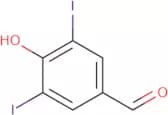
CAS:3,5-Diiodo-4-hydroxybenzaldehyde (3,5-DIBA) is a functional group that contains both hydroxyl and iodide groups. The hydroxyl group is positioned ortho to the iodide group. 3,5-DIBA is found in wastewater and can be used as a bioremediation agent. It has been shown to react with chromatographic solvents and may be used for the removal of organic contaminants from water. 3,5-DIBA reacts with monoiodotyrosine in an aqueous environment to form hypoiodous acid (HIO). This reaction is catalyzed by hydrochloric acid. HIO reacts with diiodoacetic acid or iodoacetic acid to form coagulation products such as diiodoacetate or iodoacetate. These reactions are reversible and can be used for the removal of excess iodine from wastewater.Fórmula:C7H4I2O2Pureza:Min. 98 Area-%Cor e Forma:Off-White PowderPeso molecular:373.91 g/mol3,5-Diiodo-4-hydroxybenzoic acid
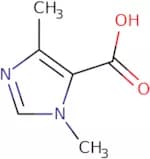
CAS:3,5-Diiodo-4-hydroxybenzoic acid (3,5 DIBA) is an aminotriazole that inhibits the growth of a wide range of bacteria. 3,5 DIBA inhibits the transport of catechol and 2,6-dichlorobenzoic acid into cells. This inhibition leads to decreased levels of catechol-O-methyltransferase activity and increased levels of lysine decarboxylase activity. The combination of these two reactions causes a decrease in lysine production. Lysine is important for cell division and protein synthesis in bacteria. 3,5 DIBA also inhibits root formation in plants and has been shown to inhibit the uptake of nutrients by plant roots. Also known as: Dibenzoylmethane; 1,2-Benzenediamine, 3-[(2,6-dichlorophenyl)imino]-, diiodide;Fórmula:C7H4I2O3Pureza:Min 97%Cor e Forma:PowderPeso molecular:389.91 g/mol1,4-Dimethyl-1H-imidazole-5-carboxylic acid
CAS:Versatile small molecule scaffoldFórmula:C6H8N2O2Pureza:Min. 90%Peso molecular:140.14 g/mol2-{1-[(Pyridin-3-yl)methyl]piperidin-2-yl}ethan-1-ol
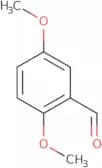
CAS:Versatile small molecule scaffoldFórmula:C13H20N2OPureza:Min. 95%Cor e Forma:PowderPeso molecular:220.31 g/mol2,5-Dimethoxybenzaldehyde
CAS:Intermediate in organic synthesis
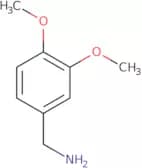
Fórmula:C9H10O3Pureza:Min. 98 Area-%Cor e Forma:Off-White PowderPeso molecular:166.17 g/mol3,4-Dimethoxybenzylamine
CAS:3,4-Dimethoxybenzylamine is an amine that is used in the synthesis of pharmaceuticals. It can be polymerized by heating with aqueous formaldehyde and hydrochloric acid to form a resin. 3,4-Dimethoxybenzylamine inhibits serotonin receptors, exhibiting inhibitory properties at concentrations of 10-5 M. 3,4-Dimethoxybenzylamine also has pharmacokinetic properties that are similar to vitamin B1. This compound has been shown to inhibit homogeneous catalysts and is used for coatings for ganglion cells.
Fórmula:C9H13NO2Pureza:Min. 95%Cor e Forma:Clear LiquidPeso molecular:167.21 g/mol
![(R,R)-2,8-Diazabicyclo[4.3.0]nonane](/_next/image/?url=https%3A%2Fstatic.cymitquimica.com%2Fproducts%2F3D%2Fthumb-webp%2FFD21506.webp&w=3840&q=75)






![6-[(1E)-2-(3,4-Dihydroxyphenyl)ethenyl]-3,4-dihydroxy-2H-pyran-2-one](/_next/image/?url=https%3A%2Fstatic.cymitquimica.com%2Fproducts%2F3D%2Fthumb-webp%2FZWC96466.webp&w=3840&q=75)

![2-{1-[(Pyridin-3-yl)methyl]piperidin-2-yl}ethan-1-ol](/_next/image/?url=https%3A%2Fstatic.cymitquimica.com%2Fproducts%2F3D%2Fthumb-webp%2FZZB80618.webp&w=3840&q=75)