Building Blocks
Subcategorias de "Building Blocks"
- Ácidos Borónicos e Derivados de Ácido Borónico(5.784 produtos)
- Building Blocks Quirais(1.243 produtos)
- Building Blocks Hidrocarbonetos(6.105 produtos)
- Building Blocks orgânicos(61.066 produtos)
Foram encontrados 205426 produtos de "Building Blocks"
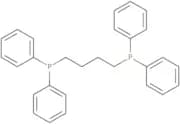
1,4-Bis-(diphenylphosphino)butane
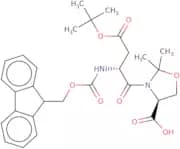
CAS:1,4-Bis-(diphenylphosphino)butane is a coordination compound that contains a bicyclic heterocycle. The compounds are made up of phosphorus and nitrogen atoms which are arranged in a tetrahedral geometry. It has photochemical properties and can be used to inhibit the growth of myeloid leukemia cells. The complexes bind to amines and form stable complexes with hydroxyl groups, so they are also able to cross mitochondrial membranes. This compound has been shown to bind to copper ions in x-ray crystal structures. 1,4-Bis-(diphenylphosphino)butane binds more strongly to ethylene diamine than it does to aryl halides such as chloroethane or phenylethane. Activation energies for the binding of 1,4-bis-(diphenylphosphino)butane with ethylene diamine have been found by measuring the free energy change for its formation fromFórmula:C28H28P2Pureza:Min. 95%Cor e Forma:White PowderPeso molecular:426.47 g/molFmoc-D-Asp(OtBu)-L-Ser(Psi(Me,Me)pro)-OH
Fmoc-D-Asp(OtBu)-L-Ser(Psi(Me,Me)pro)-OH is a high quality reagent that can be used as an intermediate in the synthesis of complex compounds. It is a useful building block for the synthesis of speciality chemicals and research chemicals. Fmoc-D-Asp(OtBu)-L-Ser(Psi(Me,Me)pro)-OH is also a versatile building block that can be used to synthesize different types of compounds.Fórmula:C29H34N2O8Pureza:Min. 95%Cor e Forma:PowderPeso molecular:538.59 g/molFurosine dihydrochloride
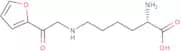
CAS:Reference material for food analysis
Fórmula:C12H18N2O4•2HClPureza:Min. 98 Area-%Cor e Forma:PowderPeso molecular:327.20 g/molFmoc-L-valine N-hydroxysuccinimide ester
CAS:Fmoc-L-valine N-hydroxysuccinimide ester is a pegylated, cytotoxic drug that is used in the treatment of cancer. It is delivered to cells by an organic solvent, which causes uptake into the cell and intracellular delivery. Fmoc-L-valine N-hydroxysuccinimide ester forms particles that are excreted from the body through the kidneys. This drug has been shown to be effective against a number of different types of cancer cells, including breast cancer, lung cancer, and colon cancer cells. Fmoc-L-valine N-hydroxysuccinimide ester has been shown to be cytotoxic in vivo and in vitro against tumor tissue and MFC-7 cells with no effect on normal tissue or healthy cells. Fmoc-L-valine N-hydroxysuccinimide ester can also be used as aFórmula:C24H24N2O6Pureza:Min. 98 Area-%Cor e Forma:White PowderPeso molecular:436.46 g/mol2-Bromo-4-iodopyridine
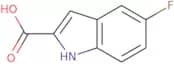
CAS:2-Bromo-4-iodopyridine is a coordination compound that inhibits bacterial enzyme catechol-O-methyltransferase (COMT). It is also an inhibitor of methicillin-resistant Staphylococcus aureus (MRSA) and other bacteria. 2-Bromo-4-iodopyridine binds to the active site of COMT, which is located in the bacterial cell wall, and prevents methylamine from binding to the enzyme. This prevents methylation of the catechol ring, which is required for bacterial growth. 2-Bromo-4-iodopyridine has been shown to have antimicrobial activity against Escherichia coli, Enterococcus faecalis, Bacillus subtilis, and Candida albicans.Fórmula:C5H3BrINPureza:Min. 95%Cor e Forma:PowderPeso molecular:283.88 g/mol5-Fluoroindole-2-carboxylic acid
CAS:5-Fluoroindole-2-carboxylic acid is a new substance that has been found to be an inhibitor of the influenza virus. It prevents the virus from replicating by inhibiting the synthesis of viral proteins and nucleic acids. 5-Fluoroindole-2-carboxylic acid can be prepared by dispersive solid phase extraction of a mixture of fluoroindole, fumaric acid, and potassium hydroxide in water. The compound has also been shown to potentiate the effects of carbamazepine on caspases and enhance mass spectrometric analysis for gaseous hydrochloric acid. 5-Fluoroindole-2-carboxylic acid produces antinociceptive effects in animals.Fórmula:C9H6FNO2Cor e Forma:PowderPeso molecular:179.15 g/mol(2S)-2-Amino-3-(1H-indol-3-yl)-N-methylpropanamide
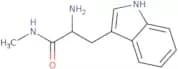
CAS:Acetaminophen is a non-opioid analgesic and antipyretic drug. It is a common medication used to treat pain, fever, and inflammation. Acetaminophen inhibits matrix metalloproteinase (MMPs) by binding to the active site of the enzyme, thus preventing it from breaking down collagen in the extracellular matrix. This inhibition has been shown to be effective against cancer cells. Acetaminophen also has an antioxidative activity that may be due to its ability to inhibit lipid peroxidation, which is important for cell membrane integrity. Acetaminophen has been shown to reduce ulceration in animal models.Fórmula:C12H15N3OPureza:Min. 95%Cor e Forma:PowderPeso molecular:217.27 g/mol4-Fluoro-3-nitrobenzaldehyde
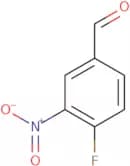
CAS:4-Fluoro-3-nitrobenzaldehyde is a diphenyl ether that has been used as a starting material for the synthesis of dihydroisoquinolines and related compounds. The compound also inhibits IL-10 production in an experiment with human cells, which might be due to its ability to act as a pro-inflammatory cytokine. 4-Fluoro-3-nitrobenzaldehyde can be used as a control experiment for 4-fluoroaniline, which was found to inhibit IL-10 production in an experiment with human cells.
4-Fluoro-3-nitrobenzaldehyde is not active against P. aeruginosa, but does have antinociceptive effects and can be considered to have nucleophilic properties.Fórmula:C7H4FNO3Pureza:Min. 95%Cor e Forma:PowderPeso molecular:169.11 g/mol5,6,7,8-Tetrahydropteridine
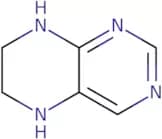
CAS:5,6,7,8-Tetrahydropteridine is a prodrug of 5-fluorouracil. It has been shown to be effective in the treatment of solid tumours in animals. The effects of 5,6,7,8-tetrahydropteridine on cancer cells depend on the pH of the environment. It is active at low pH and inactive at high pH. 5,6,7,8-Tetrahydropteridine has been used as a predictive biomarker for human cancer cells. A study showed that 5,6,7,8-tetrahydropteridine was effective against depression in rats. However it can cause side effects such as nausea and vomiting when taken orally and needs to be administered intravenously or intramuscularly. 5-Fluorouracil (5FU) is an anti-cancer drug that belongs to the group of fluoropyrimidines and inter
Fórmula:C6H8N4Pureza:Min. 95%Cor e Forma:PowderPeso molecular:136.15 g/mol2-Iodo-4-phenyl-1,3-oxazole
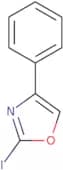
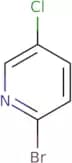
CAS:Versatile small molecule scaffoldFórmula:C9H6INOPureza:Min. 95%Cor e Forma:PowderPeso molecular:271.05 g/mol2-Bromo-5-chloropyridine
CAS:2-Bromo-5-chloropyridine is a synthetic compound that acts as an inhibitor of tyrosine kinase. It binds to the active site of the enzyme and blocks its activity. This inhibits protein phosphorylation, which is essential for cell signaling. The mechanism of this inhibition is similar to that of piperidine and diethanolamine, which are competitive inhibitors of the enzyme. 2-Bromo-5-chloropyridine also reacts with chloride ion to give bipyridines, which have been shown to inhibit cholesterol ester transfer protein (CETP) by binding covalently to the enzyme's active site. 2-Bromo-5-chloropyridine has been shown to be effective in inhibiting tumor growth in mice when given orally at doses ranging from 10 mg/kg to 30 mg/kg daily. 2-Bromo-5-chloropyridine can also be used as a starting material forFórmula:C5H3BrClNPureza:Min. 98 Area-%Cor e Forma:White PowderPeso molecular:192.44 g/mol(R)-1,1'-Bi-2-Naphthol
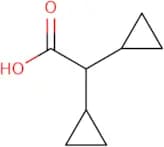
CAS:(R)-1,1'-Bi-2-Naphthol is an organic compound that is made from the hydrogenation of 2-naphthol. The sodium salts of this compound are chiral and can be used to synthesize racemic mixtures with a high degree of optical purity. The x-ray crystal structures of (R)-1,1'-Bi-2-Naphthol have been studied in detail and show that this molecule exhibits intermolecular hydrogen bonding interactions. It also has a steric interaction with the amine group which prevents rotation about the C3—C4 bond. Other interesting features include intramolecular hydrogen bonding interactions between the hydroxyl group and the alkanoic acid. This molecule also has a hydrophobic region consisting of three methyl groups that are connected to fatty acids.Fórmula:C20H14O2Pureza:Min. 98.5 Area-%Cor e Forma:White Off-White PowderPeso molecular:286.32 g/mol2,2-Dicyclopropylacetic acid
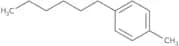
CAS:Versatile small molecule scaffoldFórmula:C8H12O2Pureza:Min. 95%Cor e Forma:PowderPeso molecular:140.18 g/mol1-Hexyl-4-methylbenzene
CAS:1-Hexyl-4-methylbenzene is a hydrocarbon with the chemical formula C8H18. It has an octane rating of 100 and a boiling point of 156°C. This compound is used in the preparation of pharmaceuticals, dyes, and cleaning agents. It has been shown to react with palladium catalysts to form homopolymers in the presence of oxygen or water. These polymers are used for optical purposes due to their emission properties. They also have high photophysical properties that make them suitable for use in lasers and photonic devices. The intramolecular interactions between the benzene rings give this compound its conformational stability.
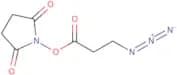
Fórmula:C13H20Pureza:Min. 95%Cor e Forma:Clear LiquidPeso molecular:176.3 g/mol3-Azidopropanoate-N-hydroxysuccinimide ester
CAS:3-Azidopropanoate-N-hydroxysuccinimide ester is a fluorescent probe that can be activated by the addition of an azide donor. The fluorescence of 3-azidopropanoate-N-hydroxysuccinimide ester is dependent on the presence of serum albumin and can be used as a model system for studying albumin uptake and metabolism. This probe has been shown to have good uptake in lung cancer cells, which may be due to its ability to bind with the receptor on the cell surface. 3-Azidopropanoate-N-hydroxysuccinimide ester binds to proteolytic enzymes such as plasmin, cathepsins, and elastase, which are found in high concentrations in lung cancer cells.Fórmula:C7H8N4O4Pureza:Min. 95%Cor e Forma:PowderPeso molecular:212.16 g/mol7-Azaindole
CAS:7-Azaindole is a chemical compound that can be used as a building block in organic synthesis. It can be used as a reactant in the preparation of other chemicals, such as dyes, rubber accelerators, and pharmaceuticals. 7-Azaindole is also useful as an intermediate in the production of polymers, such as polyurethanes and polyesters. This chemical is soluble in water and alcohols, but insoluble in ethers and chloroform. 7-Azaindole has been classified by the International Agency for Research on Cancer (IARC) as Group 3: Not Classifiable as to its Carcinogenicity to Humans.Fórmula:C7H6N2Pureza:Min. 98.0 Area-%Peso molecular:118.14 g/molRef: 3D-A-9500
-Unit-kgkgA consultar1kgA consultar5kgA consultar250gA consultar500gA consultar2500gA consultarFmoc-Cl
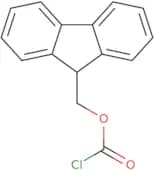
CAS:Fmoc-Cl is a fluorescent derivative that can be used as an analytical method for amino acids in human serum. This reagent is synthesized from chloroformate and derivatization of the amino acid with polymyxin B. Fmoc-Cl reacts with amino acids, producing a fluorescent molecule. The reaction solution can be applied to human serum to determine the concentration of various types of amino acids in the sample. The main matrix effect comes from the presence of human serum proteins, which have been shown to interfere with the measurement of some amino acid concentrations. Fmoc-Cl has also been studied as a potential therapeutic agent for autoimmune diseases, such as multiple sclerosis, lupus erythematosus, and rheumatoid arthritis. It has been shown that Fmoc-Cl inhibits complex enzymes and can reduce levels of certain inflammatory markers in animal models.
Fórmula:C15H11ClO2Pureza:Min. 95%Cor e Forma:White PowderPeso molecular:258.7 g/mol5-Amino-1H-indole-2-carboxylic acid
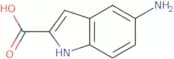
CAS:5-Amino-1H-indole-2-carboxylic acid is a chemical compound that belongs to the group of alcohols. It has been shown to have a viscosity increasing effect in industrial applications and can be used as an environmental pollutant. This compound is also a surface active agent, and it has been shown to be an effective antitumor agent. 5-Amino-1H-indole-2-carboxylic acid is a nonionic surfactant with urea derivative properties. It can be used for the treatment of skin conditions such as eczema and psoriasis, but should not be applied to open wounds.Fórmula:C9H8N2O2Pureza:Min. 95%Cor e Forma:PowderPeso molecular:176.17 g/mol2-(Pyrrolidin-2-yl)cyclohexan-1-one hydrochloride
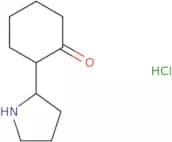
CAS:Versatile small molecule scaffoldFórmula:C10H18ClNOPureza:Min. 95%Cor e Forma:PowderPeso molecular:203.71 g/mol5-(2-Fluorophenyl)-1-methyl-1H-pyrrole-2-carboxylic acid
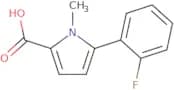
CAS:Versatile small molecule scaffold
Fórmula:C12H10FNO2Pureza:Min. 95%Cor e Forma:PowderPeso molecular:219.21 g/mol