Building Blocks
Subcategorias de "Building Blocks"
- Ácidos Borónicos e Derivados de Ácido Borónico(5.783 produtos)
- Building Blocks Quirais(1.242 produtos)
- Building Blocks Hidrocarbonetos(6.105 produtos)
- Building Blocks orgânicos(61.055 produtos)
Foram encontrados 205383 produtos de "Building Blocks"
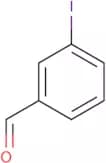
3-Iodobenzaldehyde
CAS:3-Iodobenzaldehyde is an atypical, isomeric, low energy, functional group. It has a fluorine atom in the 3-position and three different types of functional groups: alcohol, aldehyde and carboxylic acid. This compound has been studied for its ability to bind to receptors. 3-Iodobenzaldehyde can be synthesized by reacting benzalchohde with iodine and hydrochloric acid. The technique used to produce this compound is called Grignard reaction. 3-Iodobenzaldehyde can also be prepared by heating the corresponding nitrobenzene with sodium iodide in dry ether or under refluxing conditions. This compound has a low boiling point and melts at about 170 degrees Celsius. The frequency of this molecule ranges from 98 to 102 megahertzFórmula:C7H5IOPureza:Min. 95%Cor e Forma:PowderPeso molecular:232.02 g/mol2-Iodo-5-nitrobenzoic acid
CAS:2-Iodo-5-nitrobenzoic acid is a reactive molecule that reacts with terminal alkynes to form a fluorescent compound. It was immobilized on an electrode and used as a probe in voltammetry studies. 2-Iodo-5-nitrobenzoic acid is also used as a reagent in the synthesis of amides, which are important in many biochemical reactions. The use of this compound may be limited by the toxicity to cells, which can be increased through the presence of cisplatin or 3-aminobenzoic acid. The microenvironment around cancer cells may also alter the reactivity of 2-iodo-5-nitrobenzoic acid.Fórmula:C7H4INO4Pureza:Min. 95%Cor e Forma:Beige PowderPeso molecular:293.02 g/molKisspeptin-234 trifluoroacetate
CAS:Please enquire for more information about Kisspeptin-234 trifluoroacetate including the price, delivery time and more detailed product information at the technical inquiry form on this page
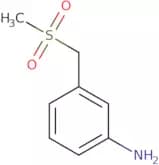
Fórmula:C63H78N18O13•(C2HF3O2)xPureza:Min. 95 Area-%Peso molecular:1,295.41 g/mol3-(Methanesulfonylmethyl)aniline
CAS:3-(Methanesulfonylmethyl)aniline is a growth factor inhibitor that binds to the receptor-2, which is a protein tyrosine kinase. This binding inhibits the activation of endothelial cells and angiogenesis, as well as tumor growth. 3-(Methanesulfonylmethyl)aniline has been shown to inhibit the proliferation of human cancer cells in vitro by interfering with their ability to secrete vascular endothelial growth factor (VEGF). The drug also inhibits VEGFR-2 signaling pathways in endothelial cells, leading to a decrease in cell proliferation and angiogenesis. The mechanism of action is not yet fully understood.Fórmula:C8H11NO2SPureza:Min. 95%Peso molecular:185.24 g/mol2,5-Dihydroxycinnamic acid
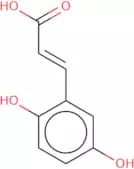
CAS:2,5-Dihydroxycinnamic acid is an intermediate in the metabolism of 4-hydroxycinnamic acid and is a precursor for the formation of methylthioadenosine. It has been shown to stimulate the growth of human epidermal cells and increase colony-stimulating factor production. 2,5-Dihydroxycinnamic acid also has been found to have cytotoxic effects on HL-60 cells, as well as inhibitory effects on human serum. The detection sensitivity for this compound is 0.1 mg/L, which can be achieved using liquid chromatography with UV detection. 2,5-Dihydroxycinnamic acid can be prepared by hydrolysis of dimethylthiourea with alkaline or acidic conditions at room temperature or 37 degrees Celsius. This compound has pharmacokinetic properties that are similar to those of 4-hydroxycinnamic acid and is believed to act similarly by inhibiting proteinFórmula:C9H8O4Pureza:Min. 95%Cor e Forma:Off-White PowderPeso molecular:180.16 g/mol3-(3,4-Dihydroxyphenyl)propionic acid
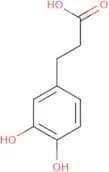
CAS:3-(3,4-Dihydroxyphenyl)propionic acid (3,4-DHPA) is a chlorogenic acid that is found in the leaves of the coffee plant. It has been shown to have a synergic effect with benzalkonium chloride on postprandial blood glucose levels. 3,4-DHPA also has a hypoglycemic effect and can be used as a dietary supplement for people with diabetes. 3,4-DHPA was extracted from coffee leaves using solid phase microextraction and then analyzed by gas chromatography. The rate constant for the reaction was found to be 0.917 min-1 at 25 °C and pH 7.0. The biocompatible polymer poly(L-lactic acid) was used as the stationary phase in this experiment to improve the selectivity of separation.Fórmula:C9H10O4Pureza:Min. 95%Cor e Forma:Off-White PowderPeso molecular:182.17 g/mol3,4-Dinitrobenzoic acid
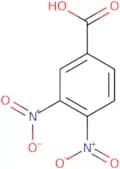
CAS:3,4-Dinitrobenzoic acid is a nitrobenzoic acid that has a hydrogen bond. 3,4-Dinitrobenzoic acid is activated by the loss of a proton and it reacts with amines to form diazonium salts. It can be found in plants and animals as an intermediate in the metabolism of tyrosine and tryptophan. 3,4-Dinitrobenzoic acid is used in analytical chemistry to detect the presence of amines. The functional groups on 3,4-dinitrobenzoic acid are carboxylic acid and nitro. Ribulose is an example of a molecule containing these functional groups.
Fórmula:C7H4N2O6Pureza:Min. 98.0%Cor e Forma:Yellow PowderPeso molecular:212.12 g/mol3,4-Dinitrobenzonitrile
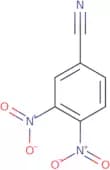
CAS:3,4-Dinitrobenzonitrile is a fine chemical that is used as a versatile building block in the synthesis of complex organic compounds. It is also used as a research chemical and a reaction component in organic synthesis. 3,4-Dinitrobenzonitrile is stable against oxidation and hydrolysis, making it an ideal intermediate for other reactions. CAS No. 4248-33-3Fórmula:C7H3N3O4Pureza:Min. 95%Cor e Forma:PowderPeso molecular:193.12 g/mol1-(3,5-Dimethylphenyl)ethanone
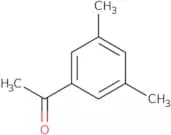
CAS:3',5'-Dimethylacetophenone is a ligand that can bind to the activated site of polynuclear metal complexes and undergoes acetylation by acetic anhydride in the presence of base. The reaction time for the condensation product formation is typically less than 1 min. Acetonitrile is used as a solvent during the synthesis, which may be due to its ability to activate the methyl group on 3',5'-dimethylacetophenone. Kinetics studies have shown that 3',5'-dimethylacetophenone can react with benzoyl chloride at room temperature in less than 10 minutes, while at higher temperatures it takes only a few seconds.Fórmula:C10H12OPureza:Min. 95%Cor e Forma:Clear LiquidPeso molecular:148.2 g/molBis(trifluoromethane)sulfonimide lithium salt
CAS:Please enquire for more information about Bis(trifluoromethane)sulfonimide lithium salt including the price, delivery time and more detailed product information at the technical inquiry form on this pageFórmula:C2F6LiNO4S2Peso molecular:287.09 g/molRef: 3D-Q-101273
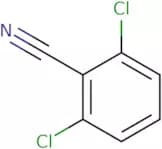
1kgA consultar5kgA consultar250gA consultar500gA consultar2500gA consultar-Unit-kgkgA consultar2,6-Dichlorobenzonitrile
CAS:2,6-Dichlorobenzonitrile is a crystalline cellulose that inhibits the activity of cytochrome P450 enzymes. It has been shown to inhibit the activities of xet and p450 in vitro and in vivo. 2,6-Dichlorobenzonitrile has been shown to have an inhibitory effect on the growth of plants by inhibiting cell division. This compound is used as a herbicide and insecticide. 2,6-Dichlorobenzonitrile has been shown to be toxic in animal studies.
Fórmula:C7H3Cl2NPureza:Min. 95%Cor e Forma:PowderPeso molecular:172.01 g/mol2-(4-Bromo-1H-imidazol-1-yl)acetic acid
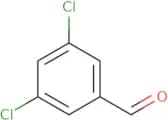
CAS:2-(4-Bromo-1H-imidazol-1-yl)acetic acid is a fine chemical that can be used as a versatile building block, a reaction component and as a speciality chemical. It is an intermediate in the synthesis of other compounds, such as 2-(4-bromophenylimino)-N-(2-chlorophenyl)acetamide. It has been shown to be useful in the synthesis of complex compounds with high quality, such as 2-[4-(2,6-Dichlorobenzoyloxy)phenylimino]-N-(2,4-dimethoxyphenyl)acetamide.Fórmula:C5H5BrN2O2Pureza:Min. 95%Cor e Forma:PowderPeso molecular:205.01 g/mol3,5-Dichlorobenzaldehyde
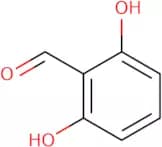
CAS:3,5-Dichlorobenzaldehyde is an organic compound with the formula CHClO. It is a colorless liquid that smells like freshly cut grass. 3,5-Dichlorobenzaldehyde is used in organic synthesis as an electrophile for the preparation of substituted benzoquinones and other heterocycles. It is also used to prepare aromatic amines via aldol condensation with ketones. In addition, it can be used to generate azides from nitroarenes or nitroalkanes in the presence of sodium azide or potassium azide. Finally, it can be used to synthesize molybdenum compounds such as molybdic acid and ammonium molybdate.Fórmula:C7H4Cl2OPureza:Min. 95%Cor e Forma:PowderPeso molecular:175.01 g/mol2,6-Dihydroxybenzaldehyde
CAS:2,6-Dihydroxybenzaldehyde is a chemical compound that has been used as an intermediate in the synthesis of other chemicals. It is also used as a precursor for benzaldehyde and benzoic acid. 2,6-Dihydroxybenzaldehyde can be synthesized by reacting sodium carbonate with pluronic F127 in the presence of cationic surfactant. The surface methodology used in this process involves the use of hydrophobic molecules to form micelles and liposomes on the surface of the electrode. The interaction between these micelles and liposomes is pH dependent. This reaction causes an increase in hydrogen ions, which leads to an increase in conductivity at acidic pH values. Electrochemical impedance spectroscopy (EIS) results show that 2,6-dihydroxybenzaldehyde reacts with high concentrations of salt and water vapor. FTIR spectroscopy shows that it has two hydroxyl groups and one double
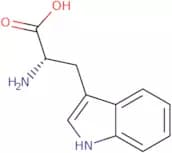
Fórmula:C7H6O3Pureza:Min. 95%Cor e Forma:PowderPeso molecular:138.12 g/molL-Tryptophan
CAS:L-tryptophan is a non-essential amino acid that is used as a building block in the synthesis of proteins. It has been used in research and as a starting material for the production of other chemicals. L-tryptophan has also been shown to have antidepressant effects, although it is not approved by the FDA for this use. L-tryptophan can be found in protein-rich foods such as meat, eggs, and soybeans.Fórmula:C11H12N2O2Pureza:Min. 98.0 Area-%Peso molecular:204.23 g/molRef: 3D-T-8320
1kgA consultar100gA consultar250gA consultar500gA consultar2500gA consultar-Unit-kgkgA consultarN-Acetyl-L-tyrosine
CAS:N-Acetyl-L-tyrosine is a tyrosine derivative with a chemical structure similar to that of an amino acid. It is used as a model system in biochemistry and molecular biology to study the transfer reactions of tyrosine, which are important for energy metabolism, protein synthesis, and metal chelation. N-Acetyl-L-tyrosine is also an effective substrate molecule for many analytical methods, such as thin layer chromatography or liquid chromatography.Fórmula:C11H13NO4Pureza:Min. 95%Cor e Forma:White PowderPeso molecular:223.23 g/molEthyl 3-hydroxybenzoate
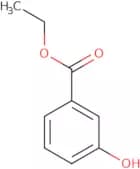
CAS:Ethyl 3-hydroxybenzoate is a preservative that has been shown to be effective against a variety of microorganisms, including gram-positive and gram-negative bacteria. It has been shown to bind with iron, which prevents it from interacting with tyrosinase, an enzyme necessary for the production of melanin. Ethyl 3-hydroxybenzoate also inhibits the activity of benzodiazepine receptor, which reduces the effects of benzodiazepines in the brain. This compound is used in some cosmetics as an antimicrobial agent and cosmetic preservative. The molecular descriptors for this compound are: Molecular Weight=165.07; Log P=0.5; H-bond acceptor count=3; H-bond donor count=2; rotatable bond count=2; hydrogen bond acceptor count=1; hydrogen bond donor count=2; polar surface area=79.90 Å2Fórmula:C9H10O3Pureza:Min. 98.5 Area-%Cor e Forma:White PowderPeso molecular:166.17 g/mol3',5'-Dimethoxyacetophenone
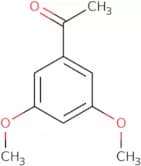
CAS:3',5'-Dimethoxyacetophenone is a compound that is used as an analytical reagent, corrosion inhibitor, and a catalyst. It has been categorized as a hazardous substance by the U.S. Environmental Protection Agency (EPA) and is on the list of substances of very high concern in Europe. 3',5'-Dimethoxyacetophenone is used to prevent corrosion in metals because it reacts with chloride ions to form a protective layer of hydrochloric acid and fatty acid esters. This product has medicinal values because it can be used to synthesize flavonoids or fatty acids.Fórmula:C10H12O3Pureza:Min. 95%Cor e Forma:PowderPeso molecular:180.2 g/mol2,3-Dibromopropene - stabilized with copper chip
CAS:2,3-Dibromopropene - stabilized with copper chip (2,3-DBPC) is a novel bromination reagent that can be used for the synthesis of polypeptides. This compound has been shown to react with acyl halides in an asymmetric synthesis. The reaction mechanism is thought to be via the addition of 2,3-DBPC to the carbonyl group of an acyl halide and subsequent elimination of bromoethane. 2,3-DBPC also reacts with ethanolamine in the presence of carbon disulphide and x-ray diffraction data have shown that this reaction proceeds through a 1,4 addition mechanism.Fórmula:C3H4Br2Pureza:Min. 90 Area-%Cor e Forma:Brown Colorless Yellow Clear LiquidPeso molecular:199.87 g/mol3,5-Dimethylbenzoic acid
CAS:3,5-Dimethylbenzoic acid is a carboxylic acid that is a member of the 3-carboxybenzenesulfonic acid family. The molecule is formed by the reaction of sodium carbonate with benzene in the presence of water. The compound has a redox potential that is close to zero, which makes it a reducing agent and an excellent hydrogen donor. The compound is soluble in water and has been shown to inhibit plant growth as well as promote plant growth by acting as a growth regulator. This molecule has also been shown to be fluorescent.Fórmula:C9H10O2Pureza:Min. 95%Cor e Forma:PowderPeso molecular:150.17 g/mol