Building Blocks
Subcategorias de "Building Blocks"
- Ácidos Borónicos e Derivados de Ácido Borónico(5.784 produtos)
- Building Blocks Quirais(1.242 produtos)
- Building Blocks Hidrocarbonetos(6.105 produtos)
- Building Blocks orgânicos(61.061 produtos)
Foram encontrados 205399 produtos de "Building Blocks"
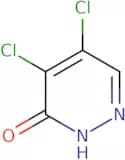
4,5-Dichloro-3-hydroxypyridazine
CAS:4,5-Dichloro-3-hydroxypyridazine is an organic compound that is used as a precursor to other compounds. It has been shown to be genotoxic and mutagenic in a number of assays with mammalian cells. 4,5-Dichloro-3-hydroxypyridazine reacts with phenols in the presence of Friedel-Crafts catalysts to form pyridine derivatives. It has also been shown to regulate transcriptional activity by binding to the prostacyclin receptor and α2-adrenergic receptor. This compound has been studied for its potential diagnostic value in the diagnosis of triticum aestivum (wheat) sensitivity.Fórmula:C4H2Cl2N2OPureza:Min. 95%Cor e Forma:PowderPeso molecular:164.98 g/mol2,4-Dihydroxypyrimidine-5-carboxylic acid anhydrous
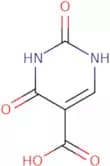
CAS:2,4-Dihydroxypyrimidine-5-carboxylic acid anhydrous (2,4DPA) is a metabolite of the drug 2,4-diaminopyrimidine. It inhibits protein synthesis in cells through hydrogen bonding interactions with dna duplexes and has been shown to be toxic to bacteria by inhibiting fatty acid biosynthesis. 2,4DPA is used as a standard in biological assays to measure uptake and light exposure. The analytical method for measuring 2,4DPA relies on hydrochloric acid (HCl) as a solvent that converts the material into its dimethyl ester derivative. This derivative can be quantified by gas chromatography/mass spectrometry (GCMS).Fórmula:C5H4N2O4Pureza:Min. 94.0 Area-%Cor e Forma:White Off-White PowderPeso molecular:156.1 g/mol2,6-Diaminopurine
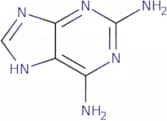
CAS:2,6-Diaminopurine is a nucleotide analogue that is synthesized from guanosine. It inhibits the enzyme ribonucleotide reductase and blocks the synthesis of DNA precursors, which are necessary for viral replication. 2,6-Diaminopurine has been shown to inhibit hiv infection in tissue culture and animal models by decreasing the levels of nucleotides in cells. This drug can be used as an anti-viral agent against HIV and other retroviruses. 2,6-Diaminopurine has also been shown to be effective against murine sarcoma virus. The compound binds to the enzyme ribonucleotide reductase, which is important for DNA synthesis, and prevents its activity by mimicking adenosine triphosphate (ATP). The binding of 2,6-diaminopurine to ATP results in a coordination geometry that causes a long hydrogen bond with one oxygen
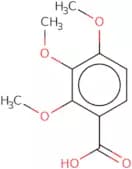
Fórmula:C5H6N6Pureza:Min. 95%Cor e Forma:PowderPeso molecular:150.14 g/mol2,3,4-Trimethoxybenzoic acid
CAS:2,3,4-Trimethoxybenzoic acid is a molecule that has been shown to stimulate epidermal growth. It is a methylating agent that can be used to produce 2-hydroxybenzoic acid from protocatechuic acid. The hydroxy group on the 2,3,4-trimethoxybenzoic acid binds to the chloride ion in the protocatechuic acid and removes it from the molecule. This reaction mechanism is supported by x-ray crystal structures of protocatechuic acid and 2,3,4-trimethoxybenzoic acid.Fórmula:C10H12O5Pureza:Min. 95%Cor e Forma:PowderPeso molecular:212.2 g/molThieno[3,2-c]pyridine-7-carboxylic acid
CAS:Thieno[3,2-c]pyridine-7-carboxylic acid is an anticancer drug that belongs to the class of acid derivatives. It has been shown to be active against solid tumors and has been found to be effective in inhibiting tumor growth and proliferation. Thieno[3,2-c]pyridine-7-carboxylic acid is a prodrug that is activated by hydrolysis of the ester group. The activation process occurs through an enzymatic mechanism that requires two enzymes: carboxylesterase and cytochrome P450.Fórmula:C8H5NO2SPureza:Min. 95%Cor e Forma:PowderPeso molecular:179.2 g/mol2,4,5-Trimethoxybenzaldehyde
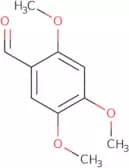
CAS:2,4,5-Trimethoxybenzaldehyde is a natural compound that belongs to the group of sephadex g-100. It is used as an absorbent and has been shown to react with human immunoglobulin in the presence of tiglic acid. The reaction mechanism for this chemical is not well understood but it is believed that intermolecular hydrogen bonding may be occurring. 2,4,5-Trimethoxybenzaldehyde has been shown to have anti-inflammatory effects when tested on rats in a laboratory setting. This chemical has also been used as an analytical reagent for biological samples and biological studies as well as a preparative hplc column. Optical sensors have also been used to detect this chemical in various types of optical sensing experiments. X-ray crystal structures have also been obtained for this compound using synchrotron radiation.Fórmula:C10H12O4Pureza:Min. 98 Area-%Cor e Forma:PowderPeso molecular:196.2 g/mol4-Methylfuran-2-carboxylic acid
CAS:4-Methylfuran-2-carboxylic acid is a versatile building block that is used in the synthesis of complex compounds. It can be used as a research chemical, reagent, or speciality chemical. 4-Methylfuran-2-carboxylic acid can also be used as a useful intermediate for synthesizing products with high quality and as a reaction component for synthesizing scaffolds.Fórmula:C6H6O3Pureza:Min. 95%Peso molecular:126.11 g/molTrifluoromethanesulfonic anhydride
CAS:Trifluoromethanesulfonic anhydride is more frequently known as triflic anhydride, since it derives from triflic acid. It is a versatile and strong electrophile used to insert the triflyl group (represented as Tf-) into chemical molecules (Ouyang, 2018). For example, trifluoromethane sulfonic anhydride interacts with some alkylsulfides to form stable salts that are used in the oxidation of alcohols. Moreover, trifluoromethane sulfonic anhydride has successfully shown high activity as a promoter in glycosylation reactions to obtain disaccharides (Tatai, 2007).Fórmula:C2F6O5S2Pureza:Min. 95%Cor e Forma:Colorless Slightly Brown Clear LiquidPeso molecular:282.14 g/mol2,4,6-Trihydroxybenzoic acid methyl ester
CAS:2,4,6-Trihydroxybenzoic acid methyl ester is a synthetic compound that has been used in animal studies to investigate the inflammatory effects of substances. It has been shown to have anti-inflammatory properties in vitro and in vivo. Furthermore, 2,4,6-Trihydroxybenzoic acid methyl ester has been shown to inhibit the production of tumour necrosis factor-α (TNF-α) and other cytokines. This drug also has anti-fungal activity against Candida albicans and Aspergillus fumigatus. 2,4,6-Trihydroxybenzoic acid methyl ester is biodegradable.
Fórmula:C8H8O5Pureza:Min. 95%Cor e Forma:PowderPeso molecular:184.15 g/mol3,4,5-Trimethoxycinnamic acid
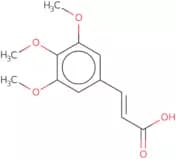
CAS:3,4,5-Trimethoxycinnamic acid (TMC) is a hydroxycinnamic acid that is an intermediate in the synthesis of protocatechuic acid. TMC has been found to have an inhibitory effect on the matrix metalloproteinase activity in the cerebellar granule cells and may be useful for treating allergic reactions. It also has anti-inflammatory properties and can be used as a replacement for sodium carbonate in certain industrial processes. TMC also has been shown to have GABA-ergic effects, increasing locomotor activity and reducing anxiety. TMC can also be used as a Chinese herb for the treatment of ganoderma lucidum.Fórmula:C12H14O5Pureza:Min. 98 Area-%Cor e Forma:PowderPeso molecular:238.24 g/mol6-Amino-5-nitro-1,2-dihydropyrimidin-2-one
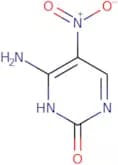
CAS:6-Amino-5-nitro-1,2-dihydropyrimidin-2-one (6ANPD) is a neutral molecule that can form self-assembled monolayers at the air/water interface. 6ANPD adsorbs to the interface by hydrogen bonding and van der Waals interactions. This molecule has been shown to stabilize the monolayer against electrolytes, which are molecules that disrupt the bonding between molecules in a solution. The self-assembled monolayers formed by 6ANPD are two dimensional in nature and have been shown to be stable for more than three months at room temperature.Fórmula:C4H4N4O3Pureza:Min. 95%Cor e Forma:PowderPeso molecular:156.1 g/mol4-Methoxy-2-oxo-1,2-dihydropyridine-3-carboxylic acid
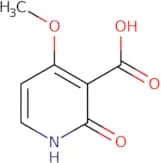
CAS:4-Methoxy-2-oxo-1,2-dihydropyridine-3-carboxylic acid is a versatile building block and useful intermediate in organic synthesis. This compound can be used as a reagent or speciality chemical for research purposes. It has been shown to be an effective reactant in the preparation of diverse complex compounds. 4-Methoxy-2-oxo-1,2-dihydropyridine 3 carboxylic acid has also been shown to be a high quality material with applications in specialty chemicals and pharmaceuticals.Fórmula:C7H7NO4Pureza:Min. 95 Area-%Cor e Forma:PowderPeso molecular:169.14 g/mol2,6-Dichloropurine
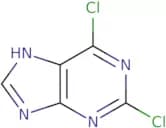
CAS:2,6-Dichloropurine is a nitrogenous base that inhibits the activity of certain enzymes in the body. It has been shown to inhibit protease activity and nitro reductases, which are enzymes that metabolize nitrosamines. 2,6-Dichloropurine also inhibits the synthesis of epidermal growth factor (EGF) and adenosine A3 receptors in vivo. This drug has potent antitumor activity against various cancer cells and is used for the treatment of HIV infections. 2,6-Dichloropurine can be synthesized from 6-fluoro-3-indoxyl-beta-D-galactopyranoside with an intramolecular hydrogen atom.
Fórmula:C5H2Cl2N4Pureza:Min. 98 Area-%Cor e Forma:PowderPeso molecular:189 g/molcis-4,7,10,13,16,19-Docosahexaenoic acid
CAS:cis-4,7,10,13,16,19-Docosahexaenoic acid (also known as DHA or cervonic acid) is one of the omega-3 fatty acids (a group of highly unsaturated fatty acids). As for most omega-3 fatty acids, good sources of DHA include fish oils and other seafoods. DHA plays a key role in human brain development and function and is also found in high concentration in the retina, central nervous system and skin. As such DHA is a key nutrient which is widely used as a dietary supplement, particularly for infants and pregnant women, with its potential health benefits currently being investigated across a number of different disease areas.Fórmula:C22H32O2Pureza:Min. 80 Area-%Cor e Forma:Yellow Clear LiquidPeso molecular:328.49 g/molOctyl isocyanate
CAS:Octyl isocyanate is a non-steroidal anti-inflammatory drug that belongs to the class of isocyanates. The biological activity of octyl isocyanate has been studied extensively, and it has been shown to inhibit the polymerase chain reaction (PCR). Octyl isocyanate also inhibits the growth of bacteria in vitro through metal chelation and polymyxin B., which are antibiotics that bind metal ions and disrupt bacterial cell membranes. Octyl isocyanate has been shown to be reactive in vivo, leading to autophagy and necrosis.Fórmula:C9H17NOPureza:Min. 97 Area-%Cor e Forma:Clear LiquidPeso molecular:155.24 g/mol3,5-Dibromo-4-methoxybenzonitrile
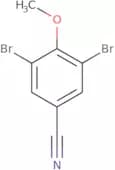
CAS:3,5-Dibromo-4-methoxybenzonitrile (DBMB) is a pentane that can be synthesized in the laboratory. DBMB is used as a weed control agent to kill weeds and grasses in neoprene rubber products and other materials. The chemical reacts with nitro groups on the surface of the material, producing an unstable intermediate that decomposes into pentane and nitric acid. 3,5-Dibromo-4-methoxybenzonitrile has been shown to have low toxicity to mammals at high doses. The compound may also be used as a chemical intermediate for the synthesis of other compounds or drugs. Nitro groups may be reduced by reductants such as sodium borohydride or lithium aluminium hydride to produce analdehyde derivatives.Fórmula:C8H5Br2NOPureza:Min. 95%Cor e Forma:White Off-White PowderPeso molecular:290.94 g/mol4-Chlorothiophene-3-carboxylic acid
CAS:4-Chlorothiophene-3-carboxylic acid is a chemical compound that can be used as a building block for other compounds. It has been used in the preparation of many complex compounds, including pharmaceuticals and fine chemicals. CAS No. 59337-81-4
Fórmula:C5H3ClO2SPureza:Min. 95%Cor e Forma:PowderPeso molecular:162.59 g/mol2,3-Dihydroxybenzoic acid
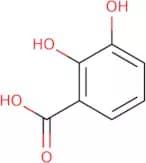
CAS:2,3-Dihydroxybenzoic acid is an antioxidant found in many plants. It has a protective effect against oxidative injury. 2,3-Dihydroxybenzoic acid has been used as a model for the study of infectious diseases and its effects on biological studies. This compound has been shown to prevent the growth of Aerobacter aerogenes and Dinucleotide phosphate. 2,3-Dihydroxybenzoic acid is also used as an ingredient in sephadex g-100 and it acts as an antimicrobial agent that prevents microbial growth in wastewater treatment systems.Fórmula:C7H6O4Pureza:Min. 95%Cor e Forma:PowderPeso molecular:154.12 g/mol1,4-Diisocyanatobutane
CAS:Monomer for the preparation of biocompatible polyurethane polymersFórmula:C6H8N2O2Pureza:Min. 98 Area-%Cor e Forma:Colorless Clear LiquidPeso molecular:140.14 g/mol2,4-Dinitrobenzaldehyde
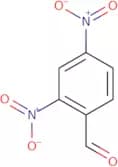
CAS:2,4-Dinitrobenzaldehyde is a chemical compound that contains a hydroxyl group and an amine. It is reactive and can form cationic surfactants with other compounds. 2,4-Dinitrobenzaldehyde has been shown to react with dimethyl fumarate in the presence of ethyl esters to form ethyl 2,4-dinitrophenolate. This reaction is catalyzed by dinucleotide phosphate and requires salinity or a base such as sodium methoxide. 2,4-Dinitrobenzaldehyde reacts with 2-aminoethanol in the presence of water or alcohols to produce 2,4-diaminobenzoic acid. The reaction mechanism for this process is not known but it may involve hydrogen bonding between the hydroxyl group and amine groups. 2,4-Dinitrobenzaldehyde has been used as a reagent for staining DNA in gel electFórmula:C7H4N2O5Pureza:Min. 95%Cor e Forma:PowderPeso molecular:196.12 g/mol

![Thieno[3,2-c]pyridine-7-carboxylic acid](/_next/image/?url=https%3A%2Fstatic.cymitquimica.com%2Fproducts%2F3D%2Fthumb-webp%2FSEC97587.webp&w=3840&q=75)