


Building Blocks
Subcategorias de "Building Blocks"
- Ácidos Borónicos e Derivados de Ácido Borónico(5.784 produtos)
- Building Blocks Quirais(1.242 produtos)
- Building Blocks Hidrocarbonetos(6.105 produtos)
- Building Blocks orgânicos(61.065 produtos)
Foram encontrados 205418 produtos de "Building Blocks"
5-Aminoindole
CAS:5-Aminoindole is a versatile chemical intermediate that can be used in the synthesis of many different types of compounds. It has been used as a building block for the synthesis of complex molecules, such as antibiotics and other pharmaceuticals. 5-Aminoindole is also useful in research because it is a reagent that can be used to study the reaction between proteins and nucleic acids. This chemical reacts with calf thymus DNA to produce 5-aminoindole phosphate, which can then react with an activated phosphate group on a protein or nucleic acid. 5-Aminoindole is a high quality reagent that will provide you with excellent results in your experiments.Fórmula:C8H8N2Peso molecular:132.17 g/molRef: 3D-A-5645
-Unit-ggA consultar10gA consultar25gA consultar50gA consultar100gA consultar250gA consultar2-Amino-6-chlorobenzoic acid
CAS:2-Amino-6-chlorobenzoic acid is a fine chemical that is used as a reagent or speciality chemical.
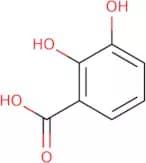
Fórmula:C7H6ClNO2Peso molecular:171.58 g/mol2,3-Dihydroxybenzoic acid
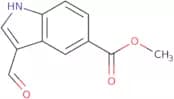
CAS:2,3-Dihydroxybenzoic acid is an antioxidant found in many plants. It has a protective effect against oxidative injury. 2,3-Dihydroxybenzoic acid has been used as a model for the study of infectious diseases and its effects on biological studies. This compound has been shown to prevent the growth of Aerobacter aerogenes and Dinucleotide phosphate. 2,3-Dihydroxybenzoic acid is also used as an ingredient in sephadex g-100 and it acts as an antimicrobial agent that prevents microbial growth in wastewater treatment systems.Fórmula:C7H6O4Pureza:Min. 95%Cor e Forma:PowderPeso molecular:154.12 g/molMethyl-3-Formylindole-5-carboxylate
CAS:Please enquire for more information about Methyl-3-Formylindole-5-carboxylate including the price, delivery time and more detailed product information at the technical inquiry form on this pageFórmula:C11H9NO3Pureza:Min. 95%Peso molecular:203.19 g/mol2-[3-(4-Methylphenyl)-1,2,4-oxadiazol-5-yl]acetonitrile
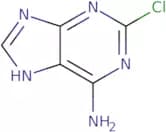
CAS:Heterocycle with nitrile functional handleFórmula:C11H9N3OPureza:Min. 95%Cor e Forma:PowderPeso molecular:199.21 g/mol6-Amino-2-chloropurine
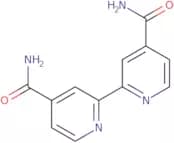
CAS:6-Amino-2-chloropurine (6AC) is a nucleoside analogue that inhibits the synthesis of DNA, RNA, and protein by inhibiting the activity of polymerase chain reaction. It has been used to study the molecular mechanisms of pandemic influenza A virus and HIV infection. 6AC has also been shown to be effective in treating solid tumours and metastatic colorectal cancer in mice. This drug is also used as a competitive inhibitor for measuring endonuclease activity in polymerase chain reactions. 6AC binds to the enzyme's active site and prevents it from cleaving the DNA strands during replication, resulting in incomplete replication of the viral genome.Fórmula:C5H4ClN5Pureza:Min. 95%Cor e Forma:PowderPeso molecular:169.57 g/mol2,2'-Bipyridine-4,4'-dicarboxamide
CAS:2,2'-Bipyridine-4,4'-dicarboxamide is a catalyst that can be used in a variety of reactions. It has been used as an additive to increase yields and to accelerate catalytic reactions. The compound also has the ability to oxidize picolinic acid and form formic acid. This product can be used in glycerol synthesis or hydrogen peroxide production. 2,2'-Bipyridine-4,4'-dicarboxamide is a ligand that binds to picolinic acid and peroxide ions, forming an ion pair with the peroxide ion. This complex increases the efficiency of hydrogen peroxide evolution from water by up to 100%.Fórmula:C12H10N4O2Pureza:Min. 95%Cor e Forma:PowderPeso molecular:242.23 g/mol1,4-Diisocyanatobutane
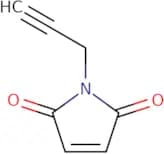
CAS:Monomer for the preparation of biocompatible polyurethane polymersFórmula:C6H8N2O2Pureza:Min. 98 Area-%Cor e Forma:Colorless Clear LiquidPeso molecular:140.14 g/mol1-(Prop-2-yn-1-yl)-2,5-dihydro-1H-pyrrole-2,5-dione
CAS:1,2-Dihydropyrrolo[3,4-b]pyrrole-2,5-dione is a fine chemical that is used as a research chemical and in the synthesis of complex organic compounds. It is also an intermediate for the production of other chemicals. This compound can be used as a building block for the synthesis of many other chemicals with pharmaceutical and industrial applications. 1,2-Dihydropyrrolo[3,4-b]pyrrole-2,5-dione has been shown to be a useful reagent that can react with various functional groups to form new compounds and has found use in many industries.Fórmula:C7H5NO2Pureza:Min. 95%Cor e Forma:PowderPeso molecular:135.12 g/mol4-Methoxybenzoic acid hydrazide
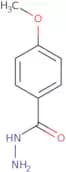
CAS:4-Methoxybenzoic acid hydrazide is a copper complex that binds to the DNA of bacteria, inhibiting the production of proteins. It has been shown to have antimicrobial activity against gram-positive and gram-negative bacteria. 4-Methoxybenzoic acid hydrazide has also been shown to inhibit colorectal carcinoma cells in vitro and in vivo. This compound inhibits the growth of cells by binding to them and disrupting hydrogen bonds. 4-Methoxybenzoic acid hydrazide causes cell death by inhibiting protein synthesis.Fórmula:C8H10N2O2Pureza:Min. 95%Cor e Forma:White PowderPeso molecular:166.18 g/molAniline
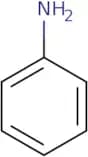
CAS:Aniline is an aromatic amine and is a clear to slightly yellow liquid with a characteristic odor. Aniline is an important precursor in the production of a wide range of industrial chemicals, including polyurethane foams, agricultural chemicals, and dyes. Aniline is also used in the manufacture of pharmaceuticals, rubber processing chemicals, and antioxidants. Due to its widespread industrial use, aniline can be found in various environmental matrices, including water, wastewater, and air.Fórmula:C6H7NPureza:Min. 95%Cor e Forma:Colorless Clear LiquidPeso molecular:93.13 g/mol2,4-Dinitrobenzaldehyde
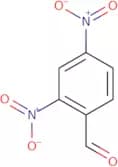
CAS:2,4-Dinitrobenzaldehyde is a chemical compound that contains a hydroxyl group and an amine. It is reactive and can form cationic surfactants with other compounds. 2,4-Dinitrobenzaldehyde has been shown to react with dimethyl fumarate in the presence of ethyl esters to form ethyl 2,4-dinitrophenolate. This reaction is catalyzed by dinucleotide phosphate and requires salinity or a base such as sodium methoxide. 2,4-Dinitrobenzaldehyde reacts with 2-aminoethanol in the presence of water or alcohols to produce 2,4-diaminobenzoic acid. The reaction mechanism for this process is not known but it may involve hydrogen bonding between the hydroxyl group and amine groups. 2,4-Dinitrobenzaldehyde has been used as a reagent for staining DNA in gel electFórmula:C7H4N2O5Pureza:Min. 95%Cor e Forma:PowderPeso molecular:196.12 g/mol2-Methyl-6-(phenylethynyl)pyridine HCl
CAS:2-Methyl-6-(phenylethynyl)pyridine (MPEP) is a drug that is used in the treatment of Parkinson's disease. This drug inhibits the synthesis of proteins, including glutamate and dopamine, which are involved in Parkinson's disease. MPEP has been shown to be effective against Parkinson's disease by blocking protein synthesis in the caudate putamen and other brain regions. It also lowers locomotor activity and improves motor skills in rats. MPEP binds to response element-binding protein (RBP), which is involved in the regulation of gene expression. The binding of MPEP to RBP leads to an increase in levels of endogenous adenosine, which blocks the effects of dopamine and serotonin on postsynaptic neurons.Fórmula:C14H11N·HClPureza:Min. 98 Area-%Cor e Forma:White PowderPeso molecular:229.7 g/mol4-Formylcinnamic acid
CAS:4-Formylcinnamic acid is a molecule that is produced by the condensation of benzaldehyde and formic acid. The nmr spectra of 4-formylcinnamic acid show that it has a structure with two aromatic rings. It has been shown to activate Toll-like receptor 4 (TLR4) in human liver cells. The radiation induced photochemical properties of this molecule have been studied using x-ray diffraction data and the hydrochloric acid decoupling technique. This molecule has also been shown to suppress tumor xenografts in mice and primary cells in vitro, which may be due to its ability to inhibit cellular proliferation and induce cell death by apoptosis.Fórmula:C10H8O3Pureza:Min. 97 Area-%Cor e Forma:White PowderPeso molecular:176.17 g/molCaffeic acid
CAS:Caffeic acid is naturally produced by the metabolism of plants and fungi. Caffeic acid has an antioxidant activity that can be higher than tocopherol in oil-in-water emulsions. Caffeic acid has proven antimicrobial activity against Staphylococcus aureus. In mice, caffeic acid inhibits the enzyme 5-lipoxygenase thus inhibititing the biosynthesis of the inflammatory mediators leukotrienes.
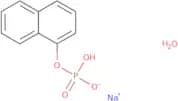
Fórmula:C9H8O4Pureza:Min. 98 Area-%Cor e Forma:PowderPeso molecular:180.16 g/mol1-Naphthol dihydrogen phosphate monosodium monohydrate
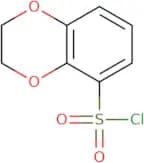
CAS:1-Naphthol dihydrogen phosphate monosodium salt monohydrate is an organic compound that is a useful scaffold for the synthesis of other organic compounds. It is also used as a reagent and building block in organic synthesis. 1-Naphthol dihydrogen phosphate monosodium salt monohydrate has CAS No. 81012-89-7 and can be used as a reaction component, intermediate, or building block in the synthesis of complex compounds. This compound is soluble in water, ethanol, ethers, benzene, chloroform, and acetone. The purity level of 1-naphthol dihydrogen phosphate monosodium salt monohydrate ranges from 99% to 100%.Fórmula:C10H9O4P•Na•H2OPureza:Min. 98%Cor e Forma:PowderPeso molecular:265.16 g/mol2,3-Dihydro-1,4-benzodioxine-5-sulfonyl chloride
CAS:Versatile small molecule scaffold
Fórmula:C8H7ClO4SPureza:Min. 95%Cor e Forma:PowderPeso molecular:234.65 g/mol4-{5H,6H,7H,8H-Pyrido[4,3-c]pyridazin-3-yl}-1,4-oxazepane
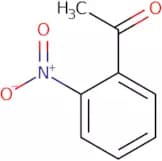
CAS:Versatile small molecule scaffoldFórmula:C12H18N4OPureza:Min. 95%Cor e Forma:PowderPeso molecular:234.3 g/mol2'-Nitroacetophenone
CAS:2'-Nitroacetophenone is a chemical compound that is synthesized by the reaction of acetophenone with nitric acid and sulfuric acid in an acidic environment. The optimum conditions for this reaction are at 50°C and pH=1.5-2.0, which leads to the formation of ester hydrochloride. When 2'-nitroacetophenone comes into contact with choline, it binds to form the nitro group on the aromatic ring, which can be photochemically activated to form the nitro group on the benzene ring. This chemical has inhibitory properties against mammalian cells and may be used in cancer therapy. 2'-Nitroacetophenone also reacts with hydrogen gas in a water vapor environment to form hydrogen bonds, which are necessary for asymmetric synthesis reactions involving carbonyl groups.br>br> 2'-Nitroacetophenone is used as an intermediate for pharmaceuticals such as nitrosoureas and other antic
Fórmula:C8H7NO3Pureza:Min. 95%Cor e Forma:Yellow PowderPeso molecular:165.15 g/mol4-Amino-3-chloro-N-[2-(diethylamino)ethyl]benzamide
CAS:4-Amino-3-chloro-N-[2-(diethylamino)ethyl]benzamide (4ACB) is a benzoquinone analog that has been shown to inhibit the proliferation of muscle cells. It has also been found to be reactive with reactive functional groups, such as the fatty acids found in the liver and bowel. 4ACB suppresses mitochondrial functions, which may contribute to its anti-inflammatory effects. This drug is also a pharmacological agent that inhibits bowel disease by reducing the secretion of inflammatory substances from cells in the bowel.Fórmula:C13H20ClN3OPureza:Min. 95%Cor e Forma:PowderPeso molecular:269.77 g/mol


![2-[3-(4-Methylphenyl)-1,2,4-oxadiazol-5-yl]acetonitrile](/_next/image/?url=https%3A%2Fstatic.cymitquimica.com%2Fproducts%2F3D%2Fthumb-webp%2FICA59900.webp&w=3840&q=75)



![4-{5H,6H,7H,8H-Pyrido[4,3-c]pyridazin-3-yl}-1,4-oxazepane](/_next/image/?url=https%3A%2Fstatic.cymitquimica.com%2Fproducts%2F3D%2Fthumb-webp%2FJHD95611.webp&w=3840&q=75)
![4-Amino-3-chloro-N-[2-(diethylamino)ethyl]benzamide](/_next/image/?url=https%3A%2Fstatic.cymitquimica.com%2Fproducts%2F3D%2Fthumb-webp%2FAAA89160.webp&w=3840&q=75)