Building Blocks
Subcategorias de "Building Blocks"
- Ácidos Borónicos e Derivados de Ácido Borónico(5.784 produtos)
- Building Blocks Quirais(1.243 produtos)
- Building Blocks Hidrocarbonetos(6.105 produtos)
- Building Blocks orgânicos(61.066 produtos)
Foram encontrados 205426 produtos de "Building Blocks"
β-Glycerophosphate, disodium salt pentahydrate, max. 2% α
CAS:Beta-Glycerophosphate, Disodium Salt Pentahydrate is a complex compound that is used as a reagent, useful intermediate, and fine chemical. It is also useful as a scaffold or building block for the synthesis of organic compounds. Beta-glycerophosphate has CAS No. 13408-09-8 and is classified as a speciality chemical. This compound can be used in research and development for versatile building blocks and reaction components to synthesize organic compounds.Fórmula:C3H17Na2O11PPeso molecular:306.12 g/molRef: 3D-G-4200
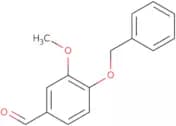
-Unit-kgkgA consultar1kgA consultar100gA consultar250gA consultar500gA consultar2500gA consultar4-Benzyloxy-3-methoxybenzaldehyde
CAS:4-Benzyloxy-3-methoxybenzaldehyde is a deuterium isotope analog of the natural compound benzaldehyde. This molecule has been shown to inhibit the growth of cancer cells in tissue culture by binding to DNA. The molecular mechanism of this inhibition is believed to involve an enzymatic process that results in the substitution of chloride for chlorine, thereby inhibiting DNA synthesis and preventing cell division. 4-Benzyloxy-3-methoxybenzaldehyde also inhibits the production of growth factors and thus has anticancer activity.Fórmula:C15H14O3Pureza:Min. 95%Cor e Forma:PowderPeso molecular:242.27 g/molGlycine anhydride
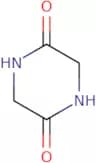
CAS:Glycine anhydride is a fine chemical that is used as a building block in the synthesis of many other compounds. It is also used as a reagent, and can be found in research chemicals, speciality chemicals, or high-quality products. Glycine anhydride is also used as a reaction component to make other molecules. It is versatile and can be used as a scaffold for complex compounds. Glycine anhydride has CAS No. 106-57-0 and can be found in the following chemical name: 3-(2-Aminoethyl)glycine anhydrideFórmula:C4H6N2O2Peso molecular:114.1 g/molRef: 3D-G-4600
-Unit-kgkgA consultar1kgA consultar5kgA consultar10kgA consultar25kgA consultar2500gA consultar3-Acetoxybenzoic acid
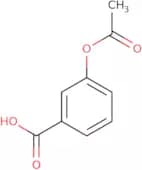
CAS:3-Acetoxybenzoic acid is a metabolite of 3-hydroxybenzoic acid, which is an intermediate in the biosynthesis of salicylic acid. It has been shown to have antibacterial properties and may be used as a topical treatment for skin infections caused by staphylococcus. 3-Acetoxybenzoic acid also has antiviral properties, which may be related to its ability to bind histone H3. 3-Acetoxybenzoic acid inhibits leishmania infantum growth and development by binding to chloride ions and preventing the formation of hydrogen bonds in the cell membrane. This prevents chloride ions from entering the cell and causes water channels to close, leading to dehydration and death.Fórmula:C9H8O4Pureza:Min. 95%Cor e Forma:PowderPeso molecular:180.16 g/molPiperitone
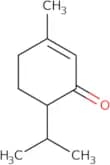
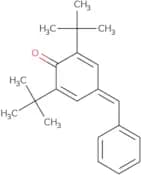
CAS:Piperitone is a natural product that is isolated from the roots of Piper aduncum L. It has shown antimicrobial activity against Gram-positive and Gram-negative bacteria, fungi, and protozoa. The compound has been used as a broad-spectrum antimicrobial agent to treat infectious diseases such as malaria, leishmaniasis, and trypanosomiasis. Piperitone's mechanism of action is not well understood but it may be due to its ability to inhibit fatty acid synthesis or by inhibiting the biosynthesis of hepg2 in human erythrocytes.Fórmula:C10H16OPureza:Min. 95%Cor e Forma:Clear LiquidPeso molecular:152.23 g/mol4-Benzylidene-2,6-di-tert-butylcyclohexa-2,5-dien-1-one
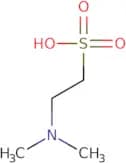
CAS:4-Benzylidene-2,6-di-tert-butylcyclohexa-2,5-dien-1-one is an efficient catalyst for the formation of annular products from aldehydes and amines. It has been found to be superior to other catalysts such as morpholine or piperidine in terms of yields and catalytic activity. 4-Benzylidene-2,6-di-tert-butylcyclohexa-2,5-dien-1-one is a base that can also serve as a catalyst for the formation of aromatic aldehydes through the Robinson annulation reaction. This product can be used at low temperature in order to improve the yield significantly.Fórmula:C21H26OPureza:Min. 95%Cor e Forma:PowderPeso molecular:294.44 g/mol2-(Dimethylamino)ethane-1-sulfonic acid
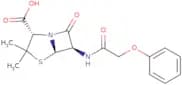
CAS:2-(Dimethylamino)ethane-1-sulfonic acid (DMAES) is a sulfonamide drug that binds to basic proteins and has been used in the treatment of microbial infections. DMAES has been shown to bind to human serum albumin, which may be due to its ability to form a covalent bond with the sulfur on the protein. The binding constant for DMAES with human serum albumin is about 5x10 M. The clinical response in patients treated with DMAES was found to depend on the binding constant between DMAES and human serum albumin. The binding constants for DMAES with other proteins have also been studied. These include erythrocyte membrane protein, myelin basic protein, and ganglioside GM1. In addition, it has been found that DMAES can bind to ganglia cells of rat brain tissue by forming a covalent bond with amino acids such as lysine residuesFórmula:C4H11NO3SPureza:Min. 95%Cor e Forma:PowderPeso molecular:153.2 g/molPenicillin V
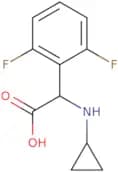
CAS:Penicillin V is an antibiotic that belongs to the class of penicillins. It is used in the treatment of bacterial infections, such as streptococcal pharyngitis and infectious diseases. Penicillin V binds to the penicillin-binding proteins, which are located on the outer surface of the bacterial membrane and prevent cell wall synthesis. This binding inhibits cell wall biosynthesis by preventing transpeptidation and transglycosylation reactions and leads to cell death. Penicillin V also inhibits the production of certain cytokines, including interleukin-1β (IL-1β) and tumor necrosis factor α (TNFα), which may be a result of its ability to inhibit Toll-like receptor 4 (TLR4). The solubility data for penicillin V was obtained from experiments conducted with experimental animals. The oral cephalosporins were shown to have a greater affinity for penicillin-binding proteins than penFórmula:C16H18N2O5SPureza:Min. 95%Peso molecular:350.39 g/mol2-(Cyclopropylamino)-2-(2,6-difluorophenyl)acetic acid
CAS:Versatile small molecule scaffoldFórmula:C11H11F2NO2Pureza:Min. 95%Cor e Forma:PowderPeso molecular:227.21 g/mol8α-Phenyl-octahydropyrrolo[1,2-a]pyrimidin-6-one
CAS:Versatile small molecule scaffoldFórmula:C13H16N2OPureza:Min. 95%Cor e Forma:PowderPeso molecular:216.3 g/mol4-Amino-1-butanol
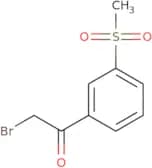
CAS:4-Amino-1-butanol is a natural compound that is not toxic to humans. It is amide with a hydrophilic interaction chromatography property, and has been shown to have hemolytic activity against human erythrocytes. 4-Amino-1-butanol has been shown to be an inhibitor of the HIV virus, with minimal toxicity. It has also been shown to inhibit the replication of the wild type virus in cells in vitro and in vivo, which is due to its ability to bind with the enzyme ethylene diamine. The inhibition of this enzyme leads to a reduction in biological activity of amines.Fórmula:C4H11NOPureza:Min. 95%Cor e Forma:Slightly Yellow Clear LiquidPeso molecular:89.14 g/mol2-Bromo-1-(3-methanesulfonylphenyl)ethan-1-one
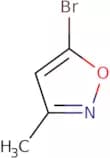
CAS:2-Bromo-1-(3-methanesulfonylphenyl)ethan-1-one is a fine chemical that has been used as a building block for research chemicals, reagents, and speciality chemicals. It is a versatile building block that can be used in multi-step reactions to form complex compounds. This compound is also an intermediate in the synthesis of many pharmaceuticals and agrochemicals.Fórmula:C9H9BrO3SPureza:Min. 95%Cor e Forma:PowderPeso molecular:277.14 g/mol5-Bromo-3-methylisoxazole
CAS:5-Bromo-3-methylisoxazole is a brominated heterocycle with a pyridine ring. It is used in research as a reagent, speciality chemical, and intermediate for the preparation of complex compounds. 5-Bromo-3-methylisoxazole is also useful as a building block for the synthesis of more complex molecules. The compound is also used as an intermediate for organic synthesis, reaction component, and scaffold.
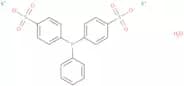
Fórmula:C4H4BrNOPureza:Min. 90%Cor e Forma:Clear LiquidPeso molecular:161.98 g/molBis(p-sulfonatophenyl)phenylphosphine dihydrate dipotassium
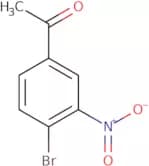
CAS:A common water soluble substitute for triphenylphosphine in palladium coupling reactionsFórmula:C18H15O6PS2•K2•(H2O)2Pureza:Min. 95%Cor e Forma:PowderPeso molecular:536.64 g/mol4-Bromo-3-nitroacetophenone - 90%
CAS:4-Bromo-3-nitroacetophenone is a chemical compound with the molecular formula C6H4BrNO2. It is an organic nitroaromatic compound that is used in organic synthesis as a building block for pharmaceuticals. 4-Bromo-3-nitroacetophenone has been shown to be effective in relieving pain and it has been used as an analgesic. The compound was synthesized by the Suzuki reaction, which involves the use of palladium as a catalyst, and thermogravimetric analysis showed that it hydrolyzes in water. 4-Bromo-3-nitroacetophenone also reacts with europium ion to produce phosphor, which can be observed using absorption spectroscopy. This chemical has also been shown to have an emission spectrum. The reaction product of 4-bromo-3-nitroacetophenone and ligands can be measured using various fields or cross coupling reactions.Fórmula:C8H6BrNO3Pureza:Min. 95%Cor e Forma:PowderPeso molecular:244.04 g/molβ-Ionone
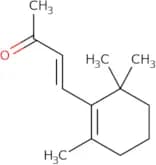
CAS:2-Ionone is a carotenoid that is an intermediate in the biosynthesis of vitamin A. It is also used as a flavoring and fragrance additive and has been shown to have cancer-preventing properties. 2-Ionone inhibits the NADP-cytochrome P450 reductase, which prevents formation of NADPH, an essential cofactor in cellular respiration and biosynthesis of fatty acids. 2-Ionone also inhibits cell growth in vitro by interacting with the polymerase chain reaction (PCR) process. The physiological function of 2-Ionone is not well understood, but it has been shown to inhibit steric interactions between DNA molecules. 2-Ionone can be prepared industrially by photolysis or by thermal decomposition of acetophenone.
Fórmula:C13H20OPureza:Min. 95%Cor e Forma:Clear LiquidPeso molecular:192.3 g/mol3-Hydroxy-2,3-dihydro-1H-indol-2-one
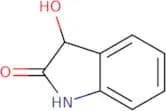
CAS:3-Hydroxy-2,3-dihydro-1H-indol-2-one (3HID) is a heterocyclic compound that contains a trifluoroacetate group. It is an intermediate in the synthesis of histamine, serotonin, and melatonin. 3HID is an inhibitor of the growth factor receptor, which inhibits the proliferation of human liver cells. 3HID also has a strong affinity for basic proteins such as albumin and hemoglobin. These interactions are thought to be important for its cytotoxic activity in cancer cells. 3HID can be synthesized by reacting acetyl chloride with 2-aminobutyric acid in the presence of potassium hydroxide or sodium hydroxide at room temperature, followed by hydrolysis with water. The reaction produces 3HID and acetic acid, which can be removed by distillation. The product can then be purified by recrystallization from methanol orFórmula:C8H7NO2Pureza:Min. 95%Cor e Forma:PowderPeso molecular:149.15 g/mol4-(Morpholinomethyl)phenol
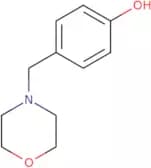
CAS:4-(Morpholinomethyl)phenol is a potent acetylcholinesterase inhibitor that binds to the active site of the enzyme and prevents its function. It has been shown to have inhibitory activity against acetylcholinesterase and may be used for the treatment of Alzheimer's disease. 4-(Morpholinomethyl)phenol is a competitive inhibitor and is structurally similar to galanthamine, an acetylcholinesterase inhibitor that has been used in the treatment of Alzheimer's disease.Fórmula:C11H15NO2Pureza:Min. 95 Area-%Cor e Forma:PowderPeso molecular:193.24 g/mol1-(Aminooxy)propane hydrochloride
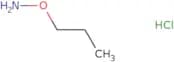
CAS:1-Aminooxypropane hydrochloride is an alkylthio group with a phenoxy group and an antibacterial activity. It is used as a precursor for the synthesis of many organic compounds. 1-Aminooxypropane hydrochloride is produced by the reaction of ethyl bromoacetate and ammonia in liquid ammonia, or by the reaction of propylene oxide with methylamine to produce 1-aminooxypropane. It has been shown to exhibit antimicrobial activity against certain strains of Escherichia coli and Salmonella enterica serovar Typhimurium, but not against Staphylococcus aureus. This compound is also used as a building block for metal ion catalysts such as copper complexes, amines, trifluoromethylated heterocyclic compounds, and others.Fórmula:C3H10ClNOPureza:Min. 95%Cor e Forma:PowderPeso molecular:111.57 g/mol2-Benzofurancarboxylic acid
CAS:2-Benzofurancarboxylic acid is a potent antimicrobial agent that inhibits the growth of bacteria by binding to amines, carthamus tinctorius, coumarin derivatives, and reaction mechanism. It has been shown to be effective against several types of cancer cells and autoimmune diseases. 2-Benzofurancarboxylic acid binds reversibly to the active site of an enzyme with high affinity for amines, carthamus tinctorius, coumarin derivatives, and reaction mechanism. This binding prevents the enzyme from performing its normal function.
2-Benzofurancarboxylic acid has also been shown to inhibit bacterial growth in a microgravity environment and was found to be more effective than its analogs in a molecular docking analysis.Fórmula:C9H6O3Pureza:Min. 98 Area-%Cor e Forma:PowderPeso molecular:162.14 g/mol


![8α-Phenyl-octahydropyrrolo[1,2-a]pyrimidin-6-one](/_next/image/?url=https%3A%2Fstatic.cymitquimica.com%2Fproducts%2F3D%2Fthumb-webp%2FGAA02925.webp&w=3840&q=75)