


Building Blocks
Subcategorias de "Building Blocks"
- Ácidos Borónicos e Derivados de Ácido Borónico(5.784 produtos)
- Building Blocks Quirais(1.244 produtos)
- Building Blocks Hidrocarbonetos(6.105 produtos)
- Building Blocks orgânicos(61.073 produtos)
Foram encontrados 205446 produtos de "Building Blocks"
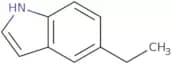
5-Ethylindole
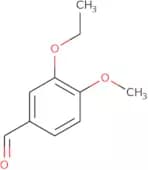
CAS:5-Ethylindole is a granulatimide that is synthesized by the cross-coupling of ethylene and copper chromite in the presence of solvents and magnesium. The chemical reactions are performed at temperatures between room temperature and 50°C, depending on the desired product. 5-Ethylindole is used as an intermediate for other chemicals such as pharmaceuticals, fungicides, dyes, and pesticides. It can be used to produce chloroethanol, which is used in the synthesis of numerous compounds including pharmaceuticals and plastics. Chromatographic techniques are often used to isolate 5-Ethylindole from mixtures with other chemicals.Fórmula:C10H11NPureza:Min. 95%Peso molecular:145.2 g/mol3-Ethoxy-4-methoxybenzaldehyde
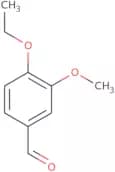
CAS:3-Ethoxy-4-methoxybenzaldehyde is a metabolite of the benzoquinone and 3-hydroxypropanoic acid pathway. It is an electron donor that serves as a substrate for fatty acid synthesis. This compound has been shown to have antiviral properties, as it inhibits the replication of influenza virus in vitro by interfering with viral RNA polymerase. It may also act as a regulatory molecule for uptake, although its precise role in this process is not yet known. 3-Ethoxy-4-methoxybenzaldehyde has been shown to be an optimal reactant with signal sequences from proteins, including biochemical pathways such as glycolysis and pentose phosphate shunt.Fórmula:C10H12O3Pureza:Min. 95%Cor e Forma:White PowderPeso molecular:180.2 g/mol4-Ethoxy-3-methoxybenzaldehyde
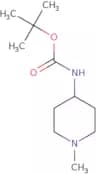
CAS:4-Ethoxy-3-methoxybenzaldehyde is an organic compound that can be found in plants, such as in the leaves of the nutmeg plant. It is a cleavage product of 4-hydroxycoumarin. 4-Ethoxy-3-methoxybenzaldehyde is a dicarboxylic acid by substructure and it has been shown to be an intermediate in the synthesis of ethylene acetal and hydrogen peroxide. It is also postulated to react with chloride to form 4-chloroacetophenone and chloride ions, which are then reacted with hydrogen peroxide to form hydrochloric acid. The acute toxicity of this compound has not been determined but it may cause toxic effects on extracellular cells, such as radical species. The toxicities of 4-ethoxy-3-methoxybenzaldehyde have been observed in biphenyl which causes skin irritation, liver toxicity, kidney damage, and respiratory irritationFórmula:C10H12O3Pureza:Min. 95%Cor e Forma:PowderPeso molecular:180.2 g/moltert-Butyl N-(1-methylpiperidin-4-yl)carbamate
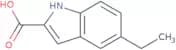
CAS:Versatile small molecule scaffoldFórmula:C11H22N2O2Pureza:Min. 95%Cor e Forma:PowderPeso molecular:214.3 g/mol5-Ethylindole-2-carboxylic acid
CAS:5-Ethylindole-2-carboxylic acid is an organic compound that is a decarboxylation product of indole. It can be obtained by catalytic dehydrogenation of ethyl ester or 5-ethylindole-2-carboxylic acid. It has been shown to inhibit the growth of bacteria and fungi, as well as to have anti-inflammatory properties.
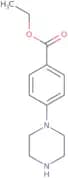
Fórmula:C11H11NO2Pureza:Min. 95%Peso molecular:189.21 g/mol1-(4-Ethoxycarbonylphenyl)piperazine
CAS:1-(4-Ethoxycarbonylphenyl)piperazine is an enantiopure phosphatase inhibitor. It is used in the treatment of cancer and other life-threatening diseases. 1-(4-Ethoxycarbonylphenyl)piperazine inhibits phosphatases, which are enzymes that catalyze hydrolysis of phosphate groups from substrates. This inhibition leads to a decrease in the production of fatty acids and cholesterol, resulting in a reduction in body mass index. The drug has been shown to be effective against animal models for cancer, with an effective dose of 100 mg/kg intraperitoneally. In addition, 1-(4-ethoxycarbonylphenyl)piperazine has been shown to inhibit cardiac phosphatases and increase cardiac uptake by inhibiting acylation reactions.Fórmula:C13H18N2O2Pureza:Min. 98%Cor e Forma:White PowderPeso molecular:234.29 g/molEthopabate - Technical
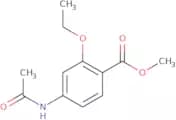
CAS:Ethopabate is a salt of ethopropazine and sodium carbonate. It is used in pharmaceutical preparations as an antiparasitic agent. The chemical composition of the salt is CHNO, with one hydrogen bond between the ethopropazine and sodium carbonate. Ethopabate has been shown to be active against amprolium-resistant coccidia in human serum, as well as being an analytical reagent for detecting monoclonal antibodies. This chemical can be used to prepare a polymeric matrix for use in fluorescence detection or for antimicrobial agents. Hydrochloric acid and UV light are used to synthesize this compound.Fórmula:C12H15NO4Pureza:Min. 95%Cor e Forma:White PowderPeso molecular:237.25 g/mol2-Ethyl-3(5 or 6)-dimethylpyrazine, mixture of isomers
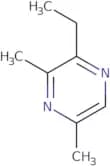
CAS:2-Ethyl-3(5 or 6)-dimethylpyrazine is a mixture of isomers that is used in the biosynthesis of unsaturated fatty acids and related products. 2-Ethyl-3(5 or 6)-dimethylpyrazine is produced by the reaction of phenylacetic acid with acetone and can be isolated from natural sources such as kidney beans and hexane. This compound has been shown to inhibit l-threonine production in mammalian cells, which may be due to its ability to inhibit the synthesis of fatty acids. Magnetic resonance spectroscopy has revealed that 2-Ethyl-3(5 or 6)-dimethylpyrazine binds to diphenyl ether, a chemical that is used extensively in pesticides and herbicides.Fórmula:C8H12N2Pureza:Min. 95%Cor e Forma:PowderPeso molecular:136.19 g/mol5-Bromoindole-2-carboxylic acid ethyl ester
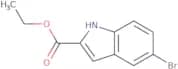
CAS:5-Bromoindole-2-carboxylic acid ethyl ester (5-BIEC) is a carboxamide antibiotic that inhibits the growth of gram-negative bacteria, including pneumoniae. 5-BIEC has been shown to have an inhibitory concentration (IC50) of 0.9 μM against Escherichia coli and other gram negative bacteria. It also has anti-proliferative effects on cancer cells, which may be due to its ability to inhibit DNA replication by binding to the beta subunit of DNA gyrase. 5-BIEC is currently being studied as a potential anticancer drug for the treatment of breast cancer, colon cancer, and leukemia.Fórmula:C11H10BrNO2Pureza:Min. 98 Area-%Cor e Forma:PowderPeso molecular:268.11 g/mol2,2'-Biquinoline-4,4'-dicarboxylic acid disodium salt
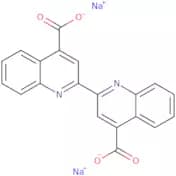
CAS:2,2'-Biquinoline-4,4'-dicarboxylic acid disodium salt is a model system for studying the sequence and hydrogen bonding interactions of polymers. It is a biocompatible polymer that has been shown to have inhibitory properties in response to atherosclerotic lesions. 2,2'-Biquinoline-4,4'-dicarboxylic acid disodium salt has shown optical properties that can be used as a signal in recording sequences. This polymerase chain reaction (PCR) substrate is able to bind with DNA and protein molecules when they are present in an appropriate buffer. The sequence of 2,2'-biquinoline-4,4'-dicarboxylic acid disodium salt is controlled by the coordination geometry of the metal ions involved in its formation.Fórmula:C20H10N2Na2O4Pureza:Min. 95%Cor e Forma:PowderPeso molecular:388.28 g/mol5-Bromo-2-chloropyrimidine
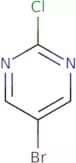
CAS:Intermediate in the synthesis of macitentan; building blockFórmula:C4H2BrClN2Pureza:Min. 95%Cor e Forma:White PowderPeso molecular:193.43 g/mol2,3-Dihydroxy-3-methylbutanoic acid
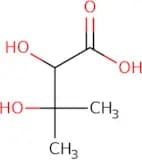
CAS:2,3-Dihydroxy-3-methylbutanoic acid (2,3DMB) is a hydrophobic molecule that is used as an activator of the butyric acid pathway. This activation mechanism has been shown in vitro with the use of 2,3DMB and racemase to convert isovaleric acid into butyric acid. The activation mechanism can be seen in vivo by synthesizing 2,3DMB from its constituent parts: magnesium ion and a monocarboxylic acid. The reaction occurs when magnesium ion binds to the carboxyl group of a monocarboxylic acid in the presence of water. In this reaction, water acts as a base to remove hydrogen ions from the carboxyl group and release protons. The protonated carboxyl group then reacts with magnesium ion to form an intermediate compound called Grignard reagent. The Grignard reagent will react with water to form anFórmula:C5H10O4Pureza:Min. 95%Cor e Forma:PowderPeso molecular:134.13 g/molAdipoRon
CAS:AdipoRon is a high-quality, versatile building block that can be used in the synthesis of complex molecules. It is a reagent and speciality chemical with applications in research and development. AdipoRon reacts with other chemicals to form new compounds, which are useful as scaffolds for the synthesis of pharmaceuticals or fine chemicals.
Fórmula:C27H28N2O3Pureza:Min. 95%Cor e Forma:PowderPeso molecular:428.53 g/mol1-Bromo-2-methoxy-3-nitrobenzene
CAS:1-Bromo-2-methoxy-3-nitrobenzene is a high quality chemical that is used as a reagent and building block in organic synthesis. It is also a versatile intermediate and can be used in the synthesis of complex compounds. This chemical has been shown to have anti-inflammatory properties, which may be due to its inhibition of prostaglandin synthesis.Fórmula:C7H6BrNO3Pureza:Min. 95%Cor e Forma:PowderPeso molecular:232.03 g/mol7-Azaindole
CAS:7-Azaindole is a chemical compound that can be used as a building block in organic synthesis. It can be used as a reactant in the preparation of other chemicals, such as dyes, rubber accelerators, and pharmaceuticals. 7-Azaindole is also useful as an intermediate in the production of polymers, such as polyurethanes and polyesters. This chemical is soluble in water and alcohols, but insoluble in ethers and chloroform. 7-Azaindole has been classified by the International Agency for Research on Cancer (IARC) as Group 3: Not Classifiable as to its Carcinogenicity to Humans.Fórmula:C7H6N2Pureza:Min. 98.0 Area-%Peso molecular:118.14 g/molRef: 3D-A-9500
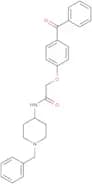
-Unit-kgkgA consultar1kgA consultar5kgA consultar250gA consultar500gA consultar2500gA consultar3-azido-4,5-dihydro-1H-benzo[b]azepin-2(3H)-one
CAS:Versatile small molecule scaffoldFórmula:C10H10N4OPureza:Min. 95%Cor e Forma:PowderPeso molecular:202.21 g/mol5-Bromoisothiazole
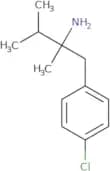
CAS:5-Bromoisothiazole is a conformationally constrained isoform of isothiazole. It has significant antifungal activity and binds to a number of kinases. 5-Bromoisothiazole has been shown to have chemokine inhibitory effects in human breast carcinoma cells. This molecule also inhibits the production of cyclooxygenase-2, and may be used to treat inflammatory diseases such as rheumatoid arthritis. 5-Bromoisothiazole also inhibits the synthesis of nitric oxide by inhibiting the enzyme nitrosylating reductase, which is involved in the conversion of nitrate to nitrite. The biological function of this molecule is not yet well understood, but it may play a role in cellular metabolism or cell signaling.Fórmula:C3H2BrNSPureza:Min. 95%Cor e Forma:Brown Liquid.Peso molecular:164.02 g/mol1-(4-Chlorophenyl)-2,3-dimethylbutan-2-amine
CAS:4-Chloro-1-(4-chlorophenyl)butan-2-amine (PCPA) is a versatile building block in organic synthesis. It is used as a precursor to other chemicals, such as pharmaceuticals and pesticides. PCPA can be used to synthesize many complex compounds, such as 1-(4-chlorophenyl)-2,3-dimethylbutan-2-amine. PCPA is useful for the production of research chemicals and speciality chemical intermediates. This compound has a high quality and can be used as a reagent for further reactions.
Fórmula:C12H18ClNPureza:Min. 95%Cor e Forma:Clear LiquidPeso molecular:211.73 g/mol4H,5H,6H,7H,8H-[1,2,3]Triazolo[1,5-a][1,4]diazepine hydrochloride
CAS:Versatile small molecule scaffold
Fórmula:C6H10N4•HClPureza:Min. 95%Cor e Forma:PowderPeso molecular:174.63 g/mol1-(Azidomethyl)-4-ethenylbenzene
CAS:1-(Azidomethyl)-4-ethenylbenzene is a vinyl alcohol that can be used to enhance the properties of polymers. This compound has been shown in FT-IR spectroscopy to react with carbon tetrachloride and nitrogen atoms to form a functional group. The copolymerization of styrene with 1-(azidomethyl)-4-ethenylbenzene can be used for patterning. This compound also has fluorescence properties, enabling it to be used as a fluorescent tag in microscopy and other imaging techniques.
Fórmula:C9H9N3Pureza:Min. 95%Cor e Forma:PowderPeso molecular:159.19 g/mol



![3-azido-4,5-dihydro-1H-benzo[b]azepin-2(3H)-one](/_next/image/?url=https%3A%2Fstatic.cymitquimica.com%2Fproducts%2F3D%2Fthumb-webp%2FLDA49924.webp&w=3840&q=75)

![4H,5H,6H,7H,8H-[1,2,3]Triazolo[1,5-a][1,4]diazepine hydrochloride](/_next/image/?url=https%3A%2Fstatic.cymitquimica.com%2Fproducts%2F3D%2Fthumb-webp%2FGWC61084.webp&w=3840&q=75)
