Building Blocks
Esta seção contém produtos fundamentais para a síntese de compostos orgânicos e biológicos. Building blocks são os materiais de partida essenciais usados para construir moléculas complexas através de várias reações químicas. Eles desempenham um papel crítico na descoberta de medicamentos, ciência dos materiais e pesquisa química. Na CymitQuimica, oferecemos uma ampla gama de building blocks de alta qualidade para apoiar suas pesquisas inovadoras e projetos industriais, garantindo que você tenha os componentes essenciais para uma síntese bem-sucedida.
Subcategorias de "Building Blocks"
- Ácidos Borónicos e Derivados de Ácido Borónico(5.784 produtos)
- Building Blocks Quirais(1.244 produtos)
- Building Blocks Hidrocarbonetos(6.105 produtos)
- Building Blocks orgânicos(61.076 produtos)
Foram encontrados 205455 produtos de "Building Blocks"
Ordenar por
Pureza (%)
0
100
|
0
|
50
|
90
|
95
|
100
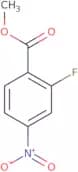
2-Fluoro-4-nitrobenzoic acid methyl ester
CAS:2-Fluoro-4-nitrobenzoic acid methyl ester is a synthetic compound that has been shown to inhibit the activity of protein kinases and may be used as a lead compound for the development of allosteric inhibitors. A high yield synthesis of this compound was achieved using an allyl chloroformate, which is a versatile reagent that can be used to synthesize 2-fluoro-4-nitrobenzoic acid methyl ester. The structural analysis of this compound showed that it binds to the allosteric site on ATP binding proteins. This site is distinct from the active site and regulates ATP binding, hydrolysis, and phosphate transfer.Fórmula:C8H6FNO4Pureza:Min. 98%Cor e Forma:White PowderPeso molecular:199.14 g/mol4-Formyl-3-hydroxybenzoic acid
CAS:4-Formyl-3-hydroxybenzoic acid (4FHB) is a member of the phenylacetic acid family. It has been shown to have potential as a substrate for creatine kinase and amines, as well as an inhibitor of the enzyme. 4FHB binds to the surface of silica particles in order to enhance Raman scattering in a solid-phase synthesis. The molecular weight of 4FHB is 148 g/mol, with optical properties that can be described by fluorescence spectroscopy. 4FHB has been shown to be homochiral and tetradentate, with a magnetic resonance spectrum that can be characterized by hydroxyl group and salicylaldehyde groups.Fórmula:C8H6O4Pureza:Min. 96.5 Area-%Cor e Forma:PowderPeso molecular:166.13 g/mol2-Chloro-N-(2-methoxybenzyl)acetamide
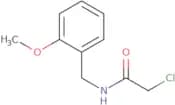
CAS:2-Chloro-N-(2-methoxybenzyl)acetamide is a fine chemical that can be used as a versatile building block in the synthesis of many compounds. It is also a research chemical and reagent with potential use in the production of pharmaceuticals, agricultural chemicals, and pesticides. The compound has been shown to have useful properties for use in complex syntheses, such as its reactivity toward amines and alcohols, which makes it a useful intermediate for the synthesis of other compounds. 2-Chloro-N-(2-methoxybenzyl)acetamide is an excellent high quality reagent that can be used for many purposes.
Fórmula:C10H12ClNO2Pureza:Min. 95%Cor e Forma:PowderPeso molecular:213.66 g/mol3-Fluoro-4-hydroxybenzaldehyde
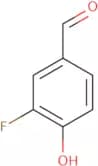
CAS:3-Fluoro-4-hydroxybenzaldehyde is a hydroxyl group with an activation energy of 87.7 kJ/mol. The molecule can be synthesized by the reaction of salicylaldehyde and 3,4-dihydroxybenzaldehyde in the presence of an organic solvent such as chloroform or methylene chloride. This compound has been shown to cause cell death in ht-29 cells and cancer cell lines, as well as human ovarian carcinoma cells. It causes apoptosis by inhibiting mitochondrial membrane potential, which leads to decreased intracellular ATP levels. 3-Fluoro-4-hydroxybenzaldehyde is most commonly used in molecular modeling studies to represent the hydroxyl group due to its simplicity in comparison to other hydroxyl groups like methanol or ethanol.Fórmula:C7H5FO2Pureza:90%Cor e Forma:White PowderPeso molecular:140.11 g/mol4-(4-Fluorophenoxy)benzylamine hydrochloride
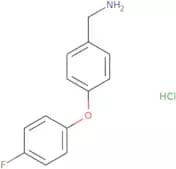
CAS:4-(4-Fluorophenoxy)benzylamine hydrochloride is a metabolic agent that inhibits the metabolism of phenylpropionic acid and butanoic acid. It is used industrially as an oxime to protect other organic compounds from damage by peroxides, such as in polymerization reactions. 4-(4-Fluorophenoxy)benzylamine hydrochloride has been shown to be effective in treating metabolic diseases, such as phenylketonuria and urea cycle disorders.Fórmula:C13H12FNO·HClPureza:Min. 95%Cor e Forma:PowderPeso molecular:253.7 g/mol5-Fluoro-3-methylindole
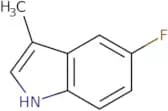
CAS:5-Fluoro-3-methylindole is a reactive compound that is not soluble in water. It has a molecular weight of 288.5 and an ionization potential of 7.8 eV. 5-Fluoro-3-methylindole can act as a potent antagonist by binding to the pharmacophore, which is the three hydrogen bonding sites on the benzodiazepine receptor. This drug has been shown to be reactive with halides, nitro, and magnesium, as well as with some endogenous compounds such as nitroarenes and amides. 5-Fluoro-3-methylindole also reacts with fluorescence ligands and transfer agents.Fórmula:C9H8FNPureza:Min. 95%Peso molecular:149.16 g/molFmoc-L-cysteine
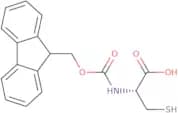
CAS:Fmoc-L-cysteine is a reactive thiol that can be used for the synthesis of peptides and proteins. Fmoc-L-cysteine is synthesized by hydrothiolation of L-cysteine with 3-mercaptopropionic acid, which leads to the formation of a disulfide bond. The reaction product is purified by column chromatography and analyzed by NMR spectroscopy. Fmoc-L-cysteine has been shown to have efficient prenylation activity in vitro and in cell culture experiments. It has also been shown to be an important amino acid for the formation of amyloid protein aggregates, as well as being involved with other helical peptides in plants. X-ray crystal structures have been determined for Fmoc-L-cysteine bound to monoclonal antibodies.Fórmula:C18H17NO4SPureza:Min. 98 Area-%Cor e Forma:PowderPeso molecular:343.4 g/mol6-(Fmoc-amino)-1-hexanol
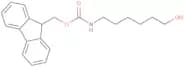
CAS:6-(Fmoc-amino)-1-hexanol is a high quality chemical that can be used as an intermediate in the synthesis of many complex compounds, such as pharmaceuticals, fine chemicals and research chemicals. It is often used as a building block in the synthesis of other useful chemicals and has been shown to have versatile reactions with many functional groups. 6-(Fmoc-amino)-1-hexanol can be used in reactions involving nucleophilic substitution, elimination, amination, esterification and transesterification.Fórmula:C21H25NO3Pureza:Min. 95%Cor e Forma:PowderPeso molecular:339.43 g/mol2-Chloro-2-fluoro-2-phenylacetic acid
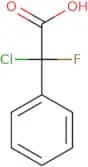
CAS:Versatile small molecule scaffoldFórmula:C8H6ClFO2Pureza:90%MinCor e Forma:PowderPeso molecular:188.58 g/molFmoc-Gly-Gly-Gly-OH
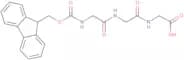
CAS:Fmoc-gly-gly-gly-OH is a synthetic amino acid with the carboxylate group at the alpha position and an amide group at the beta position. It is a white solid that can be synthesized by reacting glycine ethyl ester with glyoxylic acid in a solvent such as chloroform. Fmoc-gly-gly-gly-OH has been used to study the binding of oxytocin to its receptor, which is important for regulating uterine contraction during childbirth. The compound also has potential applications in drug delivery, biotechnology, and medical research.Fórmula:C21H21N3O6Pureza:Min. 95%Cor e Forma:PowderPeso molecular:411.41 g/molEthyl 2-formyl-1H-pyrrole-3-carboxylate
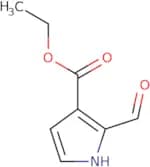
CAS:Ethyl 2-formyl-1H-pyrrole-3-carboxylate is a fine chemical that can be used as a building block in the synthesis of drugs, pesticides, and other organic compounds. It is also a reagent for the synthesis of other compounds. The compound can be easily synthesized by reacting ethyl formate with pyrrole. This process occurs spontaneously at room temperature and does not require any catalysts or solvents. Ethyl 2-formyl-1H-pyrrole-3-carboxylate has been used to synthesize antihistamines, antihypertensives, and anticancer agents. As it is a versatile building block, it can be used as an intermediate for the synthesis of many other compounds. It has also been shown to have useful scaffolding properties in drug design.Fórmula:C8H9NO3Pureza:Min. 95%Cor e Forma:PowderPeso molecular:167.16 g/molFmoc-Gly-Gly-OH
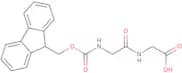
CAS:Fmoc-Gly-Gly-OH is an Fmoc protected glycine derivative used in proteomics studies and in solid phase peptide synthesis. In the synthesis of antibody-drug conjugates (ADC), Fmoc-Gly-Gly-OH acts as a cleavable ADC linker. The protected head of Fmoc-Gly-Gly-OH allows expanding the chain of the peptide to produce polypeptides.Fórmula:C19H18N2O5Pureza:Min. 97 Area-%Cor e Forma:PowderPeso molecular:354.36 g/molFmoc-4-benzoyl-L-phenylalanine
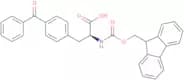
CAS:Fmoc-4-benzoyl-L-phenylalanine is a benzoic acid derivative that binds to the 5-HT1A receptor and the intestinal polypeptide receptor. It may also act as a vasoactive intestinal peptide (VIP) agonist. The pharmacophore of Fmoc-4-benzoyl-L-phenylalanine is similar to other antiarrhythmic drugs, such as quinidine and procainamide, with substituents at positions 2, 3, 4, 6, 7, and 8. Fmoc-4-benzoyl-L-phenylalanine has been shown to inhibit nitric oxide production in amines and ethane. This drug has been shown to have therapeutic potential in the treatment of cardiovascular diseases by visualizing cellular changes in heart tissue.Fórmula:C31H25NO5Pureza:Min. 95%Cor e Forma:Off-White PowderPeso molecular:491.53 g/mol(S)-1-(2-Amino-propan-1-yl)-4-methyl-piperazine
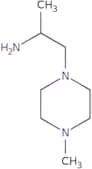
CAS:(S)-1-(2-Amino-propan-1-yl)-4-methyl-piperazine is a reagent, reaction component and building block for speciality chemicals. It is a versatile intermediate that has been used in the synthesis of complex compounds. (S)-1-(2-Amino-propan-1-yl)-4-methyl-piperazine is an important building block for the synthesis of a variety of pharmaceuticals and other organic compounds. This compound can be used as an intermediate or reagent to produce high quality research chemicals.Fórmula:C8H19N3Pureza:Min. 95%Peso molecular:157.26 g/mol2-Methyl-3-morpholin-4-yl-propionic acid hydrochloride
CAS:2-Methyl-3-morpholin-4-yl-propionic acid hydrochloride is a reagent that can be used in the synthesis of various compounds. It is also a building block for the preparation of complex compounds and fine chemicals. The CAS number for this chemical is 1052522-32-3.Fórmula:C8H16ClNO3Pureza:Min. 95%Cor e Forma:PowderPeso molecular:209.67 g/molFmoc-beta-alanine
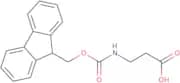
CAS:Fmoc-beta-alanine is a type of amino acid that is found in plants. It has been shown to have biological properties and can be used as an ingredient in food products. Fmoc-beta-alanine is also a chemical ligation agent that can be used for the synthesis of cyclic peptides and polypeptides. The compound has been shown to inhibit chloride ion channels, which may make it useful for the treatment of autoimmune diseases. Fmoc-beta-alanine is natural antibacterial and has been shown to increase the activity of urokinase-type plasminogen activator, which may make it useful for the treatment of cardiovascular diseases. Fmoc-beta-alanine is a sequence of amino acids found in wheat germ, as well as other plant families such as corn and rice. This compound binds to specific receptors and can be synthesized by solid phase synthesis on a resin column.Fórmula:C18H17NO4Pureza:Min. 95%Cor e Forma:PowderPeso molecular:311.33 g/molFerene disodium salt
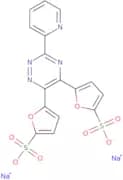
CAS:Ferene is an iron chelate that has been shown to have a number of beneficial effects on iron homeostasis. Ferene has been used in the treatment of chronic viral hepatitis, and it has also been shown to be effective against galleria mellonella. Ferene is a metal chelate, which means that it is a type of molecule that contains two metal ions. The metal ions are usually connected by a central atom, such as oxygen or nitrogen. Ferene disodium salt can be synthesized in the lab using the chemiluminescence method and polymerase chain reaction (PCR). It is also possible to isolate ferene from human serum or from a model system.Fórmula:C16H8N4Na2O8S2Pureza:Min. 95 Area-%Cor e Forma:Yellow PowderPeso molecular:494.37 g/molFmoc-L-tert-leucine
CAS:Fmoc-L-tert-leucine is an amide that is used for the treatment of prostate cancer. Fmoc-L-tert-leucine has been shown to be effective in treating resistant prostate cancer cells in vivo, and it has been shown to inhibit the growth of prostate cancer cells in vitro. This drug also has a diagnostic effect on prostate cancer cells. The uptake of this drug by prostate cancer cells is dependent on the presence of caspase-9, which may be due to its ability to inhibit apoptosis.Fórmula:C21H23NO4Pureza:Min. 95%Cor e Forma:White PowderPeso molecular:353.41 g/mol2,2-Dicyclopropylacetic acid
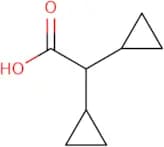
CAS:Versatile small molecule scaffoldFórmula:C8H12O2Pureza:Min. 95%Cor e Forma:PowderPeso molecular:140.18 g/molFMoc-L-Allylglycine
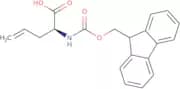
CAS:FMoc-L Allylglycine is a synthetic reactive molecule that binds to the P2Y receptor. It is active in the cell maturation process and stimulates receptor activity. FMoc-L-Allylglycine has been shown to have anticancer properties, as well as an effect on human serum and bovine fetal serum. The nitrogen atoms in FMoc-L-Allylglycine are capable of forming strong bonds with buffers and imprinting agents, which can be used to study biomolecules. The disulfide bond in FMoc-L-Allylglycine can be cleaved with reductive conditions, making it a useful tool for the synthesis of peptides.Fórmula:C20H19NO4Pureza:Min. 95%Cor e Forma:White PowderPeso molecular:337.37 g/mol