Building Blocks
Subcategorias de "Building Blocks"
- Ácidos Borónicos e Derivados de Ácido Borónico(5.786 produtos)
- Building Blocks Quirais(1.246 produtos)
- Building Blocks Hidrocarbonetos(6.107 produtos)
- Building Blocks orgânicos(61.080 produtos)
Foram encontrados 205472 produtos de "Building Blocks"
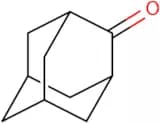
2-Adamantanone
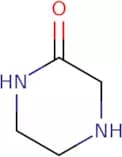
CAS:2-Adamantanone is a chemical compound that belongs to the group of p2-adamantanes. It has been shown to have acute toxicities in rats and mice, as well as a high reactivity with water vapor. 2-Adamantanone is used as an oxidation catalyst in organic synthesis reactions and has biological properties that are related to its inhibitory effects on acetylcholinesterase. This compound also reacts readily with malonic acid and fatty acid, which may be due to steric interactions between the two molecules. 2-Adamantanone is also shown to have chemiluminescent activity, which can be used for the detection of trifluoroacetic acid (TFA) in vitro. It is also active against fungus cells when combined with hydroxyl groups, such as those found in fatty acids.Fórmula:C10H14OPureza:Min. 95%Cor e Forma:White PowderPeso molecular:150.22 g/molPiperazin-2-one
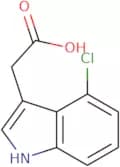
CAS:Building block in medicinal chemistryFórmula:C4H8N2OPureza:Min. 95%Cor e Forma:White PowderPeso molecular:100.12 g/mol4-Chloroindole-3-acetic acid
CAS:4-Chloroindole-3-acetic acid is a plant hormone that belongs to the group of auxins. It has been shown to stimulate root formation in plants by increasing the amount of auxin present in the plant's tissues. 4-Chloroindole-3-acetic acid is an intramolecular hydrogen donor and can form hydrogen bonds with other molecules. It also has a receptor binding site and cyclic peptide backbone, which allow it to act as a transcription factor or enzyme inhibitor. This molecule has been shown to be an optimum concentration for root formation in physiology experiments, and can be used as a model system for auxin research.Fórmula:C10H8ClNO2Pureza:Min. 95%Cor e Forma:Off-White PowderPeso molecular:209.63 g/mol2-(4'-Chlorobenzoyl)benzoic acid
CAS:2-(4'-Chlorobenzoyl)benzoic acid (2-CBA) is a sulfa drug that inhibits bacterial growth by blocking the synthesis of folic acid. It is also known to be luminescent and can be used in techniques such as luminescent probes. 2-CBA has antibacterial activity and can inhibit bacterial growth in a chromatographic method. 2-CBA is chemically stable and has been shown to have antibacterial properties against gram-positive bacteria, including Bacillus subtilis and Staphylococcus aureus. 2-CBA also has the ability to react with phthalazinone, an inhibitor of glutamine synthetase, which is involved in the production of ATP from ADP. This reaction results in the formation of an unstable intermediate which decomposes into CO2 and benzoic acid.
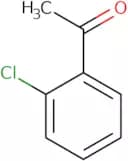
Fórmula:C14H9ClO3Pureza:Min. 95%Cor e Forma:White PowderPeso molecular:260.67 g/mol2'-Chloroacetophenone
CAS:2'-Chloroacetophenone is an organic compound that has been used as a hydrogen donor in the synthesis of natural products. It is produced by the reaction of acetone with chlorine gas, and it can be isolated by distillation. 2'-Chloroacetophenone reacts with hexane to form 2-chlorohexane, which can be further reacted with methanol to form methoxybenzene. The optimum concentration for this reaction is 10% (w/v) at 25°C. This chemical also has reductase activities and may enhance the activity of other reductases. 2'-Chloroacetophenone is a colorless liquid that boils at 172°C and decomposes above 300°C. It has a molecular weight of 119.16 g/mol and a density of 1.037 g/cm3 at 20°C and 0.101 g/cm3 at 25°C. It also has an intram
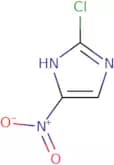
Fórmula:C8H7ClOPureza:Min. 96 Area-%Cor e Forma:Colorless Clear LiquidPeso molecular:154.59 g/mol2-Chloro-4-nitroimidazole
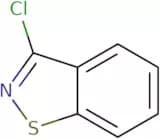
CAS:Radiosensitiser in hypoxic tumoursFórmula:C3H2ClN3O2Pureza:Min. 95%Cor e Forma:PowderPeso molecular:147.52 g/mol3-Chloro-1,2-benzisothiazole
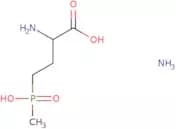
CAS:3-Chloro-1,2-benzisothiazole is a nucleophilic agent with a hydrogen bond donor. It has been shown to inhibit the replication of RNA in the presence of adenosine triphosphate (ATP) and to bind to amines. 3-Chloro-1,2-benzisothiazole is used as an inhibitor for non-nucleoside reverse transcriptase inhibitors. It has been shown to have high potency and strong inhibitory activity against HIV and other retroviruses. 3-Chloro-1,2-benzisothiazole also inhibits vibrational modes associated with enzymatic reactions.Fórmula:C7H4ClNSPureza:Min. 95%Cor e Forma:PowderPeso molecular:169.63 g/molDL-Phosphinothricin ammonium salt
CAS:Non-proteinogenic amino acid; Inhibitor of glutamine synthetase
Fórmula:C5H15N2O4PPureza:Min. 95 Area-%Cor e Forma:White PowderPeso molecular:198.16 g/mol5-Amino-2-mercaptobenzimidazole
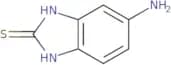
CAS:5-Amino-2-mercaptobenzimidazole is a molecule that has been shown to have antibacterial activity. It binds to the active site of bacterial ribosomes, which prevents the synthesis of proteins. This binding also inhibits the growth of bacteria such as Staphylococcus aureus and Escherichia coli. 5-Amino-2-mercaptobenzimidazole has been studied using vibrational spectroscopy, molecular modeling and surface-enhanced Raman spectroscopy. The binding constants have been determined by measuring the dissociation constant using sodium carbonate as an electrolyte. The optimum concentration for this molecule is when it is in anhydrous sodium at a constant concentration of 0.1 M.
Fórmula:C7H7N3SPureza:Min. 95%Cor e Forma:PowderPeso molecular:165.22 g/mol3-Chloro-5-hydroxybenzoic acid ethyl ester
Please enquire for more information about 3-Chloro-5-hydroxybenzoic acid ethyl ester including the price, delivery time and more detailed product information at the technical inquiry form on this page
Fórmula:C9H9ClO3Pureza:Min. 98 Area-%Cor e Forma:PowderPeso molecular:200.62 g/mol3-Chloro-5-hydroxybenzoic acid methyl ester
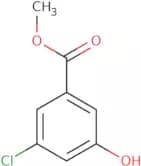
CAS:3-Chloro-5-hydroxybenzoic acid methyl ester is a fine chemical that can be used as a versatile building block and reaction component in the synthesis of complex compounds. It is soluble in organic solvents such as dichloromethane, chloroform, and acetone. 3-Chloro-5-hydroxybenzoic acid methyl ester has CAS No. 98406-04-3 and a molecular weight of 149. 2.Fórmula:C8H7ClO3Pureza:Min. 98 Area-%Cor e Forma:White Off-White PowderPeso molecular:186.59 g/mol3-Amino-2,4-dimethylpyridine
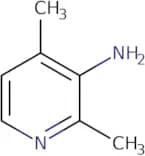
CAS:Building blockFórmula:C7H10N2Pureza:Min. 95%Cor e Forma:Clear Viscous LiquidPeso molecular:122.17 g/molTris(phenylthio)methane
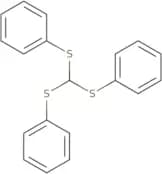
CAS:Tris(phenylthio)methane is a formylating reagent that reacts with ethyl formate to produce the nitro compound. It is used in the preparation of β-amino acids and as an asymmetric synthesis catalyst. Tris(phenylthio)methane can be used as a polymerization initiator for metathesis reactions, such as the Suzuki reaction. It has been shown to be a good nucleophile and polymerizing agent when combined with hydrochloric acid or silver trifluoromethanesulfonate. Tris(phenylthio)methane may also react with chloride in the presence of base to produce phosphoric acid esters.
Fórmula:C19H16S3Pureza:Min. 95%Cor e Forma:Off-White PowderPeso molecular:340.53 g/mol2-Chloro-6-fluorobenzaldehyde
CAS:2-Chloro-6-fluorobenzaldehyde is an impurity that can be found in wastewater. It has been shown to be a reactive intermediate for the synthesis of streptochlorin, which is a natural product with potential antibiotic activity. 2-Chloro-6-fluorobenzaldehyde is produced by the reaction of chlorine and anhydrous sodium, with acid as catalyst. The molecule has two fluorine atoms and one chloride atom. This compound can also be used in the treatment of waste water due to its ability to react with hydroxyl ions and chloride ions in the presence of hydrogen chloride or hydrochloric acid. The pain model was evaluated using nmr spectra and optical properties.Fórmula:C7H4ClFOPureza:Min. 95%Cor e Forma:White PowderPeso molecular:158.56 g/mol6-Azaindole
CAS:6-Azaindole is a drug that inhibits the activity of the enzyme aromatase, which is responsible for the conversion of testosterone to estrogen. 6-Azaindole has shown potent inhibitory activity against cancer cells in vitro and in vivo. It also has an inhibitory effect on pain relief mechanisms at low doses, but not at high doses. The mechanism of action is complex and multifactorial; it may involve inhibition of proton transfer, receptor activity, and/or inhibition of nitrogen atoms. The synthesis of 6-azaindoles can be carried out using a variety of methods and starting materials, including asymmetric synthesis or reduction of an n-oxide moiety.
Fórmula:C7H6N2Pureza:Min. 95%Cor e Forma:PowderPeso molecular:118.14 g/molL-Tryptophan
CAS:Tryptophan is a non-essential amino acid that has been shown to have an effect on mood, appetite, and sleep. L-Tryptophan is an essential amino acid. It is involved in the synthesis of serotonin and melatonin. The body breaks down tryptophan into 5-hydroxytryptophan (5HTP) and then into serotonin. Serotonin can be converted into melatonin by the pineal gland. Tryptophan levels are often low in people with depression and anxiety disorders. Tryptophan also has an effect on human gastrointestinal function, as it can stimulate gut motility and secretion of gastric acid and pepsinogen from the stomach lining. Tryptophan may also play a role in the discovery process, as it was found to increase the number of spontaneous oxidations in rat urine samples, which may be indicative of a new chemical reaction or drug discovery process.Fórmula:C11H12N2O2Pureza:Min. 98 Area-%Cor e Forma:White PowderPeso molecular:204.23 g/mol(Acetyloxy)(furan-2-yl)methyl acetate
CAS:Acetyloxy(furan-2-yl)methyl acetate is a hydrazone molecule that is used in pharmaceutical preparations. It is synthesized by the condensation of crotonylidene and acetyloxyacetic acid. This compound has shown promising anticancer activity with an activation energy of 8.3 kcal/mol for the formation of the reactive species. Acetyloxy(furan-2-yl)methyl acetate has also been shown to be effective against methicillin resistant Staphylococcus aureus, although it does not have any activity against Gram positive bacteria such as Mycobacterium tuberculosis or Mycobacterium avium complex.Fórmula:C9H10O5Pureza:Min. 95%Cor e Forma:PowderPeso molecular:198.17 g/mol2-Chloro-4-trifluoromethylbenzoic acid
CAS:2-Chloro-4-trifluoromethylbenzoic acid is a chemical compound with the formula CHClFO. It can be obtained by deprotonation of 2,4,6-trichlorobenzoic acid with butyllithium and subsequent reaction with chlorotrifluoromethane. The product has two regioisomers, one in which the chlorine atom is attached to the para position on the benzene ring and the other in which it is attached to the ortho position. Substituents such as alkyl groups or lithium reagents can affect both reactivity and selectivity. The halogen substituent can also be replaced by other functional groups to make derivatives of this compound.
Fórmula:C8H4ClF3O2Pureza:Min. 95%Cor e Forma:PowderPeso molecular:224.56 g/molThieno[3,2-c]pyridine-7-carboxylic acid
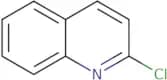
CAS:Thieno[3,2-c]pyridine-7-carboxylic acid is an anticancer drug that belongs to the class of acid derivatives. It has been shown to be active against solid tumors and has been found to be effective in inhibiting tumor growth and proliferation. Thieno[3,2-c]pyridine-7-carboxylic acid is a prodrug that is activated by hydrolysis of the ester group. The activation process occurs through an enzymatic mechanism that requires two enzymes: carboxylesterase and cytochrome P450.Fórmula:C8H5NO2SPureza:Min. 95%Cor e Forma:PowderPeso molecular:179.2 g/mol2-Chloroquinoline
CAS:2-Chloroquinoline is a compound that has antimicrobial properties. It acts by inhibiting bacterial RNA synthesis and protein synthesis. 2-Chloroquinoline has been shown to have toxicological effects in animal studies, including cancer. It also inhibits the activity of the cb2 receptor and the CCR5 receptor, which are involved in tumor growth. The molecular docking analysis for this compound is available, which can be found on PubChem.Fórmula:C9H6ClNPureza:Min. 98%Cor e Forma:PowderPeso molecular:163.6 g/mol





![Thieno[3,2-c]pyridine-7-carboxylic acid](/_next/image/?url=https%3A%2Fstatic.cymitquimica.com%2Fproducts%2F3D%2Fthumb-webp%2FSEC97587.webp&w=3840&q=75)