Building Blocks
Esta seção contém produtos fundamentais para a síntese de compostos orgânicos e biológicos. Building blocks são os materiais de partida essenciais usados para construir moléculas complexas através de várias reações químicas. Eles desempenham um papel crítico na descoberta de medicamentos, ciência dos materiais e pesquisa química. Na CymitQuimica, oferecemos uma ampla gama de building blocks de alta qualidade para apoiar suas pesquisas inovadoras e projetos industriais, garantindo que você tenha os componentes essenciais para uma síntese bem-sucedida.
Subcategorias de "Building Blocks"
- Ácidos Borónicos e Derivados de Ácido Borónico(5.756 produtos)
- Building Blocks Quirais(1.242 produtos)
- Building Blocks Hidrocarbonetos(6.095 produtos)
- Building Blocks orgânicos(61.038 produtos)
Foram encontrados 196817 produtos de "Building Blocks"
Ordenar por
Pureza (%)
0
100
|
0
|
50
|
90
|
95
|
100
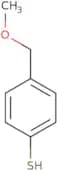
4-(Methoxymethyl)benzene-1-thiol
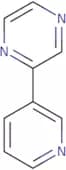
CAS:<p>Versatile small molecule scaffold</p>Fórmula:C8H10OSPureza:Min. 95%Peso molecular:154.23 g/mol2-(Pyridin-3-yl)pyrazine
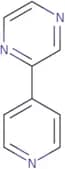
CAS:<p>Versatile small molecule scaffold</p>Fórmula:C9H7N3Pureza:Min. 95%Peso molecular:157.17 g/mol2-(Pyridin-4-yl)pyrazine
CAS:<p>Versatile small molecule scaffold</p>Fórmula:C9H7N3Pureza:Min. 95%Peso molecular:157.17 g/molMethyl 4,5,6,7-tetrahydrothieno[3,2-c]pyridine-4-carboxylate hydrochloride
CAS:<p>Versatile small molecule scaffold</p>Fórmula:C9H12ClNO2SPureza:Min. 95%Peso molecular:233.72 g/mol2-[(3-Methylphenyl)amino]-1-(piperidin-1-yl)ethan-1-one
CAS:<p>Versatile small molecule scaffold</p>Fórmula:C14H20N2OPureza:Min. 95%Peso molecular:232.32 g/mol2-[(2-Methylphenyl)amino]-1-(piperidin-1-yl)ethan-1-one
CAS:<p>Versatile small molecule scaffold</p>Fórmula:C14H20N2OPureza:Min. 95%Peso molecular:232.32 g/mol2-[(4-Methylphenyl)amino]-1-(piperidin-1-yl)ethan-1-one
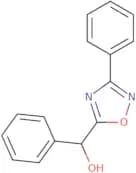
CAS:<p>Versatile small molecule scaffold</p>Fórmula:C14H20N2OPureza:Min. 95%Peso molecular:232.32 g/molPhenyl(3-phenyl-1,2,4-oxadiazol-5-yl)methanol
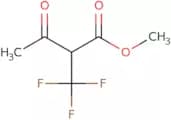
CAS:<p>Versatile small molecule scaffold</p>Fórmula:C15H12N2O2Pureza:Min. 95%Peso molecular:252.27 g/molMethyl 3-oxo-2-(trifluoromethyl)butanoate
CAS:<p>Versatile small molecule scaffold</p>Fórmula:C6H7F3O3Pureza:Min. 95%Peso molecular:184.11 g/mol5-Methoxy-2,3-dihydrobenzofuran-2-carboxylic acid
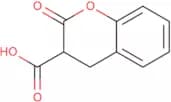
CAS:<p>Versatile small molecule scaffold</p>Fórmula:C10H10O4Pureza:Min. 95%Peso molecular:194.19 g/mol2-Oxo-3,4-dihydro-2H-1-benzopyran-3-carboxylic acid
CAS:<p>Versatile small molecule scaffold</p>Fórmula:C10H8O4Pureza:Min. 95%Peso molecular:192.17 g/molEthyl 8-hydroxyoctanoate
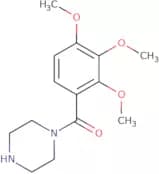
CAS:<p>Versatile small molecule scaffold</p>Fórmula:C10H20O3Pureza:Min. 95%Peso molecular:188.26 g/mol1-(2,3,4-Trimethoxybenzoyl)piperazine
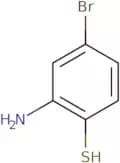
CAS:<p>Versatile small molecule scaffold</p>Fórmula:C14H20N2O4Pureza:Min. 95%Peso molecular:280.32 g/mol2-amino-4-bromobenzene-1-thiol
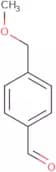
CAS:<p>2-Amino-4-bromobenzene-1-thiol is a semiconducting polymer that can be used in devices such as solar cells, transistors, and sensors. It has electron deficient properties and is therefore able to form the backbone of a polymer. 2-Amino-4-bromobenzene-1-thiol is an electron donor that can be used for polymerization reactions with electron acceptors such as indigoid compounds. This compound has been shown to have optical absorption bands in the near infrared region, which are suitable for solar energy conversion applications.</p>Fórmula:C6H6BrNSPureza:Min. 95%Peso molecular:204.1 g/mol4-(Methoxymethyl)benzaldehyde
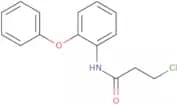
CAS:<p>4-(Methoxymethyl)benzaldehyde is an organic chemical compound that has the molecular formula CHO. It can be obtained by catalytic cleavage of 4-hydroxybenzaldehyde with hydrogen chloride in the presence of a nickel catalyst, followed by chlorination and reduction. This chemical is used in pharmaceuticals as a catalyst for reductive cleavage and cyclization reactions. The acidity of 4-(methoxymethyl)benzaldehyde is due to its nitrogen substituents, which are capable of deprotonating the carbon atom adjacent to the carbonyl group. This allows for selective synthesis at the benzylic position.<br>4-(Methoxymethyl)benzaldehyde is also able to catalyze lithiation reactions because it contains a reactive chlorine atom.</p>Fórmula:C9H10O2Pureza:Min. 95%Peso molecular:150.17 g/mol3-Chloro-N-(2-phenoxyphenyl)propanamide
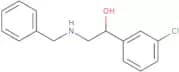
CAS:<p>Versatile small molecule scaffold</p>Fórmula:C15H14ClNO2Pureza:Min. 95%Peso molecular:275.73 g/mol2-(Benzylamino)-1-(3-chlorophenyl)ethan-1-ol
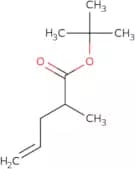
CAS:<p>Versatile small molecule scaffold</p>Fórmula:C15H16ClNOPureza:Min. 95%Peso molecular:261.74 g/moltert-Butyl 2-methylpent-4-enoate
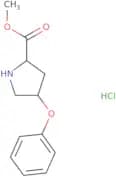
CAS:<p>Versatile small molecule scaffold</p>Fórmula:C10H18O2Pureza:Min. 95%Peso molecular:170.25 g/molMethyl (2S,4S)-4-phenoxypyrrolidine-2-carboxylate hydrochloride
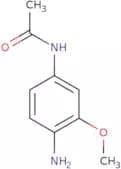
CAS:<p>Versatile small molecule scaffold</p>Fórmula:C12H16ClNO3Pureza:Min. 95%Peso molecular:257.71 g/molN-(4-Amino-3-methoxyphenyl)acetamide
CAS:<p>Versatile small molecule scaffold</p>Fórmula:C9H12N2O2Pureza:Min. 95%Peso molecular:180.2 g/mol

![Methyl 4,5,6,7-tetrahydrothieno[3,2-c]pyridine-4-carboxylate hydrochloride](/_next/image/?url=https%3A%2Fstatic.cymitquimica.com%2Fproducts%2F3D%2Fthumb-webp%2FTDA85119.webp&w=3840&q=75)
![2-[(3-Methylphenyl)amino]-1-(piperidin-1-yl)ethan-1-one](/_next/image/?url=https%3A%2Fstatic.cymitquimica.com%2Fproducts%2F3D%2Fthumb-webp%2FTDA86538.webp&w=3840&q=75)
![2-[(2-Methylphenyl)amino]-1-(piperidin-1-yl)ethan-1-one](/_next/image/?url=https%3A%2Fstatic.cymitquimica.com%2Fproducts%2F3D%2Fthumb-webp%2FTDA86541.webp&w=3840&q=75)
![2-[(4-Methylphenyl)amino]-1-(piperidin-1-yl)ethan-1-one](/_next/image/?url=https%3A%2Fstatic.cymitquimica.com%2Fproducts%2F3D%2Fthumb-webp%2FTDA86542.webp&w=3840&q=75)