


Building Blocks
Esta seção contém produtos fundamentais para a síntese de compostos orgânicos e biológicos. Building blocks são os materiais de partida essenciais usados para construir moléculas complexas através de várias reações químicas. Eles desempenham um papel crítico na descoberta de medicamentos, ciência dos materiais e pesquisa química. Na CymitQuimica, oferecemos uma ampla gama de building blocks de alta qualidade para apoiar suas pesquisas inovadoras e projetos industriais, garantindo que você tenha os componentes essenciais para uma síntese bem-sucedida.
Subcategorias de "Building Blocks"
- Ácidos Borónicos e Derivados de Ácido Borónico(5.756 produtos)
- Building Blocks Quirais(1.242 produtos)
- Building Blocks Hidrocarbonetos(6.095 produtos)
- Building Blocks orgânicos(61.038 produtos)
Foram encontrados 196817 produtos de "Building Blocks"
Ordenar por
Pureza (%)
0
100
|
0
|
50
|
90
|
95
|
100
5,6,7,8-Tetrahydropyrido[2,3-D]Pyrimidin-4(3H)-One
CAS:<p>Tetrahydropyrido[2,3-D]pyrimidin-4(3H)-one is a heterocyclic compound that has been synthesized with high diastereoselectivity and good yields. The reaction process is carried out with the use of a solid acid catalyst at room temperature to give the desired product in high yield. Tetrahydropyrido[2,3-D]pyrimidin-4(3H)-one can be used as an antineoplastic agent for the treatment of cancer. It inhibits cell proliferation by arresting cells in the G1 phase of the cell cycle.</p>Fórmula:C7H9N3OPureza:Min. 95%Peso molecular:151.17 g/mol1H,2H,3H,4H,5H,6H,7H-Pyrazolo[3,4-b]pyridin-3-one
CAS:<p>Versatile small molecule scaffold</p>Fórmula:C6H9N3OPureza:Min. 95%Peso molecular:139.16 g/molImidazo[1,2-a]pyridin-6-amine dihydrochloride
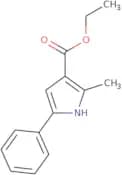
CAS:<p>Versatile small molecule scaffold</p>Fórmula:C7H7N3·2HClPureza:Min. 95%Peso molecular:206.08 g/molethyl 2-methyl-5-phenyl-1H-pyrrole-3-carboxylate
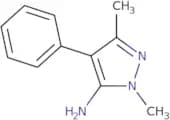
CAS:<p>Ethyl 2-methyl-5-phenyl-1H-pyrrole-3-carboxylate is a serotonin analog. It has been shown to have antidepressant properties and inhibit the reuptake of serotonin by the neurotransmitter transporter. This leads to an increase in serotonin levels in the brain, which may be due to its ability to act on 5-HT2A and 5-HT2C receptors. The compound also acts as an antagonist at 5HT1A receptors, which may contribute to its antidepressant effects. In vivo activities of this drug have been confirmed using various animal models. Ethyl 2-methyl-5-phenyl-1H-pyrrole-3--carboxylate is a lead compound for other potential antidepressants with similar activity.</p>Fórmula:C14H15NO2Pureza:Min. 95%Peso molecular:229.28 g/mol2,5-Dimethyl-4-phenylpyrazol-3-amine
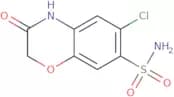
CAS:<p>Versatile small molecule scaffold</p>Fórmula:C11H13N3Pureza:Min. 95%Peso molecular:187.25 g/mol6-Chloro-3-oxo-3,4-dihydro-2H-1,4-benzoxazine-7-sulfonamide
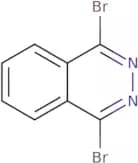
CAS:<p>Versatile small molecule scaffold</p>Fórmula:C8H7ClN2O4SPureza:Min. 95%Peso molecular:262.67 g/mol1,4-Dibromophthalazine
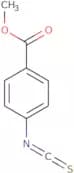
CAS:<p>1,4-Dibromophthalazine is a protonated nitrogen heterocycle. It is a ligand that binds to an iron catalyst and inhibits the fluxional activity of organic acids. 1,4-Dibromophthalazine has been shown to inhibit the proliferation of cancer cells in vitro at concentrations as low as 0.1 mM. The anti-proliferative activities of 1,4-dibromophthalazine are due to its ability to bind to the DNA in cancer cells, which prevents DNA replication and transcription, leading to cell death.</p>Fórmula:C8H4Br2N2Pureza:Min. 95%Peso molecular:287.94 g/mol4-Methoxycarbonylphenyl isothiocyanate
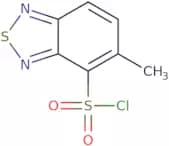
CAS:<p>4-Methoxycarbonylphenyl isothiocyanate is a metabolic disorder that is detectable by the use of stable isotope labeled 4-Methoxycarbonylphenyl isothiocyanate, which can be used to screen for and diagnose metabolic disorders. This compound is synthesized from phenyl isothiocyanate, which is converted to the 4-methoxycarbonyl derivative under acidic conditions. The 4-methoxycarbonylphenyl derivative can be derivatized with bromine in methanol to produce a label that can be detected using an ionization mass spectrometer. The ionization mass spectrometer can also be used to analyze the matrix effect on linearity of the derivatized metabolite. Liquid chromatography coupled with electrospray ionization has been shown to be a sensitive method for detecting this compound in human urine.</p>Fórmula:C9H7NO2SPureza:Min. 95%Peso molecular:193.22 g/mol5-Methyl-2,1,3-benzothiadiazole-4-sulfonyl chloride
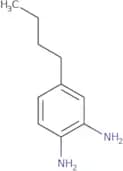
CAS:<p>Versatile small molecule scaffold</p>Fórmula:C7H5ClN2O2S2Pureza:Min. 95%Peso molecular:248.71 g/mol4-Butylbenzene-1,2-diamine
CAS:<p>4-Butylbenzene-1,2-diamine is an organic compound that is synthesized by the reaction of acetyl chloride and 4-butylbenzene. This chemical is a colorless solid with a melting point of 45°C and a boiling point of 184°C. It has a distinctive unpleasant odor. 4-Butylbenzene-1,2-diamine is used as a reagent in the synthesis of hydrosulfite, sodium thiosulfate, and sodium sulfide. 4-Butylbenzene-1,2-diamine reacts with hydroxide solution to form acetone and sodium sulfate. When this chemical is heated with sodium sulfide it produces hydrogen sulfide gas. 4-Butylbenzene-1,2-diamine also reacts with cyanamide to produce carbamic acid ethylamide and nitrous oxide gas (N 2 O). This chemical can also</p>Fórmula:C10H16N2Pureza:Min. 95%Peso molecular:164.25 g/mol6-Ethyl-1H-1,2,3-benzotriazole
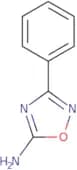
CAS:<p>Versatile small molecule scaffold</p>Fórmula:C8H9N3Pureza:Min. 95%Peso molecular:147.18 g/mol3-Phenyl-1,2,4-oxadiazol-5-amine
CAS:<p>3-Phenyl-1,2,4-oxadiazol-5-amine is a synthetic compound that is used for the study of mechanistic and stereochemical aspects of organic reactions. It has been shown to be an effective nucleophile in many different reactions. 3-Phenyl-1,2,4-oxadiazol-5-amine can undergo rearrangements and is a good substrate for thioamides. This compound also reacts with thioureas and thiocarbamates, which are both reactive compounds that are commonly used in organic chemistry. 3-Phenyl-1,2,4-oxadiazol-5-amine reacts with thiols to form photochemically active organosulfur compounds. The photoinduced reaction can be carried out by irradiating the compound with ultraviolet light or visible light.</p>Fórmula:C8H7N3OPureza:Min. 95%Peso molecular:161.16 g/mol3-(4-Methylphenyl)-1,2,4-oxadiazol-5-amine
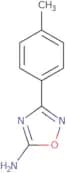
CAS:<p>Versatile small molecule scaffold</p>Fórmula:C9H9N3OPureza:Min. 95%Peso molecular:175.19 g/mol2,3-Dihydro-benzo[1,4]dioxine-2-carboxylic acidmethyl ester
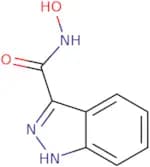
CAS:<p>Versatile small molecule scaffold</p>Fórmula:C10H10O4Pureza:Min. 95%Peso molecular:194.18 g/molN-Hydroxy-1H-indazole-3-carboxamide
CAS:<p>Versatile small molecule scaffold</p>Fórmula:C8H7N3O2Pureza:Min. 95%Peso molecular:177.16 g/mol1-N-[2-(Dimethylamino)ethyl]benzene-1,2-diamine
CAS:<p>Versatile small molecule scaffold</p>Fórmula:C10H17N3Pureza:Min. 95%Peso molecular:179.26 g/mol2-[(4-Methylphenyl)sulfanyl]-5-nitrobenzoic acid
CAS:<p>Versatile small molecule scaffold</p>Fórmula:C14H11NO4SPureza:Min. 95%Peso molecular:289.31 g/mol1-(Dimethylsulfamoyl)imidazole
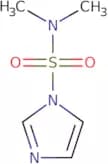
CAS:<p>1-(Dimethylsulfamoyl)imidazole is a chemical compound that belongs to the class of heterocycles. It has been shown to inhibit the activity of two enzymes, which are xanthine oxidase and nitric oxide synthase. 1-(Dimethylsulfamoyl)imidazole is synthesized by reacting 2-aminothiophene with methyl sulfonyl chloride in tetrahydrofuran. The yield of this reaction is low, which may be due to the imidazole ring being a poor nucleophile in this reaction. This chemical has been shown to have an inhibitory potency against xanthine oxidase and nitric oxide synthase, which may be due to its functional groups or dimethylformamide solvate state. The mechanism for 1-(dimethylsulfamoyl)imidazole's inhibition of these enzymes is not yet known.</p>Fórmula:C5H9N3O2SPureza:Min. 95%Peso molecular:175.21 g/mol2-Chloro-N-(2-methyl-6-nitrophenyl)acetamide
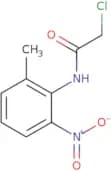
CAS:<p>Versatile small molecule scaffold</p>Fórmula:C9H9ClN2O3Pureza:Min. 95%Peso molecular:228.63 g/mol6,7-Dihydro-5H-cyclopenta[b]pyridin-4-amine
CAS:<p>Versatile small molecule scaffold</p>Fórmula:C8H10N2Pureza:Min. 95%Peso molecular:134.18 g/mol
![5,6,7,8-Tetrahydropyrido[2,3-D]Pyrimidin-4(3H)-One](/_next/image/?url=https%3A%2Fstatic.cymitquimica.com%2Fproducts%2F3D%2Fthumb-webp%2FDAA64942.webp&w=3840&q=75)

![1H,2H,3H,4H,5H,6H,7H-Pyrazolo[3,4-b]pyridin-3-one](/_next/image/?url=https%3A%2Fstatic.cymitquimica.com%2Fproducts%2F3D%2Fthumb-webp%2FDAA64944.webp&w=3840&q=75)
![Imidazo[1,2-a]pyridin-6-amine dihydrochloride](/_next/image/?url=https%3A%2Fstatic.cymitquimica.com%2Fproducts%2F3D%2Fthumb-webp%2FDAA64947.webp&w=3840&q=75)

![2,3-Dihydro-benzo[1,4]dioxine-2-carboxylic acidmethyl ester](/_next/image/?url=https%3A%2Fstatic.cymitquimica.com%2Fproducts%2F3D%2Fthumb-webp%2FDAA66379.webp&w=3840&q=75)
![1-N-[2-(Dimethylamino)ethyl]benzene-1,2-diamine](/_next/image/?url=https%3A%2Fstatic.cymitquimica.com%2Fproducts%2F3D%2Fthumb-webp%2FDDA15603.webp&w=3840&q=75)
![2-[(4-Methylphenyl)sulfanyl]-5-nitrobenzoic acid](/_next/image/?url=https%3A%2Fstatic.cymitquimica.com%2Fproducts%2F3D%2Fthumb-webp%2FDDA16005.webp&w=3840&q=75)
![6,7-Dihydro-5H-cyclopenta[b]pyridin-4-amine](/_next/image/?url=https%3A%2Fstatic.cymitquimica.com%2Fproducts%2F3D%2Fthumb-webp%2FDDA18315.webp&w=3840&q=75)