Building Blocks
Esta seção contém produtos fundamentais para a síntese de compostos orgânicos e biológicos. Building blocks são os materiais de partida essenciais usados para construir moléculas complexas através de várias reações químicas. Eles desempenham um papel crítico na descoberta de medicamentos, ciência dos materiais e pesquisa química. Na CymitQuimica, oferecemos uma ampla gama de building blocks de alta qualidade para apoiar suas pesquisas inovadoras e projetos industriais, garantindo que você tenha os componentes essenciais para uma síntese bem-sucedida.
Subcategorias de "Building Blocks"
- Ácidos Borónicos e Derivados de Ácido Borónico(5.756 produtos)
- Building Blocks Quirais(1.242 produtos)
- Building Blocks Hidrocarbonetos(6.095 produtos)
- Building Blocks orgânicos(61.038 produtos)
Foram encontrados 196817 produtos de "Building Blocks"
Ordenar por
Pureza (%)
0
100
|
0
|
50
|
90
|
95
|
100
1-(7,7-Dimethylbicyclo[2.2.1]heptan-1-yl)ethan-1-one
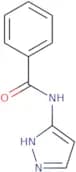
CAS:<p>Versatile small molecule scaffold</p>Fórmula:C11H18OPureza:Min. 95%Peso molecular:166.26 g/molN-(1H-Pyrazol-3-yl)benzamide
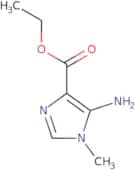
CAS:<p>Versatile small molecule scaffold</p>Fórmula:C10H9N3OPureza:Min. 95%Peso molecular:187.2 g/molEthyl 5-amino-1-methyl-1H-imidazole-4-carboxylate
CAS:<p>Ethyl 5-amino-1-methyl-1H-imidazole-4-carboxylate is a synthetic retinoid that has been shown to be effective in the treatment of psoriasis. It inhibits the activation of histone lysine residues and increases the terminal half life of endogenous synthesis. The quantum theory is used to explain its biological properties. Ethyl 5-amino-1-methyl-1H-imidazole-4-carboxylate also inhibits the production of proinflammatory cytokines in response to inflammatory stimuli, and it has been shown to inhibit lipopolysaccharide (LPS) induced production of nitric oxide.</p>Fórmula:C7H11N3O2Pureza:Min. 95%Peso molecular:169.18 g/mol1-Chloro-3-methylpentan-2-one
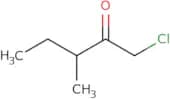
CAS:<p>Versatile small molecule scaffold</p>Fórmula:C6H11ClOPureza:Min. 95%Peso molecular:134.6 g/mol2-Chloro-1-cycloheptylethan-1-one
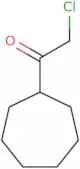
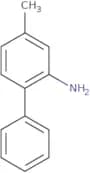
CAS:<p>Versatile small molecule scaffold</p>Fórmula:C9H15ClOPureza:Min. 95%Peso molecular:174.67 g/mol5-Methyl-2-phenylaniline
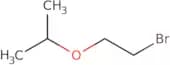
CAS:<p>5-Methyl-2-phenylaniline is a chemical intermediate that is used in the synthesis of flurbiprofen. Flurbiprofen is an NSAID that has been shown to inhibit the production of prostaglandins and thromboxane, which are inflammatory mediators. 5-Methyl-2-phenylaniline is also used as an intermediate for making other organic compounds such as acetonitrile and nitride. This chemical can be brominated to make bromoacetonitrile, which can then be converted into ethyl bromopropionate.</p>Fórmula:C13H13NPureza:Min. 95%Peso molecular:183.25 g/mol2-(2-Bromoethoxy)propane
CAS:<p>Versatile small molecule scaffold</p>Fórmula:C5H11BrOPureza:Min. 95%Peso molecular:167.04 g/molo-(2-Ethoxyethyl)hydroxylamine
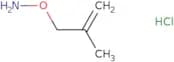
CAS:<p>Versatile small molecule scaffold</p>Fórmula:C4H11NO2Pureza:Min. 95%Peso molecular:105.14 g/molO-(2-Methylallyl)hydroxylamine hydrochloride
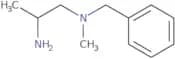
CAS:<p>Versatile small molecule scaffold</p>Fórmula:C4H9NO·HClPureza:Min. 95%Peso molecular:123.58 g/mol(2-Aminopropyl)(benzyl)methylamine
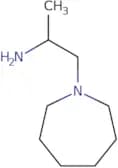
CAS:<p>Versatile small molecule scaffold</p>Fórmula:C11H18N2Pureza:Min. 95%Peso molecular:178.27 g/mol1-(Azepan-1-yl)propan-2-amine
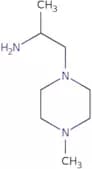
CAS:<p>Versatile small molecule scaffold</p>Fórmula:C9H20N2Pureza:Min. 95%Peso molecular:156.27 g/mol1-(4-Methylpiperazin-1-yl)propan-2-amine
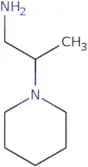
CAS:Versatile small molecule scaffoldFórmula:C8H19N3Pureza:Min. 95%Peso molecular:157.26 g/mol2-Piperidin-1-yl-propylamine
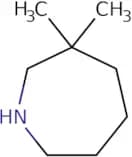
CAS:<p>Versatile small molecule scaffold</p>Fórmula:C8H18N2Pureza:Min. 95%Peso molecular:142.25 g/mol3,3-Dimethylazepane
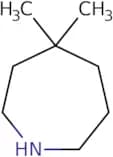
CAS:<p>Versatile small molecule scaffold</p>Fórmula:C8H17NPureza:Min. 95%Peso molecular:127.23 g/mol4,4-Dimethylazepane
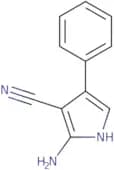
CAS:<p>Versatile small molecule scaffold</p>Fórmula:C8H17NPureza:Min. 95%Peso molecular:127.23 g/mol2-Amino-4-phenyl-1H-pyrrole-3-carbonitrile
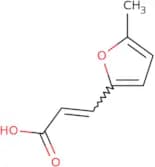
CAS:<p>2-Amino-4-phenyl-1H-pyrrole-3-carbonitrile (APC) is a synthetic molecule that has been shown to have potent antitumor activity. APC inhibits the glycosylation of proteins in cancer cells, which may be responsible for its antitumor activity. APC also inhibits the enzyme adenosine kinase, which regulates cellular metabolism and growth, leading to cell death. The use of APC may lead to an increased sensitivity to antiseizure medications.</p>Fórmula:C11H9N3Pureza:Min. 95%Peso molecular:183.21 g/mol(2E)-3-(5-Methylfuran-2-yl)prop-2-enoic acid
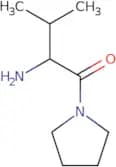
CAS:Versatile small molecule scaffoldFórmula:C8H8O3Pureza:Min. 95%Peso molecular:152.15 g/mol(2S)-2-Amino-3-methyl-1-(pyrrolidin-1-yl)butan-1-one
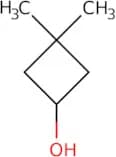
CAS:<p>(2S)-2-Amino-3-methyl-1-(pyrrolidin-1-yl)butan-1-one is a peptide hormone that belongs to the group of nucleophilic hormones. It is an inhibitor of the enzyme dihydropyrimidine dehydrogenase and has been shown to have antiviral activity against viruses such as type 1 adenovirus. In addition, (2S)-2-Amino-3-methyl-1-(pyrrolidin-1-yl)butan-1-one has been shown to be an inhibitor of the surface glycoprotein in the nervous system, which may be a cause of nervous system diseases. The elimination rate of this molecule was determined using a pseudotyped virus model system and molecular docking analysis.</p>Fórmula:C9H18N2OPureza:Min. 95%Peso molecular:170.25 g/mol3,3-Dimethylcyclobutan-1-ol
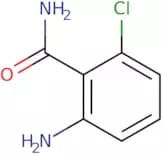
CAS:<p>3,3-Dimethylcyclobutan-1-ol is a chemical that belongs to the group of organic solvents. It is used in the manufacturing process of pharmaceuticals and as an intermediate for other chemicals. 3,3-Dimethylcyclobutan-1-ol can be used to make alkali metal salts, such as lithium chloride and sodium sulfide. It also reacts with hydrocarbon groups to form colitis. In addition, 3,3-dimethylcyclobutan-1-ol has been shown to have a protective effect against radiation and hydrogen sulfate. This compound also reacts with methane sulfonate to form an aliphatic hydrocarbon that is useful for making plastics. 3,3-Dimethylcyclobutan-1-ol is also used in the manufacture of sclerosis and episulfide. Finally, this compound can be reacted with aromatic hydrocarbons or ammonium salt to make amides or amines respectively.</p>Fórmula:C6H12OPureza:Min. 95%Peso molecular:100.16 g/mol2-Amino-6-chloro-benzamide
CAS:<p>2-Amino-6-chloro-benzamide is a compound with diverse applications in various industries. It is known for its benzylic properties, which make it suitable for use in the synthesis of organic compounds. Additionally, 2-Amino-6-chloro-benzamide has been found to interact with serotonin receptors, specifically 5-HT1A and 5-HT2C receptors. This interaction may have implications in the treatment of certain neurological disorders.</p>Fórmula:C7H7ClN2OPureza:Min. 95%Peso molecular:170.6 g/mol
![1-(7,7-Dimethylbicyclo[2.2.1]heptan-1-yl)ethan-1-one](/_next/image/?url=https%3A%2Fstatic.cymitquimica.com%2Fproducts%2F3D%2Fthumb-webp%2FECA13139.webp&w=3840&q=75)