Building Blocks
Esta seção contém produtos fundamentais para a síntese de compostos orgânicos e biológicos. Building blocks são os materiais de partida essenciais usados para construir moléculas complexas através de várias reações químicas. Eles desempenham um papel crítico na descoberta de medicamentos, ciência dos materiais e pesquisa química. Na CymitQuimica, oferecemos uma ampla gama de building blocks de alta qualidade para apoiar suas pesquisas inovadoras e projetos industriais, garantindo que você tenha os componentes essenciais para uma síntese bem-sucedida.
Subcategorias de "Building Blocks"
- Ácidos Borónicos e Derivados de Ácido Borónico(5.756 produtos)
- Building Blocks Quirais(1.242 produtos)
- Building Blocks Hidrocarbonetos(6.095 produtos)
- Building Blocks orgânicos(61.055 produtos)
Foram encontrados 199650 produtos de "Building Blocks"
Ordenar por
Pureza (%)
0
100
|
0
|
50
|
90
|
95
|
100
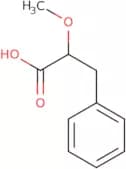
2-Methoxy-3-phenylpropanoic acid
CAS:<p>2-Methoxy-3-phenylpropanoic acid is an ester with a carboxylic acid group at its end. It is a chiral molecule that has two enantiomers, which are mirror images of each other. The stereochemical conformations of these molecules can be determined by the weighting of their conformational energies. This compound is used in the synthesis of various pharmaceuticals and pesticides, such as carbamates and herbicides. The nmr spectroscopic data for this compound show that it has two conformers, A and B, which have different chemical shifts in their nmr spectra. The experimental data show that the equilibrium between these two conformers is weighted heavily to conformer A because it has a lower energy barrier than conformer B.</p>Fórmula:C10H12O3Pureza:Min. 95%Peso molecular:180.2 g/mol2-Methoxy-4-methylpentanoic acid
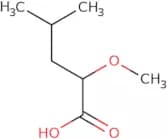
CAS:<p>Versatile small molecule scaffold</p>Fórmula:C7H14O3Pureza:Min. 95%Peso molecular:146.18 g/mol(3-Methoxyphenyl)(pyridin-4-yl)methanol
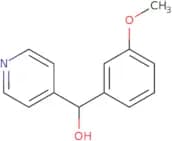
CAS:<p>Versatile small molecule scaffold</p>Fórmula:C13H13NO2Pureza:Min. 95%Peso molecular:215.25 g/mol2-(tert-Butoxy)acetyl chloride
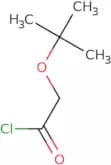
CAS:<p>Versatile small molecule scaffold</p>Fórmula:C6H11ClO2Pureza:Min. 95%Peso molecular:150.6 g/mol4-(Benzylsulfanyl)benzaldehyde
CAS:<p>Benzylsulfanylbenzaldehyde is a benzyl derivative that has been studied for its optical properties and electronic structures. The sulfur atom in this molecule is replaced with an electron-donating group, which gives the molecule a positive charge. This change also makes the substituent more polar and thus increases its ability to interact with other molecules. Substituents are groups attached to benzene rings in order to modify their chemical or physical properties. Chromophores are groups of atoms that absorb light and can be used to identify substances by their color. Electron withdrawing groups cause the dipole moment of the molecule to increase, while electron donating groups have the opposite effect on the dipole moment.</p>Fórmula:C14H12OSPureza:Min. 95%Peso molecular:228.31 g/mol2-Chloro-6-(chloromethyl)pyridine
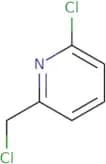
CAS:<p>2-Chloro-6-(chloromethyl)pyridine (2C6CP) is a chloride precursor that can be used for the synthesis of metal chlorides, such as copper chlorides. 2C6CP is synthesized by reacting thionyl chloride with the substituted pyridine under anhydrous conditions at -78°C. The resultant 2C6CP is then hydrolyzed to produce the desired chloride.<br>2C6CP has been shown to act as a ligand in coordination chemistry. It was first synthesized by reacting 3-chloropyridine with thionyl chloride and then hydrolyzing it to 2-chloropyridine. This method was later modified to use 4-chlorobenzoyl chloride instead of 3-chloropyridine, producing 2,4-dichloropyridine.</p>Fórmula:C6H5Cl2NPureza:Min. 95%Peso molecular:162.02 g/mol3-[5-(4-Chlorophenyl)-1,3,4-oxadiazol-2-yl]propanoic acid
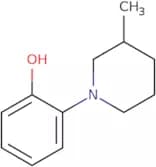
CAS:<p>Versatile small molecule scaffold</p>Fórmula:C11H9ClN2O3Pureza:Min. 95%Peso molecular:252.65 g/mol2-(3-Methylpiperidin-1-yl)phenol
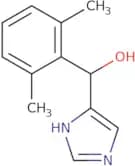
CAS:<p>Versatile small molecule scaffold</p>Fórmula:C12H17NOPureza:Min. 95%Peso molecular:191.27 g/mol(2,6-Dimethylphenyl)(1H-imidazol-4-yl)methanol
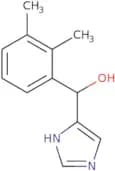
CAS:<p>Versatile small molecule scaffold</p>Fórmula:C12H14N2OPureza:Min. 95%Peso molecular:202.26 g/mol(2,3-dimethylphenyl)(1H-imidazol-5-yl)methanol
CAS:Versatile small molecule scaffoldFórmula:C12H14N2OPureza:Min. 95%Peso molecular:202.25 g/mol4-[(2,6-Dimethylphenyl)methyl]-1H-imidazole hydrochloride
CAS:Versatile small molecule scaffoldFórmula:C12H15ClN2Pureza:Min. 95%Peso molecular:222.71 g/molMethyl 5-methyl-1H-imidazole-4-carboxylate hydrochloride
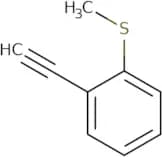
CAS:<p>Versatile small molecule scaffold</p>Fórmula:C6H9ClN2O2Pureza:Min. 95%Peso molecular:176.6 g/mol1-Ethynyl-2-(methylsulfanyl)benzene
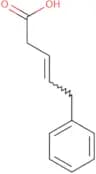
CAS:<p>1-Ethynyl-2-(methylsulfanyl)benzene is a potent antioxidant. It has been shown to have antimicrobial activity against both Gram-positive and Gram-negative bacteria, as well as antifungal activity against both mold and yeast. 1-Ethynyl-2-(methylsulfanyl)benzene has been shown to inhibit the growth of S. aureus and E. coli in vitro, having an IC50 of less than 0.1 μg/mL. This compound also inhibits the growth of Bacillus subtilis and B. cereus, with IC50 values of 0.5 and 0.06 μg/mL respectively, but is not active against Escherichia coli or Pseudomonas aeruginosa at concentrations up to 200 μg/mL.</p>Fórmula:C9H8SPureza:Min. 95%Peso molecular:148.23 g/mol(3E)-5-Phenylpent-3-enoic acid
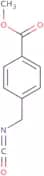
CAS:<p>Versatile small molecule scaffold</p>Fórmula:C11H12O2Pureza:Min. 95%Peso molecular:176.21 g/molMethyl 4-(isocyanatomethyl)benzoate
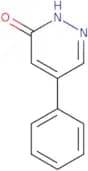
CAS:<p>Versatile small molecule scaffold</p>Fórmula:C10H9NO3Pureza:Min. 95%Peso molecular:191.18 g/mol5-Phenyl-2,3-dihydropyridazin-3-one
CAS:<p>Versatile small molecule scaffold</p>Fórmula:C10H8N2OPureza:Min. 95%Peso molecular:172.18 g/mol1-[3-(Chloromethyl)-4-ethoxyphenyl]ethan-1-one
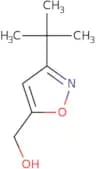
CAS:<p>Versatile small molecule scaffold</p>Fórmula:C11H13ClO2Pureza:Min. 95%Peso molecular:212.67 g/mol(3-tert-Butyl-1,2-oxazol-5-yl)methanol
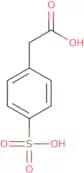
CAS:<p>Versatile small molecule scaffold</p>Fórmula:C8H13NO2Pureza:Min. 95%Peso molecular:155.19 g/mol2-(4-Sulfophenyl)acetic acid
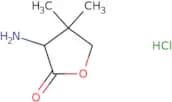
CAS:<p>2-(4-Sulfophenyl)acetic acid (2-SPAA) is a sulfonate that has been used in the calibration of butyric acid. 2-SPAA has a redox potential of -0.87 V and can be used to measure the concentration of butyric acid by HPLC analysis. This compound is biodegradable and environmentally friendly. 2-SPAA has also been found to have homologous properties, which make it suitable for use as an industrial chemical or for calibration purposes. It is also fluorescent and can be detected with polyclonal antibodies. High concentrations of this compound are toxic to humans, causing high values in blood pressure and heart rate.</p>Fórmula:C8H8O5SPureza:Min. 95%Peso molecular:216.21 g/mol(3R)-3-Amino-4,4-dimethyloxolan-2-one hydrochloride
CAS:<p>Versatile small molecule scaffold</p>Fórmula:C6H12ClNO2Pureza:Min. 95%Peso molecular:165.62 g/mol


![3-[5-(4-Chlorophenyl)-1,3,4-oxadiazol-2-yl]propanoic acid](/_next/image/?url=https%3A%2Fstatic.cymitquimica.com%2Fproducts%2F3D%2Fthumb-webp%2FDDA85861.webp&w=3840&q=75)
![4-[(2,6-Dimethylphenyl)methyl]-1H-imidazole hydrochloride](/_next/image/?url=https%3A%2Fstatic.cymitquimica.com%2Fproducts%2F3D%2Fthumb-webp%2FDDA89245.webp&w=3840&q=75)

![1-[3-(Chloromethyl)-4-ethoxyphenyl]ethan-1-one](/_next/image/?url=https%3A%2Fstatic.cymitquimica.com%2Fproducts%2F3D%2Fthumb-webp%2FDDA92773.webp&w=3840&q=75)