Building Blocks
Esta seção contém produtos fundamentais para a síntese de compostos orgânicos e biológicos. Building blocks são os materiais de partida essenciais usados para construir moléculas complexas através de várias reações químicas. Eles desempenham um papel crítico na descoberta de medicamentos, ciência dos materiais e pesquisa química. Na CymitQuimica, oferecemos uma ampla gama de building blocks de alta qualidade para apoiar suas pesquisas inovadoras e projetos industriais, garantindo que você tenha os componentes essenciais para uma síntese bem-sucedida.
Subcategorias de "Building Blocks"
- Ácidos Borónicos e Derivados de Ácido Borónico(5.756 produtos)
- Building Blocks Quirais(1.242 produtos)
- Building Blocks Hidrocarbonetos(6.095 produtos)
- Building Blocks orgânicos(61.055 produtos)
Foram encontrados 199650 produtos de "Building Blocks"
Ordenar por
Pureza (%)
0
100
|
0
|
50
|
90
|
95
|
100
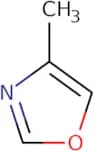
4-Methyloxazole
CAS:<p>4-Methyloxazole is a reactive compound that has been used in the synthesis of vitamins, ligands, and other organic chemicals. It can be prepared by formylation of nitroethane with formic acid, followed by oxidation with potassium permanganate. When heated to 300°C, 4-methyloxazole decomposes to form nitrogen gas and water vapor. 4-Methyloxazole is a ligand for several metal ions including platinum and palladium. The stability of 4-methyloxazole decreases as the number of methyl groups increases. This property makes it an excellent ligand for complex formation with metals such as zirconium oxide or imidazole derivatives.</p>Fórmula:C4H5NOPureza:Min. 95%Peso molecular:83.09 g/mol2-Mercapto-3-methyl-3,5-dihydro-imidazol-4-one
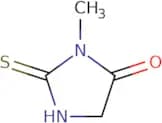
CAS:<p>2-Mercapto-3-methyl-3,5-dihydro-imidazol-4-one (MMI) is a diagnostic agent that belongs to the group of chemical ionization reagents. It has been shown to be effective as a carcinogen in Sprague Dawley rats and to induce cancer at high doses. MMI is used in the analysis of acidity, and is also used for the analysis of amino acids in proteins by chromatography. MMI reacts with histidine residues on ribosomes and forms an iminium ion, which leads to protein synthesis inhibition. This reaction mechanism can be inhibited by adding an amine such as methylamine or ammonia, thereby inhibiting protein synthesis.</p>Fórmula:C4H6N2OSPureza:Min. 95%Peso molecular:130.17 g/mol2-Bromobicyclo[2.2.1]hept-2-ene
CAS:<p>2-Bromobicyclo[2.2.1]hept-2-ene is a brominating agent that is used for the synthesis of organic compounds, such as halogenated hydrocarbons and pharmaceuticals. The use of this reagent in the synthesis of halogenated hydrocarbons is based on its ability to form a metal hydride with the desired metal, which can then be used as a reducing agent. This brominating agent also has stereospecificity, allowing for the selective introduction of one type of substituent at one position in an organic molecule. 2-Bromobicyclo[2.2.1]hept-2-ene is a precursor to other brominating agents and metal hydrides, such as lithium bromide and sodium hydride.</p>Fórmula:C7H9BrPureza:Min. 95%Peso molecular:173.05 g/mol3-Bromotricyclo[2.2.1.0,2,6]heptane
CAS:<p>3-Bromotricyclo[2.2.1.0,2,6]heptane is a biomolecule and azabicyclic compound with molecular formula C8H14Br and molecular weight of 152.19 g/mol. It has been shown to react through nucleophilic attack at the carbonyl carbon to produce an intermediate that tautomerizes to the corresponding ketone in a cycloaddition reaction with acetaldehyde or xylene. The deuterated derivative of this compound has been synthesized using deuteration techniques and can be used for studies on the mechanism of substitution reactions of nucleophiles such as chloride or butyltin compounds. This biomolecule also reacts with alkoxides at temperatures greater than 0°C to form ethyl 2-bromo-3-methylhexanoate, which can be used as a starting material for the synthesis of biphenyls by Friedel-Crafts</p>Fórmula:C7H9BrPureza:Min. 95%Peso molecular:173.05 g/mol5,6-Dihydro Thymine
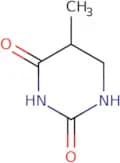
CAS:<p>5,6-Dihydrothymine is a metabolic precursor to thymine. It has been shown to inhibit the production of DNA and RNA in cells, which causes cellular transformation. 5,6-Dihydrothymine also inhibits enzyme activity by competing with substrates or by forming covalent bonds with the enzyme. This drug has been found to be genotoxic and may cause cancer, but it can also be used for diagnosis and treatment of radiation-induced genetic damage. The drug is an oral prodrug that is hydrolyzed in the gastrointestinal tract to release thymine. 5,6-Dihydrothymine is used for molecular pathogenesis studies on solid tumours, such as breast cancer and prostate cancer.</p>Fórmula:C5H8N2O2Pureza:Min. 95%Peso molecular:128.13 g/mol1-Methyl-1,3-diazinane-2,4-dione
CAS:<p>1-Methyl-1,3-diazinane-2,4-dione is a heterocycle that has been shown to have immunosuppressive effects. It has been shown to inhibit the production of inflammatory cells, including T cells and natural killer cells, in response to stimulation with mitogens. In addition, 1-methyl-1,3-diazinane-2,4-dione inhibits the activation of T cells by inhibiting the synthesis of β-amino acid and reducing intracellular levels of LPS. This compound also has been shown to be a potent inhibitor of HIV replication and cancer growth in vitro.</p>Fórmula:C5H8N2O2Pureza:Min. 95%Peso molecular:128.13 g/molalpha-Fluorostyrene
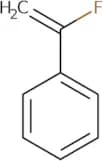
CAS:<p>Styrene is a synthetic monomer that belongs to the group of cycloalkanes. It is a colorless, volatile liquid with a boiling point of at least 100°C and a viscosity of 0.5-2 mm2/s. Styrene is usually used in the production of polystyrene plastic and styrenic resins. Its most well-known application is in the manufacture of polystyrene foam insulation (commonly known as Styrofoam). Styrene can be converted into other compounds by thermolysis, oxidation, or hydrolysis. One such conversion is debromination, which occurs when styrene reacts with bromine in an alkaline solution to produce di-bromostyrene and hydrogen bromide gas. The isotopomers alpha-fluorostyrene and beta-fluorostyrene are derivatives of styrene that are used for analysis purposes because they have different physical properties due to their different masses.</p>Fórmula:C8H7FPureza:Min. 95%Peso molecular:122.14 g/molCyclooctanol
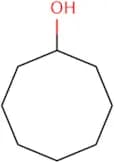
CAS:<p>Cyclooctanol is an organic compound that belongs to the group of aliphatic hydrocarbons. It is a reaction product of trifluoroacetic acid and cyclooctyl, which is formed at a rate dependent on the hydroxyl group content. Cyclooctanol inhibits monoamine reuptake, which may be due to its carbonyl group, and has been shown to have insulin resistance-inducing properties. Cyclooctanol also inhibits the formation of insulin receptors in diabetic neuropathy by binding with piperazine, thus inhibiting the redox potential of the cells.</p>Fórmula:C8H16OPureza:Min. 95%Peso molecular:128.22 g/mol(1R,2S)rel-cyclopropane1,2dicarboxylic acid
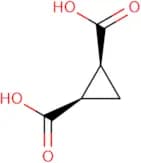
CAS:(1R,2S)rel-cyclopropane1,2dicarboxylic acid is a synthetic compound. It has been shown to activate the camp-dependent protein kinase C and inhibit the phosphodiesterase type 3 enzyme. It also has gametocide properties in vitro assays. (1R,2S)rel-cyclopropane1,2dicarboxylic acid has been analysed using nmr spectra and transition state theory to determine its structure. The pharmacophore of (1R,2S)rel-cyclopropane1,2dicarboxylic acid is a dione with an activating hydrogen atom on one side and a hydrogenolysis site on the other.Fórmula:C5H6O4Pureza:Min. 95%Peso molecular:130.1 g/mol1-(2-Chloroethoxy)-2,5-dihydro-1H-1λ⁵-phosphol-1-one
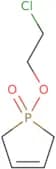
CAS:<p>Versatile small molecule scaffold</p>Fórmula:C6H10ClO2PPureza:Min. 95%Peso molecular:180.57 g/mol3,5-Dimethyl-2H-1,2,6-thiadiazine-1,1-dione
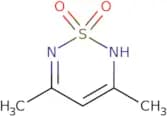
CAS:<p>Versatile small molecule scaffold</p>Fórmula:C5H8N2O2SPureza:Min. 95%Peso molecular:160.2 g/molTricyclo[2.2.1.0,2,6]heptane-3-carboxylic acid
CAS:<p>Versatile small molecule scaffold</p>Fórmula:C8H10O2Pureza:Min. 95%Peso molecular:138.16 g/mol3-Acetylpyrrolidine-2,4-dione
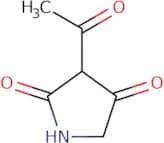
CAS:<p>3-Acetylpyrrolidine-2,4-dione is an experimental drug that belongs to the class of metal hydroxides. It has been shown to have anti-tumor activity in vitro and in vivo against a variety of malignant tumors. 3-Acetylpyrrolidine-2,4-dione also inhibits the growth of pigweed and other plants by inhibiting the production of tenuazonic acid. This compound is a tautomeric form of tenuazonic acid, which is also known as 2,4-pentanedione. The carboxylate group on this molecule may be responsible for its herbicidal activity.</p>Fórmula:C6H7NO3Pureza:Min. 95%Peso molecular:141.12 g/mol7-Chlorothieno[2,3-d]pyridazine
CAS:<p>Versatile small molecule scaffold</p>Fórmula:C6H3ClN2SPureza:Min. 95%Peso molecular:170.62 g/mol6H,7H-Thieno[2,3-d]pyridazin-7-one
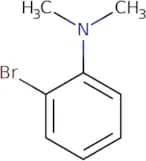
CAS:<p>Versatile small molecule scaffold</p>Fórmula:C6H4N2OSPureza:Min. 95%Peso molecular:152.18 g/mol2-Bromo-N,N-dimethylaniline
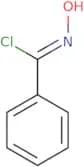
CAS:<p>2-Bromo-N,N-dimethylaniline is a chemical compound that belongs to the class of alkylating agents. It is prepared by the reaction of 2-bromoaniline with a Grignard reagent, followed by acidification and removal of the volatile bromide. 2-Bromo-N,N-dimethylaniline has been used in the preparation of ligands for metal complexes and as an acetal protecting group for alcohols and phenols. 2-Bromo-N,N-dimethylaniline has been shown to be a good cross-coupling agent for halides or aromatic heterocycles, which is an important property in organic synthesis. The mechanism involves initial abstraction of hydrogen from the substrate molecule by 2-bromo-N,N-dimethylaniline forming an intermediate cationic species. This intermediate cationic species then reacts with the substrate molecule</p>Fórmula:C8H10BrNPureza:Min. 95%Peso molecular:200.08 g/mola-Chlorobenzaldoxime
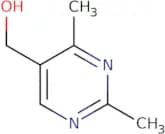
CAS:<p>a-Chlorobenzaldoxime is a potent antibacterial agent that inhibits bacterial growth by binding to the enzyme protein, thereby preventing the synthesis of essential proteins. It also has insecticidal activities. a-Chlorobenzaldoxime is an inorganic compound and is not metabolized by the body. This makes it an efficient method for treating bacterial infections.</p>Fórmula:C7H6ClNOPureza:Min. 95%Peso molecular:155.58 g/mol(2,4-Dimethylpyrimidin-5-yl)methanol
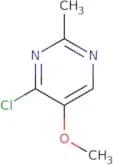
CAS:<p>(2,4-Dimethylpyrimidin-5-yl)methanol is an ethylene diamine molecule that is covalently bonded to a cyclic peptide. It has been shown to have strong antimicrobial activity against various types of bacteria and fungi. (2,4-Dimethylpyrimidin-5-yl)methanol is able to kill bacteria by inhibiting protein synthesis, which may be due to its ability to form hydrogen bonds with the transfer reactions of the ribosome. In addition, (2,4-Dimethylpyrimidin-5-yl)methanol has also been shown to form acid in the presence of malonic acid and inhibitor molecules. This results in inhibition of bacterial growth and structural analysis by electrochemical impedance spectroscopy.</p>Fórmula:C7H10N2OPureza:Min. 95%Peso molecular:138.17 g/mol4-Chloro-5-methoxy-2-methylpyrimidine
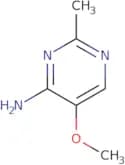
CAS:<p>Versatile small molecule scaffold</p>Fórmula:C6H7ClN2OPureza:Min. 95%Peso molecular:158.58 g/mol5-Methoxy-2-methylpyrimidin-4-amine
CAS:<p>Versatile small molecule scaffold</p>Fórmula:C6H9N3OPureza:Min. 95%Peso molecular:139.16 g/mol

![2-Bromobicyclo[2.2.1]hept-2-ene](/_next/image/?url=https%3A%2Fstatic.cymitquimica.com%2Fproducts%2F3D%2Fthumb-webp%2FAAA69490.webp&w=3840&q=75)
![3-Bromotricyclo[2.2.1.0,2,6]heptane](/_next/image/?url=https%3A%2Fstatic.cymitquimica.com%2Fproducts%2F3D%2Fthumb-webp%2FAAA69502.webp&w=3840&q=75)

![Tricyclo[2.2.1.0,2,6]heptane-3-carboxylic acid](/_next/image/?url=https%3A%2Fstatic.cymitquimica.com%2Fproducts%2F3D%2Fthumb-webp%2FAAA69756.webp&w=3840&q=75)
![7-Chlorothieno[2,3-d]pyridazine](/_next/image/?url=https%3A%2Fstatic.cymitquimica.com%2Fproducts%2F3D%2Fthumb-webp%2FAAA69771.webp&w=3840&q=75)
![6H,7H-Thieno[2,3-d]pyridazin-7-one](/_next/image/?url=https%3A%2Fstatic.cymitquimica.com%2Fproducts%2F3D%2Fthumb-webp%2FAAA69772.webp&w=3840&q=75)