Building Blocks
Esta seção contém produtos fundamentais para a síntese de compostos orgânicos e biológicos. Building blocks são os materiais de partida essenciais usados para construir moléculas complexas através de várias reações químicas. Eles desempenham um papel crítico na descoberta de medicamentos, ciência dos materiais e pesquisa química. Na CymitQuimica, oferecemos uma ampla gama de building blocks de alta qualidade para apoiar suas pesquisas inovadoras e projetos industriais, garantindo que você tenha os componentes essenciais para uma síntese bem-sucedida.
Subcategorias de "Building Blocks"
- Ácidos Borónicos e Derivados de Ácido Borónico(5.756 produtos)
- Building Blocks Quirais(1.242 produtos)
- Building Blocks Hidrocarbonetos(6.095 produtos)
- Building Blocks orgânicos(61.038 produtos)
Foram encontrados 196817 produtos de "Building Blocks"
Ordenar por
Pureza (%)
0
100
|
0
|
50
|
90
|
95
|
100
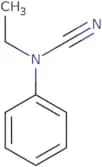
N-Cyano-N-ethylaniline
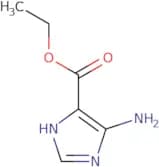
CAS:<p>Versatile small molecule scaffold</p>Fórmula:C9H10N2Pureza:Min. 95%Peso molecular:146.19 g/molethyl 4-amino-1H-imidazole-5-carboxylate
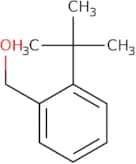
CAS:<p>Ethyl 4-amino-1H-imidazole-5-carboxylate is an ionotropic gelator, which means it is able to form gels when mixed with water. It is synthesised from aluminium chloride and primary amines. Ethyl 4-amino-1H-imidazole-5-carboxylate has been shown to have a carbonyl group and triethyl orthoformate as functional groups. The chemical structure of ethyl 4-amino-1H-imidazole-5-carboxylate is heterocyclic with three rings in the molecule. Ethyl 4 amino 1H imidazole 5 carboxylate has been used as a model substrate for biosynthesis studies of α,α'-diaminopropionic acid and its derivatives.</p>Fórmula:C6H9N3O2Pureza:Min. 95%Peso molecular:155.2 g/mol(2-tert-Butylphenyl)methanol
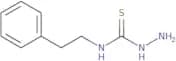
CAS:<p>Versatile small molecule scaffold</p>Fórmula:C11H16OPureza:Min. 95%Peso molecular:164.24 g/molN-(1-Phenylethyl)hydrazinecarbothioamide
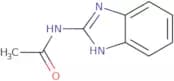
CAS:<p>N-(1-Phenylethyl)hydrazinecarbothioamide (HZPCA) is a corrosion inhibitor that is used in acid solutions such as hydrochloric acid, nitric acid, phosphoric acid, and sulfuric acid. It is an organic compound that has been shown to be active against certain metal ions at the adsorption sites. The efficiency of HZPCA adsorption for different metal ions depends on the pH of the solution. HZPCA also has potent inhibitory effects on the corrosion process by reacting with the metal oxide film on metal surfaces and forming an insoluble hydrazine complex. This complex reduces further corrosion by blocking oxygen diffusion to the metal surface.</p>Fórmula:C9H13N3SPureza:Min. 95%Peso molecular:195.29 g/molN-(1H-1,3-Benzodiazol-2-yl)acetamide
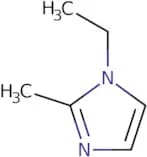
CAS:<p>N-(1H-1,3-Benzodiazol-2-yl)acetamide is a hydrophilic molecule that has been shown to be active against helminths. It is used as an experimental drug for the treatment of schistosomiasis. N-(1H-1,3-Benzodiazol-2-yl)acetamide binds to the nuclear membrane and prevents the formation of hydrogen bonds with cytosine residues. This leads to a disruption in the helical structure of DNA and causes cell death. The compound also inhibits protein synthesis by binding to ribosomes and inhibiting peptide bond formation. In addition, N-(1H-1,3-Benzodiazol-2-yl)acetamide has been shown to have antimicrobial activity against bacteria and fungi.<br>The profile of this molecule can be altered by changing its substituents on benzene ring or cyclopropane ring. It can also be modified by altering the</p>Fórmula:C9H9N3OPureza:Min. 95%Peso molecular:175.19 g/mol1-Ethyl-2-methyl-1H-imidazole
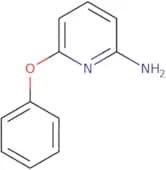
CAS:<p>1-Ethyl-2-methyl-1H-imidazole is an imidazole derivative that has been shown to be active against a variety of bacteria. It can be used as an antimicrobial agent in medicines, such as antibiotics and antifungal agents. 1-Ethyl-2-methyl-1H-imidazole is also used as a chemical intermediate for the synthesis of other compounds. This compound has been shown to have bifunctional properties by inhibiting both ion channels and membranes, which may be related to its antibacterial activity. The compound is stable at high temperatures and displays good chemical stability in aqueous media. It has also been shown to have antihypertensive effects in animal models.</p>Pureza:Min. 95%6-Phenoxypyridin-2-amine
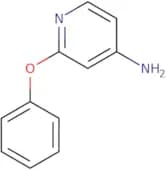
CAS:<p>Versatile small molecule scaffold</p>Fórmula:C11H10N2OPureza:Min. 95%Peso molecular:186.21 g/mol2-Phenoxypyridin-4-amine
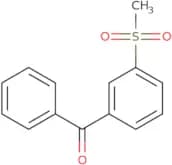
CAS:<p>Versatile small molecule scaffold</p>Fórmula:C11H10N2OPureza:Min. 95%Peso molecular:186.21 g/mol3-(Methylsulfonyl)benzophenone
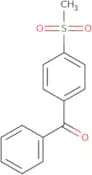
CAS:<p>Versatile small molecule scaffold</p>Fórmula:C14H12O3SPureza:Min. 95%Peso molecular:260.31 g/mol(4-Methanesulfonylphenyl)(phenyl)methanone
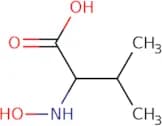
CAS:<p>Versatile small molecule scaffold</p>Fórmula:C14H12O3SPureza:Min. 95%Peso molecular:260.31 g/mol2-(Hydroxyamino)-3-methylbutanoic acid
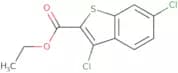
CAS:<p>Versatile small molecule scaffold</p>Fórmula:C5H11NO3Pureza:Min. 95%Peso molecular:133.15 g/molEthyl 3,6-dichloro-1-benzothiophene-2-carboxylate
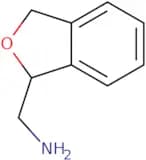
CAS:<p>Versatile small molecule scaffold</p>Fórmula:C11H8Cl2O2SPureza:Min. 95%Peso molecular:275.1 g/mol(2,3-Dihydrobenzofuran-2-yl)methanamine
CAS:<p>Versatile small molecule scaffold</p>Fórmula:C9H11NOPureza:Min. 95%Peso molecular:149.19 g/mol1-(2-Aminobenzo[d]thiazol-6-yl)ethanone
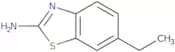
CAS:<p>1-(2-Aminobenzo[d]thiazol-6-yl)ethanone is a potentiator that potentiates the activity of benzothiazoles by lowering blood pressure. It is also a neuroprotectant, which has been shown to protect against neuronal injury in vivo. 1-(2-Aminobenzo[d]thiazol-6-yl)ethanone has been shown to dilate carotid arteries and cause vasodilation in mice, increasing blood flow. It has calcium-activated potassium channels and can modulate membrane potential, thus regulating the contractile state of smooth muscle cells.</p>Fórmula:C9H8N2OSPureza:Min. 95%Peso molecular:192.24 g/mol6-Ethyl-1,3-benzothiazol-2-amine
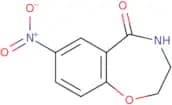
CAS:<p>Versatile small molecule scaffold</p>Fórmula:C9H10N2SPureza:Min. 95%Peso molecular:178.25 g/mol7-Nitro-3,4-dihydro-1,4-benzoxazepin-5(2H)-one
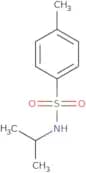
CAS:<p>Versatile small molecule scaffold</p>Fórmula:C9H8N2O4Pureza:Min. 95%Peso molecular:208.17 g/mol4-Methyl-N-(propan-2-yl)benzene-1-sulfonamide
CAS:<p>4-Methyl-N-(propan-2-yl)benzene-1-sulfonamide is a hydroaminating agent that undergoes electrophilic substitution reactions with amines. It is activated by the presence of electron withdrawing groups and can be used as a catalyst in hydroamination reactions. This compound is prepared by the reaction of aniline with acetic anhydride and pyridine in the presence of triethylamine.</p>Fórmula:C10H15NO2SPureza:Min. 95%Peso molecular:213.3 g/mol2-methyl-2h,4h,5h-pyrazolo[3,4-d]pyrimidin-4-one
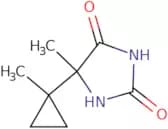
CAS:<p>Versatile small molecule scaffold</p>Fórmula:C6H6N4OPureza:Min. 95%Peso molecular:150.14 g/mol5-Methyl-5-(1-methylcyclopropyl)imidazolidine-2,4-dione
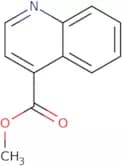
CAS:<p>Versatile small molecule scaffold</p>Fórmula:C8H12N2O2Pureza:Min. 95%Peso molecular:168.19 g/molMethyl quinoline-4-carboxylate
CAS:<p>Methyl quinoline-4-carboxylate is a potent inhibitor of secretory phospholipase A2 (sPLA2), which is an enzyme that cleaves the fatty acid at the sn-2 position in phospholipids. It has been shown to inhibit sPLA2 activity in both nonpancreatic and pancreatic secretions, but not in plasma. Methyl quinoline-4-carboxylate also inhibits the functionalities of heterocycles, such as chromatographic and synthetic. Methyl quinoline-4-carboxylate can be synthesized by reacting an aldoxime with methyl 4-chloroquinoline carboxylate. The molecular ion of methyl quinoline-4-carboxylate has been observed at m/z 335, while its mass spectrum displays peaks at m/z 335, 319, and 307. This molecule is found in quinoline derivatives and aldox</p>Fórmula:C11H9NO2Pureza:Min. 95%Peso molecular:187.2 g/mol

![1-(2-Aminobenzo[d]thiazol-6-yl)ethanone](/_next/image/?url=https%3A%2Fstatic.cymitquimica.com%2Fproducts%2F3D%2Fthumb-webp%2FWAA22261.webp&w=3840&q=75)
![2-methyl-2h,4h,5h-pyrazolo[3,4-d]pyrimidin-4-one](/_next/image/?url=https%3A%2Fstatic.cymitquimica.com%2Fproducts%2F3D%2Fthumb-webp%2FWAA23041.webp&w=3840&q=75)