Building Blocks
Esta seção contém produtos fundamentais para a síntese de compostos orgânicos e biológicos. Building blocks são os materiais de partida essenciais usados para construir moléculas complexas através de várias reações químicas. Eles desempenham um papel crítico na descoberta de medicamentos, ciência dos materiais e pesquisa química. Na CymitQuimica, oferecemos uma ampla gama de building blocks de alta qualidade para apoiar suas pesquisas inovadoras e projetos industriais, garantindo que você tenha os componentes essenciais para uma síntese bem-sucedida.
Subcategorias de "Building Blocks"
- Ácidos Borónicos e Derivados de Ácido Borónico(5.756 produtos)
- Building Blocks Quirais(1.242 produtos)
- Building Blocks Hidrocarbonetos(6.093 produtos)
- Building Blocks orgânicos(60.525 produtos)
Foram encontrados 195536 produtos de "Building Blocks"
Ordenar por
Pureza (%)
0
100
|
0
|
50
|
90
|
95
|
100
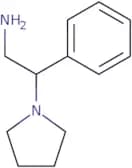
2-Phenyl-2-(pyrrolidin-1-yl)ethanamine
CAS:<p>Versatile small molecule scaffold</p>Fórmula:C12H18N2Pureza:Min. 95%Peso molecular:190.28 g/mol2-(4-Methoxy-phenyl)-2-piperidin-1-yl-ethylamine
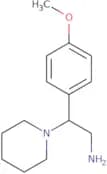
CAS:<p>Versatile small molecule scaffold</p>Fórmula:C14H22N2OPureza:Min. 95%Peso molecular:234.34 g/mol2-(4-Methoxy-phenyl)-2-pyrrolidin-1-yl-ethylamine
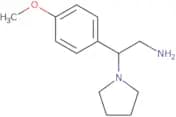
CAS:<p>Versatile small molecule scaffold</p>Fórmula:C13H20N2OPureza:Min. 95%Peso molecular:220.31 g/molrac-(1R,2R,4R)-5-Oxobicyclo[2.2.1]heptane-2-carboxylic acid
CAS:<p>Versatile small molecule scaffold</p>Fórmula:C8H10O3Pureza:Min. 95%Peso molecular:154.2 g/mol1,3-Diethyl-1,3-dimethylurea
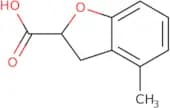
CAS:<p>Versatile small molecule scaffold</p>Fórmula:C7H16N2OPureza:Min. 95%Peso molecular:144.21 g/mol4-Methyl-2,3-dihydro-1-benzofuran-2-carboxylic acid
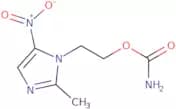
CAS:<p>Versatile small molecule scaffold</p>Fórmula:C10H10O3Pureza:Min. 95%Peso molecular:178.18 g/mol2-(2-Methyl-5-nitro-1H-imidazol-1-yl)ethyl carbamate
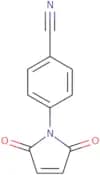
CAS:<p>2-(2-Methyl-5-nitro-1H-imidazol-1-yl)ethyl carbamate is a diluent that can be used to reconstitute fatty acids at high concentrations. It is also used in pharmaceutical preparations and conjugates. It has been shown to have an antiviral effect against chlamydia and has been used as a pharmaceutical dosage for the diagnosis of radiation exposure. The diluent can also be used in pharmaceutical preparations and conjugates, but it is not active against viruses or bacteria.</p>Fórmula:C7H10N4O4Pureza:Min. 95%Peso molecular:214.18 g/mol4-(2,5-Dioxo-2,5-dihydro-1H-pyrrol-1-yl)benzonitrile
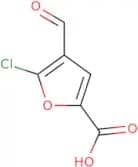
CAS:<p>4-(2,5-Dioxo-2,5-dihydro-1H-pyrrol-1-yl)benzonitrile is a versatile research chemical with various applications. It contains fluorine and is commonly used in the synthesis of copolymers, phenolic acids, and hydrocarbons. This compound also finds application in the field of medicine, where it has been studied for its potential as an antioxidant and for its activity on dopamine receptors. Additionally, 4-(2,5-Dioxo-2,5-dihydro-1H-pyrrol-1-yl)benzonitrile has been found to exhibit surface energy properties and can be used in interfacial processes or as an electrolyte. Its wide range of characteristics makes it a valuable compound for researchers across different fields.</p>Fórmula:C11H6N2O2Pureza:Min. 95%Peso molecular:198.18 g/mol5-Chloro-4-formylfuran-2-carboxylic acid
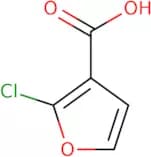
CAS:<p>Versatile small molecule scaffold</p>Fórmula:C6H3ClO4Pureza:Min. 95%Peso molecular:174.54 g/mol2-chlorofuran-3-carboxylic acid
CAS:<p>2-Chloro-3-carboxylic acid is a broad spectrum inhibitor of human herpesvirus 1 (HSV-1) and human herpesvirus 2 (HSV-2). It is a non-nucleoside inhibitor of DNA polymerases. The compound binds to the active site of the enzyme, preventing the formation of an active complex with the template strand. 2-Chloro-3-carboxylic acid inhibits both DNA polymerases and RNA polymerases. This antiviral drug has been shown to inhibit HSV replication in culture by 95%. 2C3CA has been shown to have high specificity for HSV type 1 and type 2, as well as for all other human DNA viruses, including adenoviruses and cytomegalovirus.<br>2C3CA is not active against other animal DNA viruses or bacterial DNA viruses.</p>Fórmula:C5H3ClO3Pureza:Min. 95%Peso molecular:146.53 g/molrac-(3R,5R)-1,3,5-Trimethylpiperidin-4-one
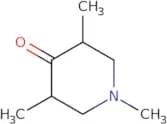
CAS:<p>Versatile small molecule scaffold</p>Fórmula:C8H15NOPureza:Min. 95%Peso molecular:141.2 g/molMethyl 2-phenylpropanoate
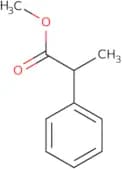
CAS:<p>Methyl 2-phenylpropanoate is the product of a lipase-catalyzed reaction between methanol and phenylacetic acid. The hydrolysis of the ester bond releases methanol, which can then react with another molecule of phenylacetic acid to form methyl 2-phenylpropanoate. Methyl 2-phenylpropanoate is a key intermediate in the synthesis of beta blockers, such as propranolol. It can also be used as an alternative to cyclopentane for synthesizing stereoisomers of cyclohexane. The reaction mechanism involves an activation energy that is kinetically favorable and has an asymmetric synthesis. The stereoselectivity of this reaction is due to the use of an acid catalyst and a chiral ligand.</p>Fórmula:C10H12O2Pureza:Min. 95%Peso molecular:164.2 g/mol5,6-Dihydro-4h-pyran-2-carboxylic acid
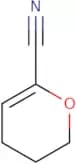
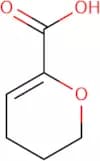
CAS:<p>5,6-Dihydro-4H-pyran-2-carboxylic acid is a diluent that is used in the manufacture of dry powders. It is also used as a diluting agent for influenza vaccines. 5,6-Dihydro-4H-pyran-2-carboxylic acid is one of the most commonly used diluents for vaccines and other biological products. This compound has been approved by the FDA for use in both injectable and nasal flu vaccine preparations. The particle size of this compound ranges from microns to millimeters. 5,6-Dihydro-4H-pyran-2-carboxylic acid can be mixed with water or saline to produce a solution with a pH between 3 and 8.</p>Fórmula:C6H8O3Pureza:Min. 95%Peso molecular:128.13 g/mol(S)-3-Methyl-2-butylamine Hydrochloride ee
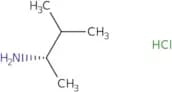
CAS:<p>Versatile small molecule scaffold</p>Fórmula:C5H14ClNPureza:Min. 95%Peso molecular:123.62 g/mol(2R)-3,3-Dimethylbutan-2-amine HCl
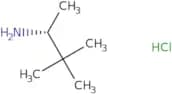
CAS:<p>Versatile small molecule scaffold</p>Fórmula:C6H16ClNPureza:Min. 95%Peso molecular:137.65 g/mol5-Amino-3,3-dimethyl-indolin-2-one
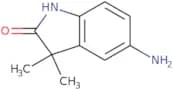
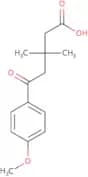
CAS:<p>Versatile small molecule scaffold</p>Fórmula:C10H12N2OPureza:Min. 95%Peso molecular:176.21 g/mol5-(4-Methoxyphenyl)-3,3-dimethyl-5-oxopentanoic acid
CAS:<p>Versatile small molecule scaffold</p>Fórmula:C14H18O4Pureza:Min. 95%Peso molecular:250.29 g/mol3-(Carboxymethyl)-1H-indole-2-carboxylic acid
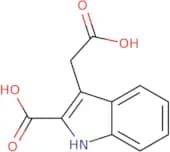
CAS:<p>3-(Carboxymethyl)-1H-indole-2-carboxylic acid is an intramolecular cyclization reaction that involves the amination of a propanoic acid and a ring system. This reaction is analogous to the synthesis of 2,5-diaminopentane, which is also a cyclization of an amine to form a five-membered ring. The nmda receptor complex has been shown to be efficient in binding 3-(carboxymethyl)-1H-indole-2-carboxylic acid and other analogues of this compound. In addition, 3-(carboxymethyl)-1H-indole-2-carboxylic acid has shown affinity for the glycine site on the nmda receptor complex. The chemistry behind this drug is not well understood due to its complexity.</p>Fórmula:C11H9NO4Pureza:Min. 95%Peso molecular:219.19 g/mol7-Chloro-3,4-dihydro-2H-1,3-benzoxazine-2,4-dione
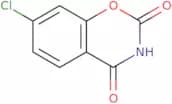
CAS:<p>Versatile small molecule scaffold</p>Fórmula:C8H4ClNO3Pureza:Min. 95%Peso molecular:197.57 g/mol

![rac-(1R,2R,4R)-5-Oxobicyclo[2.2.1]heptane-2-carboxylic acid](/_next/image/?url=https%3A%2Fstatic.cymitquimica.com%2Fproducts%2F3D%2Fthumb-webp%2FGBA46753.webp&w=3840&q=75)