Building Blocks
Esta seção contém produtos fundamentais para a síntese de compostos orgânicos e biológicos. Building blocks são os materiais de partida essenciais usados para construir moléculas complexas através de várias reações químicas. Eles desempenham um papel crítico na descoberta de medicamentos, ciência dos materiais e pesquisa química. Na CymitQuimica, oferecemos uma ampla gama de building blocks de alta qualidade para apoiar suas pesquisas inovadoras e projetos industriais, garantindo que você tenha os componentes essenciais para uma síntese bem-sucedida.
Subcategorias de "Building Blocks"
- Ácidos Borónicos e Derivados de Ácido Borónico(5.756 produtos)
- Building Blocks Quirais(1.242 produtos)
- Building Blocks Hidrocarbonetos(6.093 produtos)
- Building Blocks orgânicos(60.532 produtos)
Foram encontrados 195533 produtos de "Building Blocks"
Ordenar por
Pureza (%)
0
100
|
0
|
50
|
90
|
95
|
100
1-Bromo-4-(trifluoromethyl)cyclohexane
CAS:<p>Versatile small molecule scaffold</p>Fórmula:C7H10BrF3Pureza:Min. 95%Peso molecular:231.05 g/mol1-Benzylpyrrolidine-2,4-dione
CAS:<p>Versatile small molecule scaffold</p>Fórmula:C11H11NO2Pureza:Min. 95%Peso molecular:189.21 g/mol1,3-Dichloropentane
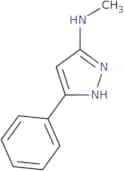
CAS:<p>1,3-Dichloropentane is a molecule that consists of chlorine and hydrogen atoms. It has been studied extensively in kinetic isotope effect experiments for its transport properties. The kinetic isotope effect is the change in reaction rate due to the presence of an atom with an atomic mass different from the reactant or product. 1,3-Dichloropentane has also been studied for its role in cell membrane transport. This molecule is not reactive, but it does have a reactive isotope effect on cells when it reacts with chlorine atoms.</p>Fórmula:C5H10Cl2Pureza:Min. 95%Peso molecular:141.04 g/molN-Methyl-5-phenyl-1H-pyrazol-3-amine
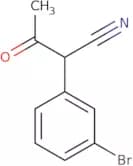
CAS:<p>Versatile small molecule scaffold</p>Fórmula:C10H11N3Pureza:Min. 95%Peso molecular:173.21 g/mol2-(3-Bromophenyl)-3-oxobutanenitrile
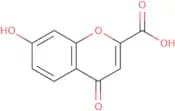
CAS:<p>Versatile small molecule scaffold</p>Fórmula:C10H8BrNOPureza:Min. 95%Peso molecular:238.08 g/mol7-Hydroxy-4-oxo-4H-chromene-2-carboxylic acid
CAS:<p>7-Hydroxy-4-oxo-4H-chromene-2-carboxylic acid is a molecule that is found in the human body. It has been shown to have cationic polymer activity and to inhibit the growth of bacteria by binding to the hydroxyl group of DNA. 7-Hydroxy-4-oxo-4H-chromene-2-carboxylic acid has potent inhibitory activity against Gram positive and Gram negative bacteria, including Mycobacterium tuberculosis and Staphylococcus aureus. This compound can be used as an antibiotic for bacterial infections due to its ability to bind with high concentrations of the hydroxyl group on DNA.</p>Fórmula:C10H6O5Pureza:Min. 95%Peso molecular:206.15 g/mol2-Bromo-1-(3-chloro-4-methoxyphenyl)ethan-1-one
CAS:<p>Versatile small molecule scaffold</p>Fórmula:C9H8BrClO2Pureza:Min. 95%Peso molecular:263.51 g/mol2-Bromo-1-[4-(2-methylpropyl)phenyl]ethan-1-one
CAS:<p>Versatile small molecule scaffold</p>Fórmula:C12H15BrOPureza:Min. 95%Peso molecular:255.15 g/mol3-(2-Chlorophenoxymethyl)benzoic acid
CAS:<p>Versatile small molecule scaffold</p>Fórmula:C14H11ClO3Pureza:Min. 95%Peso molecular:262.69 g/mol3-{[(4-Chlorophenyl)sulfanyl]methyl}benzoic acid
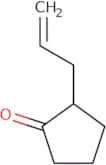
CAS:<p>Versatile small molecule scaffold</p>Fórmula:C14H11ClO2SPureza:Min. 95%Peso molecular:278.8 g/mol2-(Prop-2-en-1-yl)cyclopentan-1-one
CAS:<p>2-(Prop-2-en-1-yl)cyclopentan-1-one (propargyl alcohol) is a heterocyclic compound that is the simplest member of the cyclopentanones. It has been shown to be an effective inhibitor of human viruses such as Hepatitis C virus, HIV, and influenza A virus. The antiviral activity of propargyl alcohol is attributed to its ability to inhibit viral DNA polymerase and RNA polymerase in the infected cells. Propargyl alcohol also inhibits glycol dimethyl ether, which is a cofactor for some cellular enzymes involved in lipid metabolism. This compound can also act as a substrate for allylation reactions with other compounds such as 1,3 butadiene or ethylene.</p>Fórmula:C8H12OPureza:Min. 95%Peso molecular:124.18 g/mol4-Bromo-2-nitro-1H-pyrrole
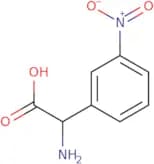
CAS:<p>Versatile small molecule scaffold</p>Fórmula:C4H3BrN2O2Pureza:Min. 95%Peso molecular:190.98 g/mol2-amino-2-(3-nitrophenyl)acetic acid
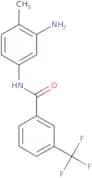
CAS:<p>Versatile small molecule scaffold</p>Fórmula:C8H8N2O4Pureza:Min. 95%Peso molecular:196.16 g/molN-(3-Amino-4-methylphenyl)-3-(trifluoromethyl)benzamide
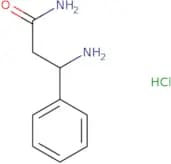
CAS:<p>Versatile small molecule scaffold</p>Fórmula:C15H13F3N2OPureza:Min. 95%Peso molecular:294.27 g/mol3-Amino-3-phenylpropanamide hydrochloride
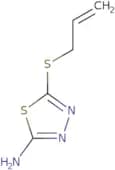
CAS:<p>Versatile small molecule scaffold</p>Fórmula:C9H13ClN2OPureza:Min. 95%Peso molecular:200.66 g/mol5-Allylsulfanyl-1,3,4-thiadiazol-2-amine
CAS:<p>Versatile small molecule scaffold</p>Fórmula:C5H7N3S2Pureza:Min. 95%Peso molecular:173.3 g/mol1,2,3,5-Tetrahydroindolizine-1,5-dione
CAS:<p>Versatile small molecule scaffold</p>Fórmula:C8H7NO2Pureza:Min. 95%Peso molecular:149.15 g/mol8-Chloro-5-methoxy-N-methyl-1,2,3,4-tetrahydronaphthalen-1-amine hydrochloride
CAS:<p>Versatile small molecule scaffold</p>Fórmula:C12H17Cl2NOPureza:Min. 95%Peso molecular:262.17 g/mol1,2,3,4-Tetrahydroquinoline-6-sulfonamide
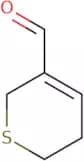
CAS:<p>Versatile small molecule scaffold</p>Fórmula:C9H12N2O2SPureza:Min. 95%Peso molecular:212.27 g/mol3,6-Dihydro-2H-thiopyran-5-carbaldehyde
CAS:<p>3,6-Dihydro-2H-thiopyran-5-carbaldehyde is an aldehyde that is used as an intermediate in the synthesis of crotonaldehyde. It reacts with hydrogen sulfide in the presence of an acidic catalyst to produce acrolein and water. The reaction product can be boiled off to generate a crude form of crotonaldehyde. 3,6-Dihydro-2H-thiopyran-5-carbaldehyde has been patented by BASF SE under patent number EP0992871.</p>Fórmula:C6H8OSPureza:Min. 95%Peso molecular:128.19 g/mol



![2-Bromo-1-[4-(2-methylpropyl)phenyl]ethan-1-one](/_next/image/?url=https%3A%2Fstatic.cymitquimica.com%2Fproducts%2F3D%2Fthumb-webp%2FFBA09548.webp&w=3840&q=75)

![3-{[(4-Chlorophenyl)sulfanyl]methyl}benzoic acid](/_next/image/?url=https%3A%2Fstatic.cymitquimica.com%2Fproducts%2F3D%2Fthumb-webp%2FFBA08241.webp&w=3840&q=75)