


Building Blocks
Esta seção contém produtos fundamentais para a síntese de compostos orgânicos e biológicos. Building blocks são os materiais de partida essenciais usados para construir moléculas complexas através de várias reações químicas. Eles desempenham um papel crítico na descoberta de medicamentos, ciência dos materiais e pesquisa química. Na CymitQuimica, oferecemos uma ampla gama de building blocks de alta qualidade para apoiar suas pesquisas inovadoras e projetos industriais, garantindo que você tenha os componentes essenciais para uma síntese bem-sucedida.
Subcategorias de "Building Blocks"
- Ácidos Borónicos e Derivados de Ácido Borónico(5.756 produtos)
- Building Blocks Quirais(1.242 produtos)
- Building Blocks Hidrocarbonetos(6.095 produtos)
- Building Blocks orgânicos(61.055 produtos)
Foram encontrados 199650 produtos de "Building Blocks"
Ordenar por
Pureza (%)
0
100
|
0
|
50
|
90
|
95
|
100
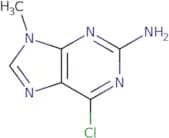
6-chloro-9-methyl-9H-purin-2-amine
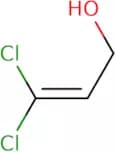
CAS:<p>6-chloro-9-methyl-9H-purin-2-amine is a cytostatic agent that is used in the synthesis of other compounds. It is prepared by the quaternization of 6-chloropurine with methylmagnesium chloride followed by amination with methyl iodide. Purinium chloride is then obtained by reacting chloroform with potassium hydrogen fluoride and hydrochloric acid. This product can be used as an intermediate in the synthesis of purines, x-rays, and iodides. 6-Chloro-9-[methyl(3,5,6 -trimethylphenyl)amino]purin-2 amine has been shown to have cytostatic activity against human lymphocytes in vitro.</p>Fórmula:C6H6ClN5Pureza:Min. 95%Peso molecular:183.6 g/mol3,3-Dichloroprop-2-en-1-ol
CAS:<p>Versatile small molecule scaffold</p>Fórmula:C3H4Cl2OPureza:Min. 95%Peso molecular:126.97 g/mol4,5-dihydro-3H-1-benzoxepin-2-one
CAS:<p>4,5-Dihydro-3H-1-benzoxepin-2-one is a peroxide that is an intermediate in the synthesis of cyclohexanones. It can be obtained by treatment with trifluoroacetic acid or immobilized catalysts. The yields are between 60 and 70%. A cyclohexanone can be synthesized from 4,5-dihydro-3H-1-benzoxepin-2-one by epoxidation with polyphosphoric acid. This reaction also produces a carboxylic acid as a byproduct. The use of lipase as catalyst leads to production of higher yields of cyclohexanones and carboxylic acids.</p>Fórmula:C10H10O2Pureza:Min. 95%Peso molecular:162.18 g/mol2-Phenyl-1H-pyrrole
CAS:<p>2-Phenyl-1H-pyrrole is a fungicide that has been shown to have high resistance against resistance mutants. The redox potential of 2-phenyl-1H-pyrrole is -0.8 volts, which is higher than the redox potential of most fungicides. This compound can be used as an alternative to other current fungicides due to its ability to inhibit the growth of fungi and bacteria, such as Penicillium sp., Cephalosporium sp., and Bacillus subtilis. 2-Phenyl-1H-pyrrole has also been shown to inhibit the growth of wild type strains, heterocycles, and alkylsulfonyl groups. It reacts with phenylpyrrole when dissolved in a reaction solution.</p>Fórmula:C10H9NPureza:Min. 95%Peso molecular:143.19 g/molo-Hydroxy-±,±-dimethylbenzyl Alcohol
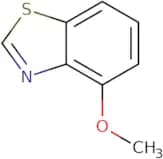
CAS:<p>Versatile small molecule scaffold</p>Fórmula:C9H12O2Pureza:Min. 95%Peso molecular:152.19 g/mol4-Methoxy-1,3-benzothiazole
CAS:<p>4-Methoxy-1,3-benzothiazole is a chromophore that has been shown to inhibit the proliferation of cancer cells in vitro. It was also found to be a potential anticancer agent in vivo, but its mechanism of action has not yet been elucidated. 4-Methoxy-1,3-benzothiazole inhibits the production of pheomelanin and carotenoids by inhibiting tyrosine kinase activity. This leads to decreased production of melanin and carotenoids, which are responsible for the colouration of skin, hair and feathers. 4-Methoxy-1,3-benzothiazole is also mesomeric and can be used as an analog for other chromophores.</p>Fórmula:C8H7NOSPureza:Min. 95%Peso molecular:165.21 g/mol2,3,4-Trimethyl-3-pentanol
CAS:<p>2,3,4-Trimethyl-3-pentanol is a monocarboxylic acid that has been shown to have functional groups including a proton and three methyl groups. The compound has been isolated from the strain CECT 4495 of clostridium. The 2,3,4-Trimethyl-3-pentanol molecule is connected by a carbon tetrachloride bond. It has been shown to enhance the flow rate of chromatographic separations with preparative separations using magnetic resonance spectroscopy. Monocarboxylic acids are found in nature and are used as solvents for oil and grease in industrial settings.</p>Fórmula:C8H18OPureza:Min. 95%Peso molecular:130.23 g/molSpiro[3.3]heptane-2,6-dicarboxylic acid
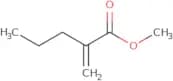
CAS:<p>Spiro[3.3]heptane-2,6-dicarboxylic acid is an isomeric form of glutamic acid that has a diastereomeric relationship with glutamic acid. It is used as a building block in organic synthesis, and it can be used to synthesize lactams, which are heterocyclic compounds that have the skeleton of a cyclic amide. Spiro[3.3]heptane-2,6-dicarboxylic acid also has an acidic nature and can be hydrolyzed under acidic conditions to produce hydrogen chloride gas. The molecule has been shown to undergo nucleophilic attack by chloride ions, forming a chloroformate ester intermediate. The stereochemistry of spiro[3.3]heptane-2,6-dicarboxylic acid is enantiopure because there are two chiral centers on the ring system.</p>Fórmula:C9H12O4Pureza:Min. 95%Peso molecular:184.19 g/molMethyl 2-methylidenepentanoate
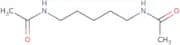
CAS:<p>Versatile small molecule scaffold</p>Fórmula:C7H12O2Pureza:Min. 95%Peso molecular:128.17 g/molN-(5-Acetamidopentyl)acetamide
CAS:<p>5-Acetamidopentylacetamide (5AA) is a molecule that is used in the treatment of cancer. It inhibits the growth of tumor cells by causing cell death in the cytoplasm. 5AA has been shown to inhibit the production of tumor necrosis factor alpha, as well as protein kinase C and phospholipase A2, which are involved in tumor cell proliferation. This molecule also induces apoptosis and inhibits viral replication by preventing viral RNA transcription. 5AA is a potent inducer of gene expression in diploid lymphoblastoid cells, which may be due to its ability to stimulate uptake and metabolism of the drug. It has been shown that 5AA can be taken up by fibroblast cells in culture through passive diffusion or an active transport mechanism. This agent is metabolized into an organic solvent and excreted via trichloroacetic acid (TCA) or salivary routes. The use of 5AA has</p>Fórmula:C9H18N2O2Pureza:Min. 95%Peso molecular:186.25 g/mol2,3-Dihydro-1H-indole-6-sulfonamide
CAS:<p>2,3-Dihydro-1H-indole-6-sulfonamide is a carboxylate antibiotic that has been shown to be active against a variety of bacteria including Staphylococcus and Streptococcus. The enzyme activity of the drug is related to the nature of the carboxylates. 2,3-Dihydro-1H-indole-6-sulfonamide has a unique chemical structure that includes both amines and piperidine, which may explain its inhibitory potency. The active site for this drug is in the indoline ring, which contains an oxygen atom with a double bond between carbons 1 and 2.</p>Fórmula:C8H10N2O2SPureza:Min. 95%Peso molecular:198.24 g/mol1H-Indole-5-sulfonamide
CAS:<p>1H-Indole-5-sulfonamide is a molecule that belongs to the class of orientations. It has been shown to have oxidase inhibitory activities and can be used for the treatment of neurodegenerative diseases. 1H-Indole-5-sulfonamide inhibits the activity of dopamine decarboxylase, which is an enzyme involved in the synthesis of dopamine from tyrosine. This inhibition prevents the production of catecholamines, thereby reducing their effects on neurotransmission. 1H-Indole-5-sulfonamide can also bind to amines and other molecules with a nucleophilic group. It is catabolized by enzymes such as propargylamine oxidase or cytochrome P450 reductase, which may lead to functional groups such as trifluoromethyl groups.</p>Fórmula:C8H8N2O2SPureza:Min. 95%Peso molecular:196.23 g/mol4-Hydroxy-N-(propan-2-yl)benzene-1-sulfonamide
CAS:<p>Versatile small molecule scaffold</p>Fórmula:C9H13NO3SPureza:Min. 95%Peso molecular:215.27 g/molN-Butyl-4-hydroxybenzene-1-sulfonamide
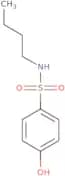
CAS:Versatile small molecule scaffoldFórmula:C10H15NO3SPureza:Min. 95%Peso molecular:229.3 g/molN-tert-Butyl-4-hydroxybenzene-1-sulfonamide
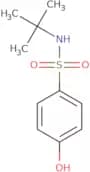
CAS:<p>Versatile small molecule scaffold</p>Fórmula:C10H15NO3SPureza:Min. 95%Peso molecular:229.3 g/mol1-Methanesulfinyloctane
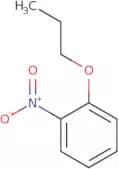
CAS:<p>Versatile small molecule scaffold</p>Fórmula:C9H20OSPureza:Min. 95%Peso molecular:176.3 g/mol1-Nitro-2-propoxybenzene
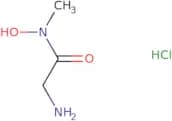
CAS:<p>Versatile small molecule scaffold</p>Fórmula:C9H11NO3Pureza:Min. 95%Peso molecular:181.19 g/mol2-Amino-N-hydroxy-N-methylacetamide hydrochloride
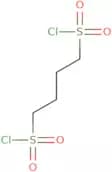
CAS:<p>Versatile small molecule scaffold</p>Fórmula:C3H9ClN2O2Pureza:Min. 95%Peso molecular:140.57 g/molButane-1,4-disulfonyl dichloride
CAS:<p>Butane-1,4-disulfonyl dichloride is a positron-emitting radiopharmaceutical that can be used as a marker for positron emission tomography. It is a diamagnetic molecule with an effective nuclear magnetic resonance (NMR) chemical shift of 2.2 ppm and has a diameter of about 0.5 nm. Butane-1,4-disulfonyl dichloride can be synthesized by reacting pyridine with peroxide in the presence of divalent metal ions such as Cu(II), Ni(II), or Zn(II). This compound is used to label radiotracers such as 3H, 14C, 11C, 15O, 13N, 18F, and 76Br for imaging biological tissues. The radiolabeled compound binds to methyl groups on proteins and lipids within the tissue to form positron emitting molecules that permit detection by PET scan. Butane-1,4-dis</p>Fórmula:C4H8Cl2O4S2Pureza:Min. 95%Peso molecular:255.1 g/mol2-Chloro-N-[2-chloro-4-(cyanosulfanyl)phenyl]acetamide
CAS:<p>Versatile small molecule scaffold</p>Fórmula:C9H6Cl2N2OSPureza:Min. 95%Peso molecular:261.13 g/mol




![Spiro[3.3]heptane-2,6-dicarboxylic acid](/_next/image/?url=https%3A%2Fstatic.cymitquimica.com%2Fproducts%2F3D%2Fthumb-webp%2FDAA05791.webp&w=3840&q=75)


![2-Chloro-N-[2-chloro-4-(cyanosulfanyl)phenyl]acetamide](/_next/image/?url=https%3A%2Fstatic.cymitquimica.com%2Fproducts%2F3D%2Fthumb-webp%2FDAA08223.webp&w=3840&q=75)