Building Blocks
Esta seção contém produtos fundamentais para a síntese de compostos orgânicos e biológicos. Building blocks são os materiais de partida essenciais usados para construir moléculas complexas através de várias reações químicas. Eles desempenham um papel crítico na descoberta de medicamentos, ciência dos materiais e pesquisa química. Na CymitQuimica, oferecemos uma ampla gama de building blocks de alta qualidade para apoiar suas pesquisas inovadoras e projetos industriais, garantindo que você tenha os componentes essenciais para uma síntese bem-sucedida.
Subcategorias de "Building Blocks"
- Ácidos Borónicos e Derivados de Ácido Borónico(5.756 produtos)
- Building Blocks Quirais(1.242 produtos)
- Building Blocks Hidrocarbonetos(6.095 produtos)
- Building Blocks orgânicos(61.037 produtos)
Foram encontrados 196139 produtos de "Building Blocks"
Ordenar por
Pureza (%)
0
100
|
0
|
50
|
90
|
95
|
100
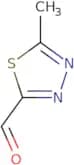
5-Methyl-1,3,4-thiadiazole-2-carbaldehyde
CAS:<p>Versatile small molecule scaffold</p>Fórmula:C4H4N2OSPureza:Min. 95%Peso molecular:128.16 g/molethyl 6-benzyl-2-oxa-6-azaspiro[3.4]octane-8-carboxylate
CAS:<p>Versatile small molecule scaffold</p>Fórmula:C16H21NO3Pureza:Min. 95%Peso molecular:275.35 g/molethyl 3-formyl-1H-pyrrole-2-carboxylate
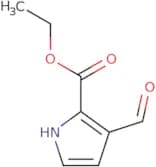
CAS:<p>Ethyl 3-formyl-1H-pyrrole-2-carboxylate is a formyl compound with the molecular formula C8H8O3. It is a colorless liquid that has a strong odor. The compound can be obtained by the reaction of ethyl acetoacetate and pyrrole in the presence of aluminum chloride. The compound has been studied for its nuclear magnetic resonance (NMR) properties. It has two conformers, which are distinguished by their different chemical shifts, and this difference can be used to study coupling between the carbonyl group and other groups in the molecule.</p>Fórmula:C8H9NO3Pureza:Min. 95%Peso molecular:167.2 g/mol2-(Bromomethyl)-6-fluorobenzonitrile
CAS:<p>Versatile small molecule scaffold</p>Fórmula:C8H5BrFNPureza:Min. 95%Peso molecular:214.04 g/mol3-chloro-4-cyanobenzoic acid
CAS:<p>Versatile small molecule scaffold</p>Fórmula:C8H4ClNO2Pureza:Min. 95%Peso molecular:181.58 g/mol2,4,6-Trichloronicotinaldehyde
CAS:<p>Versatile small molecule scaffold</p>Fórmula:C6H2Cl3NOPureza:Min. 95%Peso molecular:210.45 g/mol2-(Methoxycarbonyl)-1,3-oxazole-4-carboxylic acid
CAS:<p>Versatile small molecule scaffold</p>Fórmula:C6H5NO5Pureza:Min. 95%Peso molecular:171.11 g/mol1-Boc-pyrrolidine-3-ethanol
CAS:<p>Versatile small molecule scaffold</p>Fórmula:C11H21NO3Pureza:Min. 95%Peso molecular:215.29 g/mol(R)-tert-Butyl 2-methylpiperazine-1-carboxylate
CAS:<p>(R)-tert-Butyl 2-methylpiperazine-1-carboxylate is a versatile building block that can be used for the synthesis of complex compounds. The compound is a reagent, speciality chemical, and useful building block in research. It can be used as a reaction component or scaffold in synthesis. (R)-tert-Butyl 2-methylpiperazine-1-carboxylate has been shown to react with nucleophiles such as amines and alcohols to form stable products. This product has high quality and is useful for chemical reactions involving carbonyl groups.</p>Fórmula:C10H20N2O2Pureza:Min. 95%Cor e Forma:White PowderPeso molecular:200.28 g/mol3,5-Bis(trifluoromethyl)-1H-pyrazole-4-carboxylic acid
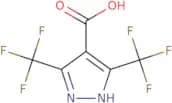
CAS:<p>3,5-Bis(trifluoromethyl)-1H-pyrazole-4-carboxylic acid is a chiral compound that has been shown to be an active building block for coordination frameworks. It is prepared from the reaction of 3,5-bis(trifluoromethyl)-1H-pyrazole with a carboxylic acid and can be used in the synthesis of metalloporphyrins. 3,5-Bis(trifluoromethyl)-1H-pyrazole-4-carboxylic acid has been shown to form stable coordination complexes with ligands such as bidentate or tridentate phosphoramidites and dimethylammonium chloride. This compound undergoes thermal treatment during the preparation process and reacts with various solvents and reagents.</p>Fórmula:C6H2F6N2O2Pureza:Min. 95%Peso molecular:248.08 g/mol2-Bromobenzo[d]thiazol-6-amine
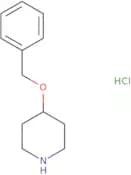
CAS:<p>Please enquire for more information about 2-Bromobenzo[d]thiazol-6-amine including the price, delivery time and more detailed product information at the technical inquiry form on this page</p>Fórmula:C7H5BrN2SPureza:Min. 95%Peso molecular:229.1 g/mol4-(Benzyloxy)piperidine HCl
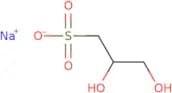
CAS:<p>4-(Benzyloxy)piperidine HCl is a versatile building block that is used in the synthesis of complex compounds such as research chemicals, reagents and speciality chemicals. 4-(Benzyloxy)piperidine HCl is also a useful intermediate in organic synthesis and can be used as a reaction component. 4-(Benzyloxy)piperidine HCl has CAS number 81151-68-0 and is a useful scaffold for chemical syntheses.</p>Fórmula:C12H17NOHClPureza:Min. 95%Cor e Forma:White PowderPeso molecular:227.73 g/molSodium 2,3-dihydroxypropane-1-sulfonate
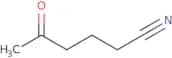
CAS:<p>Sodium 2,3-dihydroxypropane-1-sulfonate is a granular detergent that can be used in the production of heavy duty liquid and solid granules. It is an anionic surfactant with a sulfonate group that has a granular consistency. This detergent is often used as a wetting agent in detergents and as a dispersing agent in paints, dyes, and pharmaceuticals. Sodium 2,3-dihydroxypropane-1-sulfonate has been shown to be effective at removing particulate matter from water and can also be used as a stabilizer for other surfactants during manufacturing.</p>Fórmula:C3H7NaO5SPureza:Min. 95%Peso molecular:178.14 g/mol5-Ketohexanenitrile
CAS:<p>5-Ketohexanenitrile is a liquid that is used in the production of medicine. The compound has been shown to be an effective inhibitor of the enzyme, dehydrogenase, which catalyzes the conversion of 5-ketohexanoic acid to hexadecanoic acid. This reaction is important for the oxidation of fatty acids and can be found in all living organisms. 5-Ketohexanenitrile has also been shown to inhibit the enzyme, hydrogen peroxide oxidase, which catalyzes the conversion of hydrogen peroxide to water and oxygen gas. 5-Ketohexanenitrile is also an intermediate in acrylonitrile production. It can be produced by vaporizing hexadecanoic acid with a catalyst such as trimethylpyridine or acetic acid. 5-Ketohexanenitrile can exist as two isomers: cis and trans. It is a primary amine that reacts with alkali metals such as</p>Fórmula:C6H9NOPureza:Min. 95%Peso molecular:111.14 g/mol2-Cyclopropylphenol
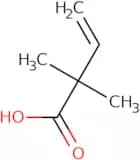
CAS:<p>2-Cyclopropylphenol is a hydrogen chloride derivative of 2-cyclohexen-1-one. It has been shown to have high affinity for the α receptor, which is a functional group in the integrin receptor that mediates cell adhesion. 2-Cyclopropylphenol has been shown to be effective for the treatment of hepatitis. 2-Cyclopropylphenol also forms an organometallic complex with platinum, which can be used as an anticancer agent and shows good antiviral activity against hepatitis C virus (HCV). The molecular modeling of this compound was done by using quantum chemical calculations and NMR spectra. The synthesis of this compound was developed from benzene and ethynylbenzene. The photochemical properties of this compound were investigated by methane monooxygenase reconstitution studies.</p>Fórmula:C9H10OPureza:Min. 95%Peso molecular:134.18 g/mol2,2-Dimethylbut-3-enoic acid
CAS:<p>2,2-Dimethylbut-3-enoic acid is a bioactive compound that is used to synthesize other compounds. It has been shown to have a number of functions, such as being an electrolyte and having an electron deficient group in its structure. 2,2-Dimethylbut-3-enoic acid reacts with electrophilic functional groups at high temperatures to form allylation products. This reaction is called cheletropic and has been shown to be reversible.</p>Fórmula:C6H10O2Pureza:Min. 95%Peso molecular:114.14 g/mol4-Bromo-2-fluoropyrimidine
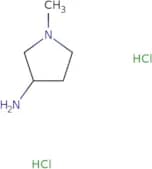
CAS:<p>Versatile small molecule scaffold</p>Fórmula:C4H2BrFN2Pureza:Min. 95%Peso molecular:176.97 g/mol1-Methylpyrrolidin-3-amine dihydrochloride
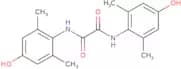
CAS:<p>Versatile small molecule scaffold</p>Fórmula:C5H12N2·2HClPureza:Min. 95%Peso molecular:173.09 g/molN1,N2-Bis(4-hydroxy-2,6-dimethylphenyl)ethanediamide
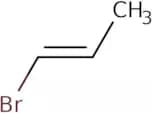
CAS:<p>Versatile small molecule scaffold</p>Fórmula:C18H20N2O4Pureza:Min. 95%Peso molecular:328.4 g/moltrans-1-Bromo-1-propene - stablised with Copper
CAS:<p>Trans-1-bromo-1-propene is a compound that has been stabilized by copper. It is used in the synthesis of quinoline derivatives and alkanoic acids. Trans-1-bromo-1-propene is an antimicrobial agent, which kills bacteria by interfering with the fatty acid synthesis. This substance also has antioxidant properties.</p>Fórmula:C3H5BrPureza:95%NmrCor e Forma:Clear LiquidPeso molecular:120.98 g/mol

![ethyl 6-benzyl-2-oxa-6-azaspiro[3.4]octane-8-carboxylate](/_next/image/?url=https%3A%2Fstatic.cymitquimica.com%2Fproducts%2F3D%2Fthumb-webp%2FLBC69289.webp&w=3840&q=75)


![2-Bromobenzo[d]thiazol-6-amine](/_next/image/?url=https%3A%2Fstatic.cymitquimica.com%2Fproducts%2F3D%2Fthumb-webp%2FFB144124.webp&w=3840&q=75)