Building Blocks
Esta seção contém produtos fundamentais para a síntese de compostos orgânicos e biológicos. Building blocks são os materiais de partida essenciais usados para construir moléculas complexas através de várias reações químicas. Eles desempenham um papel crítico na descoberta de medicamentos, ciência dos materiais e pesquisa química. Na CymitQuimica, oferecemos uma ampla gama de building blocks de alta qualidade para apoiar suas pesquisas inovadoras e projetos industriais, garantindo que você tenha os componentes essenciais para uma síntese bem-sucedida.
Subcategorias de "Building Blocks"
- Ácidos Borónicos e Derivados de Ácido Borónico(5.756 produtos)
- Building Blocks Quirais(1.242 produtos)
- Building Blocks Hidrocarbonetos(6.095 produtos)
- Building Blocks orgânicos(61.037 produtos)
Foram encontrados 196200 produtos de "Building Blocks"
Ordenar por
Pureza (%)
0
100
|
0
|
50
|
90
|
95
|
100
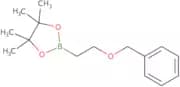
2-(Benzyloxy)ethylboronic acid pinacol ester
CAS:<p>Versatile small molecule scaffold</p>Fórmula:C15H25BO4Pureza:Min. 95%Peso molecular:280.17 g/mol1-Hydroxy-1,3-dihydro-2,1-benzoxaborole-6-carbaldehyde
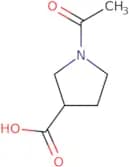
CAS:<p>Versatile small molecule scaffold</p>Fórmula:C8H7BO3Pureza:Min. 95%Peso molecular:161.95 g/mol1-Acetyl-pyrrolidine-3-carboxylic acid
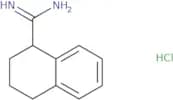
CAS:<p>Versatile small molecule scaffold</p>Fórmula:C7H11NO3Pureza:Min. 95%Peso molecular:157.17 g/mol1,2,3,4-Tetrahydronaphthalene-1-carboximidamide hydrochloride
CAS:<p>Versatile small molecule scaffold</p>Fórmula:C11H15ClN2Pureza:Min. 95%Peso molecular:210.7 g/molMethyl-2-benzyl-5-methyl-octahydro-1H-pyrrolo[3,4-c]pyridine-7a-carboxylate
CAS:<p>Versatile small molecule scaffold</p>Fórmula:C17H24N2O2Pureza:Min. 95%Peso molecular:288.4 g/mol3-Azabicyclo[3.2.1]octane-2,4-dione
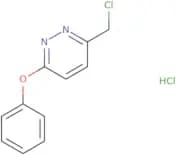
CAS:<p>Versatile small molecule scaffold</p>Fórmula:C7H9NO2Pureza:Min. 95%Peso molecular:139.15 g/mol3-(Chloromethyl)-6-phenoxypyridazine hydrochloride
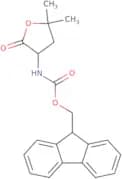
CAS:<p>Versatile small molecule scaffold</p>Fórmula:C11H10Cl2N2OPureza:Min. 95%Peso molecular:257.11 g/mol9H-Fluoren-9-ylmethyl N-(5,5-dimethyl-2-oxooxolan-3-yl)carbamate
CAS:<p>Versatile small molecule scaffold</p>Fórmula:C21H21NO4Pureza:Min. 95%Peso molecular:351.4 g/molRef: 3D-CHC37874
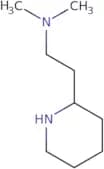
Produto descontinuadoN,N-Dimethyl-2-(2-piperidinyl)-1-ethanaminedihydrochloride
CAS:<p>Versatile small molecule scaffold</p>Fórmula:C9H22Cl2N2Pureza:Min. 95%Peso molecular:229.2 g/mol1-(4-Chlorophenyl)-2-(pyridin-2-yl)ethan-1-one
CAS:<p>Versatile small molecule scaffold</p>Fórmula:C13H10ClNOPureza:Min. 95%Peso molecular:231.68 g/mol6-Acetyl-1-methyl-1H-indazole
CAS:<p>Versatile small molecule scaffold</p>Fórmula:C10H10N2OPureza:Min. 95%Peso molecular:174.2 g/mol(3-Fluoro-2,6-dimethoxyphenyl)boronic acid
CAS:<p>Versatile small molecule scaffold</p>Fórmula:C8H10BFO4Pureza:Min. 95%Peso molecular:199.97 g/molN-Methyl-N-phenylpiperidin-4-amine hydrochloride
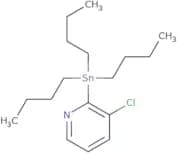
CAS:<p>Versatile small molecule scaffold</p>Fórmula:C12H19ClN2Pureza:Min. 95%Peso molecular:226.74 g/mol2-(Tributylstannyl)-3-chloropyridine
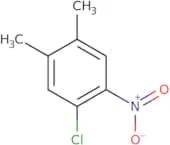
CAS:Produto Controlado<p>Versatile small molecule scaffold</p>Fórmula:C17H30ClNSnPureza:Min. 95%Peso molecular:402.59 g/mol1-Chloro-4,5-dimethyl-2-nitrobenzene
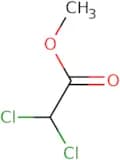
CAS:<p>Versatile small molecule scaffold</p>Fórmula:C8H8ClNO2Pureza:Min. 95%Peso molecular:185.61 g/molDichloroacetic Acid Methyl Ester
CAS:<p>Dichloroacetic acid methyl ester (DCA) is a metabolic disorder agent that belongs to the group of detergent compositions. It is an important intermediate in the synthesis of sodium salts and hiv infection inhibitors, such as hydrochloric acid and covalent linkages. DCA reacts with water molecules to form hydroxyl groups and then reacts with metal carbonyls to produce anhydrous sodium. This product also reacts with fatty acids to produce alcohol residue and can be used in the reaction solution. The product has a pyrazole ring with a hydroxyl group at one end and an alcohol residue at the other end.</p>Fórmula:C3H4Cl2O2Pureza:Min. 95%Peso molecular:142.97 g/mol3-(Hydroxymethyl)cyclobutan-1-one
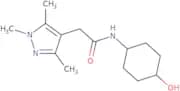
CAS:<p>3-(Hydroxymethyl)cyclobutan-1-one is a synthetic piperazine derivative that has been shown to have antitumor and antimycobacterial activities. It is a selective inhibitor of the enzyme purine nucleoside phosphorylase (PNP), which catalyzes the conversion of inosine monophosphate (IMP) to xanthosine monophosphate (XMP). This inhibition results in an accumulation of IMP and deoxyinosine monophosphate (dIMP) in tumor cells. 3-(Hydroxymethyl)cyclobutan-1-one also inhibits Mycobacterium tuberculosis, but not other bacteria such as Escherichia coli or Staphylococcus aureus. The product is synthetically produced by reacting cyclobutanone with hydroxylamine.</p>Fórmula:C5H8O2Pureza:Min. 95%Peso molecular:100.12 g/molN-(4-Hydroxycyclohexyl)-2-(trimethyl-1H-pyrazol-4-yl)acetamide
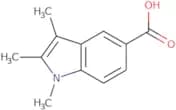
CAS:<p>Versatile small molecule scaffold</p>Fórmula:C14H23N3O2Pureza:Min. 95%Peso molecular:265.35 g/mol1,2,3-Trimethyl-1H-indole-5-carboxylic acid
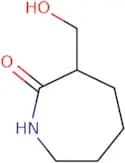
CAS:<p>Versatile small molecule scaffold</p>Fórmula:C12H13NO2Pureza:Min. 95%Peso molecular:203.24 g/mol3-(Hydroxymethyl)azepan-2-one
CAS:<p>3-(Hydroxymethyl)azepan-2-one is a monomer that belongs to the class of organic solvents. It is used as an additive in agrochemical formulations, where it functions as a viscosity regulator and stabilizer. 3-(Hydroxymethyl)azepan-2-one has also been shown to be a bioactive substance with antimicrobial properties, which is due to its ability to interfere with protein synthesis by inhibiting the synthesis of RNA. 3-(Hydroxymethyl)azepan-2-one has also been shown to have anti-inflammatory effects, which may be due to its ability to inhibit prostaglandin synthesis.</p>Fórmula:C7H13NO2Pureza:Min. 95%Peso molecular:143.18 g/molRef: 3D-GWC90059
Produto descontinuado


![Methyl-2-benzyl-5-methyl-octahydro-1H-pyrrolo[3,4-c]pyridine-7a-carboxylate](/_next/image/?url=https%3A%2Fstatic.cymitquimica.com%2Fproducts%2F3D%2Fthumb-webp%2FVXC57025.webp&w=3840&q=75)
![3-Azabicyclo[3.2.1]octane-2,4-dione](/_next/image/?url=https%3A%2Fstatic.cymitquimica.com%2Fproducts%2F3D%2Fthumb-webp%2FFAA76345.webp&w=3840&q=75)